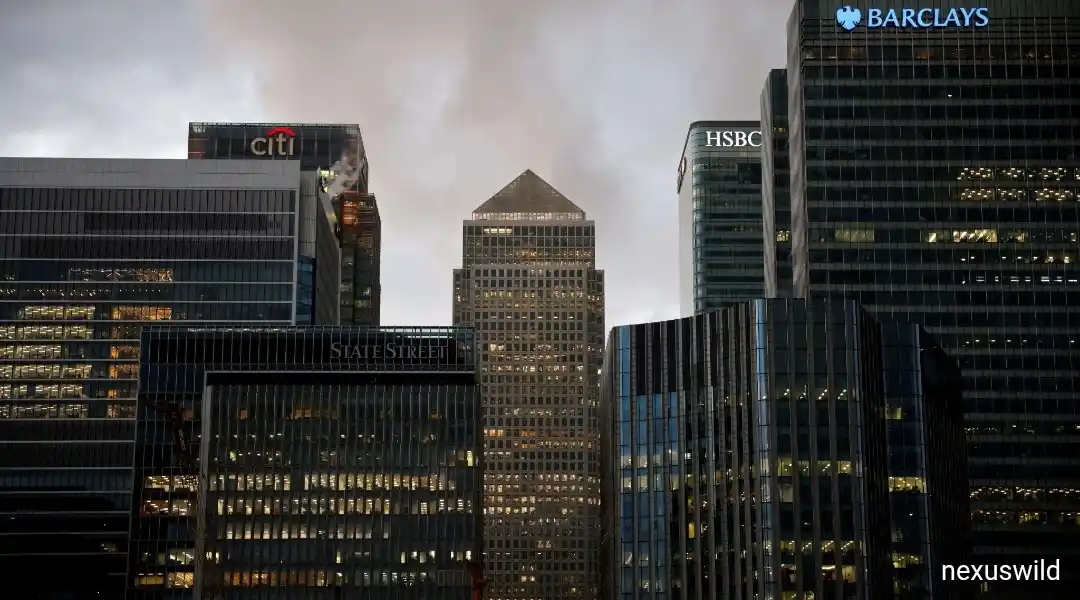

NEW YORK / LONDON — Global financial markets came under renewed pressure on Wednesday as fresh fighting between the United States and Iran pushed energy prices sharply higher earlier in the session, intensified inflation concerns and added to an already severe selloff in government bonds.
U.S. Central Command said it struck Iranian military targets including air-defense sites, radar systems and maritime assets. Iran responded with missiles and drones aimed at U.S. forces and American allies across the region, according to the Associated Press. The renewed exchange was among the most serious escalations in weeks and again focused attention on the Strait of Hormuz, a critical route for global energy supplies.
Oil Volatility and the Strait of Hormuz
Oil initially surged. Brent crude reached $97.04 a barrel before reversing some of its gains. By 1135 GMT, Brent was down 0.6% at $94.08, while U.S. West Texas Intermediate traded at $89.50. Iran has effectively restricted normal commercial traffic through the Strait of Hormuz, which carried roughly one-fifth of global oil consumption before the conflict.
The oil shock matters well beyond energy markets. Higher crude and natural-gas costs can feed into transport, manufacturing, electricity and consumer prices, making it harder for central banks to bring inflation under control. That has encouraged investors to price a greater probability of additional interest-rate increases.
Sovereign Bond Yields Surge Globally
The pressure has been particularly visible in government bonds. Bond prices and yields move in opposite directions, so yields rise when investors sell bonds and their prices fall.
The benchmark U.S. 10-year Treasury yield climbed as high as 4.8182%, its highest level since November 2023. Japan's 10-year government bond yield reached about 3.01%, remaining above 3% after crossing that threshold for the first time in roughly three decades. Germany's 10-year yield reached its highest level since 2011, while Britain's 10-year gilt yield touched 5.268%, the highest since June 2008.
The bond selloff cannot be attributed to the Iran conflict alone. Investors are also demanding higher yields because of persistent inflation, expectations for tighter monetary policy, rising government debt and fiscal concerns in several major economies. Heavy corporate borrowing has added further supply pressure in debt markets.
Pressure Across Global Equities
Higher sovereign yields can hurt stocks because safer government bonds become more competitive with equities while the discount rate applied to future corporate earnings rises. They also increase borrowing costs for governments, households and companies.
Asian equities suffered some of Wednesday's sharpest losses. South Korea's KOSPI fell almost 4%, while Japan's Nikkei 225 dropped 2.9%. In Europe, the STOXX 600 was down 0.3% at 645.42, Germany's DAX fell 0.3%, and France's CAC 40 declined 0.4%. Britain's FTSE 100 was later down about 0.6%.
Wall Street was not uniformly lower before Wednesday's opening. At 8:31 a.m. ET, Dow futures were up 0.23%, S&P 500 futures gained 0.08%, while Nasdaq 100 futures slipped 0.09%, helped partly by strength in AI-related technology shares.
Central Bank Outlook and Economic Headwinds
Interest-rate increases remain expectations, not confirmed decisions. The Federal Reserve held its target range at 3.5% to 3.75% on July 29, but markets were pricing roughly a two-thirds probability of a September increase. The ECB also held rates unchanged on July 23, although traders increasingly expect further tightening as energy-driven inflation risks build.
Investors are now watching oil and Hormuz shipping flows, developments in the Iran conflict, U.S. employment figures, the September 11 U.S. inflation report and upcoming Federal Reserve, ECB and Bank of Japan policy decisions. Those developments will help determine whether the current rise in global borrowing costs persists or eases.
Further reading and useful links
Nexuswild welcomes factual corrections. Email contact@nexuswild.com with evidence and the article URL.