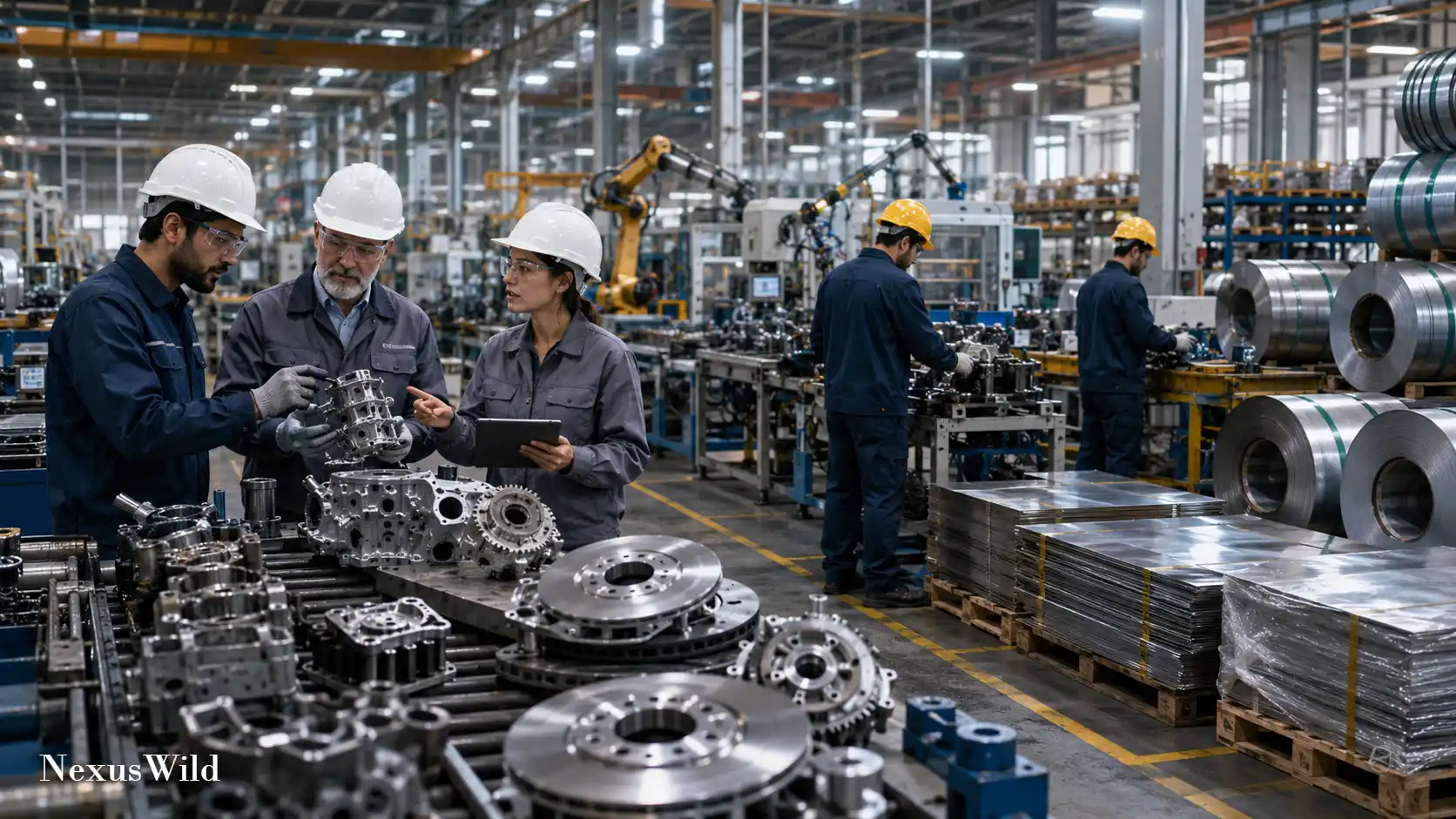

NEW DELHI — India's auto-component manufacturers are facing rising competition for skilled manpower and industrial raw materials from fast-growing sectors such as data centres and renewable energy, according to a joint report by the Automotive Component Manufacturers Association of India (ACMA) and Boston Consulting Group (BCG), released at ACMA's 66th annual session.
The report said this resource squeeze is adding to existing pressures from supply-chain disruptions, labour shortages and demand volatility that the industry has dealt with over the past decade. "Auto-components in a lot of clusters compete with quite a few industries which are themselves seeing a bit of a super cycle," said Saurabh Chhajer, partner and managing director at BCG, pointing to data centres and renewables as drawing on the same raw materials and manpower pools.
The Talent and Skills Gap
Around 60 percent of auto-component companies surveyed for the report identified manpower and labour shortages among the major disruptions affecting their operations in recent years. The report cited Pune as one example of the strain, noting that the region's automotive industry needs roughly 27,000 new skilled workers annually while relevant training programmes in the area produce only about 5,000 graduates a year. The report presented this as an illustrative case rather than a nationwide figure, and the size of the skills gap is likely to vary across India's other manufacturing clusters.
The report separately flagged rising costs and tighter availability of key industrial inputs such as steel and aluminium, treating higher prices and reduced availability as related but distinct pressures on manufacturers' operations and margins. Electrification, growing use of electronics and software in vehicles, and the shift toward more advanced manufacturing processes are adding to the strain by increasing demand for specialised engineering and technical skills that the existing workforce is not always equipped to provide.
Smart Factories and Competing Investment
In response, more than two-thirds of surveyed auto-component manufacturers have adopted smart-factory initiatives, ranging from pilot projects to fully integrated deployments, aimed at improving productivity and easing manpower constraints, the report found. Globally, data-centre investment alone is projected to reach $7 trillion by 2030, according to McKinsey estimates cited in the report, a scale of spending that could intensify competition for the same skilled workers and materials in the years ahead.
Despite these pressures, demand for vehicles has remained strong. ACMA Director General Vinnie Mehta said the industry saw strong momentum in the first quarter and in July, with original equipment manufacturer order schedules pointing to continued traction into the festive season and expectations of another strong financial year.
Eyeing $200 Billion by FY30
The report placed the current scale of India's auto-component industry at $86 billion in FY26, having grown at a 17 percent compound annual rate over the past decade, with localisation now exceeding 70 percent and the sector moving into a net trade surplus. Separately, the industry has set an ambition of reaching close to $200 billion in turnover by FY30, though the report was careful to frame this as a target rather than a guaranteed outcome, one that will depend on companies building greater resilience rather than relying on capacity expansion alone.
To help close that gap, the report's five-part resilience roadmap calls for stronger investment in people and talent, supply-chain diversification, a more balanced demand mix, greater value addition, and wider technology adoption. As Indian suppliers look to deepen their integration into global supply chains and expand exports, the report said sustained investment in engineering, research and development, and workforce development would be central to that push, alongside continued gains in localisation.
Further reading and useful links
Reader questions
Frequently asked questions
What is the main challenge facing India's auto-component makers according to the ACMA-BCG report?
The industry is facing a severe resource squeeze, particularly growing competition for skilled manpower and essential raw materials from rapidly expanding sectors like data centres and renewable energy.
How large is the skills gap in Indian automotive manufacturing clusters?
While it varies by region, the report cited Pune as an example where the industry requires roughly 27,000 new skilled workers annually, but local training programmes produce only about 5,000 graduates a year.
What is the growth target for the Indian auto-component industry?
Currently scaled at $86 billion in FY26, the industry has set an ambitious target of reaching close to $200 billion in turnover by FY30, though achieving this will depend heavily on building supply-chain and talent resilience.
Nexuswild welcomes factual corrections. Email contact@nexuswild.com with evidence and the article URL.