
Headline
China and EU Reach Preliminary Trade Understanding on Hybrid Cars and Rare Earths
Article Summary
China and the European Union have reached a preliminary understanding aimed at easing trade tensions over Chinese hybrid vehicle exports, improving access for European goods in China and facilitating rare-earth export licences. EU Trade Commissioner Maroš Šefčovič said the arrangement could reduce projected Chinese hybrid and plug-in hybrid exports to Europe by more than half over four years. Implementation details remain limited, and further negotiations will determine how the understanding translates into trade measures.
Article Body
China and the European Union have reached a preliminary understanding on hybrid vehicle trade and related market-access issues, marking a step toward reducing tensions between two of the world’s largest trading partners. The understanding was announced on October 9, 2026, following two days of discussions in Beijing between European Trade Commissioner Maroš Šefčovič and Chinese officials, including Commerce Minister Wang Wentao.
Šefčovič said the arrangement could reduce Chinese exports of hybrid and plug-in hybrid vehicles to the EU by more than half compared with projected levels without the proposed measures. He said the changes could affect several million vehicles over four years. However, officials have not publicly detailed a final export cap, a precise baseline or the mechanism through which the reduction would be achieved. <Cite refs={["turn630205search0","turn630205search3"]} />
The development comes amid growing European concern about its trade imbalance with China, particularly in manufactured goods and the automotive sector. For businesses, the discussions could influence vehicle-import strategies, industrial supply chains and access to materials used in electric vehicles and advanced manufacturing.
Hybrid vehicles become a central trade issue
The EU has already imposed additional countervailing duties on battery-electric vehicles manufactured in China following an anti-subsidy investigation. Those measures took effect in October 2024, with additional rates varying by manufacturer. Hybrid vehicles became a separate focus as imports increased and European officials sought to address competitive pressure on the region’s automotive industry. <Cite refs={["turn630205search2"]} />
Hybrid vehicles combine an internal-combustion engine with an electric motor, while plug-in hybrids can recharge their batteries externally. Their growing presence in European markets has added another dimension to the trade dispute, which previously concentrated heavily on fully electric cars.
Under the new understanding, China would moderate hybrid vehicle exports to the EU. The projected reduction should not be interpreted as a confirmed 50% fall from current shipment levels: the comparison is with a scenario in which exports continued without the proposed intervention. Actual volumes could still increase or decrease depending on demand, production and the eventual implementation arrangements.
The absence of a published mechanism leaves important questions about how the arrangement would operate in practice. The parties have yet to fully explain how export levels will be monitored, how the baseline will be calculated or how the understanding will interact with existing trade rules.
Rare-earth supplies and industrial access
The discussions also addressed rare-earth materials and permanent magnets, which are important inputs for electric motors, automotive components, electronics and other advanced manufacturing applications.
China said it would continue facilitating export-licence approvals for rare earths and permanent magnets destined for the EU through a mechanism intended to improve processing. The commitment is relevant to European manufacturers that depend on reliable access to these materials, although faster licensing does not necessarily mean unrestricted exports or guaranteed delivery volumes. <Cite refs={["turn630205search2","turn630205search12"]} />
Supply-chain predictability has become a major concern for manufacturers as export controls and geopolitical disputes complicate access to critical industrial inputs. More consistent licensing procedures could help companies plan production and reduce uncertainty, but the practical impact will depend on implementation, approval times and the treatment of individual applications.
The two sides also discussed improving access to the Chinese market for selected European products, including automotive components, olive oil and footwear. European officials said the relevant export opportunities represented nearly €4 billion in existing annual export value. That figure describes the value of trade potentially affected; it should not be treated as a confirmed increase in future sales or as finalized tariff savings. <Cite refs={["turn630205news30","turn630205search7"]} />
Automotive manufacturers assess the implications
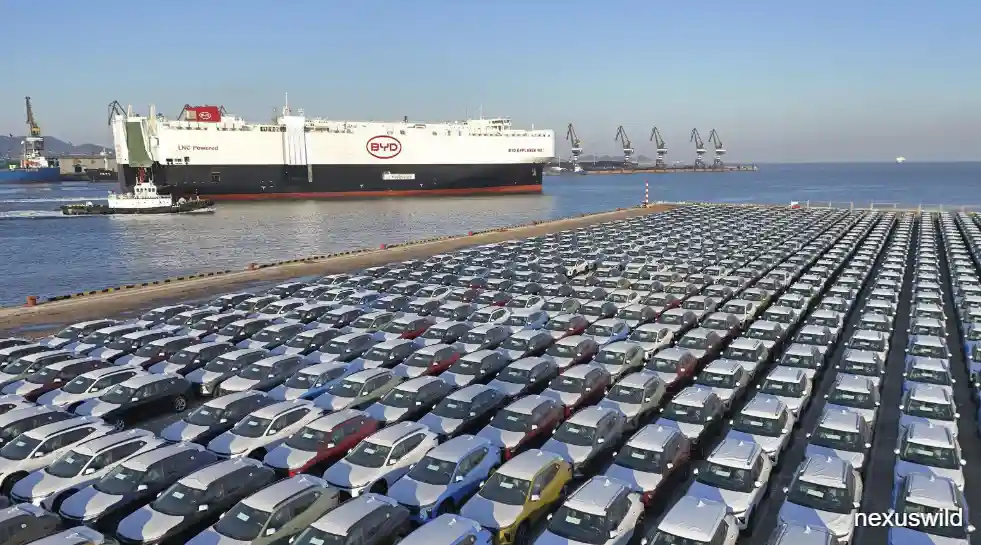
The understanding could influence planning for Chinese automakers seeking to expand their European presence, including companies such as BYD, NIO and Geely. However, the consequences will vary by manufacturer, model, production location and the eventual scope of any export-management arrangements.
A change in the volume of vehicles shipped from China could affect model availability, pricing decisions, dealer inventories and logistics. Manufacturers might reassess production and distribution strategies if the measures become more specific. The effect on consumer prices is not yet clear, because pricing also depends on competition, exchange rates, production costs and local demand.
European automakers may welcome steps intended to address competitive pressures, but the preliminary understanding does not resolve every concern surrounding subsidies, market access or the broader trade relationship. It also does not establish that all Chinese-made electric vehicles will face new restrictions beyond the existing framework.
For suppliers, the rare-earth provisions may be as significant as the vehicle discussions. Automakers and component manufacturers need dependable access to magnets and other specialised inputs, and delays can disrupt production even when the underlying materials remain available.
A first step, not a final settlement
Both sides have described the progress as an initial step. Further discussions are expected to address unresolved issues, including implementation of the hybrid vehicle understanding and the wider electric-vehicle trade dispute. Reports indicate that follow-up discussions are planned for early 2027. <Cite refs={["turn630205search2","turn630205news32"]} />
The preliminary nature of the arrangement is important. The public information available so far does not establish a fully implemented, legally binding export restriction or confirm that every element has completed all necessary approval procedures. Businesses should therefore distinguish between political commitments, detailed implementing measures and rules that have formally entered into force.
The next developments to watch are the publication of more precise terms, clarification of the export baseline and monitoring process, and evidence that rare-earth licensing becomes more predictable. Until then, the understanding represents a diplomatic effort to manage trade tensions rather than a complete resolution of the economic disputes between China and the EU.
Nexuswild welcomes factual corrections. Email contact@nexuswild.com with evidence and the article URL.