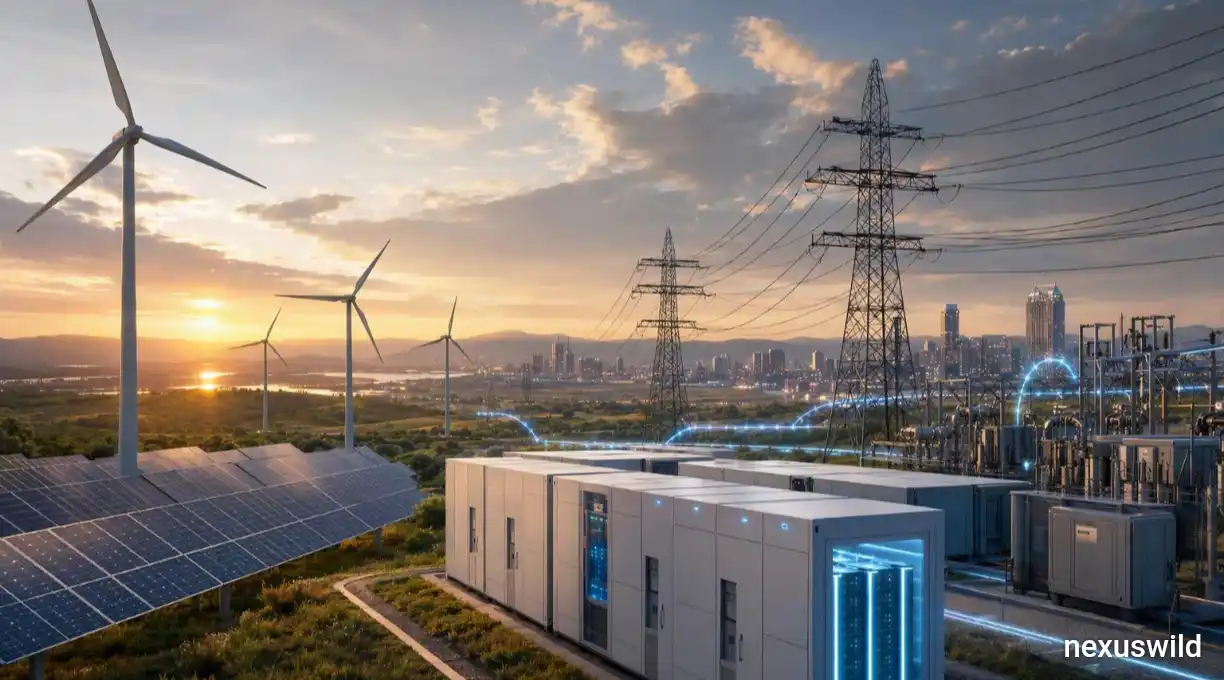

COP31 enters its week in Antalya as climate finance disputes and disagreements over the fossil-fuel transition threaten to block a strong political agreement. The 31st United Nations Climate Change Conference, COP31 began on November 9. Will end on November 20. It is being hosted in Antalya, Türkiye. The conference is working through negotiations on climate finance, energy system electrification, fossil-fuel policies and the financial challenges faced by developing economies.
The summit is co-led by Türkiye’s President Murat Kurum and Australia’s Chris Bowen, who serves as President of Negotiations. This dual leadership aims to combine Türkiye’s role as host with Australia’s responsibility for guiding the talks. Their main task is to move from discussions and national positions to a political agreement that all governments can accept.
The biggest challenges center on climate finance for developing countries how fossil fuels should be addressed in the outcome and whether the conference should back specific global energy targets. Developing countries say that real climate action cannot happen without funding, access to technology and changes to how international financial institutions operate. At the time some developed and fossil-fuel-producing nations are cautious about language that might create new obligations or suggest how countries should manage their energy systems.
One key initiative at the summit is the 35-by-35 Global Electrification Pledge. It aims to raise the share of electricity in final energy use from about 23% today to 35% by 2035. Than 50 countries have shown support for the pledge though the difference between formal signatories and political supporters is important.
Brazil, which hosted COP30 has also introduced a voluntary roadmap for moving away from fossil fuels. This document helps countries assess their reliance on fuels understand economic risks and plan national transitions. It is not a binding agreement to phase out fuels.
The United States is not participating in the COP31 government delegation. This is because the U.S. Withdrew from the Paris Agreement and that withdrawal took effect on January 27 2026. The absence of the U.S. Adds to the uncertainty at the summit. However other nations, international organizations and non-governmental groups are still taking part in the discussions.
The first week of COP31 brought progress in talks and kept the formal negotiation process running.. The most important political decisions are still not settled. The second week will decide whether countries can come together on a political outcome or whether the summit ends with only voluntary actions and incomplete financial promises.
The leadership of COP31 faces a task in the second week. The conference is being held at the ANFAŞ Antalya Expo Center in Türkiye. The formal negotiations run from November 9 to November 20. Murat Kurum, Türkiye’s Minister of Environment Urbanisation and Climate Change is leading the conference. Chris Bowen, Australia’s Minister for Climate Change and Energy is in charge of the negotiations.
This joint leadership setup creates two linked roles. The presidency is responsible for direction, diplomacy and the broader climate action agenda. The President of Negotiations leads the discussions and helps governments reach consensus.
This distinction matters because COP conferences involve different groups, technical working groups, informal talks and high-level meetings. An announcement from the presidency does not automatically become a decision accepted by all countries. Negotiated outcomes must be agreed upon by all parties and even small differences in wording can become disagreements when they affect national responsibilities, financial duties or energy futures.
The opening of COP31 avoided a delay over the agenda. After talks among delegations the official agenda was adopted on November 9. This allowed negotiations to start across the technical and political tracks. That was a step because disputes over the agenda can slow down or block real progress.
Avoiding a procedural fight at the start did not solve the deeper disagreements over the content. Climate finance, adaptation funding, mitigation efforts, energy transition and the final political decision remain topics.
The first week also included a World Leaders Summit on November 11 and 12. Leaders and senior officials used the meetings to talk about implementation, climate finance and energy security. As the summit moves into the phase negotiators face more political pressure. Ministers have the authority to make compromises. Will need to deal with unresolved technical issues.
As of November 14 the presidency is working on a draft of the main political text. This draft is expected to reflect proposals and disagreements not a final agreement. The final version will depend on what positions governmentsre willing to support or change.
The formal schedule includes a break on Sunday, November 15. The venue will be. There will be no official Blue Zone activities. Negotiations will resume on Monday, November 16. This second week will be the decisive period before the conference closes on November 20.
The Climate Finance Work Programme is moving forward procedurally. Its real impact is still in question. Climate finance is one of the important issues at COP31 because developing countries say their ability to cut emissions and adapt to climate change depends on reliable affordable financial support.
The Climate Finance Work Programme was created after the agreement at COP30 in Belém, Brazil. It is a two-year programme focused on climate finance, including Article 9.1 of the Paris Agreement within the context of Article 9.
Article 9 sets out the framework for climate finance under the Paris Agreement. It says developed countries must provide resources to help developing countries with mitigation and adaptation. Developing-country groups have pushed for a process to review how these commitments are carried out.
At COP31 the programme’s place on the agenda became a point of debate. Many developing countries, including members of the G77 and China wanted a formal space to discuss how the financial obligations are being met. Other parties worried about how this programme fits with the agenda.
Despite the disagreement the programme was included in the adopted agenda on November 9. This means the programme is now officially part of the talks.. Its real success will depend on what comes out of the negotiations not just its presence on the schedule.
The debate now focuses on the scope, meaning and results of climate-finance commitments. Developing countries want discussions to include the quality and predictability of flows the role of public and low-interest funding, access obstacles and how developed countries are held accountable for their contributions.
For vulnerable nations the difference between a financial promise and usable money is huge. A country may be listed in a climate-finance announcement. Still struggle to get the funds due to complicated applications, long approval times, high costs or rules that make the money hard to use.
The kind of finance also matters. Grants and loans with interest rates can help countries with limited budgets without adding too much debt. Commercial loans on the hand can make debt problems worse for countries already struggling with high repayment costs.
Developing countries are asking for financing that matches their level of vulnerability and financial ability. They say that adaptation projects, disaster protection, resilient infrastructure and essential public services often don’t produce income to attract private investors.
This issue is getting more urgent as climate disasters grow in frequency and intensity. Floods, droughts, heatwaves, storms and other extreme events can damage roads, homes and farms. They can reduce food production, disrupt businesses. Increase spending on emergency response.
UN Secretary-General António Guterres has used the summit to call for climate finance that is easier to access, cheaper to use and less likely to increase debt. His comments have strengthened the argument that financial promises must be judged not by the numbers but by whether poor countries can actually use the money.
The success of the Climate Finance Work Programme will be measured by whether it creates a framework for talking about obligations and delivery. It should not just lead to declarations without action.
The $300 billion climate-finance goal and the wider $1.3 trillion ambition are two financial references at COP31. The New Collective Quantified Goal agreed at COP29 says developed countries should mobilise least $300 billion each year for developing countries by 2035.
The broader ambition is to raise climate finance from all sources—private, multilateral and domestic—to $1.3 trillion annually by 2035. These two numbers are. Not the same.
The $300 billion figure is the core goal, led by developed nations. The $1.3 trillion ambition is much broader. Includes a wider range of financial actors. It is meant to support larger climate action in developing economies.
This difference matters because the larger number should not be seen as a promise that governments will give $1.3 trillion in grants or aid. It includes contributions from investors, international organisations, domestic banks and other sources.
Developing countries have questioned whether current commitments are enough and whether the financial system can deliver resources on terms. They say that headline numbers can hide the difference, between grants, loans, guarantees, export credits and private investment.
The conditions attached to financing can decide whether a country can afford to act. A renewable energy project funded with high-interest loans may create a heavy repayment burden. An equivalent project supported by finance may be much more manageable. Adaptation infrastructure often provides public benefits but may not generate enough income to attract private investors.
UN Secretary-General Guterres pointed out this issue in his opening-week speech. He said climate finance needs to be enough easy to get and not increase debt. He also said financing arrangements must avoid pushing countries into deeper financial trouble.
The European Unions climate-finance factsheet has also emphasised that the $300 billion goal forms part of a financing ambition. It reports that global climate finance from developed-country contributors reached $136.7 billion in 2024 under the OECD accounting framework. However that historical figure and the future $300 billion target have different time horizons. Should not be directly confused.
The question facing COP31 is whether the existing commitments can be translated into a predictable financial pathway. Developing countries want clarity over the sources of funding how contributions will be assessed, the balance between private capital and whether vulnerable economies will have practical access to resources.
Without clarity the financial goals risk becoming politically prominent but operationally difficult to evaluate.
Adaptation finance remains below estimated developing-country requirements
Adaptation funding is another major source of disagreement. While mitigation investment seeks to reduce greenhouse gas emissions adaptation spending helps countries prepare for and respond to the consequences of climate change.
Typical adaptation projects include flood protection, drought-resistant agriculture, water-management systems, coastal protection, heat-resilient urban infrastructure early-warning networks and improvements to health systems.
These projects are especially important for developing economies that face exposure to climate impacts but have limited fiscal resources. A major flood can damage roads, housing, schools, electricity networks and agricultural production forcing governments to redirect spending towards emergency recovery.
UN estimates cited during COP31 discussions indicate that developing countries may require $305 billion annually for adaptation by 2035. This is an assessment of need, not an agreed international funding commitment.
The difference between estimated needs and available finance is substantial. António Guterres highlighted the level of adaptation resources currently reaching vulnerable countries and called for a major increase in support.
Developing countries have also pushed for the tripling of adaptation finance. However the conference should not be described as having adopted an agreed tripling commitment with a settled baseline and delivery timetable unless such a decision is formally approved.
The opening agenda negotiations illustrate the difficulty. Proposals for an agenda item specifically addressing the tripling of adaptation finance did not receive consensus and were not added as a standalone item. This did not remove adaptation from the conferences negotiations but it demonstrated the resistance to creating additional formal negotiating tracks.
The financial debate also involves the question of who should provide resources and in what form. Countries facing repeated climate disasters often argue that they should not be required to borrow to protect populations from impacts they contributed relatively little to causing.
The distinction between climate-related losses and adaptation requirements also matters. Adaptation seeks to reduce vulnerability while loss-and-damage arrangements address impacts that cannot be avoided through adaptation alone. Both require funding. They involve different policy objectives and institutional mechanisms.
For governments the challenge is to secure resources that can support multi-year investment. Infrastructure projects cannot be planned effectively if funding is uncertain disbursements are. Borrowing conditions change sharply between project approval and implementation.
The second week of COP31 will therefore need to address how adaptation finance can move from political recognition towards more dependable delivery arrangements.
Sovereign debt and multilateral development bank reform shape climate investment
Climate finance negotiations are increasingly connected to sovereign debt because many developing countries have room in their budgets to fund new infrastructure.
High debt-servicing costs can reduce the money for electricity networks, water systems, transport, healthcare and disaster protection. Governments may be forced to prioritise debt repayments over long-term investment even when climate-related infrastructure would reduce future economic losses.
This creates a problem for climate policy. Countries may have national climate plans but the cost of financing those plans can remain prohibitively high.
Multilateral development banks are therefore a part of the debate. Institutions such as the World Bank and regional development banks can provide long-term financing, technical assistance, guarantees and risk-sharing mechanisms. Their participation can help mobilise investment by reducing some of the risks associated with infrastructure projects.
However developing countries have argued that existing lending arrangements do not always provide financing on affordable terms. They also point to project preparation processes, complex approval requirements and concerns about debt sustainability.
Reform proposals include expanding lending improving access to guarantees strengthening the ability of development banks to mobilise private capital and reducing unnecessary duplication in project assessments.
The objective is not simply to increase the volume of loans. It is to make financing more appropriate to the characteristics of the projects and the fiscal position of recipient countries.
For example a power-transmission project may generate term economic benefits by connecting renewable-energy resources to industrial centres. Yet its revenue model may not be sufficient to support commercial financing. Concessional funding or guarantees could make the project more viable while limiting the cost passed on to consumers.
Adaptation projects present a more difficult financing challenge because flood barriers, early-warning systems and climate-resilient public infrastructure may produce significant social benefits without generating direct commercial revenue.
Private investors are more likely to participate when projects offer returns, clear regulation and manageable risks. Public institutions and development banks can help create those conditions. Private capital cannot replace all forms of public and concessional finance.
The COP31 debate therefore reflects a question about the international financial system: whether its current structure can support the scale of investment required for climate resilience and energy transformation in countries with different levels of income, debt and institutional capacity.
Brazils fossil-fuel roadmap creates a framework, not a binding timetable
The transition away from fossil fuels is one of the most politically sensitive issues at COP31. Governments remain divided over whether the conferences final outcome should contain language on reducing dependence on coal, oil and natural gas.
Brazils COP30 Presidency presented a roadmap on November 3 intended to help countries translate the existing global commitment to phase out coal, oil and gas into national actions. The roadmap is not a binding treaty. It does not set a deadline for fossil-fuel phase-out. Instead it provides a framework for countries to design their pathways based on national circumstances.
The roadmap includes recommendations on policy measures such as ending fossil-fuel exploration phasing out fossil-fuel subsidies scaling up renewable energy and supporting just transitions for workers and communities. It also calls for cooperation on finance, technology and capacity building.
Some developed countries have welcomed the approach as a way forward. They argue that a one-size-fits-all timeline would be unrealistic given differences in energy systems, economic development and natural resources.
Other countries, major fossil-fuel producers have expressed concern. They worry that the roadmap could be interpreted as a de facto pressure to act faster than they're prepared to. They also stress the need for technical support before any meaningful phase-out can occur.
There is no consensus on whether the roadmap will be formally adopted at COP31. The final decision will depend on negotiations during the week. If adopted it would serve as a signal but not a legally binding agreement.
The debate highlights a tension: how to balance ambition, with realism in a world where energy systems remain deeply embedded in fossil fuels. The roadmap aims to bridge that gap by offering flexibility while keeping the long-term goal in sight.
Nexuswild welcomes factual corrections. Email contact@nexuswild.com with evidence and the article URL.