
Corona has taken the position in YouGov’s third‑quarter 2026 ranking of popular beer brands in the United States placing ahead of Guinness and Budweiser in a measure of consumer opinion. The results give the beer brand a strong showing in a competitive market although the figures measure positive sentiment rather than how much beer Americans actually buy or drink.
YouGov’s US beer ratings list Corona with a popularity score of 60 %. Guinness follows at 56 % while Budweiser records 54 %. Samuel Adams and Heineken each score 49 % with Modelo at 48 %. Coors and Miller both receive 47 % according to the ranking.
The distinction between brand names is important. YouGov tracks Corona and Corona Extra as entries. Corona receives the 60 % score in the ranking while Corona Extra is listed separately at 44 %. Treating the two scores as interchangeable would misrepresent the data.
YouGov defines popularity as the percentage of respondents who hold an opinion of a brand. Its ratings are updated quarterly using responses collected over time. The results therefore offer a snapshot of consumer attitudes, not a measure of market share, retail sales, drinking frequency or brand revenue. Other surveys may produce rankings because they measure different things, including purchase consideration, brand awareness and actual consumption.
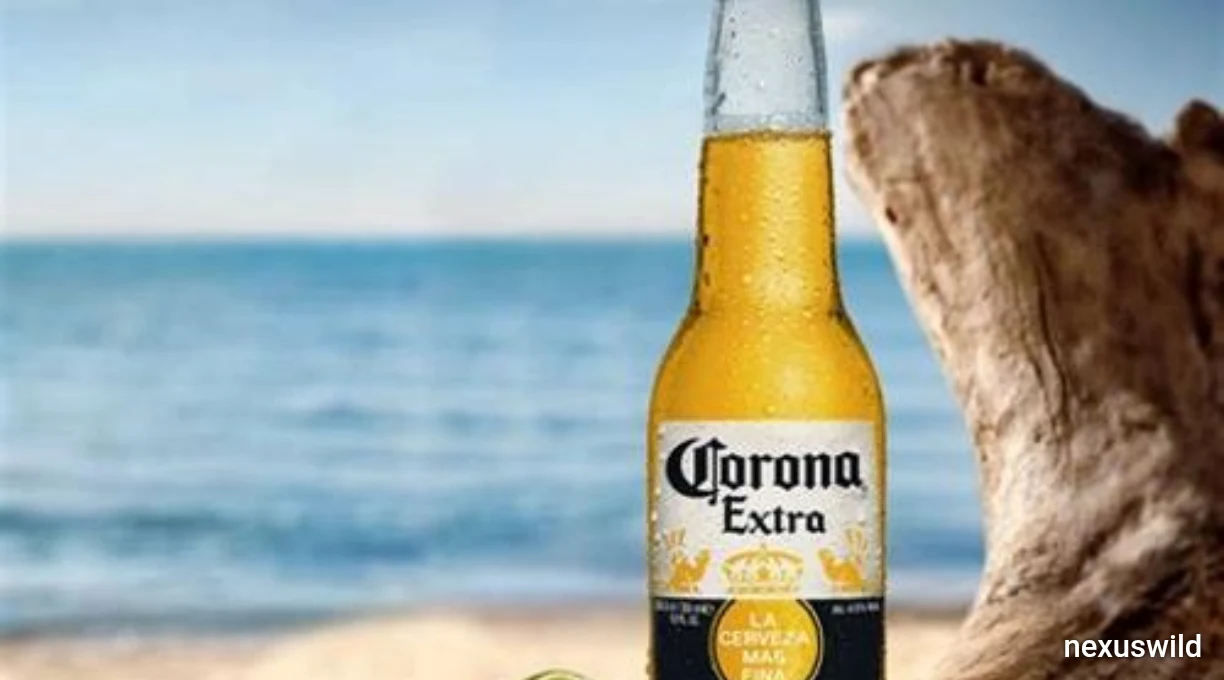
Corona’s wider brand story nevertheless gives the result context. The beer originated in Mexico. Was first brewed in 1925 making it more than a century old in 2026. It developed from a product into an internationally recognised lager with a visual identity strongly associated with its clear bottle, beach imagery and relaxed outdoor occasions.
Those associations have helped make the brand recognisable across markets. Marketing built around beaches, sunshine, social gatherings and outdoor leisure gives Corona an identity that can travel across borders. At the time a brand’s popularity is influenced by more than advertising alone: availability, price, taste, familiarity and local drinking habits can all affect consumer perceptions.
The company behind Corona AB InBev has an international distribution network. That reach gives the brewer the ability to place its products in markets support international campaigns and build recognition over time.. Broad distribution should not be confused with uniform consumer preference. A brand can be widely known while its appeal differs by country, age group or occasion.
A separate global ranking provides another measure of Corona’s standing. Brand Finance’s Beers 50 2026 report, published in October retained Corona Extra as the world’s valuable beer brand assigning it a brand value of $13.9 billion. Brand value is an estimate based on the consultancy’s valuation methodology; it is not the same as a company’s sales, profit or stock‑market value.
The global valuation and the US popularity survey tell stories. Brand Finance assesses the value attributed to a brand while YouGov’s popularity score reflects the share of respondents with a positive opinion. Taken together the measures suggest that Corona has both an international brand valuation and a strong positive reputation in the latest US ratings. Neither metric alone establishes that it is the country’s best‑selling beer.
The US market remains crowded with established international competitors. Guinness, Budweiser, Heineken, Modelo, Samuel Adams and other brands maintain identities and consumer followings. Guinness for example is a stout with a flavour profile and drinking occasion from Corona’s pale lager. A ranking based on opinion compares brand sentiment not necessarily like‑for‑like product preferences at the point of purchase.
Generational and demographic differences can also shape the result. YouGov allows its beer ratings to be examined across age groups and gender and its published analysis indicates that preferences are not identical across every segment. However those differences should be described using the subgroup figures rather than assuming that one overall ranking proves universal appeal. A 60 % overall popularity score does not mean every demographic group rated the brand equally.
For beverage companies consumer sentiment can still be commercially useful. Positive perceptions may support repeat purchases, recommendations and brand resilience while changes in sentiment can help marketers identify shifts, in consumer attitudes.. Converting approval into sales also depends on distribution, pricing, competition, product availability and the wider economic environment.
I see that Corona’s recent results give a hint but they do not show the whole beer market. According to the YouGov ranking Corona tops the list for opinion in the third quarter of 2026 in the United States while the separate score for Corona Extra is a little lower. At the time Brand Finance’s valuation shows that the larger Corona Extra brand remains strong across the world.
The next point for the industry is to see whether these numbers stay steady in reports and how they line up with sales and consumption data. One quarterly ranking alone cannot prove a lasting change in how Americans drink. Still it does show that Corona now holds a powerful spot, in a key measure of how people feel about US beer brands.
Nexuswild welcomes factual corrections. Email contact@nexuswild.com with evidence and the article URL.