
Saudi Arabia’s Public Investment Fund (PIF) has secured $3 billion-equivalent in credit facilities guaranteed by Italy’s export credit agency, SACE, as the sovereign wealth fund expands its international financing network and strengthens commercial ties with Italian businesses.
Announced on November 3, 2026, the financing consists of two credit facilities: a $1.78 billion US dollar-denominated tranche and a €1.035 billion green tranche. A syndicate of 25 international banks participated in arranging the facilities.
The agreement is intended to support trade between Saudi Arabia and Italy by creating additional opportunities for Italian companies to supply goods and services to PIF and businesses within its investment portfolio.
The euro-denominated green tranche will be allocated to eligible projects under PIF’s Green Finance Framework. SACE is providing guarantees for the credit facilities as part of its strategy to support Italian exports in international markets.
Two financing facilities support PIF's funding strategy
The transaction combines conventional credit financing with a dedicated green facility.
The first tranche is valued at $1.78 billion and denominated in US dollars. The second is a €1.035 billion green facility, with its dollar equivalent depending on the exchange rate used.
Together, PIF describes the facilities as representing $3 billion-equivalent in financing.
The participation of 25 international banks provides the lending syndicate behind the transaction, while SACE's guarantees support the financing structure.
The green tranche is linked to PIF's Green Finance Framework, which sets out the categories of projects eligible to receive green financing. This distinction is important because the two facilities do not have identical allocation requirements.
The broader transaction supports procurement and cooperation opportunities involving Italian suppliers. The green tranche has a more specific allocation requirement: its proceeds must be directed toward eligible green projects under the fund's framework.
Why Italy is involved in Saudi Arabia's investment ecosystem
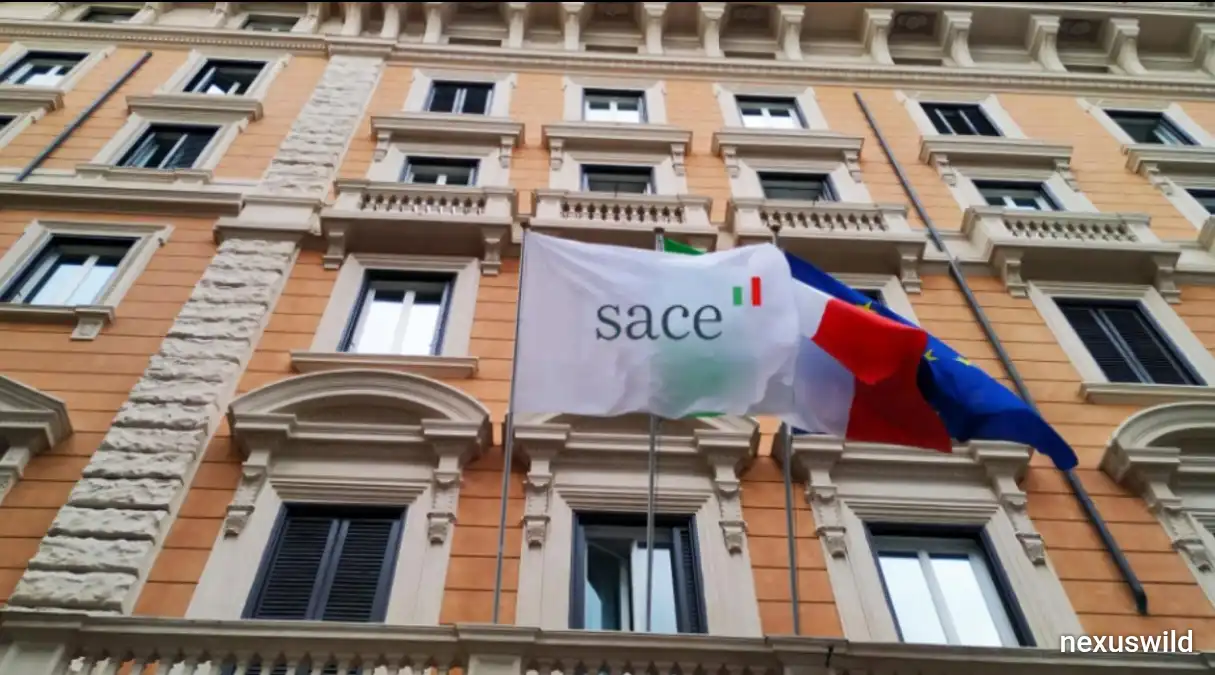
The financing builds on a memorandum of understanding signed between PIF and SACE in March 2025.
That agreement aimed to strengthen cooperation between Italian suppliers, PIF and companies within its portfolio. It also sought to create opportunities for Italian and Saudi businesses to exchange commercial knowledge and develop new partnerships.
SACE's involvement reflects its role as Italy's export credit agency. Export credit agencies support domestic businesses selling goods and services internationally by providing financing support, insurance or guarantees that can help reduce certain trade-related risks.
In this transaction, SACE's guarantees are intended to facilitate Italian exports by supporting access to financing for PIF.
SACE Chief Executive Michele Pignotti described the transaction as part of the agency's Push strategy, which aims to increase purchases of Italian goods and services through financial support and business engagement.
The arrangement therefore connects Saudi investment activity with Italy's industrial and export capabilities. It creates a financing channel through which companies in sectors such as engineering, manufacturing, technology and infrastructure may find opportunities to supply projects within the PIF ecosystem. [1][2]
Green financing remains a separate component
A significant feature of the transaction is the €1.035 billion green tranche.
PIF said the proceeds will be allocated to eligible green projects under its Green Finance Framework. This means the funds are subject to the framework's eligibility requirements rather than being unrestricted financing for any investment in the portfolio.
Green finance frameworks generally establish categories of eligible activities, rules for allocating proceeds and reporting arrangements. Such structures are intended to provide investors and financial institutions with greater transparency about how designated funds are used.
PIF has previously accessed international green bond markets. The fund has described itself as the first sovereign wealth fund to issue a green bond and has highlighted its issuance of a 100-year green bond.
The new credit facility adds another funding instrument to that broader green-finance activity. Unlike a green bond issued to investors, this transaction is a bank credit facility supported by an export credit guarantee.
The distinction matters because different financing instruments have different repayment structures, lender relationships and allocation requirements.
PIF expands its international funding relationships
The SACE-backed facilities are part of PIF's wider strategy to diversify its sources of capital.
Large sovereign wealth funds can finance investment programmes through several channels, including investment returns, asset sales, bond issuance, syndicated bank facilities and other structured financing arrangements.
Using a combination of instruments can provide flexibility when funding large investment portfolios across different countries and industries.
PIF said its 2026–2030 strategy is intended to improve the ability of portfolio companies to access international markets and attract global capital.
The fund also reported that it had deployed €98 billion in Europe since 2017. The November agreement follows the FII PRIORITY Summit in Rome, where PIF reiterated its interest in exploring joint ventures and procurement opportunities with European partners.
The fund's European engagement is relevant to the financing because the transaction is not limited to obtaining bank funding. Its stated purpose also includes developing business relationships between Italian suppliers and companies connected to PIF's investment ecosystem.
What the financing means for Italian exporters
For Italian businesses, the agreement creates the possibility of additional procurement opportunities across Saudi Arabia's large investment ecosystem.
Potential suppliers could include manufacturers of industrial equipment, engineering service providers, technology companies and businesses supplying infrastructure-related products.
However, the announcement does not identify a complete list of winning suppliers, confirmed contracts or specific projects receiving orders as a direct result of the facilities.
The transaction should therefore be understood as a financing and trade-enablement agreement rather than proof that particular Italian companies have already secured new contracts.
For SACE, the agreement supports its objective of helping Italian companies access markets with significant export potential. For PIF, it adds another source of international funding while supporting cooperation with suppliers in a priority European market.
Implications for Saudi Arabia's Vision 2030 investment programme
PIF plays a central role in Saudi Arabia's economic transformation strategy, which aims to diversify the country's economy and develop sectors beyond its traditional dependence on oil revenues.
The fund invests across areas including tourism, infrastructure, technology, manufacturing and other industries.
The SACE-backed facilities provide additional financing capacity and support procurement relationships that can contribute to activities across its portfolio.
Nevertheless, the transaction should not be described as a direct $3 billion injection into specific Vision 2030 projects. PIF's announcement identifies procurement opportunities across its ecosystem and a dedicated allocation for eligible green projects, but it does not provide a project-by-project breakdown of the facilities.
The practical impact will depend on how the financing is deployed, which suppliers secure business and how quickly procurement opportunities develop into commercial contracts.
What to watch next
The next important developments will be the allocation of the green tranche, procurement activity involving Italian companies and any new commercial agreements between Italian suppliers and PIF portfolio businesses.
Investors and businesses will also be watching how PIF combines export credit-backed facilities with its other international funding channels as it implements its 2026–2030 strategy.
For Italy, the agreement offers another route to support exports and commercial relationships with Saudi Arabia. For PIF, it demonstrates how export credit guarantees and international bank syndicates can form part of a diversified financing strategy.
The transaction is therefore significant not only for its headline value but also for the way it connects sovereign investment, international banking and cross-border industrial trade.
Nexuswild welcomes factual corrections. Email contact@nexuswild.com with evidence and the article URL.