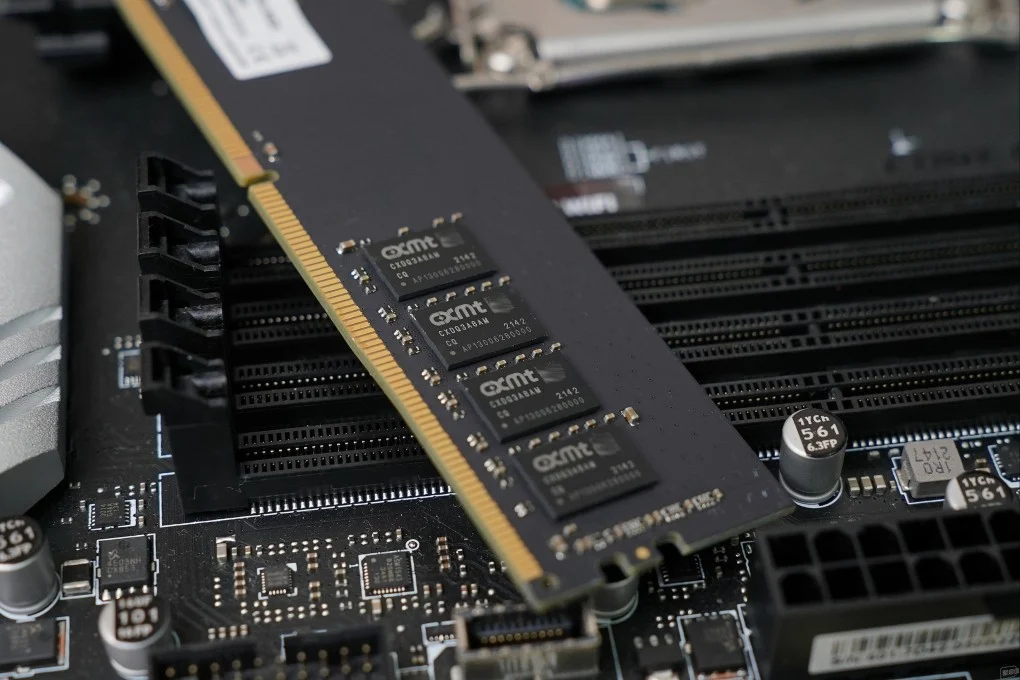

China's largest memory-chip maker just crossed a threshold it has been working toward for years. ChangXin Memory Technologies, better known as CXMT, announced at the 2026 World Manufacturing Convention in Hefei that its fifth-generation DRAM platform, called G5, has entered mass production. It sounds technical on the surface, but it carries real weight for anyone watching China's effort to build a memory-chip industry that does not depend on Samsung, SK Hynix or Micron.
CXMT's Latest Mass-Production Move
CXMT made the announcement on or around September 20, 2026, in its home city of Hefei, Anhui province, according to Reuters and other outlets covering the event. The company said its G5 platform is now producing chips at volume, not in a lab or on a pilot line, but in actual mass production. Alongside the platform, CXMT introduced two new 24-gigabit LPDDR5X memory products, both of which it says are already shipping in volume.
LPDDR5X is a low-power variant of DRAM built mainly for smartphones, tablets and laptops, where battery life matters as much as speed. Each new 24Gb chip holds roughly 3 gigabytes of data, which CXMT says is 50 percent more than the comparable 16Gb chips from its previous generation. The products come in two package formats, giving device makers flexibility in how they physically integrate the memory into their designs.
What Makes the New Memory Chips Different
The technical story behind G5 comes down to how tightly CXMT can pack the structures that store data on the chip. The company says it has narrowed the spacing between these key features to 11.95 nanometers, roughly 12 billionths of a meter, using a process called quadruple patterning, sometimes described more precisely as self-aligned quadruple patterning, or SAQP. In practice, that means repeating several manufacturing steps to etch finer, more complex circuit patterns than a simpler process could achieve. Some reporting also describes the platform as pairing this with a high-k metal gate (HKMG) process, a technique used to improve transistor performance at smaller scales.
The payoff, according to CXMT, is that G5 can produce at least 50 percent more usable dies from a single silicon wafer than its fourth-generation technology, based on a comparison using an 8-gigabit chip. That is a meaningful efficiency gain if it holds up in practice, since more dies per wafer generally means lower cost per chip. It is worth being precise about what this figure measures, though: a 50 percent increase in gross dies per wafer is not the same as a 50 percent increase in final usable yield, which depends on how many dies pass quality testing, a number CXMT has not disclosed.
Speaking at the convention, CXMT Vice President Luo Xiaodong, who heads the company's marketing center, said its "process capability is now on par with the most advanced mass-produced nodes." That is a notable claim, and it is CXMT's own characterization of where it stands technically, not an independently verified benchmark, and it stops short of claiming CXMT has pulled ahead of its established rivals.
CXMT's Role in China's Semiconductor Industry
CXMT has spent the past several years positioning itself as China's answer to the memory-chip gap left by restricted access to some foreign semiconductor technology. As the country's leading DRAM producer, it sits at the center of Beijing's push for semiconductor self-sufficiency, a priority given how central memory chips are to everything from phones to servers to the AI hardware increasingly driving global chip demand.
The G5 milestone matters because it signals CXMT is not just catching up on older technology nodes; it is now producing at a generation the company describes as competitive with current global norms, at least on paper. Whether that translates into genuine parity with the most advanced foreign DRAM makers is a separate question from whether the mass-production milestone itself is real, and the available reporting supports the latter far more confidently than the former.
Manufacturing Capacity and Technology
One thing that stands out in the coverage is what CXMT did not say. The company has not disclosed specific production yields or monthly output figures for G5, so it is not yet possible to judge how much volume is actually flowing off these lines. CXMT said the platform was developed using computer simulation work combined with collaboration with Chinese semiconductor-equipment manufacturers on key production stages, an approach that reflects the broader domestic supply-chain buildout happening alongside CXMT's own chip development.
Separately from G5, CXMT has also been reported, through earlier research from Morgan Stanley and South Korean financial media, to be working toward high-bandwidth memory (HBM) production, the specialized memory type used in AI accelerators, with HBM2E and HBM3 milestones targeted for 2026 and an HBM3E goal for 2027. That roadmap is distinct from this week's LPDDR5X news and has not been confirmed as complete, but it points to where CXMT's ambitions extend beyond mobile memory.
Applications in AI, Consumer Electronics and Data Centres
The confirmed application of these specific G5-based chips is squarely in mobile and portable computing. LPDDR5X memory ends up inside smartphones, tablets and thin laptops, not the servers and AI accelerators that dominate headlines about the memory shortage driving up prices worldwide. This announcement addresses consumer electronics memory, not the high-bandwidth memory AI data centers need, even though CXMT's separate HBM plans suggest that is a direction the company wants to grow into.
Impact on China's Domestic Chip Supply Chain
There are early signs this expansion is already being felt outside China. A Taiwanese PC maker told Seoul Economic Daily that rising Chinese memory output has eased shortages of at least commodity-grade memory, even as more advanced categories remain tight, a small but concrete sign that CXMT's ramp-up is having a measurable effect on global memory availability.
Global Memory Market and Competitive Landscape
CXMT's financial numbers help explain the timing. According to Caixin Global, second-quarter 2026 revenue reached roughly 99.5 billion yuan, about $14.9 billion, up 96 percent from the prior quarter, giving CXMT an estimated 10 percent share of the global DRAM market and a rank of fourth worldwide. Benzinga separately reported first-half 2026 revenue of 150.31 billion yuan, around $22.4 billion, up more than 873 percent year-over-year. These figures point to explosive growth amid a global memory shortage and price surge some observers expect could persist into 2028, though that timeline reflects analyst projection, not confirmed fact.
None of this means CXMT has overtaken Samsung, SK Hynix or Micron, which remain larger and, by most independent accounts, still hold a technology lead in the most advanced memory categories. What the G5 launch shows is that the competitive gap is narrowing in specific, measurable ways, particularly in mainstream mobile DRAM.
Expert and Industry Views
Beyond CXMT's own executives, independent commentary on this specific announcement remains limited in the sources reviewed here, a reminder that most of what is currently known comes from the company's own disclosures and the outlets covering its conference presentation.
Challenges and Next Steps
The biggest open questions are the ones CXMT has not answered yet: actual yield rates, monthly output volumes, and how quickly it can scale G5 production to meet demand. Its process-capability claims remain its own assessment rather than an independently benchmarked result. How the company manages the shift from an announced milestone to reliable, high-volume, high-yield output will determine how much this moment reshapes the global memory market.
Conclusion
CXMT's fifth-generation DRAM platform is a genuine mass-production milestone, not a lab demonstration, arriving as global memory prices are already under pressure from surging demand. The company's claims about matching the industry's most advanced process nodes deserve some skepticism until independently verified, but the underlying trajectory, rapid revenue growth, an expanding product lineup, and a stated roadmap into AI-oriented memory, suggests CXMT's role in the global chip supply chain is growing, even if it has not yet closed the gap with the industry's established leaders.
Further reading and useful links
Reader questions
Frequently asked questions
What milestone did CXMT announce regarding its memory chips?
CXMT announced that its fifth-generation DRAM platform (G5) has entered mass production, alongside volume shipments of new 24Gb LPDDR5X memory products.
What advanced technology does the G5 platform use?
The G5 platform achieves an 11.95nm active-area half-pitch using self-aligned quadruple patterning (SAQP) and incorporates a DRAM-optimized high-k metal gate (HKMG) flow.
What are the primary applications for CXMT's new 24Gb LPDDR5X chips?
The new LPDDR5X memory chips are designed primarily for mobile and portable consumer electronics, including smartphones, tablets, and thin laptops.
How does G5 improve manufacturing efficiency?
CXMT reports that the G5 platform yields at least 50 percent more gross dies per silicon wafer compared to its previous fourth-generation process.
Nexuswild welcomes factual corrections. Email [email protected] with evidence and the article URL.