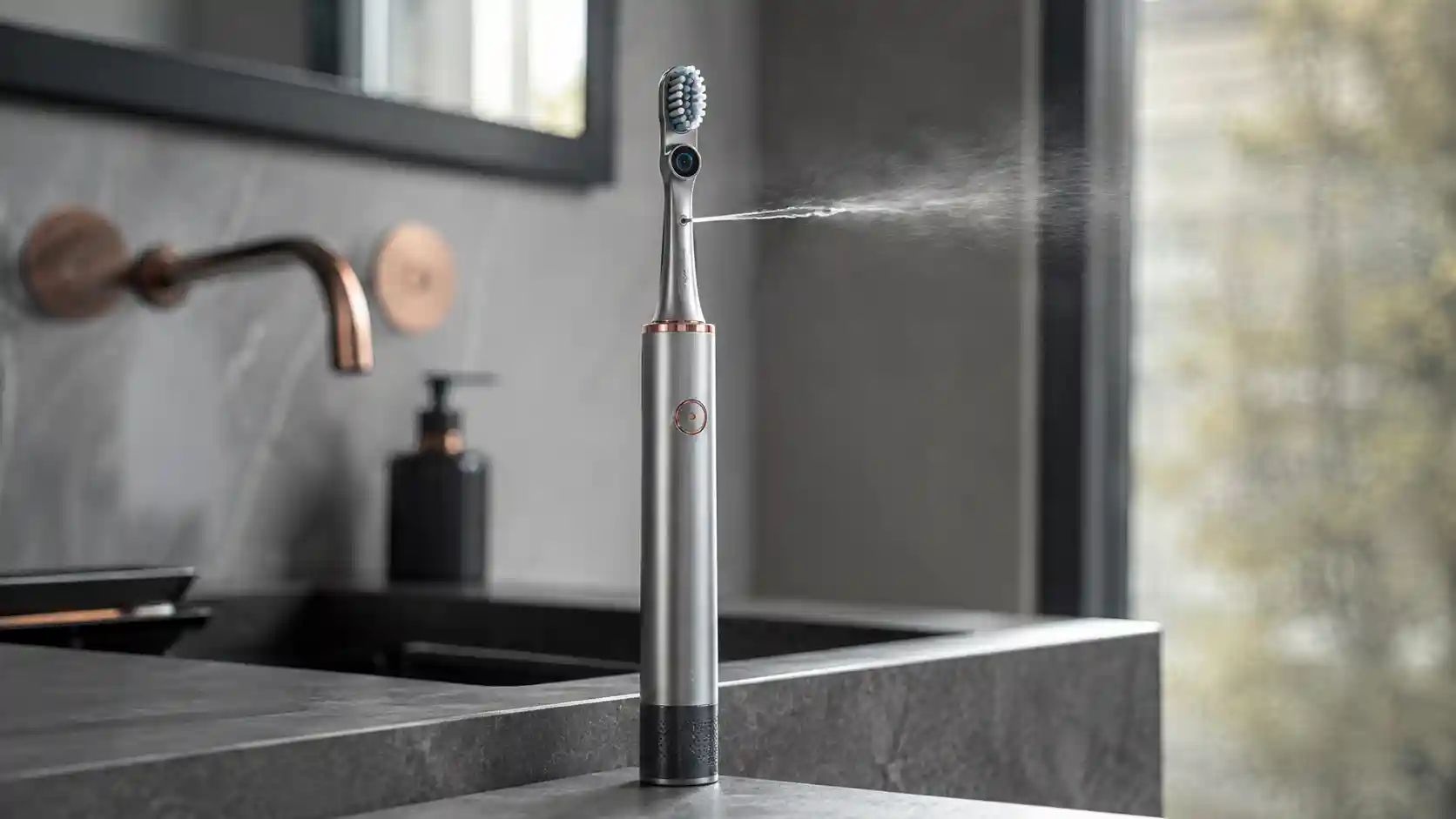

Dyson has entered the oral-care market with the CameraJet, a $499 electric toothbrush that combines sonic brushing with a built-in camera and a targeted liquid jet. The device launched on September 1, 2026, and is available through Dyson's website and its Demo Stores in ceramic blue and ceramic pink.
Gap Optical Targeting and Live Tracking
At the center of the CameraJet is a 100,000-pixel macro camera paired with what Dyson calls its Gap Optical Targeting system, a machine-learning algorithm the company says was trained on 470,000 dental images collected during six years of development. While brushing, the camera analyzes up to 28 images per second to identify gaps between teeth. When it detects one, Dyson says the device can trigger a targeted burst of mouthrinse within about 100 milliseconds, using a conical jet rather than the narrow stream found on typical water flossers.
The toothbrush connects to a companion MyDyson app, which shows a live view from the camera, maps brushing coverage, and offers feedback intended to show users which areas they may be missing. Dyson says the camera only activates when the live view or the jetting function is in use, and that images are not recorded or stored on the device or in the cloud.
Plaque Removal and Consumables
Dyson says internal laboratory testing found the CameraJet removed nearly 70% more plaque in hard-to-reach areas than premium electric toothbrushes under certain test conditions, using a proxy-plaque method developed with the National University of Singapore. That figure comes from Dyson's own testing rather than independent clinical research, and the company has not published findings in a peer-reviewed journal. Dyson describes the device as designed to help clean between teeth without a separate flossing step, but that claim, like the plaque figures, is the company's own characterization rather than independently verified medical evidence. The CameraJet is not a substitute for regular dental checkups.
Dyson is also developing consumables to go with the device, including a low-foaming, SLS-free toothpaste and mouthrinse formulated to keep the camera's view clear, along with replacement brush heads that use RFID tags to track usage.
Pricing and Market Placement
The CameraJet extends Dyson beyond the vacuum cleaners and hair-care tools that built its reputation, following the company's earlier moves into categories such as hair dryers and headphones. At $499, it is priced well above most electric toothbrushes on the market. Premium models from established oral-care brands, such as the Philips Sonicare DiamondClean 9900 Prestige and Oral-B's higher-end iO models, typically sell in the $180 to $380 range, meaning Dyson's device costs roughly $100 to $300 more than the top-tier options already available. Mainstream electric toothbrushes with basic app connectivity and pressure sensors are widely available for well under $100.
Whether that premium is worth it will depend on how much value buyers place on the camera-guided jetting system compared with established brushing technology and separate flossing, and on the ongoing cost of Dyson's proprietary brush heads and rinse. As with previous Dyson products, the CameraJet targets a smaller segment of buyers willing to pay significantly more for engineering novelty and precision, rather than competing directly on price with the mass market.
No regional pricing for other specific global markets has been officially announced by Dyson as of this writing.
Further reading and useful links
Reader questions
Frequently asked questions
What is the Dyson CameraJet?
The Dyson CameraJet is a $499 premium electric toothbrush that integrates sonic brushing with a 100,000-pixel macro camera and a precision liquid jet to target and clean gaps between teeth.
How does the camera on the Dyson toothbrush work?
The built-in camera uses an AI machine-learning algorithm called Gap Optical Targeting to analyze 28 images per second. When it detects a gap between teeth, it triggers a conical burst of mouthrinse in roughly 100 milliseconds.
Does the Dyson CameraJet record or store video of my mouth?
No. According to Dyson, the camera only activates during live viewing via the MyDyson app or when the auto-jetting feature is in use. Images are not recorded, stored on the device, or uploaded to the cloud.
Nexuswild welcomes factual corrections. Email contact@nexuswild.com with evidence and the article URL.