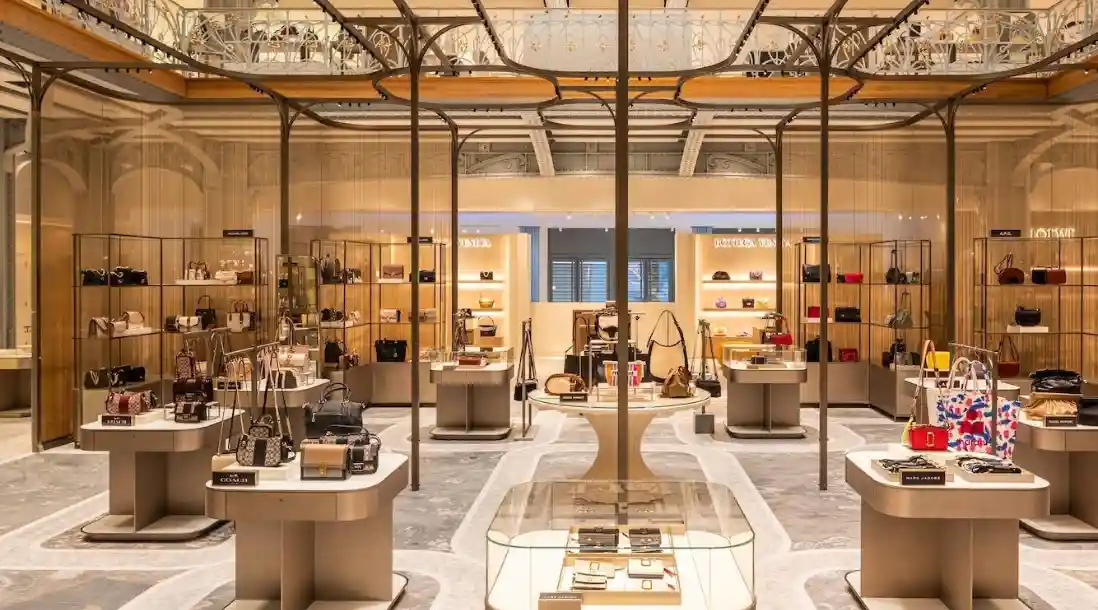

For generations prestigious department stores have offered something that individual shops cannot easily replicate: a single destination for fashion, beauty, homeware and premium brands. The luxury store business models value rests on convenience, reputation, curated products and the experience of shopping in a location.
That luxury store business model requires more than an impressive building and a famous name. The retailer must maintain relationships with brands keep its shelves stocked attract customers frequently enough to justify its operating costs and generate cash to pay suppliers. When these elements begin to fail even a landmark store can find it difficult to recover.
The latest example is BHV Marais, one of Pariss department stores. On October 27 2026 the luxury store business models management said it had sought court-supervised restructuring as part of a plan to reorganise the business and protect its operations. The luxury store business model will remain open with 700 jobs at stake.
The situation is significant because BHVs difficulties are not simply a story of shoppers abandoning retail. The luxury store business models problems reveal how financial pressure, commercial decisions, supplier confidence and property arrangements can reinforce one another until a retailer struggles to deliver the shopping experience on which its reputation depends.
1. A Famous Name Cannot Compensate for Falling Sales
A recognised name can attract customers give the luxury store business model credibility and help it secure access to brands.. Reputation is an asset only when it translates into repeat visits and purchases.
Department stores face a cost structure. They must maintain retail spaces, staff multiple product categories manage inventory and invest in customer service. Unlike a specialist shop a department store needs a broad and regularly refreshed assortment to give shoppers a reason to visit.
When sales weaken many costs cannot be reduced immediately. Rent, staffing, maintenance and store operations continue even when fewer customers are buying. Lower sales can therefore damage profitability faster than customers might expect from the outside.
BHVs recent financial performance shows how severe the problem became. According to reporting on its restructuring the luxury store business model generated €170 million in sales in 2025 down from €274 million in 2024. The same report put sales at €21 million between January and August 2026. These figures were reported from sources rather than a complete audited account presented here but they indicate the extent of the commercial pressure.
For a retailer with a physical footprint such a decline makes it increasingly difficult to fund inventory, renovations and day-to-day operations from trading revenue.
The lesson extends beyond one Paris store. A historic brand can preserve customer recognition long after its underlying business economics have deteriorated. Rebuilding the luxury store business model requires more, than reminding customers of its history. It requires a product offer, pricing strategy and shopping experience that persuade people to spend
2. Luxury Retail Depends on Supplier Confidence
A department store usually does not make most of the items it sells. Its business success relies on convincing brands to provide products keep popular lines stocked and trust the department store to pay on time.
This creates a dependence. The department store needs brands to draw customers into its doors while brands use the department store to reach shoppers and make sales.. The balance can shift fast if payments are delayed or if the department store’s strategy clashes with a supplier’s positioning.
If a supplier loses confidence the supplier may cut deliveries. Leave the department store entirely. Customers then see shelves, missing collections or fewer familiar labels. This weakens the department store’s appeal making it harder to attract shoppers and generate the cash needed to pay suppliers.
The result can become a self‑reinforcing cycle:
- Suppliers worry about payment and cut deliveries.
- Product selection shrinks, giving shoppers reasons to visit the department store.
- Lower sales reduce the cash the department store can use to settle bills.
- More suppliers leave, making it harder for the department store to restore customer confidence.
BHV faced tensions with brands before it asked for restructuring. Payment delays and commercial disputes added to supplier concerns and the later controversy around its Shein partnership added another challenge.
This hurts a retailer that sells a carefully assembled range of brands. A department store can change displays. Redo its interior but it cannot rebuild the value of a strong brand portfolio in a day.
Supplier confidence must be treated as a core business asset, not an administrative task. Reliable payment systems and clear communication are as important to the department store’s long‑term competitiveness as advertising or store design.
3. The Shein Partnership Exposed a Strategic Identity Problem
In November 2025 BHV caused controversy by opening a physical shop for Shein, the online fast‑fashion retailer famous for low prices and quick product turnover. This decision put BHV at odds with parts of the premium‑brand ecosystem that a traditional department store relies on.
The partnership was meant to attract attention and customers. It raised a strategic question: what should a historic department store stand for?
Traditional premium retail usually relies on product curation, brand identity, good service and the feeling that customers are shopping in a unique environment. Linking with an ultra‑low‑price online retailer can upset that positioning especially if existing suppliers feel the partnership clashes with their own brand image.
The reaction was big. Several brands left the department store. Cut back their involvement after the Shein announcement. The partnership ended in June 2026 seven months after the shop opened. BHV’s management called the collaboration a mistake while Shein said the partnership was meant to be temporary and highlighted problems that existed before it arrived.
The distinction matters. Shein’s presence did not cause every problem at BHV and the department store had already faced supplier troubles. Still the partnership added an commercial risk when trust was especially vital.
This case shows why customer acquisition strategies must be checked against the business model. A partnership may bring attention or more foot traffic. That does not ensure profitable sales, repeat purchases or support from existing suppliers.
For a multi‑brand retailer the decision must answer three questions: will the partnership draw customers who spend enough to boost performance? Will it. Weaken the department store’s identity?. Will key suppliers keep supporting the department store after the partnership?
If the gains are short‑term while the commercial relationships last long the cost of the strategy may outweigh its benefits.
4. Property Costs Can Turn a Retail Problem Into a Financial Crisis
A department store’s location is key, to its identity. A prime property can also become a big financial burden. Large buildings need maintenance, security, utilities and refurbishment. If the department store does not own the property rent and lease commitments add pressure when sales fall.
BHV has also faced problems with the ownership and financing of its store property. Reports describe a dispute about the transfer of the building and funds that BHV management claims were crucial for its relaunch. Brookfield, the property owner denies that it owes BHV any sums.
Those claims remain contested so they should not be treated as a settled explanation for the crisis.. The disagreement illustrates the risk when a retailers turnaround depends on property transactions, financing arrangements or capital commitments that have not been resolved.
A store may need investment to improve customer areas, refresh merchandise and attract brands back. If the money needed for that transformation is not available BHV can become caught between two choices: continue operating with a weakening offer or spend money it cannot afford.
Physical retail also faces a timing problem. Improvements to a building or product mix may take months to attract customers while operating bills and supplier obligations remain immediate. BHV, with cash can run out of room to wait for its recovery plan to work.
The financial structure behind BHV is therefore as important as its location. A desirable address can support sales. It does not guarantee that BHV can cover the cost of occupying it.
5. The Wider Retail Environment Is Making Recovery Harder
BHVs crisis comes at a time for French retail. The national statistics agency INSEE reported on 27 October that household confidence fell to 80 points a decline of five points from the month. INSEE also reported that its retail‑trade business‑climate indicator stood at 93 in October below its long‑term average of 100.
These figures do not explain BHVs problems on their own but they point to a challenging environment for retailers that depend on discretionary spending. When households become less confident consumers may postpone purchases compare prices closely or limit spending on categories they do not consider essential.
Competition is also broader than stores. Luxury and premium brands increasingly operate through their boutiques and digital channels giving them more direct control over merchandising, customer data and the shopping experience. Specialist online platforms compete on convenience and product discovery while lower‑price retailers appeal to shoppers seeking affordability.
Department stores must make a case for why customers should visit them instead of buying directly from a brand or shopping online. That case might involve products, a distinctive range, expert service, beauty and food destinations, events or a highly convenient multi‑brand experience.
Simply putting labels inside one building is no longer enough. The assortment has to feel coherent and relevant. Bhv must deliver an experience that shoppers cannot easily reproduce elsewhere.
6. Restructuring Can Buy Time. It Cannot Repair the Business Alone
Court‑supervised restructuring can provide a framework for addressing liabilities and preserving viable operations. Depending on the process and applicable law it can give BHV room to negotiate with creditors review contracts and attempt to restore stability.
Restructuring does not automatically bring back lost brands replenish empty shelves or rebuild customer loyalty. Those are challenges that must be addressed through BHVs operating business.
BHVs next steps will need to focus on stabilising supplier relationships ensuring that new deliveries can be financed and restoring a product offer. Customers must be able to find the brands and products that justify a visit while suppliers need confidence that future business will be conducted on terms.
The store will also need to clarify its identity. BHV can choose to compete on curated premium brands, distinctive retail, home and lifestyle categories, services or a combination of these. What matters is that the strategy makes sense to customers and suppliers
Cost reduction is another part of a turnaround but cutting expenses too deeply can weaken the very experience that differentiates a department store. A sustainable plan must distinguish between costs that can be removed without damaging sales and investment that's essential, to making BHV commercially relevant.
The restructuring process may give BHV some breathing room. Whether BHV can use that time well will depend on the choices BHV makes about products, brands, property, cash and the customer experience.
7. What Other Luxury Retailers Can Learn
This experience gives lessons for retailers who operate in markets.
First brand reputation must be backed by execution. Customers will not keep visiting a store if the product selection gets worse or the shopping experience falls below expectations.
Second supplier relationships need discipline. A retailer cannot build its identity around well‑known brands if those brands are unsure about getting paid or how their products will be shown.
Third partnerships should strengthen the company’s long‑term positioning. A deal that attracts attention can still destroy value if it alienates suppliers or confuses customers about what the business represents.
Finally financial restructuring and commercial recovery should be treated as linked tasks. Lower debt and reduced costs can stabilise a balance sheet. Renewed sales and reliable cash flow must ultimately come from a business that customers want to use and suppliers want to support.
These lessons apply beyond department stores. Any retailer that relies on a mix of reputation, inventory, supplier trust and expensive physical space can face pressures when the parts no longer work together.
What Happens Next?
The immediate question for BHV Marais is whether court‑supervised restructuring can stabilise BHV’s finances while BHV stays open. The next signals to watch are the return of brands the availability of merchandise progress on BHV’s property disputes and evidence that customer traffic and sales are recovering.
A successful outcome would require more than restoring BHV’s appearance. BHV would need a credible proposition, enough working capital to operate normally and supplier relationships that can withstand the pressures of a difficult retail market.
BHV’s future remains uncertain. The restructuring request is not itself proof that BHV will close, as keeping BHV’s doors open is not proof that the model has been repaired.
##
When a famous luxury store can no longer make its business model work the problem is rarely a lack of customers. It can show a breakdown in the relationship between sales, inventory, suppliers, property costs, brand positioning and available cash.
BHV Marais shows how those pressures can compound. A historic name and prominent location give advantages but they cannot compensate indefinitely for falling sales weakened supplier confidence or unresolved financial obligations.
The wider lesson for luxury retail is clear: heritage can bring shoppers through the door. Sustainable success depends on giving them a reason to return. For a department store that means a relevant product mix, trusted brand relationships, dependable operations and a financial structure capable of supporting the experience BHV promises.
Nexuswild welcomes factual corrections. Email contact@nexuswild.com with evidence and the article URL.