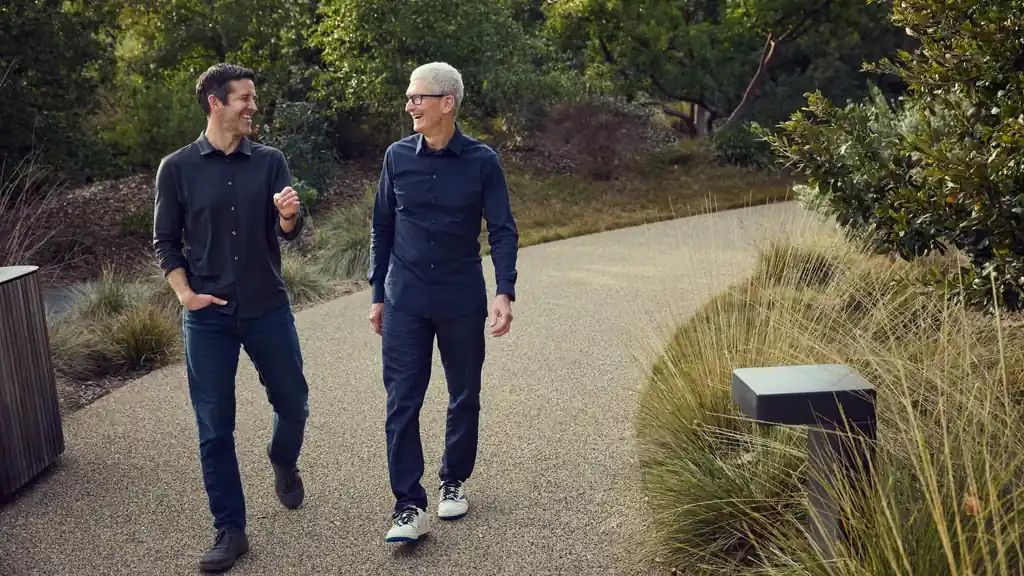

John Ternus is one of the most important technology executives in the world, yet for much of his career he was far less famous than the products he helped build.
Today, Ternus is the chief executive officer of Apple and a member of the company’s board of directors. He took over as CEO on September 1, 2026, after spending roughly 25 years inside Apple, most of them in product design and hardware engineering.
His background makes him unusual among the leaders of the world’s biggest technology companies. Ternus is not primarily known as a salesperson, financier or software founder. He is a mechanical engineer who spent decades learning how products are designed, tested, manufactured and improved at enormous scale.
Before becoming CEO, he led Apple’s hardware engineering organization. That put him close to the teams responsible for iPhone, iPad, Mac, Apple Watch, AirPods and other major devices. Apple says he was instrumental in the introduction of product lines including iPad and AirPods, and he played an important role across multiple generations of iPhone, Mac and Apple Watch.
Understanding John Ternus therefore requires more than looking at his job title. His career explains how Apple thinks about engineering, why product quality and integration remain central to the company, and why its board chose a hardware leader to follow Tim Cook.
Who is John Ternus?
John Ternus is Apple’s CEO and a longtime product and hardware engineer.
He joined Apple’s product design team in 2001. In 2013, he became a vice president of Hardware Engineering, and in 2021 he joined Apple’s executive team as senior vice president of Hardware Engineering.
Apple announced in April 2026 that Ternus would succeed Tim Cook as chief executive effective September 1, 2026. Cook moved into the role of executive chairman, while Ternus also joined Apple’s board.
The transition gave Apple a CEO whose professional identity was built around engineering.
That matters because Apple is one of the rare global technology companies where hardware, software, custom silicon, services, industrial design, supply chains and retail all have to work as one system.
Ternus spent his career near the center of that integration.
John Ternus education: mechanical engineering at the University of Pennsylvania
Ternus earned a bachelor’s degree in Mechanical Engineering from the University of Pennsylvania.
His engineering education is central to understanding how he approaches technology.
Mechanical engineering is not simply about machines. It combines physics, materials, manufacturing, structures, thermodynamics, design and problem solving. In consumer electronics, those disciplines influence everything from the rigidity of a laptop enclosure to the thermal behavior of a processor, the durability of a hinge, battery packaging, antenna placement and how easily a device can be repaired.
Ternus returned to Penn Engineering in 2024 as the undergraduate commencement speaker.
Accounts of his speech show a leadership philosophy built around confidence and learning. He told graduates to assume they are as smart as anyone in the room, but never assume they know as much as everyone else.
That combination is important in engineering organizations.
A leader has to make difficult decisions, but also has to ask questions across disciplines where other people may have deeper expertise.
His early career before Apple
Before joining Apple, Ternus worked as a mechanical engineer at Virtual Research Systems.
The company developed virtual-reality hardware, giving him early exposure to physical computing and display systems before immersive technology became a mainstream industry topic.
Apple says this was his role immediately before joining its product design organization.
That early experience is significant because Ternus entered Apple as a working engineer rather than as an executive hired from outside.
He learned the company from inside its product-development system.
John Ternus joined Apple in 2001
Ternus joined Apple in 2001, when the company was in a very different position from the global giant it would later become.
The first iPhone did not yet exist.
The iPad did not exist.
AirPods did not exist.
Apple Silicon Macs did not exist.
His career therefore spans much of Apple’s transformation from a computer company into one of the world’s largest consumer-technology ecosystems.
Ternus has described one of his early Apple assignments as work related to the Cinema Display.
The story is revealing because it involved intense attention to small physical details that many customers might never consciously notice.
That mindset is part of Apple’s engineering culture: details that appear insignificant individually can combine to create the perception of quality in a finished product.
Ternus spent years working inside that culture before becoming one of the people responsible for leading it.
What products did John Ternus work on at Apple?
Apple’s own leadership history connects Ternus with some of its most important product families.
The company says he oversaw hardware engineering work across multiple categories and was instrumental in the introduction of iPad and AirPods.
When Apple promoted him to senior vice president of Hardware Engineering in 2021, it said he had overseen the first-generation AirPods and every generation of iPad up to that point.
Apple also said he led the hardware team responsible for iPhone 12 and iPhone 12 Pro.
He was a key leader in the Mac transition from Intel processors to Apple silicon.
Over time, his organization was involved across Mac, iPhone, iPad, Apple Watch and other hardware programs.
That does not mean Ternus personally designed every component.
Modern Apple products are created by thousands of engineers across specialized teams.
The importance of his role was organizational: aligning complex hardware programs so that mechanical design, electrical engineering, displays, batteries, cameras, sensors, silicon, software and manufacturing could become one finished product.
John Ternus and the iPad
The iPad is one of the clearest examples of Ternus’s long-term influence.
Apple specifically credited him with overseeing hardware engineering across generations of iPad.
That means his experience covers the evolution of the product from a relatively simple tablet into a family of devices using advanced displays, Apple-designed processors, sophisticated cameras, accessories and increasingly laptop-class performance.
The iPad also illustrates a central engineering challenge at Apple: packaging increasing performance into thinner and lighter devices without allowing heat, battery life or structural integrity to become unacceptable.
This type of problem is where mechanical and systems engineering becomes critical.
John Ternus and AirPods
Apple has also highlighted Ternus’s role in the first generation of AirPods.
AirPods may look simple, but they represent a dense engineering problem.
A small wireless earbud has to combine batteries, microphones, speakers, antennas, processors, sensors and acoustic chambers in a tiny enclosure while remaining comfortable enough for long periods of use.
It must survive sweat, drops and constant charging cycles.
It also has to work seamlessly with software.
AirPods became an example of Apple’s ability to turn a hardware accessory into a major platform.
For an engineering leader, products like AirPods demonstrate why consumer technology is rarely about a single breakthrough. Success often comes from dozens of hardware and software decisions working together.
John Ternus and iPhone
Ternus’s hardware leadership also extended deeply into iPhone.
Apple said he led the hardware team behind iPhone 12 and iPhone 12 Pro.
Those devices were significant because they introduced a major industrial-design change, 5G connectivity and the MagSafe accessory system while continuing Apple’s transition toward increasingly integrated hardware.
Later, as Apple’s top hardware executive, Ternus oversaw teams working across subsequent iPhone generations.
His influence is best understood not as authorship of one feature, but as responsibility for the overall hardware engineering organization that had to make ambitious designs manufacturable, reliable and scalable.
When Apple ships an iPhone, it is not manufacturing a few thousand units.
It is operating at a scale where a tiny engineering weakness can become a massive commercial problem.
That makes reliability engineering as important as invention.
John Ternus and the Mac transition to Apple silicon
One of the most technically important changes in modern Apple history was the Mac’s transition away from Intel processors toward Apple’s own silicon.
Apple began that transition publicly in 2020.
Ternus was identified by Apple as a key leader in the effort.
The distinction between Ternus and Apple silicon chief Johny Srouji is important.
Srouji and his hardware technologies organization built Apple’s custom chip strategy and the silicon itself.
Ternus’s hardware engineering organization had to help turn those chips into complete products.
That required coordination across thermal engineering, power systems, enclosures, batteries, displays, ports, logic boards and software requirements.
The result was a major shift in the Mac’s performance-per-watt characteristics.
For Apple, custom silicon only creates an advantage when the entire device is designed around it.
That systems-level integration is exactly the kind of engineering environment in which Ternus built his career.
What is John Ternus actually an expert in?
Calling Ternus a “hardware guy” is accurate but incomplete.
His expertise is better understood in several layers.
Product engineering
Ternus spent decades working on how ideas become physical products.
That includes dimensions, structures, components, tolerances, materials, internal packaging and manufacturing feasibility.
Systems integration
An iPhone or Mac is not one technology.
It is a system of technologies.
The hardware leader has to understand how decisions in one area affect another.
A larger battery may improve battery life but consume space needed by cameras.
A thinner enclosure may improve design but make thermal management harder.
A new material may reduce weight but change manufacturing difficulty or durability.
The job is built around trade-offs.
Reliability and durability
Apple says Ternus led much of the company’s focus on reliability and durability and introduced techniques that made products more resilient.
This is a different skill from making a device look impressive on launch day.
A product has to survive years of heat cycles, battery charging, drops, vibration, moisture and daily physical use.
At Apple’s scale, durability becomes both an engineering problem and a financial problem.
Materials engineering
Apple credits Ternus with driving innovations in materials and hardware design that reduced the carbon footprint of products.
Examples cited by Apple include a recycled aluminum compound used across product lines and the use of 3D-printed titanium in Apple Watch Ultra.
Material choice affects strength, weight, machining, energy use, recyclability, appearance and manufacturing cost.
This is one of the areas where Ternus’s mechanical-engineering background is especially relevant.
Repairability and product lifespan
Apple also says Ternus drove advances in repairability that increased the lifespan of several products.
Repairability has become strategically important.
Consumers and regulators increasingly care about whether expensive electronics can be repaired instead of replaced.
For Apple, improving repairability while maintaining thinness, water resistance, performance and manufacturing consistency creates difficult engineering trade-offs.
Manufacturing at global scale
A prototype that works once is not a successful consumer product.
Apple must manufacture products in enormous volumes with extremely consistent quality.
Ternus’s career involved working with supplier and engineering systems that convert designs into repeatable production.
That requires understanding tolerances, yields, tooling, materials and how design choices behave outside the laboratory.
Why Apple’s board chose an engineer as CEO
Tim Cook and John Ternus came to the top job through very different professional paths.
Cook built his reputation in operations and supply-chain management.
Ternus rose through product design and engineering.
Apple’s board specifically highlighted Ternus’s deep technical knowledge, leadership and focus on creating products when it announced the succession.
That language suggests the board sees product engineering as central to Apple’s next phase.
The decision also changes the profile of the CEO’s office.
A hardware engineer leading Apple may naturally spend more attention on product architecture, engineering trade-offs and technology roadmaps.
That does not mean Ternus can focus only on devices.
As CEO, he is responsible for the entire company.
He now has to think about artificial intelligence, services, regulation, developers, manufacturing, global markets, capital allocation and geopolitics in addition to hardware.
Ternus is not Apple’s chip designer
Because Ternus is deeply associated with Apple hardware, he is sometimes described in ways that blur the responsibilities of different Apple executives.
Johny Srouji has been the executive most directly associated with Apple’s custom silicon strategy and processor development.
In 2026, Apple named Srouji chief hardware officer, expanding his responsibilities to include Hardware Engineering as Ternus moved toward the CEO role.
That division matters.
Ternus’s technical strength lies in product engineering and integration across hardware systems.
Srouji’s organization has specialized in silicon and technologies including processors, batteries, cameras, displays, sensors, modems and related components.
Apple’s advantage comes partly from these organizations working together.
His approach to reliability, durability and materials
One of the most revealing parts of Apple’s official description of Ternus is its emphasis on reliability and durability.
Technology coverage often focuses on new features.
Engineering teams have to care equally about what goes wrong after millions of units reach customers.
A device can have the fastest processor in its class and still fail as a product if batteries degrade too quickly, hinges break, screens crack unexpectedly or internal components cannot survive repeated use.
Apple says Ternus introduced new techniques around resilience.
The company also connects him with sustainable-material innovations.
This suggests that his technical philosophy is not simply “make it thinner” or “make it faster.”
It is closer to lifecycle engineering: how a product is built, how long it lasts, what materials it uses and whether the design can scale.
John Ternus and sustainability
Sustainability is sometimes treated as a marketing category, but at a hardware company it is also an engineering discipline.
Reducing material emissions can require changing alloys, suppliers, manufacturing processes and recycling systems.
Apple specifically cites Ternus’s role in a recycled aluminum compound used across multiple products.
It also points to 3D-printed titanium in Apple Watch Ultra and repairability improvements.
These decisions require collaboration between engineering, industrial design, environmental teams, operations and suppliers.
They show why a hardware leader can influence a company’s environmental footprint without working in a traditional sustainability role.
John Ternus leadership style
Ternus has generally maintained a lower public profile than many technology CEOs.
That changed gradually as Apple gave him more visible roles in product launches and interviews before announcing him as Cook’s successor.
People who have worked around him have often described him as methodical, technically detailed and collaborative.
His own public comments emphasize learning and humility.
The message from his 2024 Penn Engineering commencement speech is useful here: confidence should not become the assumption that you know more than the specialists around you.
For the CEO of a company as complex as Apple, that philosophy has practical value.
No chief executive can personally master semiconductor architecture, machine learning, display chemistry, manufacturing logistics, privacy law and international regulation.
The job requires knowing when to push deeply into a problem and when to trust experts.
How John Ternus differs from Steve Jobs and Tim Cook
Comparisons with Steve Jobs and Tim Cook are unavoidable, but they can also be misleading.
Jobs was a founder, product visionary and unusually powerful communicator.
Cook was an operations specialist who became a global corporate leader and dramatically expanded Apple’s scale and profitability.
Ternus is a product engineer.
That does not automatically make him more or less innovative than either predecessor.
It means his starting point is different.
His instinct is likely to be rooted in how technology is designed and built.
The real test will be whether that engineering mindset can translate into company-wide strategy.
The biggest challenges facing John Ternus
Ternus inherits Apple at a time when the company faces several major technology transitions.
Artificial intelligence
AI is one of the largest.
Hardware expertise alone will not determine whether Apple can build competitive AI experiences.
The company has to combine models, silicon, operating systems, privacy, cloud infrastructure and developers into products customers actually use.
For Ternus, the challenge is to make AI feel like part of Apple’s integrated product architecture rather than a feature added on top.
The future of iPhone
The iPhone remains central to Apple’s business and ecosystem.
That makes each major design transition commercially significant.
Apple has to keep improving the product without breaking the reliability and familiarity that hundreds of millions of users expect.
New device categories
Apple’s long-term future cannot depend only on incremental smartphone upgrades.
Spatial computing, wearables, health technology, home devices and new hardware form factors all create possible growth areas.
Ternus’s product background may be particularly relevant when Apple decides which categories deserve large-scale investment.
Global manufacturing
Apple’s manufacturing system is one of the most complex in the world.
As geopolitical and trade pressures change, the company is diversifying parts of production across countries including India and Vietnam.
Managing this system requires more than engineering.
Ternus will need to combine product ambition with the operational discipline that was a defining strength of Cook’s leadership.
Regulation
Apple faces scrutiny from governments around the world over app distribution, competition, privacy and platform rules.
These issues cannot be solved by better hardware.
They require political judgment, negotiation and corporate strategy.
That makes the CEO job much broader than the one Ternus held as hardware chief.
Why John Ternus matters beyond Apple
Apple’s decisions influence the rest of the technology industry.
When Apple removes a port, changes a material, adopts a new chip architecture or introduces a major product format, competitors, suppliers and developers react.
That means the background of Apple’s CEO matters globally.
A product engineer at the top may shape what kinds of bets receive attention.
It may affect how Apple balances thinness against battery life, repairability against sealed designs, AI capability against privacy and new form factors against proven products.
Those decisions can ripple through semiconductor companies, component suppliers, manufacturing partners, app developers and competing device makers.
John Ternus in one sentence
John Ternus is a mechanical engineer who spent approximately a quarter-century learning how Apple builds physical products before becoming the person responsible for leading the entire company.
That is the simplest explanation of why his rise matters.
He is not an outsider brought in to transform Apple from scratch.
He is a product engineer shaped by Apple’s own system.
Frequently asked questions about John Ternus
Who is John Ternus?
John Ternus is the CEO of Apple and a member of its board of directors. Before becoming CEO, he was Apple’s senior vice president of Hardware Engineering.
When did John Ternus become Apple CEO?
He became Apple CEO on September 1, 2026, succeeding Tim Cook, who became executive chairman.
What is John Ternus’s educational background?
Ternus holds a bachelor’s degree in Mechanical Engineering from the University of Pennsylvania.
When did John Ternus join Apple?
He joined Apple’s product design team in 2001.
What did John Ternus do before Apple?
Before Apple, he worked as a mechanical engineer at Virtual Research Systems.
Which Apple products did John Ternus work on?
Apple credits Ternus with hardware engineering work across iPad, AirPods, iPhone, Mac and Apple Watch, among other categories. He also played an important role in the Mac transition to Apple silicon.
Is John Ternus an Apple chip designer?
His career is primarily in product and hardware engineering. Apple’s custom silicon organization has been led by Johny Srouji. Ternus’s role centered on integrating technologies into complete products at scale.
Why is John Ternus considered highly technical?
He trained as a mechanical engineer, spent decades inside Apple’s product-development organization and led teams responsible for hardware design, system engineering, reliability, durability, materials and manufacturing integration.
Bottom line
John Ternus represents a different kind of technology CEO.
His authority does not come from being a celebrity founder or from building a public personal brand.
It comes from decades of engineering work inside one of the most demanding product organizations in the world.
He joined Apple in 2001, rose through hardware engineering, helped oversee products that became part of daily life for hundreds of millions of people, and developed expertise in product integration, reliability, materials and manufacturing.
Now his responsibility is much larger.
The question is no longer whether John Ternus can help Apple build excellent hardware.
His career has already answered that.
The question is whether an engineer who spent decades perfecting products can use the same discipline to lead Apple through artificial intelligence, new device categories, global manufacturing shifts and the next era of computing.
Reader questions
Frequently asked questions
Who is John Ternus?
John Ternus is the CEO of Apple and a member of its board of directors. He previously led Apple’s Hardware Engineering organization.
When did John Ternus become Apple CEO?
John Ternus became Apple CEO on September 1, 2026, succeeding Tim Cook, who moved into the role of executive chairman.
What did John Ternus study?
He earned a bachelor’s degree in Mechanical Engineering from the University of Pennsylvania.
When did John Ternus join Apple?
Ternus joined Apple’s product design team in 2001.
What did John Ternus do before Apple?
Before Apple, he worked as a mechanical engineer at Virtual Research Systems.
Which Apple products has John Ternus worked on?
Apple has connected Ternus with hardware engineering across iPad, AirPods, iPhone, Mac and Apple Watch, as well as the Mac transition to Apple silicon.
Is John Ternus an engineer?
Yes. Ternus trained as a mechanical engineer and spent most of his Apple career in product design and hardware engineering.
What is John Ternus known for technically?
He is known for product engineering, hardware integration, reliability, durability, materials innovation, repairability and leading large engineering programs across Apple’s device portfolio.
Is John Ternus responsible for Apple Silicon?
Ternus was a key leader in integrating Apple silicon into Mac products, while Apple’s custom silicon and processor organization has been led by Johny Srouji.
Why did Apple choose John Ternus as CEO?
Apple’s board highlighted his leadership, deep technical knowledge, understanding of Apple and relentless focus on creating products when announcing him as Tim Cook’s successor.
Nexuswild welcomes factual corrections. Email contact@nexuswild.com with evidence and the article URL.