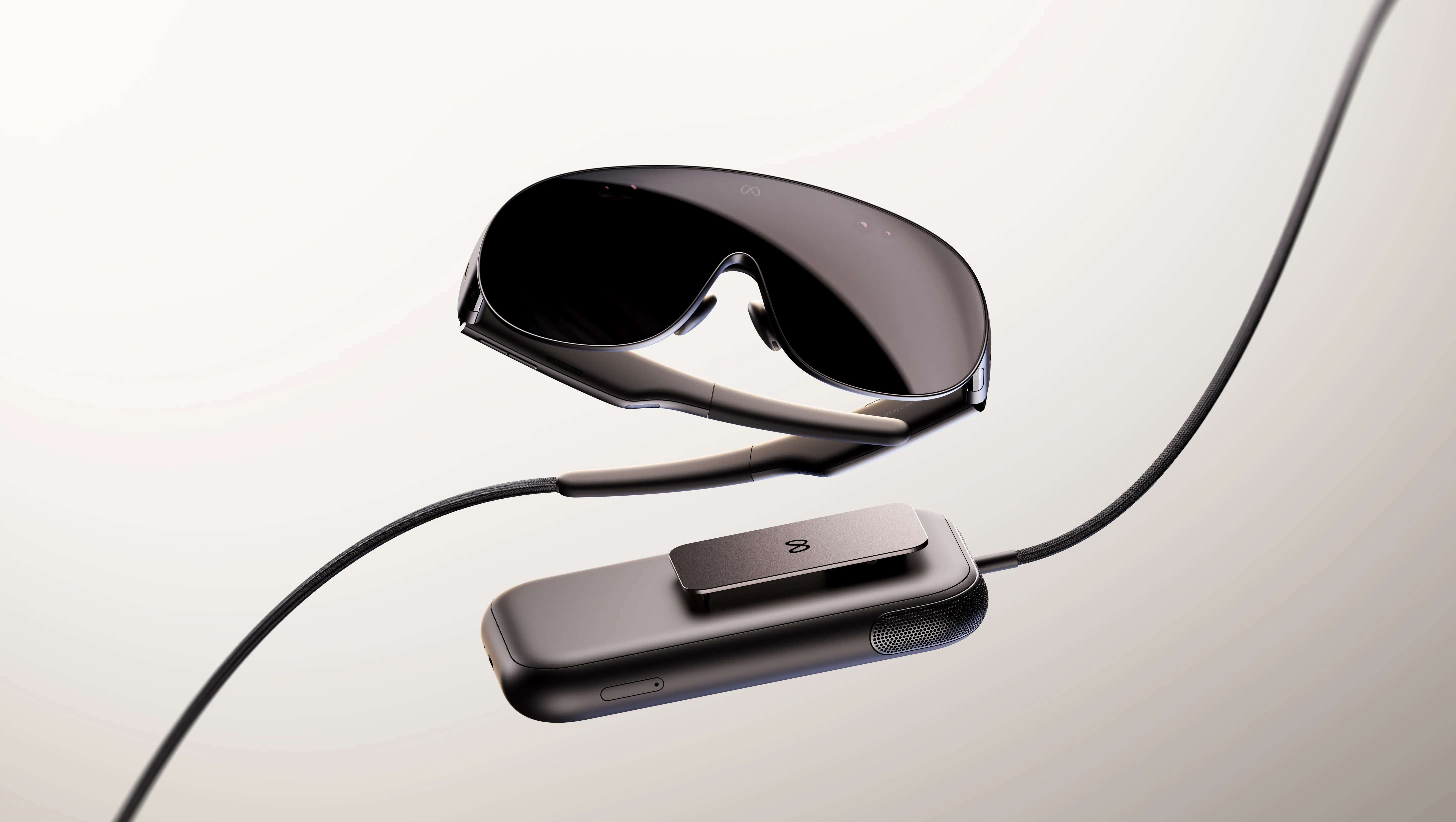

Mark Zuckerberg spent a good chunk of Wednesday night's Meta Connect keynote doing something the company hasn't managed in years: making a VR headset look genuinely light. The new device, simply called Meta VR Glasses, weighs about as much as a pair of sunglasses with a phone charger clipped to your belt. That's not a metaphor. The processor, battery and storage all live in a separate "compute puck" tethered to the glasses by a cable, and it's the clearest sign yet of where Meta thinks headsets need to go if anyone outside the gaming crowd is ever going to wear one regularly.
Held on September 23 and 24, 2026, this year's Connect event leaned harder into glasses than any previous one, and not just the VR kind. Alongside the new headset, Meta introduced a camera-free pair of AI glasses, a pendant-style AI gadget called Muse Charm, an FDA-cleared hearing aid feature for existing glasses, and a third generation of its Ray-Ban Meta line. Here's what's actually confirmed, what it costs, and what's still a ways off.
Meta's Latest Hardware Push
The throughline across nearly everything announced this week is that Meta is betting its hardware future on things you wear on your face rather than strap to your head. That's a real shift in emphasis, and Meta's own financials help explain why. The company's Reality Labs division, which builds both Quest headsets and the Ray-Ban glasses line, lost $4.62 billion in the second quarter of 2026 on just $431 million in revenue, according to Meta's own earnings report. Cumulative losses since late 2020 have climbed past $88 billion. Meta CFO Susan Li told analysts that revenue growth was coming from "strong growth in AI glasses revenue, partially offset by lower Quest headset sales," and said VR-specific investment would "decrease significantly" as spending shifts toward wearables. Zuckerberg, for his part, called glasses "one of the fastest-growing consumer electronics of all time."
New VR Headset: Features and Technology
Meta VR Glasses, previously known internally as Project Phoenix, will go on sale in spring 2027 for $1,299.99. That's a confirmed price and a confirmed product, but it's worth being clear that it hasn't shipped yet.
The headset itself weighs roughly 100 grams, about a fifth of what a Quest 3 weighs, achieved by pushing the processor, battery and storage into that external puck. Inside the glasses, Meta switched to micro-OLED panels for the first time, delivering what it calls a 5K "Infinite Display," with 5.5 megapixels per eye and a refresh rate up to 120Hz. According to hands-on testing from Road to VR, that pixel density comes at a cost: the field of view is 70 degrees horizontally, noticeably narrower than the Quest 3's 110 degrees.
The puck runs on Qualcomm's new Snapdragon Reality Elite chip, offers up to three hours of continuous high-resolution playback, and supports 45-watt fast charging. There are no controllers in the box; the headset relies on hand gestures and gaze tracking, though it works with the Touch Plus controllers from Quest 3 and 3S if you already own them. Meta says more than 75 games will support hand-tracked play at launch, including a new gesture-based mode for Beat Saber, and the headset will also tap into Xbox Cloud Gaming for a broader library. On the entertainment side, it's the first VR device to get IMAX Enhanced certification, with Disney+ bringing select 3D titles and HBO Max, Peacock and Paramount+ reportedly building out their own 3D catalogs.
Next-Generation Smart Glasses
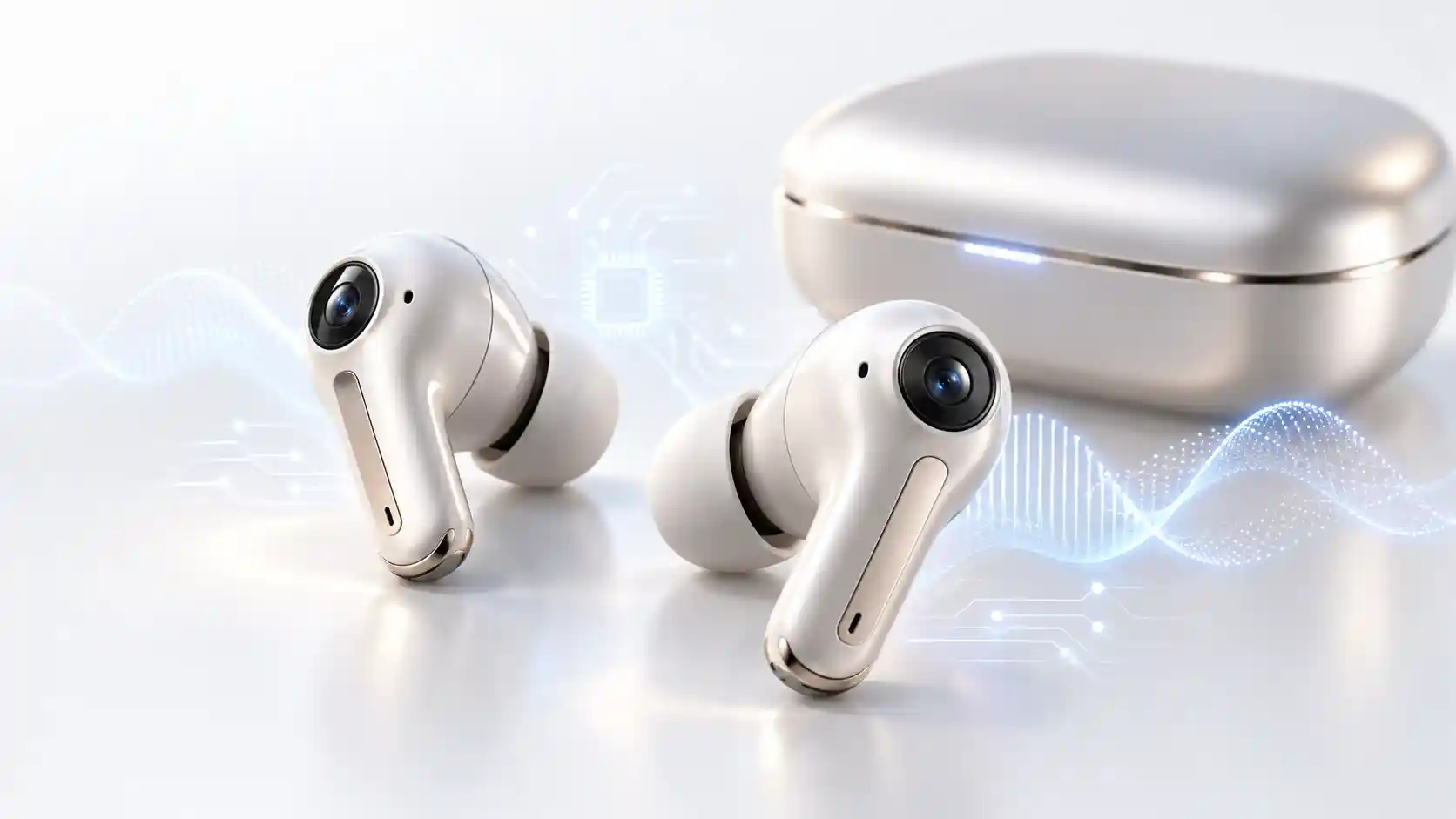
The more immediately available news is on the glasses side. Ray-Ban Meta Audio, Meta's first camera-free AI glasses, will ship October 13, 2026, for $349. At 43 grams, they lean entirely on open-ear audio and Meta's AI assistant for calls, music and voice queries, with no camera at all. Battery life is rated at 12 hours, stretching to 48 additional hours with the charging case. Dropping the camera is also a fairly direct response to the privacy criticism that's dogged camera-equipped smart glasses since they launched, letting Meta offer a version aimed at people who want the AI and audio features without carrying a camera on their face.
Meta also confirmed a third generation of its core Ray-Ban Meta glasses at Connect, alongside new styles meant to push the total lineup past 100 different looks by the end of 2026. Specific hardware changes for this Gen 3 model weren't detailed in the sources reviewed for this article, so those specifics should be treated as still emerging rather than fully confirmed.
Meta AI and Wearable Computing
Perhaps the most unexpected announcement was Muse Charm, a small pendant you can clip to a keychain or bag that carries Meta's Muse AI agent with you independent of any glasses. It's set to arrive this fall, meaning within the next few months, but Meta hasn't announced pricing yet. Existing Meta Display glasses are also getting new AI-powered features, including cycling and public transit directions with real-time departure times, rolling out later this month in the US and Canada. Meta's Ray-Ban Display glasses, previously US-only, began international rollout on September 23, 2026, the same day as the keynote.
Meta's Reality Labs Strategy
Taken together, these announcements read less like a single product launch and more like a deliberate narrowing of focus. Meta is still building headsets, but even its newest one is designed to look and feel like glasses rather than a bulkier gaming device. Combined with the financial picture, where glasses revenue is growing while Quest sales soften, the strategy looks like an attempt to find a hardware category people will actually wear all day, something Quest headsets never quite managed outside of gaming sessions.
Pricing, Availability and Supported Markets
To summarize what's confirmed: Meta VR Glasses cost $1,299.99 and arrive spring 2027. Ray-Ban Meta Audio costs $349 and ships October 13, 2026. The Hearing Enhancement software feature, which turns supported Meta Glasses into FDA-cleared over-the-counter hearing aids after a guided hearing test in the Meta AI app, arrives in the US later this year for $149.99 as a one-time activation, or as part of a Meta One subscription. Muse Charm arrives this fall without a confirmed price. Meta Display's new navigation features roll out later this month in the US and Canada specifically.
Competition and Consumer Adoption
Meta's own comparison point for the new headset is Apple's Vision Pro, and the numbers are stark: at $1,299.99, Meta VR Glasses cost roughly a third of the Vision Pro's $3,699 price while weighing about a sixth as much, according to figures cited by Business Standard. Whether lighter and cheaper is enough to build real everyday adoption, rather than another niche gadget, isn't something that can be judged yet, since the device hasn't shipped.
Key Challenges
A few open questions stand out. The compute puck's three-hour battery life for high-resolution playback is modest for something pitched partly as a travel and productivity device. The narrower field of view compared to Quest 3 is a real tradeoff for the sharper display, and early hands-on impressions noted the "sweet spot" for the optics isn't as forgiving, requiring careful fit between Standard and Large sizes. And Meta's broader smart glasses push continues to run into the same privacy concerns that shaped this week's camera-free announcement in the first place.
Expert and Company Views
Road to VR's hands-on impressions were largely positive on the display and passthrough quality, with reviewer Scott Hayden calling the color passthrough "the best I've seen on a standalone VR device," while flagging the narrower field of view and puck-based design as real tradeoffs rather than pure upgrades. Meta's own messaging around the headset, according to marketing shown at the event, was blunt: "the weight is over."
Conclusion
Nothing announced this week ships immediately except Ray-Ban Meta Audio in October and the Hearing Enhancement feature later this year. The bigger bet, Meta VR Glasses, is still seven months from stores, and its real test, whether people actually wear it the way Meta wants them to, can't be answered by a keynote. What is clear is that Meta has stopped trying to make VR headsets lighter versions of themselves and started trying to make them look like glasses instead, and it's now putting a comparable amount of energy into a $349 pair of glasses with no camera at all.
Further reading and useful links
Reader questions
Frequently asked questions
What are the new Meta VR Glasses and how much do they cost?
Meta VR Glasses are a lightweight VR headset featuring an external compute puck, priced at $1,299.99, set to release in spring 2027.
What are Ray-Ban Meta Audio glasses?
Ray-Ban Meta Audio are Meta's first camera-free AI smart glasses focusing on open-ear audio and AI queries, priced at $349 and shipping October 13, 2026.
What is Muse Charm?
Muse Charm is a small pendant-style AI gadget designed to carry Meta's Muse AI assistant independently of glasses, arriving in fall 2026.
Why is Meta shifting its hardware focus toward glasses?
Meta's Reality Labs has faced substantial financial losses on traditional Quest headsets while seeing strong revenue growth in AI glasses, leading the company to prioritize everyday wearable form factors.
Nexuswild welcomes factual corrections. Email [email protected] with evidence and the article URL.