
For years, the global carbon-credit market has faced an existential crisis of confidence, plagued by accusations of greenwashing and phantom emissions reductions. However, a newer, highly scrutinized sector of the market - nature-based carbon removal - is beginning to attract serious institutional capital. Demonstrating this shift, Brazilian climate startup Mombak announced in late September 2026 the first close of its second major investment vehicle, signaling a new phase of scale for commercial ecosystem restoration.
The newly launched Amazon Reforestation Fund II is actively targeting a massive capital pool, aiming to raise $150 million to finance large-scale, biodiverse forest restoration. Supported by state-backed development loans and multi-year corporate purchasing agreements, Mombak’s latest financial milestone illustrates that repairing degraded tropical ecosystems is slowly transitioning from a philanthropic endeavor into a viable, investable asset class.
Mombak’s New $150 Million Fund
Announced during the 2026 New York Climate Week, the Mombak $150 million fund represents a significant step up from the company’s previous efforts. It surpasses the firm's inaugural $120 million fund, which was backed by heavyweight institutional investors including Bain Capital, CPP Investments, and the AXA IM Alts impact strategy.
Crucially, this new equity vehicle does not stand alone. Alongside the fund’s first close, Mombak secured a R$200 million (approximately $40 million) credit line from the Brazilian National Development Bank (BNDES). This debt facility, which carries an exceptionally low annual interest rate of 2.3 percent, provides the necessary working capital to execute the actual planting and land management operations on the ground. This blended-finance structure - combining private equity for land acquisition with subsidized development loans for operational execution - is becoming a blueprint for large-scale climate infrastructure projects.
How Mombak’s Reforestation Business Works
Founded in 2021, Mombak operates on a business model fundamentally distinct from traditional carbon-offset projects. Historically, many Amazonian carbon credits were generated through "avoided deforestation" - where landowners were paid not to cut down existing trees. These projects often struggled to prove additionality, leading to intense market skepticism.
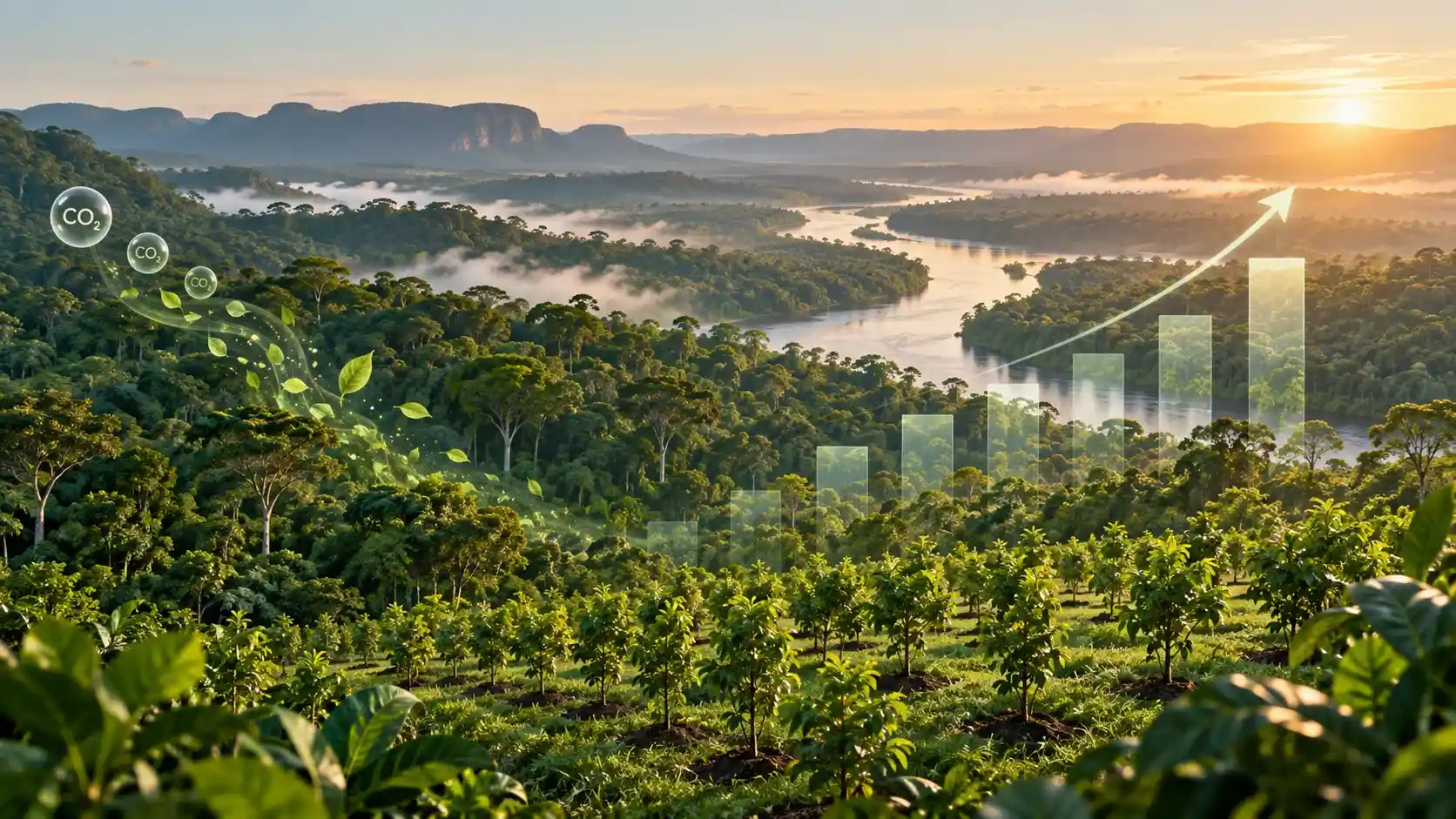
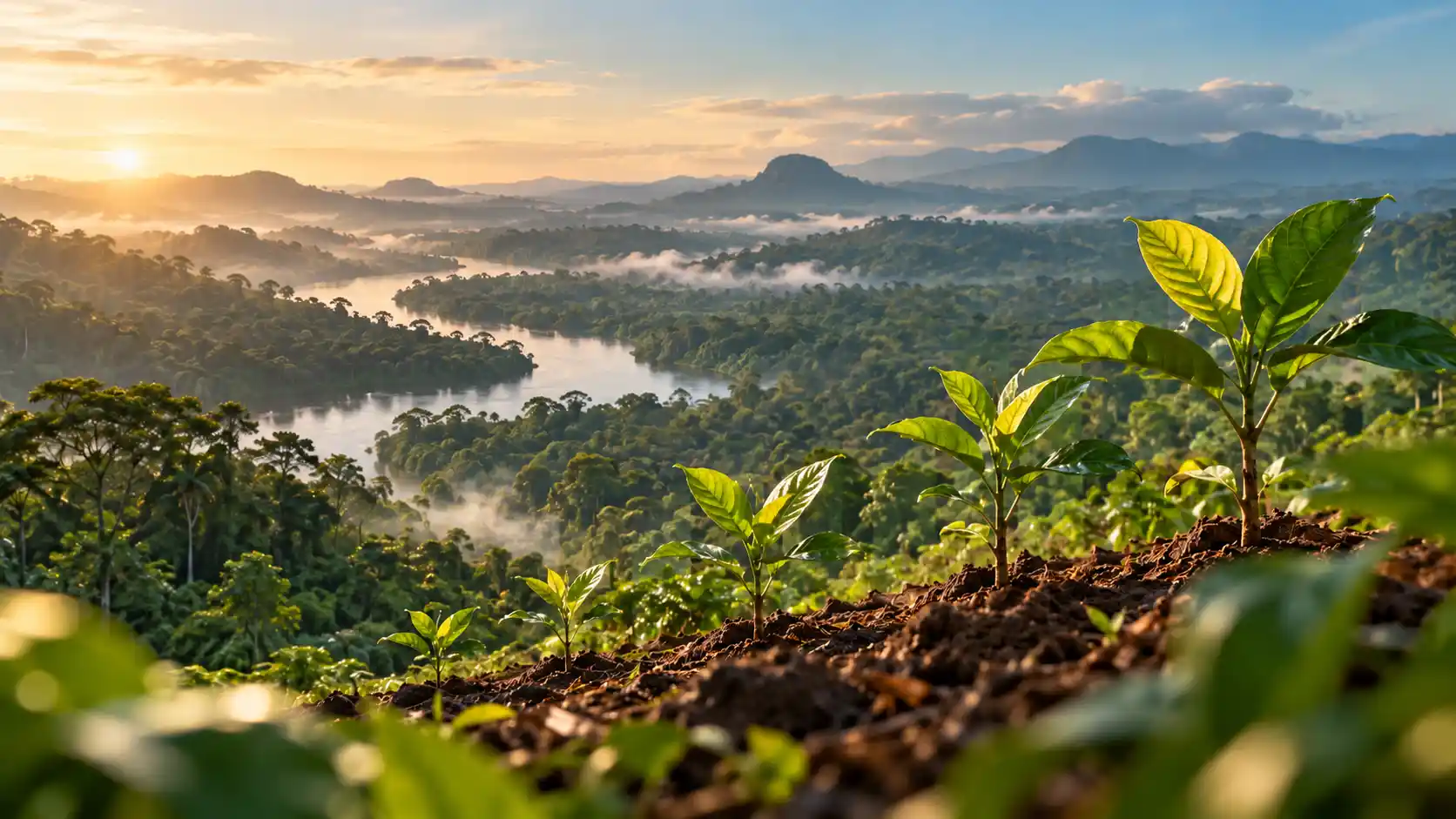
Mombak, by contrast, focuses entirely on carbon *removal*. The company acquires severely degraded, unproductive cattle pastures across the Brazilian Amazon. Instead of planting fast-growing monoculture timber like eucalyptus, the company plants highly diverse, native Amazonian tree species. As this new forest matures, it physically removes carbon dioxide from the atmosphere and binds it into woody biomass and soil. Mombak meticulously measures this sequestration and issues carbon-removal credits, which it then sells to corporate buyers seeking to neutralize their unavoidable supply-chain emissions.
In July 2026, the company successfully delivered its first batch of removal credits - certified under the rigorous protocols of the British registry Isometric - more than two years ahead of its original schedule.
Where the New Capital Will Go
The capital from the new fund will finance an aggressive operational expansion. During its first fund cycle, Mombak financed the restoration of roughly 27,000 hectares in the Brazilian state of Pará, partnering with 15 farms to plant nearly 15 million native trees.
With the Amazon Reforestation Fund II, the company is applying hard-won lessons from the field. Early in its lifecycle, Mombak relied partially on "assisted natural regeneration," allowing the forest to slowly reclaim land. However, this method lacked the precise predictability required by institutional investors. The new capital will largely fund a pivot toward methods that closely resemble commercial forestry. This means heavier upfront investments in seed genetics, localized high-capacity nurseries, precise species selection, and intensive soil management to guarantee seedling survival rates and faster carbon yields.
Amazon Restoration and Carbon Removal
The environmental imperative driving these investments is undeniable. The Amazon rainforest is a critical regulator of the global climate and regional rainfall patterns across South America. Decades of clear-cutting have pushed vast swathes of the basin dangerously close to an ecological tipping point, where the ecosystem could irreversibly transition into a dry savanna.
Amazon forest restoration reverses this damage. Beyond simply pulling carbon from the atmosphere, Mombak’s biodiverse planting strategy restores fragmented wildlife corridors, repairs degraded watershed assets, and stabilizes local microclimates. Furthermore, the labor-intensive nature of seedling cultivation, planting, and monitoring provides a vital economic alternative to illegal logging or cattle ranching. To date, the company reports creating roughly 600 direct jobs in rural communities.
The Growing Nature-Based Carbon Market
To survive, a capital-intensive reforestation business requires guaranteed revenue. Historically, the market for premium, high-integrity carbon removal has been propped up almost entirely by Silicon Valley. Technology giants, desperate to offset the massive energy footprints of their expanding artificial intelligence data centers, have been willing to pay premium prices for verifiable removals.
Mombak’s early buyer roster reads like a tech-industry index: Google, Microsoft, and Union Square Ventures. Alongside the new fund announcement, Mombak revealed a multi-year offtake agreement with enterprise software giant Salesforce, which has already received an initial tranche of 2,000 credits.
However, the market is beginning to broaden. According to BNDES officials working alongside Mombak, demand is accelerating beyond the technology sector. Heavy emitters in the oil, mining, and steelmaking industries - sectors that previously lacked the appetite for premium-priced credits - are now actively engaging with high-quality removal developers as global regulatory pressures mount.
Environmental and Business Challenges
Despite the influx of capital, scaling Amazon reforestation is incredibly difficult. The primary bottleneck is land acquisition. The Brazilian Amazon is plagued by complex, often disputed land titles and a history of illegal land grabbing (grilagem). Securing clear, legally sound titles for tens of thousands of hectares requires exhaustive due diligence.
Permanence is another major vulnerability. For a carbon credit to hold environmental value, the carbon must remain locked away for decades. Wildfires, exacerbated by climate change and regional droughts, pose a constant physical risk to newly planted forests.
Financially, the model remains heavily reliant on forward contracts. Because native trees take years to reach peak carbon-sequestration rates, Mombak must convince corporate buyers to sign pre-purchase agreements (offtake contracts) long before the credits are actually generated.
Investor, Company and Expert Views
Executives at Mombak note that their recent financing success is a direct result of proving that the operational model actually works in the field.
"The market spent years asking whether high-integrity reforestation could actually deliver. We answered that in July, with our first deliveries ahead of schedule. Now, we are scaling our operations, with renewed support from investors, customers and BNDES," stated Gabriel Silva, CEO and co-founder of Mombak, during the fund’s announcement.
Tereza Campello, socio-environmental director at BNDES, reinforced this shift in market dynamics, noting that interest from sectors including oil, mining, and steelmaking has accelerated alongside traditional technology buyers.
From the buyer's side, Tim Christophersen, Vice President for Climate Action at Salesforce, emphasized that corporate sustainability requires a dual approach. “Achieving a more sustainable future requires pairing ambitious value-chain decarbonization with high-integrity carbon removal,” he stated, validating the demand for Mombak’s premium credits.
What Comes Next
Following the early delivery of its first credits in July, Mombak is preparing for a significant scale-up in output. The company expects a second, much larger issuance of approximately 80,000 tonnes of certified carbon removal credits by the end of 2026. This will bring its total annual issuance to over 100,000 tonnes, generating the cash flow necessary to begin servicing its debt and returning value to early investors. Operationally, the company will focus on securing more presigned offtake agreements - mirroring the project-finance structures used to build large-scale solar and wind farms - to guarantee revenue before the next millions of seeds are planted.
Conclusion
The launch of Mombak’s $150 million Amazon Reforestation Fund II is a critical indicator of where the global climate-finance market is heading. By abandoning the controversial "avoided emissions" frameworks of the past and embracing measurable, biodiverse carbon removal, the startup has successfully attracted both international private equity and sovereign development capital. While immense logistical, environmental, and land-tenure challenges persist, this financial milestone proves that large-scale Amazon forest restoration is no longer just a conservation ideal; it is rapidly becoming a structured, investable industry.
Further reading and useful links
Reader questions
Frequently asked questions
What is the target size of Mombak's new fund?
Mombak's Amazon Reforestation Fund II is targeting $150 million to finance large-scale native forest restoration projects in the Brazilian Amazon.
What financial backing has Mombak secured alongside the fund launch?
Alongside the fund's first close, Mombak secured a R$200 million (approx. $40 million) credit line from the Brazilian National Development Bank (BNDES) at a 2.3% interest rate.
Which major corporate partner signed a recent carbon removal agreement with Mombak?
Salesforce signed a multi-year carbon removal offtake agreement, joining existing tech buyers like Google, Microsoft, and mainstream corporations.
How does Mombak's model differ from traditional offsets?
Instead of 'avoided deforestation' credits, Mombak focuses entirely on carbon removal by purchasing degraded cattle pastures and replanting them with diverse, native Amazonian tree species.
Nexuswild welcomes factual corrections. Email [email protected] with evidence and the article URL.