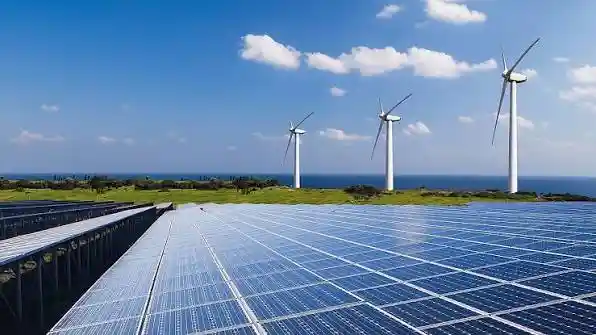

For years, the phrase “tipping point” has carried a distinctly ominous weight in climate science. It evokes images of irreversible environmental collapse - thawing permafrost, dying coral reefs, and collapsing ice sheets. But as the world races to decarbonise, economists and climate scientists are increasingly focusing on a much more hopeful phenomenon: positive tipping points.
In the context of the global clean energy transition, a positive tipping point occurs when a zero-carbon technology becomes cheaper, more accessible, and more efficient than its fossil-fuel alternative. Once this threshold is crossed, adoption is no longer driven solely by government subsidies or environmental goodwill. Instead, market forces take over, triggering exponential, self-reinforcing growth.
While researchers caution that technology alone cannot magically resolve the climate crisis, the latest market data and scientific modelling suggest that several crucial clean energy technologies are either approaching or have already crossed these tipping points. Understanding how these dynamics work is essential for policymakers and investors aiming to accelerate global climate action.
What Are Positive Tipping Points?
In physical climatology, a tipping point is a threshold that, when crossed, leads to large and often unstoppable changes in the Earth system. Positive tipping points in human systems operate on a similar principle of non-linear change, but with beneficial outcomes.
When a new technology is introduced, its adoption is typically slow and expensive. However, as production scales up, manufacturers find efficiencies, supply chains mature, and costs drop. This phenomenon, often referred to as "Wright’s Law" or the learning curve, dictates that every time the cumulative production of a technology doubles, its cost declines by a predictable percentage.
As costs fall, consumer demand rises, which in turn attracts more investment and further scaling. Once the clean technology outcompetes the incumbent fossil-fuel technology on price and performance, a positive tipping point is reached. The transition shifts from a heavy, uphill push to a rapid, downhill acceleration.
How Clean Energy Can Create Self-Reinforcing Growth
The mechanics of this self-reinforcing growth are visible across the modern energy landscape. According to researchers tracking energy transition tipping points, early government interventions - such as research grants, tax credits, and deployment mandates - are critical to getting a technology off the ground.
As these policies stimulate initial demand, economies of scale take effect. A classic example is the European feed-in tariffs of the 2000s and China’s massive domestic manufacturing push over the last decade. These policies subsidized early solar panels, driving down costs globally. Today, according to the International Energy Agency (IEA), solar power is the cheapest source of new electricity in most of the world.
Crucially, faster adoption of one technology often accelerates others. This is known as a "tipping cascade." For instance, as electric vehicle (EV) production scaled up, it drove massive investments in lithium-ion battery manufacturing. The resulting plunge in battery costs has now made large-scale grid storage economically viable, which in turn allows electricity grids to rely more heavily on intermittent renewable sources like solar and wind growth.
Solar, Wind, Batteries and Electric Vehicles
The evidence of clean technology adoption moving along exponential curves is mounting. Over the last decade, the cost of solar photovoltaics and onshore wind energy has plummeted. Battery costs have fallen by more than 90% since 2010, defying early pessimistic forecasts.
Electric vehicles are currently navigating their own tipping point. In markets like Norway, where early and aggressive policies heavily incentivized EV purchases, electric cars now dominate new sales, crossing the threshold of inevitability. Globally, as battery costs continue to fall and manufacturing scales, EVs are rapidly approaching price parity with internal combustion engine vehicles. Once an EV is cheaper to buy and run than a petrol car without subsidies, consumer preference is expected to shift decisively.
Other technologies, such as electric heat pumps for home heating and green hydrogen for industrial processes, are moving down their own learning curves, though they are at earlier stages of the transition.
Falling Costs and Rapid Technology Adoption
It is important to distinguish between observed market trends and future scenarios. The exponential growth in solar deployment and EV sales are verifiable, observed trends tracked by organisations like the IEA and the International Renewable Energy Agency (IRENA).
However, projecting exactly when a technology will cross a global tipping point involves complex economic modelling. These models suggest that positive tipping points climate dynamics could shave years off the transition to a low-carbon economy. Yet, researchers are careful to note that rapid technology adoption is not uniform. A tipping point crossed in Northern Europe or coastal China does not automatically translate to immediate adoption in developing nations, where capital costs for renewable projects remain stubbornly high.
Policy, Investment and Infrastructure
Positive tipping points do not happen in a vacuum. They are engineered through deliberate policy choices and massive renewable energy investment.
Major legislative packages - such as the Inflation Reduction Act in the United States, the European Union’s Green Deal, and ambitious domestic targets in India and China - are designed to push clean technologies past these critical cost thresholds.
However, scaling up production is only half the battle. For global clean energy growth to continue its exponential trajectory, the enabling infrastructure must keep pace. This means upgrading and expanding electricity grids, installing millions of EV charging stations, and developing robust supply chains for critical minerals.
Global Climate Benefits
The ultimate prize of crossing these economic thresholds is accelerated global decarbonisation. The Intergovernmental Panel on Climate Change (IPCC) has repeatedly emphasized that deep, rapid emissions cuts are required this decade to limit warming to 1.5°C above pre-industrial levels.
If positive tipping points trigger faster-than-expected phase-outs of coal and oil, the cascading climate change solutions become far more achievable. Furthermore, shifting to wind, solar, and battery storage carries immense co-benefits, particularly in reducing the devastating health impacts of localized air pollution caused by fossil-fuel combustion.
Barriers and Risks
Despite the optimism, climate and energy experts warn against technological determinism - the assumption that the clean energy transition is now on autopilot. Several significant barriers could stall progress.
Grid connection backlogs are a major bottleneck globally, with thousands of gigawatts of renewable projects waiting for permission to connect to overburdened power networks. Supply-chain vulnerabilities, particularly the concentration of critical mineral processing in a few countries, pose geopolitical risks. Furthermore, high interest rates can disproportionately hurt capital-intensive renewable projects compared to operating existing fossil-fuel plants.
Perhaps the greatest risk is the uneven pace of the transition. Without international financial support and technology sharing, developing economies may be left behind, locked into fossil-fuel infrastructure while wealthier nations reap the economic benefits of cheap, clean energy.
Scientific and Expert Views
The academic community is increasingly highlighting this dynamic. Reports from institutions like the University of Exeter's Global Systems Institute have mapped out how targeted interventions in key sectors can trigger these positive tipping points.
"We are seeing non-linear change in the energy sector," notes Dr. Simon Evans, an expert in energy data analysis. "What models historically got wrong was assuming linear growth for renewables. When a technology gets cheaper the more you deploy it, growth curves bend upwards."
However, institutions like the IEA continue to stress that while the momentum behind clean energy is unstoppable, the speed is what matters for the climate. Crossing a tipping point in the 2030s rather than the 2020s could mean the difference between missing or meeting international climate targets.
What the Research Still Cannot Tell Us
While the economic mechanics of tipping points in solar, wind, and batteries are well established, uncertainties remain in "hard-to-abate" sectors. Aviation, shipping, heavy road transport, and industrial processes like steel and cement manufacturing require different technological solutions - such as green hydrogen or advanced biofuels.
Whether these technologies will follow the same rapid learning curves as solar panels is still an open question. Scientific models present a range of possible futures, heavily dependent on how aggressively governments fund research and development over the next five years.
Conclusion
The concept of positive tipping points injects a crucial dose of evidence-based optimism into the climate discourse. The transition to a sustainable future is not merely a story of sacrifice and regulation; it is increasingly a story of superior, cheaper technology outcompeting outdated systems.
As falling costs drive rapid global clean energy growth, the end of the fossil-fuel era comes into sharper focus. Yet, the science remains clear: while market forces are shifting favorably, they cannot be left to do the job alone. Sustained policy support, massive infrastructure investment, and global cooperation remain essential to ensure that the clean energy transition happens fast enough, and fairly enough, to secure a stable climate.
Further reading and useful links
Reader questions
Frequently asked questions
What is a positive tipping point in the clean energy transition?
A positive tipping point occurs when a zero-carbon technology becomes cheaper, more accessible, and more efficient than its fossil-fuel alternative, triggering self-reinforcing, exponential market adoption.
How do falling costs drive clean energy growth?
Through learning curves and economies of scale (Wright’s Law), cumulative production doubling drives predictable percentage cost declines, increasing consumer demand and investment.
Which clean energy technologies have approached or crossed their tipping points?
Solar photovoltaics, onshore wind power, lithium-ion batteries, and electric vehicles (EVs) have largely crossed or are rapidly nearing their economic tipping points globally.
What are the main barriers remaining for the energy transition?
Key barriers include grid connection backlogs, supply-chain vulnerabilities for critical minerals, high interest rates for capital-intensive projects, and the slower transition pace in developing economies.
Nexuswild welcomes factual corrections. Email [email protected] with evidence and the article URL.