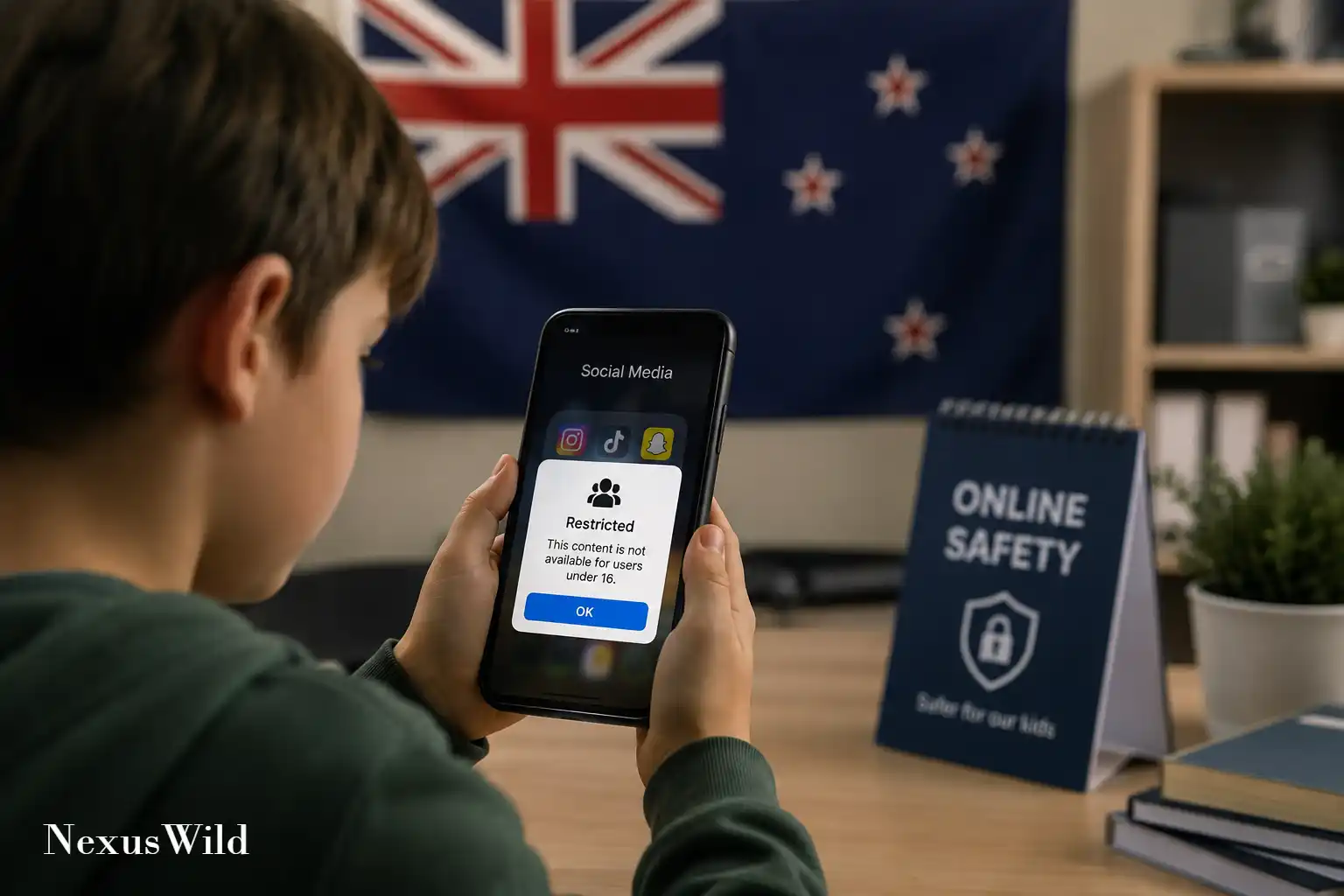

New Zealand's government introduced the Online Safety (Minimum Age and Child Safety Risk Assessment) Bill to Parliament on Monday, proposing to bar children under 16 from accessing high-risk social media platforms including Instagram, TikTok, Snapchat and Facebook.
Proposed Age Verification and Penalties
Under the bill, platforms would be required to take reasonable steps to verify that users are at least 16, using methods such as existing account information, facial age estimation, digital identity services or formal identification. Companies would also have to assess and report on risks their platforms pose to younger users. Non-compliant platforms could face penalties of up to 10% of their global revenue, though the bill does not propose penalties for children, parents or caregivers, Education Minister Erica Stanford said.
Prime Minister Christopher Luxon said the legislation was needed because "we simply cannot accept the harm being done to a generation of New Zealand children," citing figures showing one in three children aged 13 to 17 spend at least five hours a day on social media. He pointed to early evidence from Australia's under-16 ban, in place since December 2025, as showing minimum age rules can change behaviour.
Coalition Split and Political Pushback
The bill has split Luxon's coalition. Both ACT, led by David Seymour, and New Zealand First, led by Winston Peters, have refused to support it, invoking a coalition "agree to disagree" clause. Peters called the proposal a "slippery slope" that could require banning VPNs or mandating digital ID to enforce, warning it risked a "Soviet-era" erosion of privacy. Seymour argued the bill would either have to catch adults in its verification net or, like Australia's law, prove largely ineffective, noting most Australian children remain on social media despite that country's restrictions.
Labour has agreed to support the bill through at least its first reading and select committee stage, leader Chris Hipkins said, adding that the party still has concerns but does not want "a quest for perfection" to delay progress. That support gives National a path to advance the bill despite its coalition partners' opposition.
Exemptions and Next Steps
Messaging services such as WhatsApp and gaming platforms such as Roblox would fall outside the bill's scope. Luxon has acknowledged the legislation is unlikely to receive its first reading before Parliament rises ahead of New Zealand's November 7 general election, meaning its fate would likely fall to the next Parliament.
Further reading and useful links
Reader questions
Frequently asked questions
What does the New Zealand social media bill propose?
The Online Safety Bill proposes barring children under 16 from accessing high-risk social media platforms like Instagram, TikTok, Snapchat, and Facebook, requiring companies to implement age verification methods.
Will children or parents be penalized for bypassing the ban?
No, the bill does not propose penalties for children, parents, or caregivers. However, social media platforms that fail to comply could face fines of up to 10% of their global revenue.
When will the social media ban become law in New Zealand?
The bill's timeline is uncertain. Prime Minister Christopher Luxon acknowledged that the legislation is unlikely to receive its first reading before Parliament rises ahead of the November 7, 2026 general election.
Nexuswild welcomes factual corrections. Email contact@nexuswild.com with evidence and the article URL.