
Deep beneath the ocean surface, a small translucent animal is carrying a bacterium with an unusually stripped-down genome and unexpectedly enormous proteins. Sea pigs are sea cucumbers that move across abyssal sediments on enlarged tube feet, feeding on organic matter that falls from above. A multi-institutional Japanese team, led by researchers at the University of Tokyo, examined eight animals collected during deep-sea expeditions and found that one bacterium dominated the body wall of three sea pig species. They named it Candidatus Abyssoplasma scotoplanesicola. Its complete genome is only 649,000 bases, about one seventh the size of the Escherichia coli genome, yet more than a quarter of that DNA codes for surface-associated proteins, some longer than 5,000 amino acids. The study, published in ISME Host Microbe, combines DNA reconstruction with fluorescence imaging to show where the organism lives. It also underlines an unresolved question: the bacterium appears heavily dependent on its host, but what the sea pig gains from the partnership is unknown. The work therefore reads as both a description of a newly recognised organism and a case study in how scientists infer the economics of a symbiosis when one partner can be studied in far more detail than the other.
Life on the Abyssal Plain
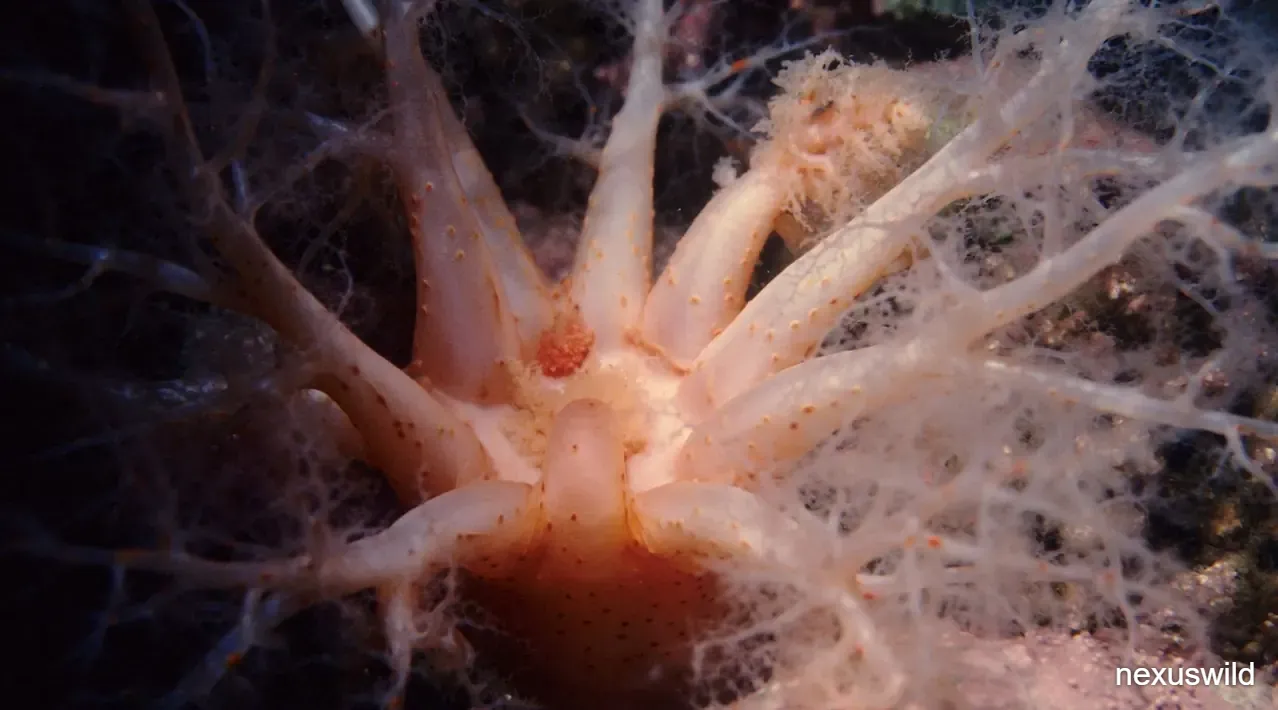
Sea pigs are among the most distinctive animals of the deep seafloor. They are a type of sea cucumber, related to sea stars and other echinoderms, and can grow to around 15 centimetres long. Their plump, soft bodies are supported by enlarged, leglike tube feet that allow them to move slowly across sediment. They use a tentacled mouth to scoop up dead organic matter, including material accumulated around whale falls, where a decaying carcass can create a temporary hotspot of life. The animals may live in water as deep as 6,000 metres, where pressure is immense and temperatures are close to freezing. Their bodies are adapted to those conditions, and studying them requires specialised ships and sampling equipment. Even so, sea pigs can be ecologically important. In some deep-sea environments, sea cucumbers make up more than 90 per cent of the biomass of large animals living on the bottom. That ecological dominance is one reason researchers pay attention to their associated microbes. A symbiont living inside a common and widespread animal may itself be widespread, even though it is rarely seen. The animals also process organic material that sinks from shallower waters, linking the chemistry of the water column to communities on the seabed. Their biology is therefore part of a broader picture of how deep-sea ecosystems recycle nutrients under extreme pressure and low temperature.
A Hidden Layer Beneath the Skin
The new study focuses not on the sea pig itself but on microbes living in and around its body wall. Like other echinoderms, sea pigs harbour bacteria in the layers that encase their bodies, sometimes described as the subcuticular region. These bacteria are not simply attached to the outside; they occupy a protected interface between the animal and the surrounding seawater. That position makes them interesting to researchers studying symbiosis, because close physical association can lead to strong dependence over evolutionary time. Yet basic information remains sparse. Lead author Yu Yoshida, a PhD student at the University of Tokyo's Graduate School of Frontier Sciences, noted that taxonomic and genomic data for body-wall bacteria are scarce, and that very few studies of deep-sea species have connected such information with the bacteria's precise location in host tissue. That gap has consequences. Without a name and a genome, researchers cannot easily compare symbionts across host species. Without imaging, they cannot tell whether a sequence belongs to an integrated resident or to an organism passing through. The study was designed to close both gaps at once, using several lines of evidence on the same animals.
Collecting and Reading the Samples
To address that gap, the team worked with sea pigs collected during deep-sea expeditions. The final dataset comprised eight animals. researchers extracted DNA from different tissues to determine which bacteria were abundant in each body region, then reconstructed the genomes of the dominant types. The genetic work was paired with fluorescence imaging, a technique that makes specific cells visible under a microscope. This combination is important because a bacterium's DNA sequence alone does not reveal where it lives inside a host. A microbe detected in a whole-body sample might come from the gut, the surface or the internal tissue layers. By linking sequence identity to physical location, the researchers could argue that the newly identified organism was genuinely a resident of the body wall rather than a chance contaminant or a passing inhabitant of the digestive tract. The eight animals provided material from more than one tissue, which allowed the team to compare communities rather than simply catalogue everything present in a single sample. Reconstructing the genomes of dominant bacteria then gave them enough resolution to distinguish the new organism from related lineages. This workflow is increasingly common in microbial ecology, but it remains demanding for deep-sea specimens. Sampling must preserve nucleic acids and tissue structure until the material reaches the laboratory, and each animal represents a costly and sometimes unrepeatable expedition. The resulting dataset is therefore modest in size but unusually rich in the kinds of evidence it combines.
One Bacterium Dominates the Body Wall
The dominant organism was striking in its abundance. In body-wall samples from three sea pig species, it accounted for more than 70 per cent of bacterial 16S ribosomal RNA gene sequences. That gene is a standard marker used to identify and compare bacteria, so the result indicates that the organism was not a minor member of the community. It was shaping the microbial landscape of the tissue. The finding also helps explain why the team pursued its genome. A rare bacterium with an unusual sequence might be interesting, but an organism that consistently dominates several host species raises sharper questions about how it colonises sea pigs and what it does there. The paper reports the result across body-wall samples from three species rather than claiming a universal proportion for all sea pigs. A repeated pattern suggests a stable association rather than a transient bloom. The researchers propose that it represents a new genus and species, substantially different from other known bacterial lineages associated with marine invertebrates. Recovery from several host species strengthens that interpretation.
Naming an Abyssal Symbiont
The proposed name, Candidatus Abyssoplasma scotoplanesicola, encodes several pieces of biological information. Abyssoplasma combines a reference to the deep sea, or abyss, with plasma, reflecting the organism's affiliation with Mycoplasmatota, a bacterial phylum known for close associations with animal hosts and, in many cases, reduced genomes. Scotoplanesicola means an inhabitant of Scotoplanes, the genus of sea pig used in the study. The prefix Candidatus signals that the name is provisional rather than formally accepted under the usual rules for naming cultivated organisms. That caution is appropriate here because the bacterium has been characterised through genetic and imaging evidence rather than grown in the laboratory. The name therefore describes what the researchers can currently support: a distinct, host-associated bacterium living in a deep-sea animal. Provisional names are common in environmental microbiology, where many organisms are known from DNA before anyone succeeds in cultivating them. The designation allows scientists to discuss and compare the organism without implying that Koch's postulates or formal nomenclatural requirements have been satisfied. It also signals a limit on what has been demonstrated. The team has not shown that the bacterium causes an effect in the host, nor has it grown the organism independently. What it has shown is a consistent genetic signature, a distinct genome and a location within the body wall. The name is a careful label for that evidence, not a claim that the biology is fully understood.
A Genome Reduced to the Essentials
The bacterium's genome is remarkably small. At 649,000 bases, it is roughly seven times smaller than the genome of Escherichia coli, a familiar laboratory bacterium with about 4.6 million bases. Reduction is a common theme among bacteria that live intimately with hosts, because a reliable supply of nutrients can make some metabolic pathways unnecessary over evolutionary time. The sea pig symbiont fits that pattern. Its genes for several energy-generating pathways commonly found in bacteria were not detected. Those pathways normally help organisms break down nutrients and extract usable energy. Their absence does not mean the bacterium lacks energy, but it does imply that it depends on molecules supplied by its host or by the surrounding environment. Genome reduction can happen when a microbe no longer needs to manufacture nutrients that are reliably available from a partner. Over time, genes that are not used may be lost, making the genome smaller and the organism more specialised. The sea pig symbiont's 649,000-base genome fits that pattern, especially given its placement within a host tissue layer. The comparison with Escherichia coli is useful because E. coli is a free-living and laboratory-adapted bacterium with a much broader metabolic toolkit. The contrast should not be read as a ranking of complexity, but as evidence that the two organisms have followed very different evolutionary strategies.
Dependence on the Host
Based on the genome, the researchers infer that Candidatus Abyssoplasma scotoplanesicola relies heavily on sea pig tissues for several classes of essential molecules. These include amino acids, the building blocks of proteins; nucleic acid precursors, needed to make DNA and RNA; lipids, required for cell membranes; and mineral nutrients. Together, these are the basic materials a cell needs to grow and maintain itself. Because the bacterium's genome no longer encodes some pathways for acquiring or making them, the host is the most plausible source. Such dependence is consistent with the organism's location within the body wall, where it sits close to host tissue rather than free in the water. The finding does not show exactly how molecules are transferred, and the team does not claim to have observed the exchange directly. It is an inference from gene content and location, presented with appropriate caution. Genomic inference is powerful because genes preserve traces of what an organism is capable of doing, but it cannot by itself show which molecules move across a cell membrane or at what rate. The sea pig's tissues would need to be studied physiologically before the exchange could be measured directly. That limitation does not weaken the basic observation that several common bacterial pathways are missing. It simply places a boundary around the claim. The bacterium has a reduced capacity to make essential compounds for itself, and its position makes the host the obvious source.
Proteins of Exceptional Size
The most surprising genomic feature was not missing genes but an unusual investment in very large ones. Genes encoding surface-associated protein groups accounted for 27.6 per cent of the entire genome. Some of the predicted proteins exceed 5,000 amino acids in length, while a typical bacterial protein averages about 300 amino acids. Such molecules are enormous by bacterial standards. The researchers suggest they may help the bacterium interact with host tissues or aggregate with other bacterial cells, but they do not present those functions as established. The proteins' surface location makes them plausible candidates for contact with the environment outside the cell, which in this case is largely host tissue. Their size raises practical questions about how they are assembled and maintained in an organism with such a reduced genome. A protein longer than 5,000 amino acids is a major investment of cellular resources, and the genome devotes more than a quarter of its sequence to this group of surface-associated proteins. That allocation is striking because so many other functions have apparently been lost. It suggests that interaction at the cell surface is one of the tasks the bacterium has not abandoned. The researchers offer two plausible explanations, contact with host tissues and clustering among bacterial cells, but neither has been demonstrated experimentally. Until then, their extraordinary length is a structural observation with functional possibilities rather than a settled explanation.
Seeing Where the Bacteria Live
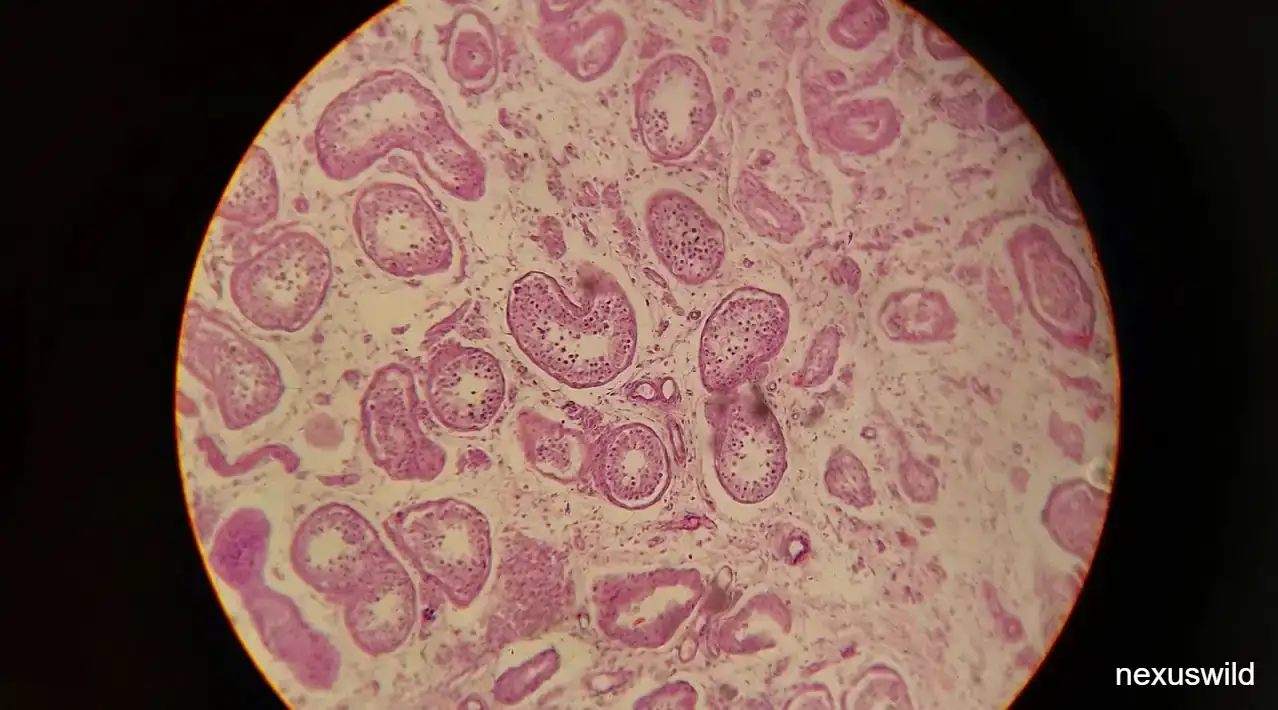
Fluorescence imaging gave the study a spatial dimension that sequence data alone could not provide. The images show the bacteria glowing green within the host's body wall, supporting the interpretation that they are residents of that tissue layer. This matters because the term symbiont can cover a wide range of relationships, from beneficial partners to harmless passengers and parasites. Knowing where an organism sits helps constrain what it might be doing. A bacterium embedded near host cells has opportunities for nutrient exchange and direct molecular signalling that a microbe living only on the outer surface would not. The images also help interpret the abundance data. A sequence dominating a body-wall sample could, in principle, come from a thin layer of cells concentrated in one spot or from a diffuse population spread through the tissue. Seeing the bacteria in place does not resolve every detail of their distribution, but it confirms that they occupy the right compartment. The paper's combination of genomic reconstruction, abundance data and imaging is therefore more informative than any one method. Each method compensates for a weakness in the others, and together they make a stronger case that the organism is an integrated member of the sea pig's body-wall community rather than an artefact of sampling. It links the identity of the dominant bacterium to a particular place in the animal's body, which is exactly the connection that Yoshida said had been missing from most deep-sea studies.
The Benefit to the Sea Pig Is Unknown
Despite the detailed picture of the bacterium, the study does not show what the sea pig receives in return. One possibility is protection against pathogens, but the researchers explicitly describe that idea as unconfirmed. It is plausible that a dominant resident of the body wall could occupy space or produce compounds that make it harder for harmful microbes to establish themselves. It is equally possible that the relationship is neutral from the host's perspective, or that its effects vary with environmental conditions. Determining the benefit would require experiments that are difficult in deep-sea animals, particularly species that cannot easily be maintained in the laboratory. The authors therefore distinguish clearly between what their data support and what they suspect. The bacterium's dependence on its host is well argued; the host's dependence on the bacterium is not. That asymmetry is one of the study's most important cautions. It would be easy to turn a dominant symbiont and a reduced genome into a story of mutual benefit, but the evidence does not yet justify that step. A microbe can be abundant because it is useful, because it is tolerated, or because it exploits a niche that few competitors can occupy. None of those possibilities has been tested here. By leaving the question open, the researchers identify a clear target for future work on these animals and their microbial partners.
Questions for Future Deep-Sea Research
Yoshida and colleagues have set out several questions for the next phase of work. They want to know how the bacterium became so dominant in the body wall, what functions its giant surface proteins perform, what competition it faces from other microbes and what effects it has on the host. Each question points to a different method, from comparative genomics to experiments on host tissue. More broadly, the system could illuminate how bacteria colonise animals and adopt host-dependent lifestyles, a process that has shaped many symbiotic organisms. The work was supported by JSPS KAKENHI and JST SPRING, reflecting the specialised resources needed to study animals from depths of thousands of metres. Sea pigs may look unlikely subjects for genomic research, but their abundance in some deep-sea ecosystems and their close microbial partnerships make them useful windows into life at the limits of Earth's biosphere. The study also shows how much can be learned from a small number of carefully analysed animals when field collection, sequencing, microscopy and evolutionary comparison are combined. Each deep-sea specimen represents a difficult expedition, so extracting several kinds of evidence from the same individuals is essential. What this paper establishes is the foundation: a named organism, a measured genome, a dominant presence in the body wall and a precise statement of what remains unknown.
Nexuswild welcomes factual corrections. Email contact@nexuswild.com with evidence and the article URL.