
Singapore has unveiled a five-year energy infrastructure strategy to beef up the supply of electricity with the increasing demand from data centres, semiconductor production and transport electrification. The programme was announced by the Energy Market Authority (EMA) at Singapore International Energy Week on 26th October 2026.
The plan relates to natural gas infrastructure, electricity networks, solar deployment, energy storage and electricity imports, as well as power generation. It is a testament to Singapore's commitment to a stable energy supply and to enabling industrial investment and growth of its digital economy.
The EMA reported that the peak demand for electricity was 8.6 gigawatts (GW) in August 2026. The number of such projects could increase to 9.9 GW to 13 GW by 2031 depending on the rate of new industrial and infrastructure projects that come online.
To build 5 new gas fired power plants.Construction of 5 new gas fired power plants.
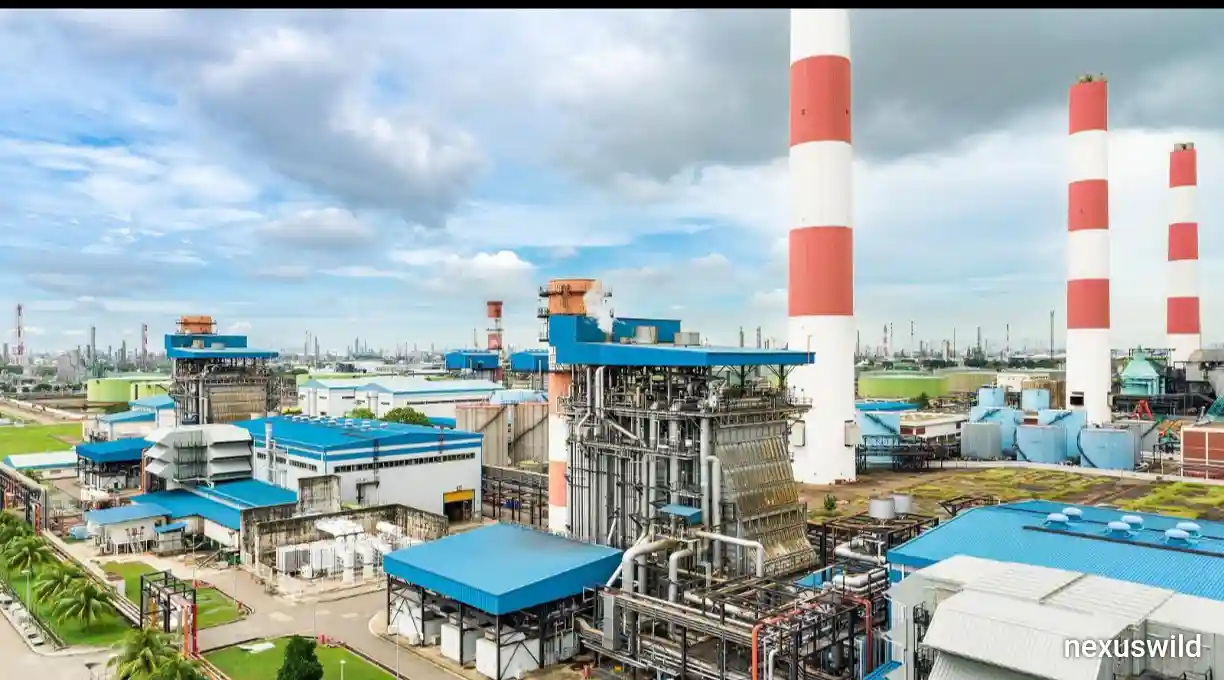
Singapore is to install five new natural gas-fired power plants, from 2026 to 2031. Combined, they are projected to ramp up electricity generation in the country at about 26% over the current generation of about 12 GW.
The extra capacity will be added to Singapore's electricity supply to ensure its electric power system is reliable to serve the nation's future needs. Today, nearly 95% of the nation's electrical power comes from natural gas, making it important to have dependable supplies of fuel and pipelines.
The EMA is also considering proposals for additional generation, which will be available by 2032. The authority could also issue more requests for proposals to meet demand if electricity demand keeps rising significantly.
The expansion is especially applicable to businesses that are intending to embark on energy intensive activities. The semiconductor factories and vast data centres need reliable power supplies, and the failure to obtain power can impact when and how new investments are made.
However, the planned increase in generation capacity should not be taken as a certainty of supply of electricity. This is contingent on the project completion, availability of fuel and network capacity, and the growth of future demand.
Information Technology (IT) and Electricity Demand.
Singapore's long-term electricity planning is influenced by a number of factors, such as data centres and semiconductor facilities. They rely on a significant and steady power supply to run their computing systems, production processes, cooling systems and other essential machinery.
As an AI revolution takes off, the demand for data-centre capacity has grown globally. The deployment of more computing infrastructure makes it important for governments to think about the possibility of providing electricity without affecting the reliability of existing networks.
Broadening transport electrification is also underway in Singapore. With the introduction of Electric Vehicles and charging infrastructure, the demand for electricity could change and there could be a need for adequate generation and distribution capacity.
These developments are also reflected in EMA's demand projections, which, however, will depend on the timing and size of new projects for the final electricity demand.
S$5.3 Billion to upgrade the grid up to now have been allocated to upgrade the grid.
Generating electricity is not enough to ensure an electricity supply. Power has to also flow from the power generation sources to the business, residential and industrial locations via a system of transmission cables, substations and distribution equipment.
Singapore is looking to spend up to S$5.3 billion on grid expansion from 2025 to 2029. The EMA estimates that this is around 11 times as much as was invested over the previous five years.
Seven new transmission substations are planned compared to four over the past five years. Singapore is also in process of increasing its cable transmission network from current 7700km to 9100km by 2030.
The works are to be used to meet increasing electricity demand and to allow for the provision of new sources of electricity, such as solar energy and imports. A more robust distribution network will also be able to enable the use of electricity in electric vehicles and other electricity consumption shifts.
The proposed investment amount is a forecast and not an actual investment that has already been made or a firm commitment. Actual expenditure will be contingent on the actual implementation of the project and infrastructure needs.
LNG capacity is set to grow to 2030.
In addition, Singapore is also building up its LNG infrastructure to cater for existing and future power plants. LNG can be loaded onto a ship and regasified at receiving terminals prior to being fed into the natural gas network.
Presently, LNG regasification capacity in the country is about 10 MTYA. It is projected to rise to 15 million tonnes per year by 2030, once a second LNG terminal will be up and running at Jurong Port.
The extra capacity would give increased flexibility in importing and processing gas. It is significant, especially as natural gas is still the primary fuel used for electricity generation in Singapore.
However, a higher throughput doesn't necessarily mean that more LNG cargoes will be available at the port. Other importing nations' contracts and competitiveness will also be a factor in supply reliability.
The government is exploring more expansion to its LNG port in Jurong Island and new gas transmission lines.
Short-term solar energy storage.Short term storage of solar power.
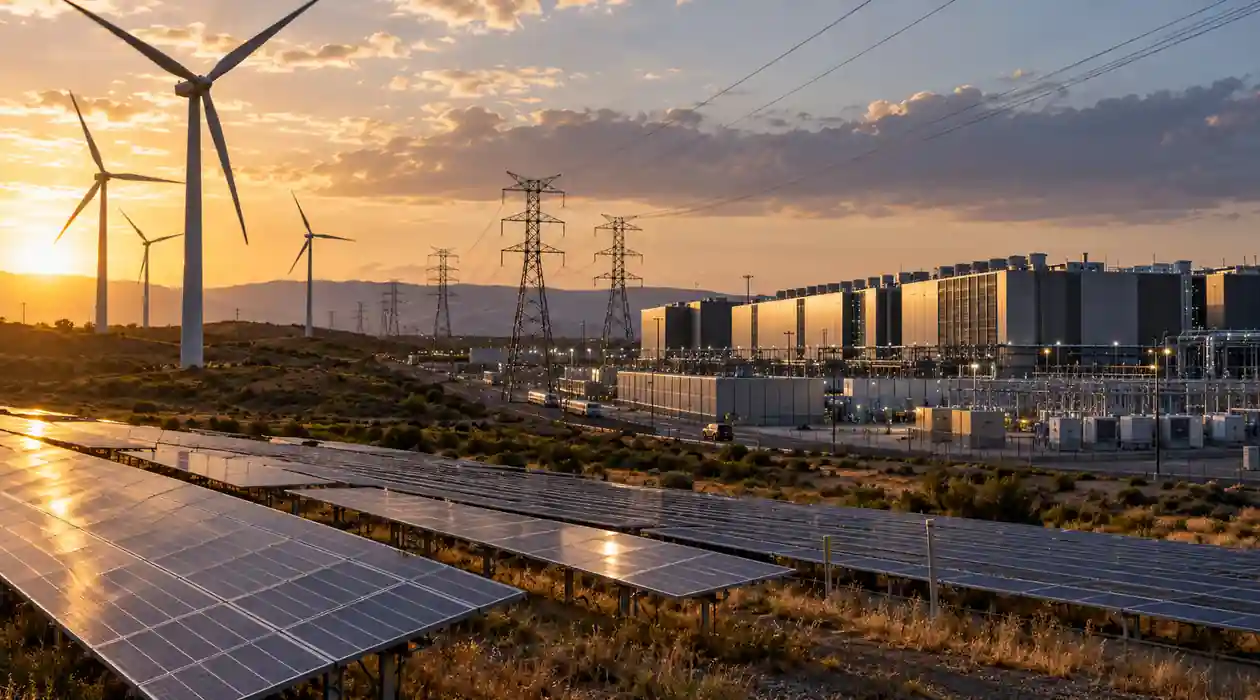
While natural gas is still the backbone of Singapore's power generation, the plan also calls for plans to diversify energy sources available in Singapore.
Currently, there is around 2.3 gigawatt-peak (GWp) of installed solar capacity in Singapore and it is targeting to reach the 3 GWp target by 2030. There is also a larger goal of 4 GWp (expanded) by 2035.
Reservoirs, available rooftops of buildings and land are expected to be solarized. The small land mass of the country will pose challenges for growth of domestic renewable generation.
Another component of the plan is energy storage. Singapore wants to raise the storage capacity from about 350 megawatts (MW) to only over one gigawatt (GW) by 2030.
Storage systems can help match supply and demand for electricity, be quickly mobilized to respond to disruptions, and be used to smooth the integration of VREs. They can also be used to assist in temporary network constraints when upgrades are being made.
Electricity Imports and Regional Connections
Singapore is also looking at other electricity imports to complement its energy policy. Cross-border linkages may enable power generation from a different country, even lower carbon, and increase countries' power supply diversity.
Nexuswild welcomes factual corrections. Email contact@nexuswild.com with evidence and the article URL.