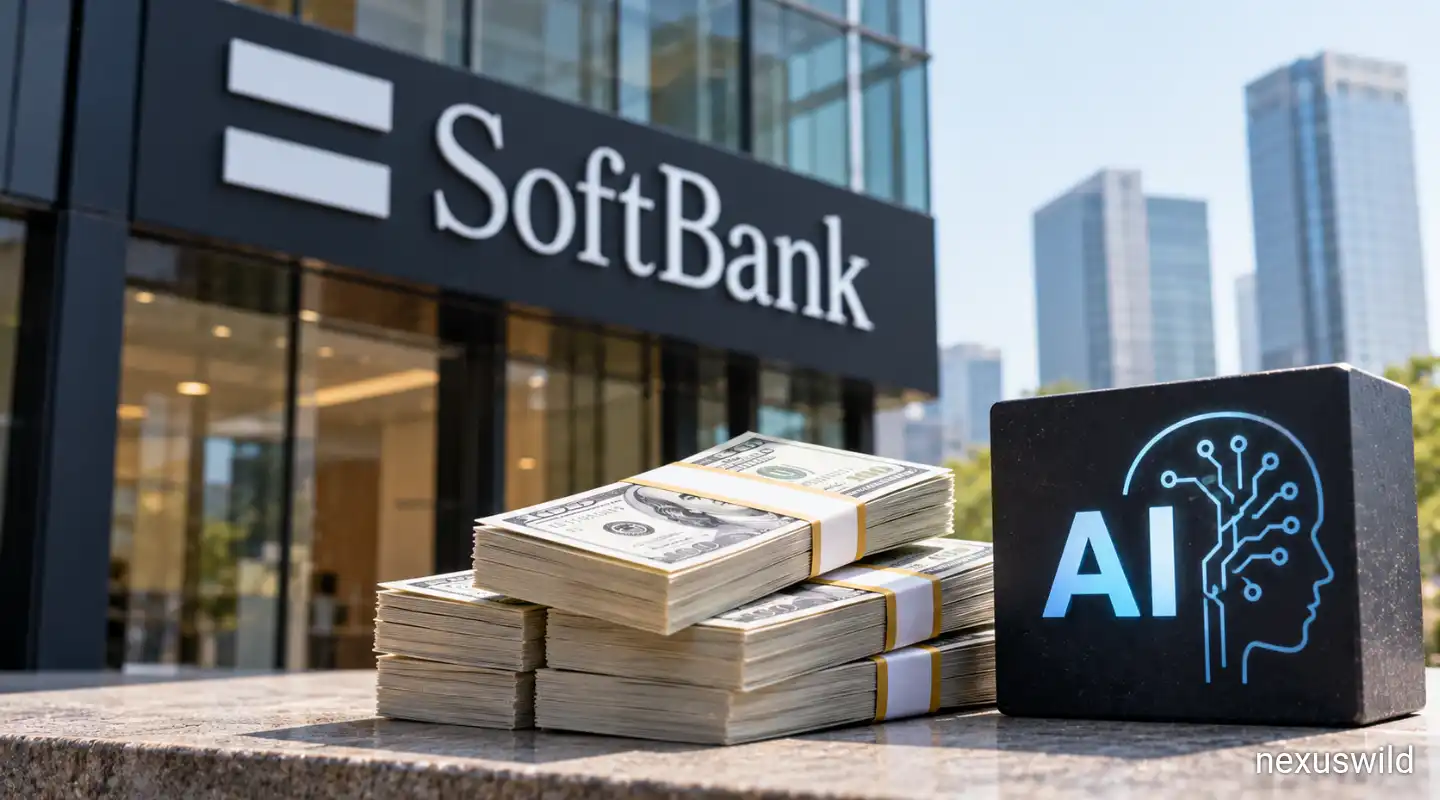

SoftBank Group founder and chief executive Masayoshi Son is seeking to raise up to $100 billion from investors in the Gulf region to finance a new wave of artificial intelligence investments, according to a report published on October 9, 2026.
Son has held discussions with senior figures in the United Arab Emirates and potentially other Gulf countries about the proposed fundraising. The money could support a new investment fund designed to acquire companies and use AI and other advanced technologies to improve their operations.
The fundraising remains at the discussion stage, and there is no guarantee that the talks will result in an agreement. SoftBank has not publicly confirmed the reported plan.
The proposal reflects Son's expanding ambitions in artificial intelligence as SoftBank commits substantial capital to AI companies and infrastructure. It also raises questions about how the Japanese investment group will finance its next phase of expansion.
How SoftBank Plans to Use the Proposed Funding
The proposed fund would reportedly acquire businesses and apply artificial intelligence to improve their operations.
Rather than focusing exclusively on investments in AI developers, the strategy could involve introducing AI tools and advanced technologies into existing businesses to improve efficiency and business performance.
Potential applications include automating repetitive tasks, improving data analysis, streamlining business processes and using robotics in selected operations. The actual technologies and industries targeted by the proposed fund have not been fully disclosed.
SoftBank's robotics and physical AI business, Roze, is expected to play a role in the broader strategy, according to reporting on the fundraising discussions. However, the structure of the proposed fund and its relationship with Roze have not been officially confirmed.
The plan would extend SoftBank's investment approach beyond financing technology developers to potentially applying AI across a wider range of businesses.
Why Gulf Investors Matter to SoftBank
The Gulf region has become an important source of capital for large technology and AI projects. Investors in the United Arab Emirates and Saudi Arabia have pursued investments across digital infrastructure, semiconductors, data centres and emerging technologies.
For SoftBank, attracting capital from the region could provide additional resources for its AI strategy without relying entirely on its own balance sheet or borrowing.
The reported discussions also follow SoftBank's earlier fundraising efforts involving Middle Eastern investors. In 2017, the company established its $100 billion Vision Fund with backing from major international investors, including Saudi Arabia's Public Investment Fund and Abu Dhabi's Mubadala Investment Company.
The proposed new fund would represent another attempt to mobilise substantial capital for technology investments, although its final size, investor commitments and structure remain uncertain.
No specific Gulf investor has been publicly confirmed as having committed funding to the newly reported initiative.
SoftBank's Growing Investment in OpenAI
The proposed fundraising comes after SoftBank completed another major investment in OpenAI, the company behind ChatGPT.
On October 1, SoftBank announced that it had completed the final $10 billion tranche of a previously announced $30 billion follow-on investment. The transaction brought SoftBank's cumulative investment in OpenAI to $64.6 billion, giving it an ownership interest of approximately 13%, according to the company's official announcement.
The investment demonstrates the scale of SoftBank's commitment to AI development.
OpenAI is part of a wider industry in which companies are raising substantial sums to develop advanced AI models, expand computing capacity and build products for businesses and consumers.
However, large investments in AI also carry financial risks. Returns depend on factors including commercial adoption, operating costs, competition and whether companies can generate sufficient revenue from their technologies.
The proposed Gulf fundraising would potentially give SoftBank another source of capital as it pursues investments across the sector.
Borrowing Adds to the Financing Picture
SoftBank has also used debt financing to support its AI ambitions.
In September 2026, the company issued foreign-currency-denominated senior notes, according to its official disclosures. The proceeds helped finance its follow-on investment in OpenAI.
Separately, market reporting put the company's recent high-yield bond issuance at approximately $11.1 billion, highlighting the scale of financing associated with its AI strategy.
Debt can provide companies with capital for large investments, but it also creates repayment obligations and interest costs. The financial implications depend on borrowing terms, cash flow, asset values and the returns generated by the investments.
A new fund backed by outside investors could provide SoftBank with a different financing structure. However, the proposed fundraising's financial arrangements and any effect on SoftBank's borrowing requirements have not been disclosed.
The Opportunity and Risks of AI-Led Acquisitions
Using AI to improve existing businesses offers a different investment opportunity from funding companies that develop AI models or hardware.
An acquisition-based strategy could allow investors to introduce new technologies into established operations, potentially improving productivity or reducing costs.
The results would depend on the businesses acquired, the suitability of AI tools for their operations and the cost of implementation. Integrating new technology into existing systems can require substantial spending, staff training and changes to established processes.
There is also uncertainty about how quickly AI investments can produce measurable financial returns. Improvements in productivity do not necessarily translate immediately into higher profits, particularly when implementation costs are high.
For SoftBank, the success of the proposed strategy would depend not only on securing capital but also on identifying suitable acquisition targets and demonstrating that AI can improve their performance.
What Happens Next?
The immediate question is whether SoftBank can turn its reported discussions with Gulf investors into firm funding commitments.
Important details remain unresolved, including the amount ultimately raised, the identities of participating investors, the fund's structure and the timeline for any acquisitions.
The reported target of up to $100 billion should therefore be treated as a fundraising ambition rather than money already secured.
Any subsequent announcement confirming investor commitments or establishing the fund would provide a clearer picture of SoftBank's plans and the resources available for its next phase of AI investment.
Conclusion
SoftBank is reportedly seeking up to $100 billion from Gulf investors to support a new AI-focused investment initiative centred on acquiring companies and improving their operations through advanced technology.
The proposal would expand Masayoshi Son's existing AI investment strategy, which already includes a substantial stake in OpenAI. But the fundraising remains unconfirmed, and its eventual scale and structure are uncertain.
The key development to watch is whether SoftBank secures commitments from Gulf investors and converts its proposed strategy into a funded investment programme.
Nexuswild welcomes factual corrections. Email contact@nexuswild.com with evidence and the article URL.