
In the fiercely competitive consumer packaged goods (CPG) industry, building a successful food brand usually requires decades of supply-chain expertise and massive advertising budgets. But a new generation of entrepreneurs is rewriting that playbook using nothing more than a smartphone and a deep understanding of internet culture.
For Leah Marcus and Yasaman Bakhtiar, the journey to building a multimillion-dollar business did not start in a culinary kitchen—it started on TikTok. The two friends met while studying at the University of Southern California (USC), graduating in 2022. By 2023, they found themselves constantly exchanging viral TikTok videos of people eating, reviewing, and obsessing over pickles. What began as a funny digital exchange quickly evolved into a serious business proposition.
How the Pickle Idea Started
Marcus and Bakhtiar noticed a glaring gap in the market. While the internet was clearly in the middle of a massive pickle craze, the actual products on grocery store shelves were dominated by legacy brands that hadn't updated their marketing or branding in decades.
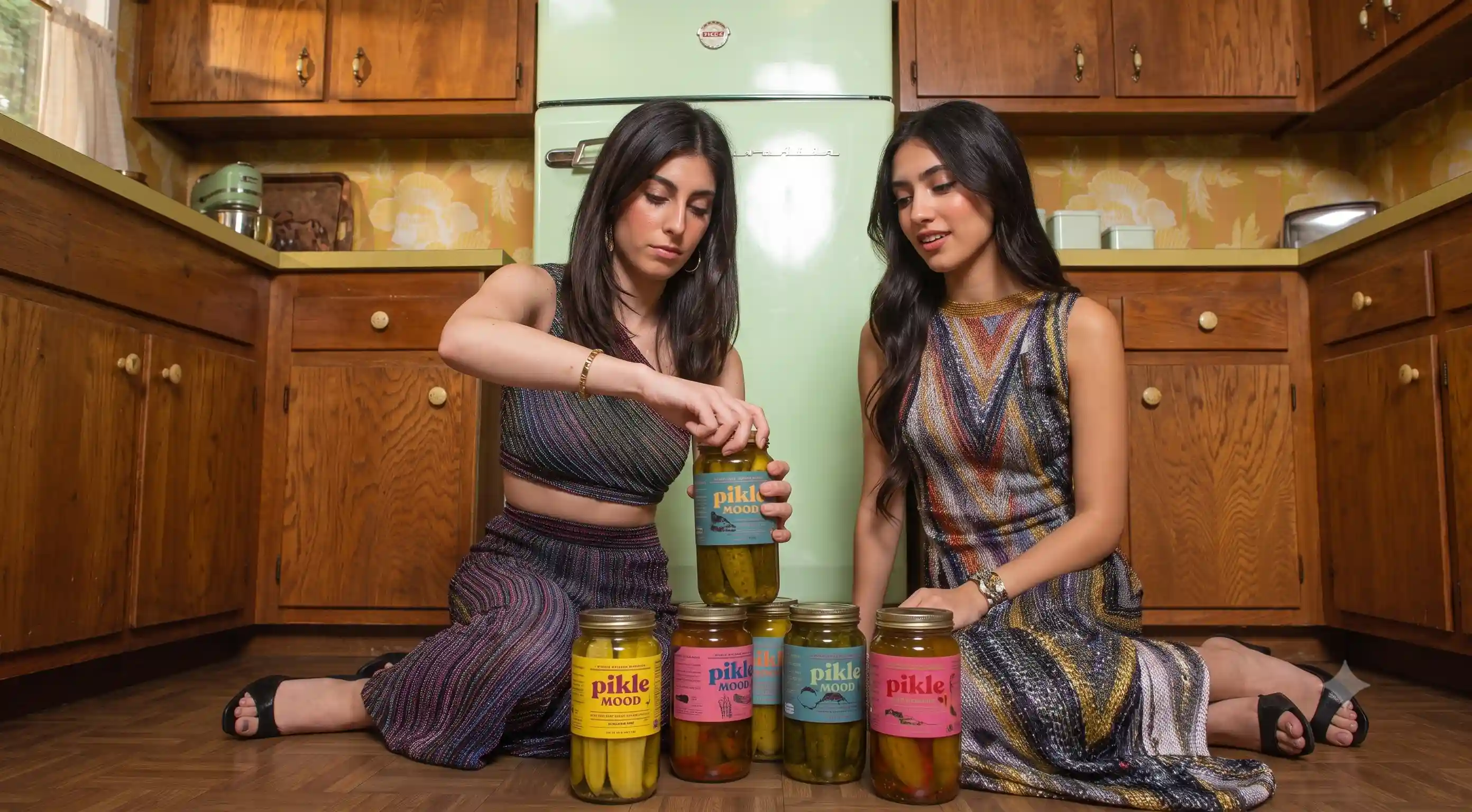
That summer, the pair took a massive leap. They quit their day jobs to capitalize on the trend, launching their Los Angeles-based startup, Good Girl Snacks, and its flagship product line: Hot Girl Pickles. Their goal was to build a brand that spoke directly to Gen Z consumers, bringing a fresh, modern identity to a historically sleepy condiment category.
From TikTok Videos to Paying Customers
Launching a food brand based on an internet trend is risky, but the founders fundamentally understood their target demographic. They officially began selling Hot Girl Pickles directly to consumers (DTC) via their website in February 2024. Instead of relying on traditional advertising, they leaned heavily into the aesthetics, humor, and creator-led culture of TikTok.
The founders used social media to build a community before they even had massive distribution. By creating self-deprecating, highly relatable short-form videos, they successfully converted passive TikTok viewers into paying customers. The strategy worked because it felt authentic—they weren’t just selling a snack; they were participating in an ongoing cultural conversation.
The Founders and the Startup Story
Building a viral brand is one thing; building a functional supply chain is another entirely. Recognizing their lack of traditional food-industry experience, Marcus and Bakhtiar aggressively leveraged their networks. They sought operational advice from former USC classmates who had co-founded the pasta sauce startup Sauz, and they utilized LinkedIn to connect with industry experts to learn the grueling realities of manufacturing, funding, and logistics.
The $8.5 Million Funding or Valuation
Initially, the startup’s operations were financed by an undisclosed friends-and-family round. However, explosive organic demand quickly required institutional capital to keep up with production.
Earlier this year, the startup successfully closed a $3 million seed funding round. This critical capital injection officially pushed the company's valuation to $8.5 million—a staggering financial achievement for a brand that began as a shared social media obsession just months prior. It is important to distinguish that the $8.5 million figure represents the company's total market valuation, rather than the amount of cash raised or its annual revenue.
How the Business Makes Money
While Good Girl Snacks began as a direct-to-consumer digital brand, the real revenue in the food industry lies in wholesale distribution. The founders rapidly parlayed their online success into highly lucrative physical retail space.
Hot Girl Pickles are now stocked on the shelves of Erewhon—a premium Southern California grocer famous for launching viral health-food brands—as well as Whole Foods Market. This dual revenue model allows the company to capture high profit margins online while driving massive sales volume through established national grocery chains.
Why TikTok Helped the Brand Grow
The rapid ascent of this pickle startup highlights exactly why food brands are increasingly turning to creator-led marketing. Historically, emerging food companies faced massive customer-acquisition barriers; buying prime supermarket shelf space and television ads was prohibitively expensive for a bootstrapped startup.
Today, social commerce allows a brand to bypass those traditional gatekeepers. By tapping into existing TikTok trends, startups can achieve millions of impressions organically. This slashes customer acquisition costs (CAC) and allows emerging companies to build brand loyalty through community and personality rather than just product specifications.
Scaling Production and Retail
However, turning viral attention into a sustainable food business is notoriously difficult. As order volumes surge, Good Girl Snacks must navigate the complex realities of commercial food manufacturing. Scaling up production capacity while maintaining strict food safety standards, shelf stability, and consistent flavor profiles requires immense operational discipline. Furthermore, winning retail distribution is only half the battle; the brand now has to ensure strong sell-through rates to maintain those shelf placements against aggressive competitors.
Investor and Founder Views
The founders are clear-eyed about their unique market positioning. In media interviews, Marcus has noted that their brand explicitly avoids taking itself too seriously.
"We're self-deprecating on social media all the time," she explained, pointing out that they do things not typically seen in the traditional pickle category.
Investors clearly see the financial value in this modern approach. By backing Good Girl Snacks with a $3 million seed round, venture capitalists are betting that Gen Z consumers will remain fiercely loyal to a brand that speaks their digital language and reflects their values.
Challenges Ahead
Despite its rapid ascent, Good Girl Snacks faces a steep uphill battle. The grocery condiment aisle is still firmly controlled by multi-generational giants like Vlasic and Mt. Olive. To survive long-term, Hot Girl Pickles must prove that it is more than just a fleeting internet novelty. The company will need to drive consistent repeat purchases, protect its profit margins amid rising manufacturing costs, and eventually diversify its product line beyond a single viral item.
What Comes Next
Armed with their new $3 million in seed capital, Marcus and Bakhtiar are positioned to aggressively scale their operations. The funding will be deployed to expand their manufacturing capacity, secure distribution in a wider footprint of national grocery chains, and fund larger marketing initiatives to keep the brand relevant. As they grow, hiring experienced CPG executives to manage the complexities of their rapidly expanding supply chain will be a critical next step.
Conclusion
The story of Good Girl Snacks is a masterclass in modern brand building. By recognizing a cultural moment on TikTok and executing a smart, community-led marketing strategy, two college friends managed to turn a digital punchline into an $8.5 million business reality. As the lines between social media entertainment and consumer purchasing continue to blur, this viral food startup proves that the next major grocery brand is just as likely to be born on a smartphone screen as it is in a corporate boardroom.
Further reading and useful links
Reader questions
Frequently asked questions
Who founded Good Girl Snacks?
Good Girl Snacks was founded by USC graduates Leah Marcus and Yasaman Bakhtiar in 2023.
What is Good Girl Snacks' valuation?
The startup achieved an $8.5 million valuation following the close of a $3 million seed funding round.
Where are Hot Girl Pickles sold?
In addition to direct-to-consumer sales via their website, Hot Girl Pickles are stocked in premium grocers like Erewhon and Whole Foods Market.
How did the startup gain initial traction?
The founders leveraged TikTok culture, creating authentic, self-deprecating videos that capitalized on an internet pickle craze to build a direct community.
Nexuswild welcomes factual corrections. Email contact@nexuswild.com with evidence and the article URL.