
US DFC Expands Investments in Critical Minerals and Digital Infrastructure
I see the United States ready to grow its direct equity investments across Africa. The focus is on minerals, transport routes and digital connections. Washington wants to mix up supply chains and build business links with African markets.
The US International Development Finance Corporation, known as DFC is the government’s investment agency. DFC has pledged over $14 billion for projects in Africa. More than $3 billion of that money is aimed at minerals or related projects said DFC officials who spoke to Reuters on October 9 2026.
DFC has also green‑lit an equity stake of up to $155 million in WIOCC Group, a company that builds networks across Africa. DFC officials say equity will play a role where projects hold strategic value but loans, guarantees and political risk insurance will stay key to DFC work.
This change arrives while the United States and other big economies look for sources of minerals that power batteries, electric cars, clean energy and high‑tech factories. It also shows that strong supply chains need more than raw material they need steady transport, power and digital links.
Equity investment takes a role
Traditionally development banks help projects by giving loans, guarantees and insurance to pull in private money. Equity gives a path: an investor takes an ownership share and shares in a project’s possible profit or loss.
For DFC using equity could help projects that need long‑term capital or that are strategically important beyond quick money. These investments can also pull in investors when public involvement makes a project safer or more appealing.
Reuters said that Vibhuti Jain, DFC’s manager for Africa said the agency plans to increase equity investments as it grows especially in key sectors. She also said that loans, guarantees and political risk insurance would keep being the parts of DFC work for the near future.
This approach does not promise that every project will win. Construction, mining and other works can hit delays, new rules, price swings local pushes back or money‑value changes. Equity owners can also lose part or all of their money if a project fails.
The success of this plan will depend on choosing the projects keeping money tight working with local partners and seeing if the money brings long‑term jobs and growth along with strategic goals.
Critical minerals remain a priority
Critical minerals stay at the heart of DFC’s African work. These substances matter to fields from electric cars and clean power to gadgets, weapons and high‑tech factories.
Africa holds reserves of many minerals like copper, cobalt, graphite and rare earths.. Making a steady supply chain is more than just mining. Plants that process, roads, power and links to world markets decide if the minerals can be sold profitably.
DFC backs projects that use earths and graphite such as work in Mozambique. These investments aim to spread supply and give routes to resources that are too focused in a few nations.
China plays a part in turning raw minerals into finished products. Money from the United States is meant to cut this reliance and give U.S. And partner firms choice in where they get materials.
Spreading supply will take years. New mines and plants need work, big money and special tech. Their success also depends on how much they cost how clean they are, their roads and long‑term need.
For nations the chance goes past just shipping raw minerals. If it makes money, local plants and related work can give jobs grow skill and keep more value in the area. Whether this happens depends on each project’s design. The deals made with governments and local people.
Lobito Corridor links mines to Atlantic markets
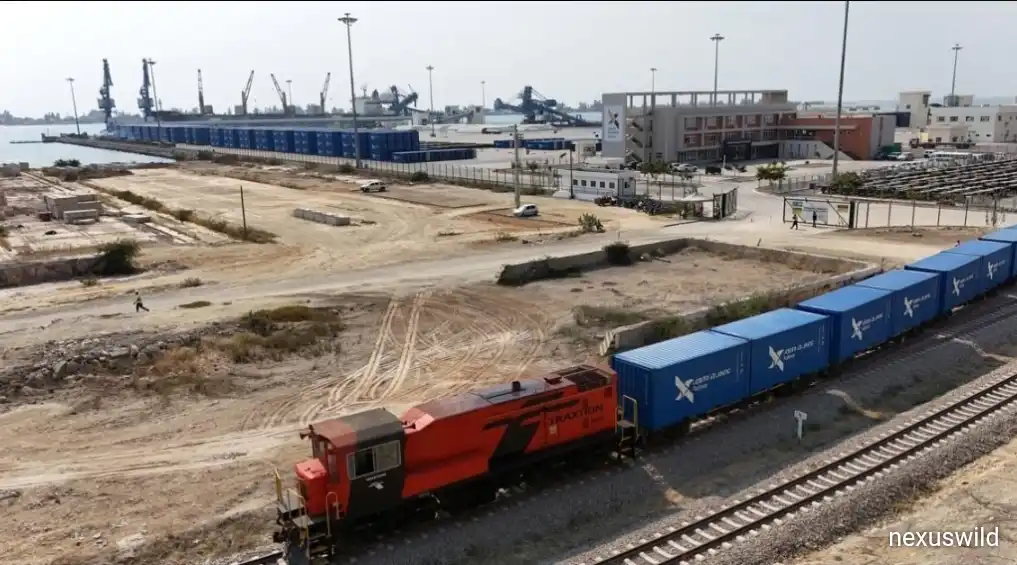
Transport links are another piece of the plan. DFC backs the Lobito Corridor, a road that aims to help minerals and other goods move from the interior of Central and Southern Africa to the Atlantic shore.
The Lobito Atlantic Railway passes through Angola from the port of Lobito to Luau close to the DRC border. The links and added roads aim to give access for mineral regions in the DRC and through broader regional ties, Zambia.
Connections and associated infrastructure are intended to improve access for mineral regions, in the DRC and through regional ties, Zambia.
In December 2025 the DFC announced that a loan has closed to fund the repair and operation of the Lobito Atlantic Railway and its port infrastructure. The agency said the project should raise transport capacity and cut the cost of moving minerals by as much as thirty percent. Those numbers are estimates; they do not guarantee that every shipper will save that much.
A faster corridor could lower the time and cost needed to ship copper, cobalt and other commodities to export markets. It could also boost trade in food, manufactured goods and equipment.
However the corridors long‑term success will rely on maintenance, border procedures, regional coordination, cargo volumes and the growth of linking infrastructure. Rail capacity by itself cannot remove all bottlenecks in a whole supply chain.
WIOCC investment targets Africas backbone
The DFC plans to invest up to $155 million in WIOCC Group taking its strategy into digital infrastructure.
WIOCC runs an open‑access network that supplies wholesale connectivity, land and submarine fibre and data‑centre facilities. The DFC says the platform reaches thirty countries and has over forty core and edge data centres.
The investment aims to grow connectivity and give telecom operators, businesses and large tech firms access to digital infrastructure. The DFC also frames the project as a way to help U.S. Technology providers and hyperscale cloud firms that want to grow in markets.
Fibre networks and data centres form the core of cloud computing, online services and AI tools. As businesses digitise demand may rise for international bandwidth, local data processing and strong links between major economic centres.
Building infrastructure does not automatically mean many people can use it. Affordability, electricity, skills, competition and rules will shape how much businesses and consumers gain.
The projects economic impact will depend not on extra network capacity but also on whether that capacity fuels competitive services and reaches areas that lack good service.
Strategic competition brings opportunities and trade‑offs
The DFCs expansion shows a race among big economies for resources, infrastructure and business ties.
For Washington African mineral supply chains and digital networks have both money and strategy value. Cutting dependence on a sources can make supply chains stronger and infrastructure deals can deepen business ties.
For governments competing investment offers can bring chances to get better financing grow infrastructure and negotiate more local involvement.. Projects must be judged against national priorities, not just strategy.
Key questions are how much jobs and local buying a project creates, whether environmental and labour safeguards are kept, how risks split between private parties and whether host countries get lasting economic benefits.
Public development finance can make hard projects happen. It does not eliminate the need for clear agreements, independent oversight and careful review of long‑term liabilities.
What to watch next
The next step depends on turning investment approvals and promises into funded projects, building work and running infrastructure.
For minerals main signs will be progress in mining and processing better transport capacity and the appearance of long‑term buyers.
For WIOCC investors will look for the closing of the approved equity investment the spread of the network and more data‑centre capacity.
The real test is whether these investments create viable infrastructure that also supports African growth and spreads international supply chains.
The DFCs approach shows a willingness to take ownership actively along with its usual finance tools. Whether this change yields lasting results will depend on how it's carried out local partnerships and the ability to turn plans into real projects.
The next thing to watch is whether the DFCs growing equity stream creates real investments, in African minerals, transport and digital networks and how much of the resulting economic value stays with local economies.
Nexuswild welcomes factual corrections. Email contact@nexuswild.com with evidence and the article URL.