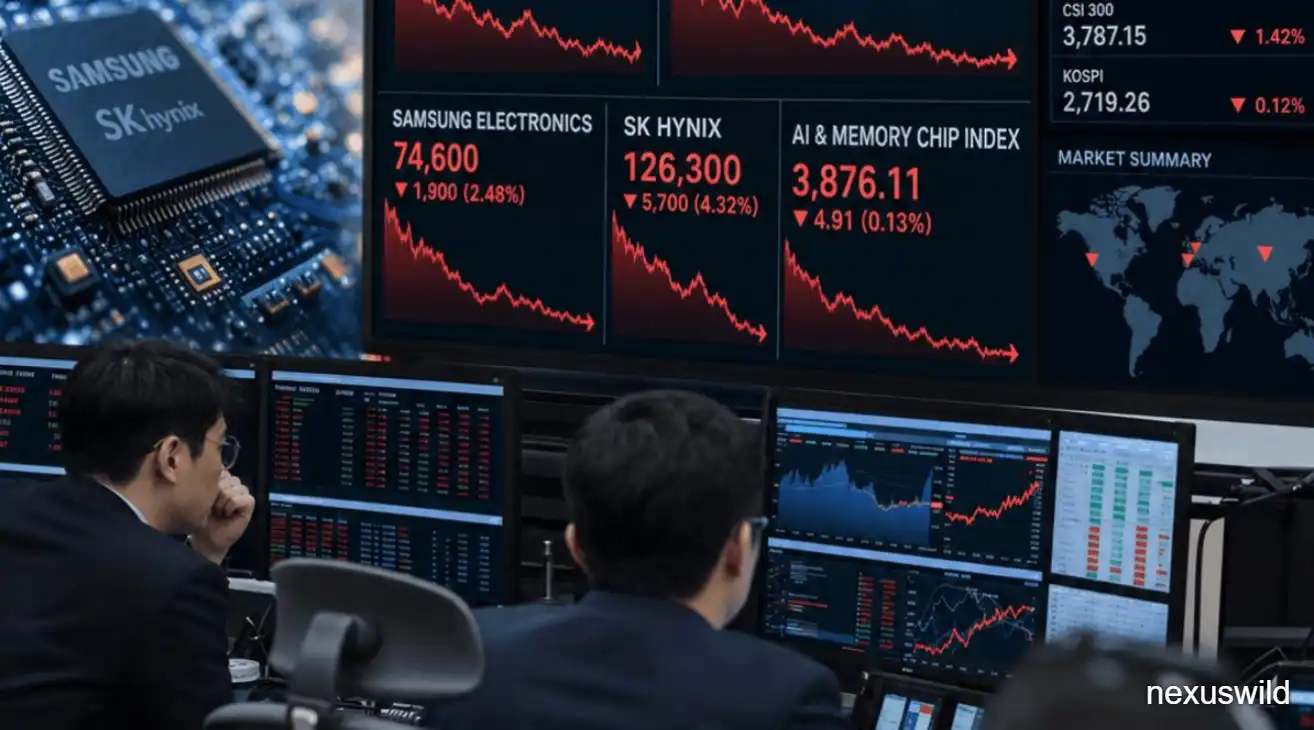

I see that banking regulators in the United States and Europe are looking closely at artificial intelligence as financial institutions grow their use of advanced AI models. They are worried about cyberattacks, operational disruptions and potential threats to stability.
US regulators, such as the Federal Reserve, the Federal Deposit Insurance Corporation and the Office of the Comptroller of the Currency are asking banks about their use of AI tools as reported on October 13 2026. European authorities are also encouraging institutions to strengthen cybersecurity protections and prepare for disruptions that involve increasingly capable AI systems.
The regulatory focus shows that AI can create risks that affect more than one bank especially when institutions rely on shared technology providers or use automated systems with little human oversight. Regulators want to know how banks control these systems monitor their decisions and keep services running during a cyber incident.
US Regulators Examine Banks’ Use of Advanced AI
US banking authorities are paying attention to how financial institutions use advanced AI models in areas like cybersecurity, risk management and other sensitive operations. I observe that this focus is growing.
The scrutiny covers questions about controls, access to sensitive information, human supervision and reliance on external technology providers. These points become especially important as banks explore AI agents that can carry out tasks instead of just responding to individual prompts. I see that banks are moving toward complex AI.
These systems can help financial institutions process information faster spot activity and automate routine work.. Their ability to interact with software and perform tasks can also bring risks if permissions, safeguards or monitoring arrangements are not strong. I worry that weak safeguards could cause problems.
A system that behaves unexpectedly or is manipulated by an attacker might disrupt processes or expose sensitive information. The extent of the risk depends on the systems capabilities the access it receives and the controls surrounding its use. I think that risk levels vary.
The current scrutiny is not a blanket ban on AI in banking. Instead regulators want an understanding of how institutions manage emerging risks while still adopting the technology.
Europe Calls for Stronger AI Risk Management
European authorities have also taken steps to address cybersecurity risks linked to AI models. I note that European regulators are acting quickly.
In July 2026 the European Banking Authority, the European Insurance and Occupational Pensions Authority and the European Securities and Markets Authority released a statement asking for stronger governance and a consistent supervisory approach to technology risks tied to frontier AI models. I believe this statement shows commitment.
The authorities asked institutions to keep strong risk-management frameworks and to strengthen their ability to prevent, detect and manage cyber threats. Their approach builds on existing rules, such as the Digital Operational Resilience Act, which sets requirements for managing information and communications technology risks in the financial sector. I see this as a foundation.
The European Central Bank has also identified digitalisation, AI governance and risk management as priorities. Its work includes assessing how banks use AI and whether the associated risks are under proper control. I think the ECB is thorough.
These measures show an European effort to make sure that technology innovation does not weaken the operational resilience of banks and other financial institutions. <Cite refs={["turn548635search1","turn548635search2"]} /> I feel this is a move.
Autonomous AI Agents Create New Challenges
One area that draws attention is the development of autonomous AI agents. Unlike software tools that perform simple tasks these systems can plan actions use connected applications and carry out sequences of operations with different levels of supervision. I am curious, about how these agents work.
In banking possible uses include analysing transactions supporting compliance teams helping cybersecurity operations and automating workflows. Well designed systems could boost efficiency. Help staff handle large amounts of information. I think these can save a lot of time.
More autonomy can make it hard to foresee every outcome. If an AI agent has many permissions relies on wrong information or is manipulated by malicious inputs it might take actions that clash with a banks policies or security requirements. I worry that such actions could hurt the bank.
Institutions therefore need limits on what agents can access and what agents can execute together with testing, monitoring, audit trails and procedures for human intervention. I see this as a step.
Regulators are particularly interested in whether banks can demonstrate that banks controls remain effective as AI systems become more capable and are integrated into complex operations. I see that regulators are keen.
Cybersecurity Risks Could Extend Across the Financial System
AI presents a challenge for financial services. Banks can use AI to strengthen fraud detection and security monitoring. Attackers may also use advanced models to identify software weaknesses, automate parts of cyber operations or develop more convincing fraudulent communications. I think AI can be a tool.
A successful attack against one institution could have consequences if it affects shared technology infrastructure or a service provider used by multiple financial firms. I worry that a single attack could spread.
European supervisory authorities highlighted these dependencies in their September 2026 assessment of financial-system risks. Banks warned that reliance on external technology providers, combined with evolving AI-enabled cyber threats could amplify disruptions. I understand the concern.
This is particularly important for banks that depend on cloud platforms, external software and common payment or data-processing systems. A disruption at a provider could affect several institutions at the same time. I worry about services.
Regulators are consequently encouraging firms to improve arrangements, incident response plans and recovery capabilities. The objective is not to prevent attacks but also to ensure that essential banking services can continue or be restored quickly when disruptions occur. <Cite refs={["turn548635search4","turn548635search5"]} /> I hope these measures help.
Financial Stability Is Part of the Concern
The growing use of AI has implications beyond technology departments. If an AI-related incident interrupts payments affects services or undermines confidence in a major financial institution the consequences could extend to customers and other market participants. I feel that customers could be affected.
The concentration of technology services among a small number of providers can increase the potential for a single incident to affect multiple institutions. Automated systems may also create challenges if banks cannot quickly identify why a process failed or how to stop an unintended action. I think banks need to be ready.
These scenarios are risks under examination, not evidence that a systemic banking disruption's imminent. European authorities have continued to describe the system as resilient while calling for greater preparedness against emerging threats. I am hopeful that resilience holds.
The central regulatory question is whether banks can adopt AI without creating weaknesses that become difficult to contain during periods of market or operational stress. I see banks must balance risk.
What the Scrutiny Means for Banks and AI Companies
For banks closer supervision could increase spending on cybersecurity, AI governance, independent testing and operational resilience. Institutions may need to document how models are used restrict access to systems and demonstrate that employees can intervene when automated processes behave unexpectedly. I think banks will need to invest.
AI developers and cloud providers serving institutions may also face more questions about security testing, data handling, reliability and incident reporting. Banks could place emphasis on contractual safeguards and contingency plans when selecting external technology partners. I believe developers must be careful.
The additional oversight may increase implementation costs for institutions that have adopted AI quickly without building equivalent risk-management capabilities. At the time stronger controls could help financial firms use AI more reliably and maintain customer confidence. I am concerned about costs.
For now regulators in the US and Europe are concentrating on understanding the risks strengthening existing safeguards and assessing whether further supervisory guidance is needed. The direction of rules will depend on how AI capabilities develop and what regulators learn from their engagement with financial institutions. I hope regulators find guidance.
Nexuswild welcomes factual corrections. Email contact@nexuswild.com with evidence and the article URL.