
A stone coffin that has stood at Westminster Abbey for generations is the subject of new research arguing that its occupant was likely a senior medieval churchman rather than the Roman notable named on its side. The sarcophagus bears an inscription to Valerius Amandinus, a wealthy Briton who lived in London between 300 and 400 AD, but a large Latin cross cut into the lid points to a burial many centuries later. Writing in the Journal of the British Archaeological Association, Warwick Rodwell, consultant archaeologist at the Abbey, reviews the evidence and narrows the possibilities to two late Saxon abbots. The paper brings together historical records, a fresh reading of the nineteenth-century investigations, new osteological work and radiocarbon dating carried out at the Scottish Universities Environmental Research Centre. Its central conclusion is deliberately modest: the occupant was likely a high-status monk buried in a recycled Roman container, with Aelfwig, who died around 1020, the strongest candidate. Rodwell does not claim a definitive identification. The study instead shows how careful re-examination of a long-familiar object, combined with modern scientific dating, can sharpen a question that has remained open since the 1860s. The inscription and the cross record two different moments in the object's history, separated by centuries, and neither can be read in isolation from the burial between them.
The Sarcophagus and Its 150-Year Mystery
The object at the centre of the study is a limestone sarcophagus, a stone coffin whose sides carry an inscription naming Valerius Amandinus. He was a wealthy inhabitant of Roman London, and the inscription places him in the period between 300 and 400 AD. That origin would ordinarily make the container a Roman artefact of considerable interest in its own right. Yet the lid tells a different story. A large Latin cross was carved into it at some point in the tenth or eleventh century, a modification that makes little sense for a Roman burial and instead suggests that the coffin was reused for a Christian burial centuries after it was first made. The sarcophagus was encountered accidentally in 1820, when workers broke the lid into six pieces, and was formally 'discovered' in 1869 after the lid had been repaired. Since then, the question of who lay inside has circulated through archaeological literature without being settled. A nineteenth-century description called the remains those of a 'robust young man' no older than thirty, an assessment that shaped later assumptions for more than a century. The new paper treats this long history not as a curiosity but as a body of evidence to be tested, weighing the inscription, the cross, the burial context and the surviving human remains against one another. Its first task is to separate the coffin's Roman manufacture from its later Christian reuse, two chapters that nineteenth-century observers did not always keep distinct.
The 2009 Time Team Investigation
The sarcophagus was not examined in isolation. One strand of the new research draws on archaeological and architectural work carried out in 2009, when the television programme Time Team investigated the archaeology of King Henry III's original sacristy, along the north side of Westminster Abbey. That structure and its surrounding area formed the setting in which the Roman coffin had been found, and understanding the sequence of building activity matters for interpreting the burial. A sacristy is a room associated with the storage of vestments and sacred vessels, and the medieval Abbey's versions of such spaces were repeatedly altered over time. The 2009 work helped establish the physical context in which a reused stone coffin could have been placed, including the possibility that the space was later buried over or repurposed as the complex changed. The new paper treats this architectural evidence as part of a wider chain of inquiry: where the coffin stood, how the lid was modified, and what the surrounding deposits could reveal about when the burial took place. It is a reminder that archaeology often advances by joining observations made decades apart, and that a television programme's field investigation can supply data later used in a peer-reviewed study. Such contextual work matters most where documents are thin and the physical arrangement of a site carries much of the evidence for where a burial was placed and why.
The Skeleton That Was Not Missing
One of the more unexpected findings in the study concerns the fate of the skeleton itself. For years, researchers had believed that the human remains from the sarcophagus were missing, leaving a significant gap in the history of the burial. That assumption was overturned when the sarcophagus was moved to a conservation studio. During the resulting examination, staff from Pre-Construct Archaeology removed the lid and found that an almost complete human skeleton was still inside. The rediscovery mattered for two reasons. First, it meant that the nineteenth-century assessment could be checked directly rather than accepted at second hand from old notes. Second, it provided the material needed for scientific dating and for a new osteological profile. Rodwell describes the survival of the skeleton as important to the investigation, because the combination of bones, coffin and modified lid makes it possible to test whether the different elements belong to the same burial event. The episode also illustrates a practical truth about museum and heritage work: an object thought to be fully documented can still hold unrecognised evidence in plain sight, particularly when it is opened and recorded under controlled conditions rather than simply displayed behind glass. Without that correction to the record, any attempt to identify the occupant would have been built on a false premise.
Pre-Construct Archaeology's 2025 Excavation
The most recent fieldwork connected to the sarcophagus was completed in 2025 by Pre-Construct Archaeology, one of the United Kingdom's larger commercial archaeological and heritage organisations. The excavation formed part of the work supporting construction of the King Charles III Sacristy, a new facility at Westminster Abbey scheduled to open the following year. Because major building work on a historic site requires careful archaeological recording, the project provided an opportunity to revisit the area where the coffin had originally been found and to examine deposits that earlier investigations could not fully resolve. As part of that programme, human bone specialist James Young Langthorne of Pre-Construct Archaeology carried out a fresh examination of the skeleton. His results form a central piece of the new paper, replacing reliance on the 1800s description with a modern assessment. The combination of a development-led excavation, specialist bone analysis and historical research is typical of contemporary archaeology in Britain, where construction projects regularly generate new information about sites that have been studied for generations. For the Abbey, the work turned a building project into a research opportunity. The timing was fortunate, because the new sacristy project created a need for exactly the kind of detailed recording that the sarcophagus study required to answer questions left open for more than a century.
A New Osteological Profile
The fresh examination produced a profile that differs sharply from the nineteenth-century account. Langthorne concluded that the deceased was a man between 35 and 49 years old, standing approximately five feet nine inches tall. By contrast, the earlier description had suggested a 'robust young man' no older than thirty and roughly five feet seven inches in height. The revised age range is especially important because it changes which historical individuals could plausibly be considered. Both of Rodwell's leading candidates are thought to have died in their forties or fifties under the assumptions he sets out, a closer fit than the much younger figure once proposed. The new height estimate also alters the physical picture of the person buried in the sarcophagus, and the direction of the change is worth noting: the modern analysis suggests an older and slightly taller man. Osteological age estimation is not an exact science, and the paper presents a range rather than a single number, which is the appropriate level of precision for skeletal evidence. The key point is that a direct, modern study of the bones has replaced a description recorded more than a century ago under very different conditions, with different methods and different expectations. Those figures now underpin the comparison with the two historical candidates, which the earlier description could not reliably support because its age estimate fell outside the plausible range for either man.
Radiocarbon Dating at SUERC
The strongest chronological evidence came from scientific dating. A bone sample was submitted to the Scottish Universities Environmental Research Centre, commonly known as SUERC, for radiocarbon analysis. The resulting date range was 987 to 1052 AD. Radiocarbon dating works by measuring the decay of carbon-14 in organic material and is routinely applied to preserved bone collagen; the result is expressed as a calibrated calendar range rather than a single year, which is why the study reports a span of decades. This range places the burial firmly in the late Saxon period, several centuries after the sarcophagus was originally made in Roman London. It also aligns with the known deaths of both abbots under consideration. Rodwell takes the dating as confirmation that the reuse of the sarcophagus, together with the remodelling of its cover into a Christian form, occurred in the late Saxon period. In doing so, the laboratory result turns a long-standing hypothesis about the cross and the coffin into a claim supported by an independent scientific method. It also provides a fixed point around which the historical and architectural evidence can be organised. The laboratory result is therefore not an isolated number but a test of the hypothesis implied by the carved cross and the reuse of the stone, first noted by archaeologists more than a century ago.
Two Candidates: Aelfwig and Wulnoth
With the burial dated to the late Saxon period, Rodwell turns to the documentary record. He identifies two viable contenders for the occupant of the sarcophagus. The first is Aelfwig, an abbot who died around 1020. Before becoming abbot, Aelfwig had served as a monk at Westminster, which was then a Benedictine monastery. That connection leads Rodwell to describe him as the slightly stronger candidate, since it fits both his burial at the Abbey and his status within the community. The second possibility is Wulnoth, who succeeded Aelfwig and died in 1049. Both men are believed to have been buried at Westminster Abbey, and both therefore match the dating evidence. Rodwell notes that the birth dates of neither man are known. Working backwards, he suggests that either would fit if the abbot was appointed in his early twenties and died close to fifty. The new osteological estimate of a man aged 35 to 49 is broadly consistent with that scenario, though it cannot distinguish between the two. The paper therefore presents the identification as a careful narrowing of possibilities, not a settled answer, and keeps both names in play. It frames the question in the language of probability, reflecting the limits of what bones, documents and dating can jointly establish about one individual's life.
Why an Abbot Burial Fits the Evidence
The case for a high-ranking burial rests on more than the dates alone. Rodwell argues that the individual was honoured with a fine sarcophagus, an unusual distinction that would be consistent with the status of an abbot. A stone coffin was a valuable object in the medieval period, and its use for a single burial implies deliberate selection rather than convenience. The modification of the lid with a prominent Latin cross reinforces the interpretation: this was a Christian burial arranged with care, not a discarded container pressed into service anonymously. The Benedictine community at Westminster would have had both the resources and the motivation to bury a leading monk in such a manner, and the Abbey's own records preserve the names of men who held that office. Rodwell also points out that the deceased's wooden coffin was placed inside the stone sarcophagus, a further sign of a considered burial arrangement. Read together, the quality of the container, its Christian reworking, the location within the Abbey and the revised profile of the remains form a coherent picture of someone of considerable standing. That coherence is suggestive, but it does not by itself supply a name. Even so, the argument remains circumstantial, and the author presents it as an interpretation of converging clues rather than a proof of identity.
A Wooden Coffin Preserved in Lime
Among the details to emerge from the recent work is what Rodwell calls a remarkable new discovery. Inside the stone coffin, researchers identified the rectangular outline of a structure that had long since disappeared. The outline survived as a white residue left by lime, a material historically used in burials. Nothing of the structure itself remained. On the basis of its shape and position, Rodwell concludes that it can only have been a timber coffin, which decayed completely during the roughly seven centuries that the sarcophagus lay buried in the sacristy courtyard. The observation is striking because it recovers information about an object that no longer exists, preserved as a chemical trace rather than a physical remnant. It also adds a layer to the sequence of the burial: a body placed in a wooden coffin, that coffin set within a reused Roman stone coffin, and the stone lid altered with a cross. The finding shows how much can be recovered when a sarcophagus is opened and recorded under conservation conditions rather than merely displayed. In this case, the absence of surviving wood became evidence in its own right. It also explains why the sarcophagus's contents attracted renewed attention when the object was finally moved for conservation work rather than being studied in place within the Abbey.
The Reuse of a Roman Object
The study is also a case history in the reuse of ancient objects. The sarcophagus was manufactured centuries before the person buried in it died, and its inscription still names a Roman individual whose connection to the medieval burial is unknown. Rather than commissioning a new stone coffin, those responsible for the burial used an existing one and adapted its lid to a Christian purpose. Rodwell regards this as a possible early example of recycling a valuable object for an entirely different purpose. The practice is not difficult to understand: a substantial, well-made stone coffin was a resource that could be put to new use, and its age may even have added to its suitability for a person of status. What matters for the present study is that the reuse can now be dated. The radiocarbon result places the adaptation of the coffin in the late Saxon period, giving a chronological anchor to a process that might otherwise be described only in general terms. The Roman inscription and the medieval cross are therefore not contradictory clues but two stages in the life of one object, each legible because the other survived. In that sense the coffin's biography is a small history of changing attitudes towards the material remains of the Roman past in medieval and modern Britain.
What Remains Unresolved
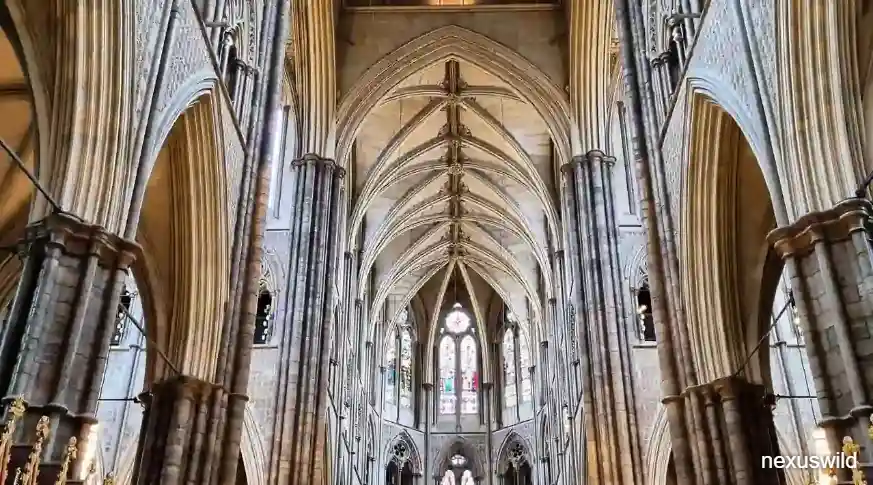
Despite the convergence of evidence, the paper stops short of naming the occupant with certainty. Rodwell states clearly that the identity has not been established beyond doubt, and that two men remain viable contenders. That caution is appropriate. The dating cannot distinguish between two abbots whose deaths fall close together, and the osteological profile supplies a range rather than an individual signature. What the research does establish is the broad outline: a man of high status, buried in a reused Roman sarcophagus at Westminster Abbey sometime between 987 and 1052 AD, in a wooden coffin whose outline survives in lime residue. Visitors can see the sarcophagus today in the Queen's Diamond Jubilee Galleries, where the physical object continues to hold the evidence discussed in the study. The value of the work lies less in a final answer than in the method it demonstrates. A familiar object, examined again with new questions, new dating and new attention to surviving traces, can still yield a substantially clearer story about the people who made and reused it. For historians of the Abbey, that alone makes the exercise worthwhile. Future work on the remains or the archival record may one day sharpen the answer, but the present study is careful not to anticipate what that evidence might show.
Nexuswild welcomes factual corrections. Email contact@nexuswild.com with evidence and the article URL.