
Content and cloud companies, led by Google, Meta, Microsoft and Amazon, accounted for roughly 75% of used international bandwidth in 2025, according to TeleGeography figures cited in trade reports. The same data show them taking part in more than two-thirds of planned new subsea cable systems. Ownership of the cables themselves is more mixed, and governments are moving to tighten control.
Who owns what
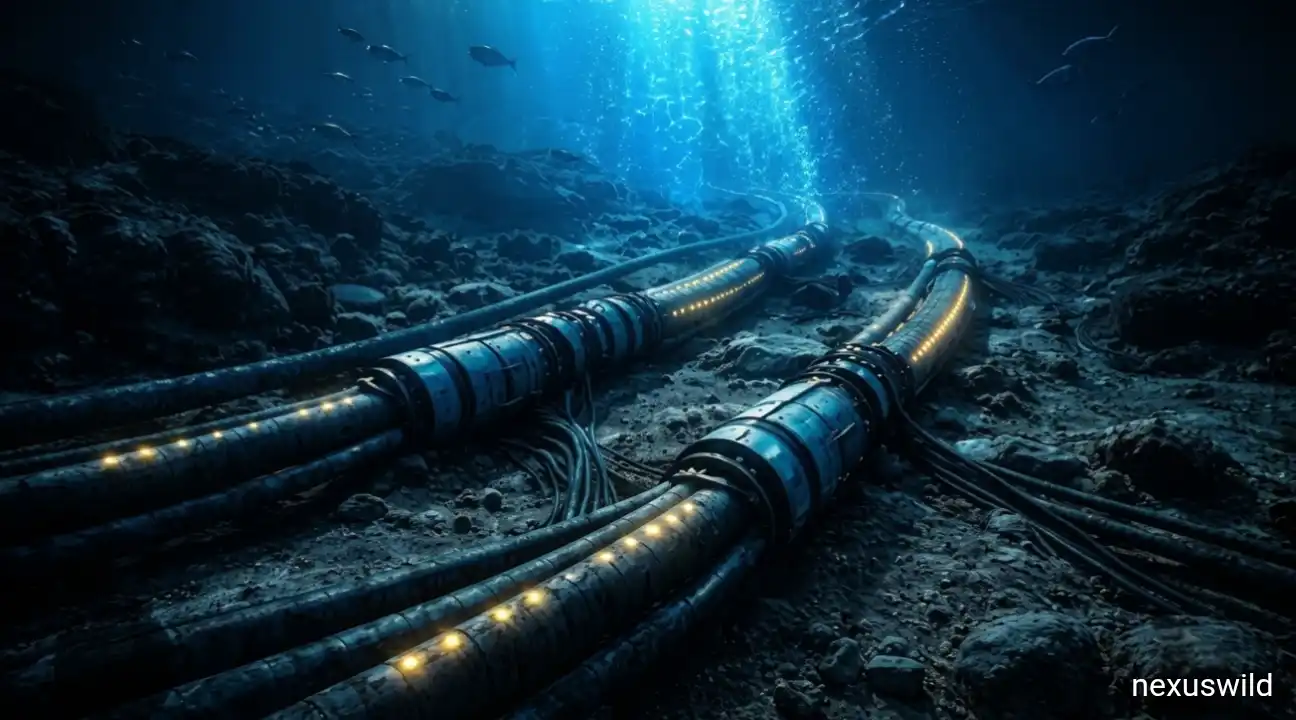
Submarine cables carry more than 99% of intercontinental data traffic. TeleGeography's 2026 map, as analysed by Mappr, lists 694 cable systems and 1,893 landing stations. That count includes planned systems. A separate summary of TeleGeography data put in-service systems at 596 in November 2025.
Bandwidth use is not the same as ownership. Control can come through sole ownership, joint ownership, consortium stakes, long-term capacity rights, leases or reservations, according to a market analysis by MacMyths. Telecom carriers still hold many of these stakes.
Even so, tech companies are accumulating them. Mappr's analysis of TeleGeography data says Google has an ownership stake in 34 cable systems and Meta in 20. Another statistics roundup cites Google Cloud as saying 33, so the count varies by source and date.
Capacity magazine reported in March that hyperscalers have shifted from buying capacity on carrier-built cables to co-investing in, and sometimes owning, new routes. AzerTelecom chief executive Ana Nakashidze told the publication that network operators could see their roles diminish as those firms drive maintenance and infrastructure agendas.
A caveat applies: an IEEE ComSoc report noted that hyperscalers do not share traffic data, so the published shares are estimates.
The money behind the build-out
TeleGeography says new cable construction averaged more than $2 billion a year over the previous nine years. Its forecast, published in July 2026, sees about $5 billion a year from 2026 to 2035, including $11 billion on intra-Asian routes over that period. The company also reported that the value of new cables planned to enter service between 2026 and 2029 exceeds $16 billion.
For 2026, TeleGeography projected nearly 40 cables coming online, representing roughly $6 billion in spending, the highest in at least a decade. It said ownership economics are one reason for the surge, because content providers are the largest bandwidth users.
Regulators step in
On 25 June 2026, the US Federal Communications Commission adopted a Second Report and Order on submarine cable licensing, released on 30 June. According to law-firm summaries from Akin and Greenberg Traurig, the order extends licensing to owners and operators of submarine line terminal equipment, adds security conditions and requires an annual foreign-adversary report from qualifying licensees.
It builds on a 2025 order that created a presumption against certain landing licences for applicants controlled by foreign adversaries. The FCC says the aim is to speed deployment while strengthening national security. Whether the rules shorten approvals or add another review layer remains to be seen.
Fragile links and thin repair capacity
The risks are physical. Multiple cables in the Red Sea were cut on 6 September 2025, and Converge Digest reported that repairs typically take weeks because of ship logistics and permitting. The Red Sea carries a large share of Asia-Europe traffic.
Recorded Future's Insikt Group counted four incidents involving eight cable damages in the Baltic Sea and five around Taiwan in 2024 and 2025. It said at least five of the nine incidents were attributed to anchor dragging, including by vessels linked to Russia or China, but that attributing cuts to state sabotage is difficult. US and European officials have suggested some Baltic cases were likely accidents, according to Data Center Dynamics.
Repair capacity is limited. A technology explainer citing TeleGeography says about 60 ships worldwide can work on cables, fewer than 20 are dedicated to repair, and about two-thirds of maintenance ships will be near the end of their working lives by 2040. In July 2026, Global Marine Group announced a contract for a new maintenance ship due in the fourth quarter of 2029.
What to watch next
Applicants and licensees face new ownership disclosures and compliance certifications under the FCC order, which will show how the rules work in practice. Watch whether the roughly 40 cables projected for 2026 enter service on schedule, whether more repair vessels are ordered, and whether routes through chokepoints such as the Red Sea are diversified. The balance between carriers and hyperscalers on new consortia is also worth following.
Nexuswild welcomes factual corrections. Email contact@nexuswild.com with evidence and the article URL.