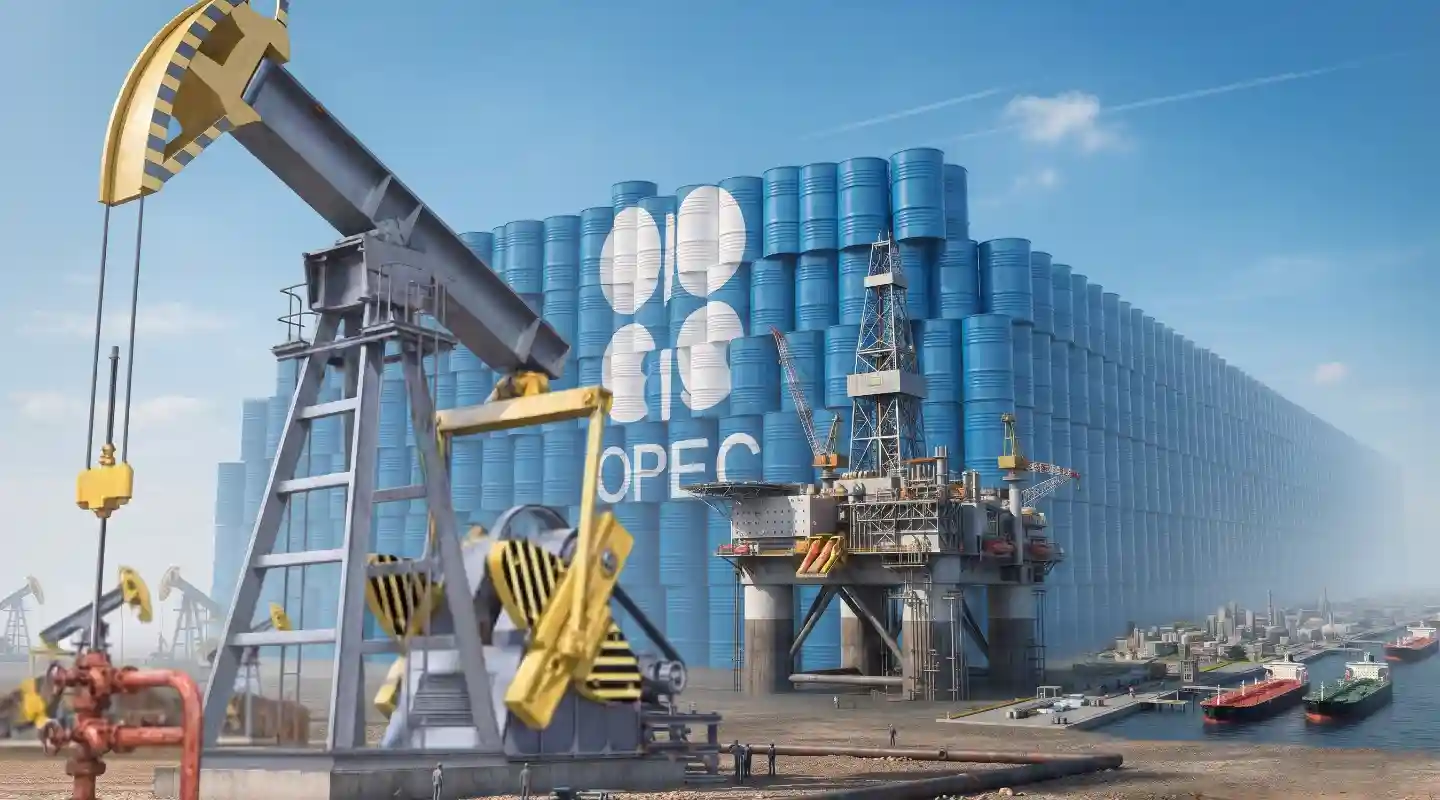

Oil remains one of the important inputs in the global economy. It influences transportation, manufacturing, electricity generation in some markets, petrochemical production and the cost of moving goods across supply chains. Even companies that do not directly purchase oil can experience oil’s effects through higher freight charges, fuel expenses, packaging costs and supplier pricing.
That makes decisions by oil‑producing countries important far beyond the energy sector.
On November 1 2026 OPEC+ producers were reported to have reached an agreement in principle to keep their December oil production targets unchanged. The understanding was reported by Reuters citing three people with the matter ahead of an online meeting involving seven key members: Saudi Arabia, Russia, Iraq, Kuwait, Algeria, Kazakhstan and Oman.
The move follows months of uncertainty in global energy markets. Gulf oil exports have been disrupted by the Iran war while producers have been gradually restoring shipments as conditions permit. Nevertheless many remain below their assigned production targets.
The decision signals that the group is prioritising stability in its production policy while preparing to negotiate quotas for 2027. For businesses this creates a predictable policy outlook in the near term but it does not remove the risk of volatile energy prices.
The distinction is important. Production targets are not the same as oil production and neither automatically determines how much crude reaches international customers.
Why OPEC+ Is Choosing Stability of Another Production Adjustment
OPEC+ brings together members of the Organization of the Petroleum Exporting Countries and partner producers including Russia. Its production decisions influence the amount of oil that participating countries are permitted or expected to produce.
The alliance has spent much of 2026 adjusting production targets after supply reductions. In September it completed the phased rollback of a production cut of 1.65 million barrels per day that had been introduced in 2023.
However another layer of production cuts estimated at around 2 million barrels per day and covering members remains in place through the end of 2026.
The latest agreement in principle would leave December targets rather than introduce another increase or reduction. This is consistent with the group’s focus on reviewing members’ production capacities and establishing the reference levels that will determine their 2027 quotas.
The seven participating countries are also dealing with a supply environment. Gulf producers have been increasing exports following months of disruption. Several remain unable to reach their existing production targets.
In these circumstances changing quotas may have limited immediate value if producers cannot physically deliver the additional oil. Keeping targets steady gives the group time to assess production capabilities and negotiate the phase of its supply policy.
The decision should therefore be understood as a pause in policy adjustments not proof that global oil supply has returned to normal.
Oil Supply Risks Remain Despite Unchanged Production Targets
One of the misconceptions in energy markets is that unchanged production targets automatically mean unchanged supply.
In reality oil availability depends on production capacity, export infrastructure, shipping routes, storage facilities and the ability to transport crude to buyers.
The continuing disruption to Gulf energy exports demonstrates this distinction. When an oil‑producing country has permission to increase production it may not be able to deliver additional volumes if infrastructure is damaged shipping operations are restricted or vessels face security risks.
The International Energy Agency’s October 14 Oil Market Report highlighted the scale of the disruption. It estimated that global oil supply increased to 102.3 million barrels per day in September supported by output from Gulf producers. However the agency still projected an annual supply decline of 5.8 million barrels per day in 2026 reflecting the impact of the conflict and related disruptions.
The report also highlighted pressure on global oil inventories. When commercial stockpiles decline companies and governments have buffers to manage unexpected supply interruptions.
For businesses this means oil prices can remain sensitive to developments even when OPEC+ makes no formal adjustment, to production targets.
A disruption affecting an export route can influence physical availability, transportation costs and the price of crude grades needed by specific refineries. Companies that depend on deliveries may therefore face higher procurement costs even without a new production decision.
Airlines Could Face Pressure From Fuel Costs
Airlines are among the businesses most directly exposed to oil‑market movements.
Jet fuel is an operating expense and changes in crude and refined‑product prices can affect profitability. When fuel becomes more expensive airlines must decide whether to absorb the costs increase ticket prices adjust routes or improve fuel efficiency.
The impact is not always immediate. Some airlines use fuel‑hedging agreements to manage price exposure while others purchase fuel at prices linked to prevailing market conditions. The timing and effectiveness of those arrangements differ across companies.
An unchanged OPEC+ production target does not guarantee aviation fuel. Refinery capacity, regional inventories, transport costs and geopolitical risks also influence jet‑fuel prices.
This is particularly important for airlines operating long‑distance routes, where fuel consumption represents a significant portion of operating expenses.
Higher fuel costs can also affect passenger demand. When airlines raise fares to protect margins customers may reconsider travel creating a second financial challenge for carriers.
The wider travel industry can experience effects. Hotels, tour operators, airport service providers and cargo companies may face transportation and operating expenses.
For these businesses the key issue is not simply whether OPEC+ increases production. It is whether the broader energy market becomes more predictable and affordable.
Shipping and Logistics Companies Must Prepare for Uncertain Energy Costs
International shipping companies are heavily exposed to the cost of transporting goods between production centres and consumer markets.
Oil‑price changes can influence fuel expenses, trucking costs and other logistics services. If energy prices increase freight operators may attempt to pass some of the expense to customers through revised rates and fuel surcharges.
Geopolitical instability can make the situation more complicated. Shipping companies may face journeys, higher insurance premiums, additional security requirements and disruptions to established maritime routes.
These costs can emerge when the underlying price of crude remains unchanged.
The continuing disruption around Gulf export routes has demonstrated how energy transportation can become a source of risk. Oil producers may have the ability to pump crude. International customers still depend on secure maritime infrastructure to receive it.
For manufacturers and retailers the consequences can spread through supply chains. Higher freight costs can increase the price of materials, finished products and imported components.
Companies that depend on just‑in‑time inventory systems may also need to reconsider their stock policies when shipping schedules become less reliable.
The OPEC+ decision may reduce uncertainty about production policy but it cannot independently resolve wider maritime and geopolitical risks.
Manufacturers and Chemical Producers Face Pressure Beyond Crude Oil
The business impact of oil prices extends beyond companies that directly consume large quantities of fuel.
Petrochemical manufacturers depend on oil and other hydrocarbon feedstocks to produce materials used in plastics, synthetic fibres, packaging, industrial chemicals and consumer products.
When feedstock prices rise producers may experience manufacturing costs. Their ability to pass those increases to customers depends on competition demand conditions and the availability of materials.
The same pressure can reach the textile and fashion industries through fibres such as polyester. Packaging producers may also face cost changes because plastics are closely connected to petrochemical markets.
Manufacturers therefore need to monitor both prices and the cost of refined petroleum products and chemical feedstocks.
Some companies may respond by improving energy efficiency diversifying suppliers negotiating longer‑term purchase agreements or changing their production mix.
However these measures cannot eliminate exposure completely. Global manufacturing remains closely connected to energy markets and a prolonged supply disruption can affect costs across industrial sectors.
For businesses operating with profit margins, even relatively small increases in raw‑material and transportation expenses can influence investment decisions and pricing strategies.
Oil‑Importing Countries Could Face Additional Economic Pressure
Oil‑importing economies are particularly sensitive to changes in energy prices because a substantial share of their domestic fuel requirements depends on purchases from overseas suppliers.
When crude prices rise import bills can increase, potentially affecting trade balances currency demand and government finances. Depending on domestic pricing policies higher costs may also affect consumers through fuel prices, transportation charges and inflation.
India provides an example of this exposure. As an importer of crude oil the country is sensitive to international supply conditions, shipping costs and changes, in global benchmark prices.
Higher oil prices can increase the cost of importing energy. Put pressure on the rupees external value. They can also affect fuel marketing companies, refiners, airlines, transport operators and industries that use inputs.
However the impact depends on factors, including the price at which imported crude is purchased the currency exchange rate, domestic tax structures, refinery margins and government policy.
Oil‑exporting economies may benefit from prices through higher export revenues although production disruptions can prevent them from taking full advantage of an increase.
The same market development can therefore create financial outcomes for importing and exporting countries.
Businesses Must Separate Production Targets From Actual Market Supply
For companies planning budgets and procurement strategies understanding the difference between targets and actual production is essential.
A production target is a policy benchmark. Actual output can be lower because of maintenance, technical problems, infrastructure damage, investment constraints or geopolitical disruptions.
This distinction becomes particularly important when companies evaluate announcements about supply or unchanged production levels.
If targets remain steady but actual exports increase because disrupted shipments recover the market may receive oil without any formal change in quotas.
Conversely an increase in production targets may have immediate effect if infrastructure or transportation restrictions prevent additional barrels from reaching buyers.
The IEAs October assessment highlighted this difference by documenting increases in supply during September while warning that overall disruptions would continue to affect annual market availability.
Businesses should therefore monitor production data, export volumes, inventory levels, tanker movements and refined‑product availability than relying only on headline announcements.
A comprehensive approach can help companies identify supply problems earlier and prepare alternative procurement arrangements.
The 2027 Quota Negotiations Could Become More Important Than the December Decision
Although the December decision matters for the near‑term market outlook the significant policy question may involve the production framework for 2027.
OPEC+ needs to complete an assessment of members maximum production capacity. The assessment is intended to provide reference points for the production baselines that will determine country quotas.
Different members have abilities to increase output. Some have production capacity while others may face investment, infrastructure or operational limitations.
The allocation of quotas could therefore become an important issue during negotiations.
The remaining production cuts also create another question: how quickly should the group unwind them once market conditions allow?
Removing supply restrictions quickly could add pressure to prices if demand is weak or inventories are rising. Keeping restrictions in place for longer could support prices. May limit the ability of producers to increase export revenues.
The groups next major ministerial meeting is scheduled for November 29 2026 according to its June 2026 statement. The outcome of the capacity review and subsequent negotiations could shape the direction of oil policy beyond the end of the year.
For energy companies, refiners, airlines and major manufacturers these discussions could influence procurement planning and investment decisions into 2027.
Source: OPECs June 2026 Ministerial Meeting statement.
What Global Companies Should Watch Next
The immediate effect of December targets may be limited if physical supply conditions continue to improve or deteriorate independently of formal quotas.
Companies should pay attention to the recovery of Gulf exports changes in crude inventories, tanker security, refinery operating rates and developments in the negotiations over 2027 production baselines.
Businesses with fuel or raw‑material exposure should also examine whether their existing procurement and risk‑management arrangements can withstand further volatility.
Longer‑term planning may require supplier diversification, improved energy efficiency, more careful inventory management and stronger financial protection against unexpected cost increases.
For companies the ability to respond to changing energy conditions can be an important competitive advantage. A business with procurement contracts and efficient operations may manage volatility more effectively than a competitor dependent on a single source of supply.
Conclusion
OPEC+s decision to keep December oil production targets matters because energy costs influence nearly every part of the global economy. Airlines, shipping companies, manufacturers, chemical producers and oil‑importing countries all depend on energy supplies to manage operating expenses and plan investments.
The agreement in principle provides some clarity about the groups production policy but it does not guarantee stable oil prices or a return, to normal supply conditions. Geopolitical disruptions, physical production limitations, shipping risks and inventory changes remain market influences.
The next major challenge will be determining production quotas for 2027. Deciding how the remaining supply restrictions should be managed.
For companies the message is clear: energy‑market stability cannot be judged by production targets alone. The actual availability of oil the cost of transporting it and the reliability of supply routes will ultimately determine how the decision affects business performance.-
Nexuswild welcomes factual corrections. Email contact@nexuswild.com with evidence and the article URL.