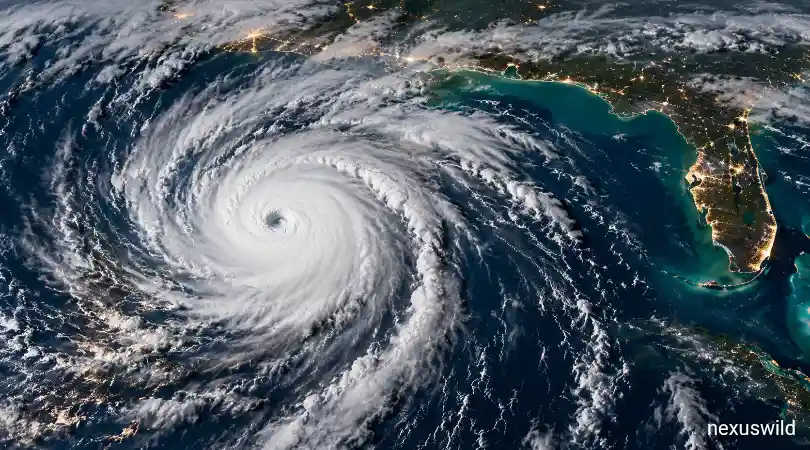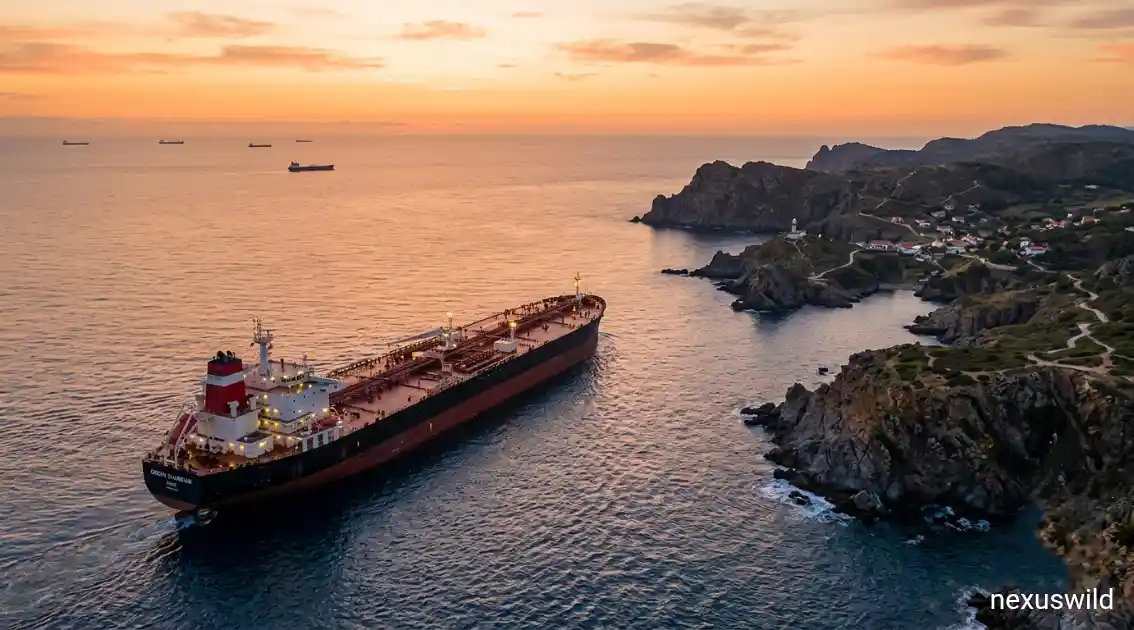

The Strait of Hormuz is a narrow channel between Iran and Oman that links the Persian Gulf to open sea. In normal times it handles a large share of the world's oil and a fifth of its liquefied natural gas. This year it has shown what happens when a single route is disrupted, because few other routes can take its place.
How much passes through
The US Energy Information Administration (EIA) estimated that about 20 million barrels a day of oil moved through the strait in 2024, equal to about 20% of global petroleum liquids consumption and more than a quarter of seaborne oil trade. Around one-fifth of global LNG also passed through, mainly from Qatar.
Most of it goes east. In 2024, 84% of the crude and condensate and 83% of the LNG that moved through the strait went to Asian markets, according to the EIA. China, India, Japan and South Korea together took 69% of the crude and condensate.
Bypasses exist but are limited. The EIA estimated about 2.6 million barrels a day of spare Saudi and UAE pipeline capacity could be used to avoid the strait. That is a small fraction of normal flows, and LNG has no pipeline alternative.
What has happened in 2026
Al Jazeera reported that US-Israeli strikes on Iran began on February 28 and that Iran's Revolutionary Guard announced the strait's closure on March 2. Traffic fell sharply. Between July 15 and August 23, it averaged about five vessels a day, roughly 95% below pre-war levels, according to Al Jazeera's analysis.
The effects spread quickly. The IEA reported in September that more than 10 million barrels a day of Gulf output remained shut in during August, with total Gulf oil exports around 13 million barrels a day, nearly half their pre-war level. It forecast 2026 global oil supply to fall 5.7 million barrels a day and global oil demand to fall 2.5 million barrels a day. Observed global inventories have drawn 507 million barrels since February.
Another source, Kpler, painted a more recovered picture for crude. It said Gulf oil flows, excluding Iran, rose above 81% of pre-war levels in September, helped by pipelines and workarounds, with about 40% of exports now bypassing the strait. The two figures measure different things and different months, so they are not contradictory, but they show how uncertain a clear count is.
Why prices reach far beyond the Gulf
Oil is priced globally, so a disruption in one place lifts costs everywhere. The IEA said Brent traded around $105 a barrel in mid-September, roughly 45% above pre-war levels. Al Jazeera reported Brent near $99.57 on October 6, against about $72 before the war.
Refined fuels were hit harder. The IEA said US diesel prices passed $200 a barrel in early September, about 94% above pre-war levels, and Atlantic Basin refining margins hit record levels in August.
Gas followed. The World Bank said its natural gas price index rose 24% in March, with the Asian LNG benchmark up about 94% and the European benchmark about 59%. Both regions compete for the same limited cargoes, while the US benchmark was largely insulated by domestic production.
From fuel to inflation to borrowing costs
Energy costs are now feeding into broader prices. Forbes reported US consumer prices rose 3.4% in the year to August, with energy up 16.3%, and tied the rise to the Iran conflict. The ECB cited energy costs when it raised rates in September.
That connects the shipping lane to bond markets and company results. Higher inflation raises interest rate expectations, which push up government bond yields, which in turn raise borrowing costs for businesses and households.
Who is most exposed
The IEA and Al Jazeera data point to uneven effects. Countries that rely on Middle Eastern oil and cannot easily switch are most exposed, including Pakistan (78%), Japan (77%) and Kenya (77%), according to figures cited by Al Jazeera. Trade has also been redirected. Al Jazeera reported Russian fuel oil shipments to Singapore and Malaysia rose 2.5 times in July.
Aramco CEO Amin Nasser said nearly three billion barrels of supply had been lost since late February and that rebuilding inventories could take up to two years. His warning that "the system is already straining" reflects an industry view, not an independent forecast.
What governments are doing
The G7 agreed to release up to 100 million barrels from strategic reserves, according to Al Jazeera. The IEA said US military escorts and bypass flows have narrowed crude losses to just below 45%.
Gibson Shipbrokers' Richard Matthews told Al Jazeera that for most cargo "there is no alternative maritime route", and that the market has "burnt through" its buffer.
What to watch next
The IEA says the US-Iran impasse delays a normalisation of flows into next year, and it expects the Gulf's supply recovery to be deferred to 2027. In the meantime, watch tanker attacks, since Al Jazeera counted at least seven incidents in a week in early October, the pace of any ceasefire talks, and whether inventories can be rebuilt.
Nexuswild welcomes factual corrections. Email contact@nexuswild.com with evidence and the article URL.