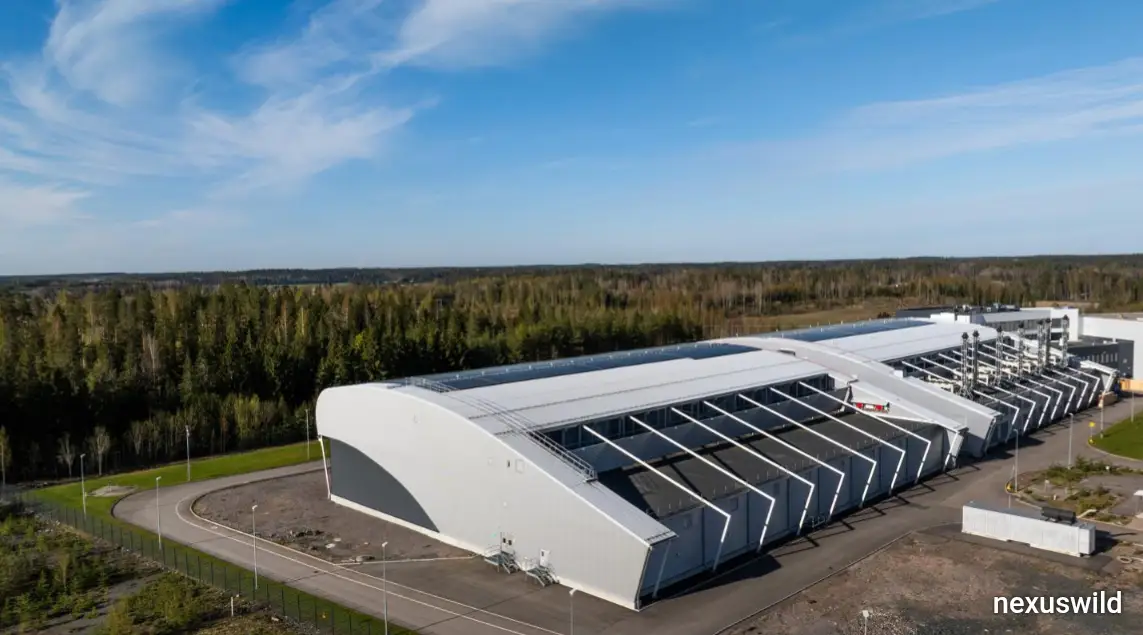

Five technology, telecommunications and energy-infrastructure companies have formed a consortium to compete for a major European artificial intelligence infrastructure opportunity, signalling a new attempt to expand the region's capacity to train and operate advanced AI models.
Nokia, Nscale, Skeleton Technologies, Telia and Verda announced the formation of AI Gigafactory Northern (AIGF Northern) on November 16, 2026. The proposed initiative would establish a federated, multi-site AI computing network across the Nordic and Baltic region, bringing together computing infrastructure, cloud platforms, telecommunications connectivity and specialised energy systems.
The announcement represents a consortium formation and an intention to participate in a European procurement process. It does not mean that the consortium has won a contract, received a final funding commitment or begun operating an AI Gigafactory.
The companies intend to submit a bid under the European High-Performance Computing Joint Undertaking's (EuroHPC JU) call for tenders for the establishment and operation of AI Gigafactories. The broader European programme is designed to expand the computing infrastructure available to researchers, businesses, start-ups, public authorities and other organisations developing advanced artificial intelligence systems.
The proposed Northern European network is particularly notable because it does not rely on a single centralised data-centre location. Instead, the consortium wants to connect infrastructure across several countries through a common operational and governance model.
That approach could provide an alternative blueprint for building large-scale AI infrastructure in a region where electricity availability, grid capacity, data sovereignty and cross-border connectivity are becoming increasingly important considerations.
What Is AI Gigafactory Northern?
AI Gigafactory Northern is a proposed European-led infrastructure consortium intended to combine multiple AI computing locations into one federated system.
According to Nokia's announcement, the network would operate under European governance and integrate large-scale AI computing infrastructure with sovereign cloud and AI platform services, high-capacity connectivity and decarbonised energy.
The proposed facilities are distributed across four locations:
- Oulu, Finland
- Iru, Estonia
- Valmiera, Latvia
- A fourth location in Sweden, which has not yet been determined
The consortium's objective is to connect these locations into a coordinated infrastructure network rather than develop each site as an isolated computing facility.
A federated model can allow different facilities to contribute computing capacity while operating within a shared technical and governance framework. Depending on how the eventual system is designed, workloads could potentially be distributed between locations according to computing availability, energy capacity, network conditions and operational requirements.
However, the precise architecture, computing capacity, GPU deployment schedule, investment commitments and service-level specifications have not been publicly established in the consortium's announcement.
It would therefore be premature to describe AIGF Northern as a completed gigawatt-scale facility or to assign it a specific computing capacity.
The immediate development is the formation of a consortium with an intention to compete for a public procurement opportunity.
Why the Consortium Is Pursuing a Federated Model
The demand for advanced AI infrastructure is increasing the importance of data-centre power availability and network capacity.
Training large AI models and operating inference services at scale require substantial computing resources. These facilities also need reliable electricity, cooling systems, high-capacity data transmission and secure infrastructure for storing and processing sensitive information.
A single large data centre can concentrate substantial computing capacity in one location, but it may also encounter local constraints. Electricity-grid connections, planning approvals, cooling requirements, land availability and construction timelines can all affect the ability to expand a facility.
A distributed architecture offers another approach.
By connecting facilities in several countries, a consortium may be able to access different electricity markets, infrastructure locations and regional technology ecosystems. It can also reduce dependence on one physical site.
Nokia's announcement describes the distribution of capacity across borders as a way to reduce concentration risk and strengthen the resilience of Europe's AI ecosystem.
The model could be commercially attractive if the participating sites can deliver sufficiently reliable network connections and coordinate their computing resources effectively.
However, a federated architecture does not automatically eliminate infrastructure constraints. Moving large datasets between facilities can require substantial network capacity. Workload distribution can introduce latency, scheduling complexity and additional data-transfer costs. Different national electricity systems and regulatory environments may also complicate operations.
The commercial success of the approach will depend on how effectively the consortium addresses these practical challenges.
Five Companies, Five Infrastructure Contributions
AIGF Northern brings together companies with different areas of expertise across the AI infrastructure value chain.
The consortium's structure is designed to combine computing, cloud, connectivity and energy capabilities rather than rely on a single company to provide every component.
Nokia: High-Performance Connectivity and Network Infrastructure
Nokia's role is to provide the connectivity infrastructure needed to link the proposed computing locations.
The company identifies secure, high-performance network infrastructure as a central requirement for moving data reliably between sites and supporting resilient operations.
Large AI infrastructure networks depend on high-capacity optical and IP connectivity. Model training, distributed storage, inference workloads and communication between computing systems can generate substantial data-transfer requirements.
Nokia's networking expertise could therefore form an important part of the proposed federated architecture.
The company has not, however, published a complete network design or disclosed specific latency, bandwidth or availability targets for AIGF Northern.
Nscale: Cloud Platforms and AI Infrastructure
Nscale contributes cloud platform and AI infrastructure expertise.
The company's stated role is to support scalable computing environments for AI training and inference. This includes the cloud and infrastructure capabilities required to make large computing resources accessible to customers.
For enterprises and research institutions, access to physical computing capacity is only one part of the requirement. They also need software platforms, infrastructure management, workload orchestration and suitable environments for developing and deploying AI applications.
Nscale's contribution is intended to address this operational layer.
The eventual commercial offering will depend on the platform architecture, available computing resources, pricing arrangements and customer-access model established if the project is selected.
Telia and Telia Cygate: Telecommunications and Cloud Operations
Telia, together with its subsidiary Telia Cygate, brings telecommunications connectivity, data transmission, infrastructure operations and cloud capabilities.
Cross-border connectivity is particularly important for a federated network because the proposed locations must operate as connected components of a wider infrastructure system.
Telecommunications operators can also provide experience in managing critical network services and supporting enterprise customers with security and operational requirements.
Telia's participation could help connect the proposed facilities with businesses, public-sector organisations and other users across the region.
The consortium has not yet disclosed the complete operational arrangements or the specific service responsibilities that Telia will undertake under a final project structure.
Verda: AI-Native Infrastructure and Cloud Expertise
Verda is contributing AI-native infrastructure and cloud expertise.
Its stated role is to support scalable environments for AI training and inference, complementing the cloud and infrastructure capabilities provided by other consortium members.
The inclusion of specialised AI infrastructure providers reflects the growing importance of companies that focus on the computing requirements of AI workloads rather than traditional general-purpose cloud services alone.
A successful offering will need to integrate hardware resources, cloud platforms, data management and workload execution into a dependable service for customers.
Skeleton Technologies: Energy Systems and Data-Centre Efficiency
Skeleton Technologies brings expertise in high-power systems intended to improve data-centre efficiency and operational stability.
The company's contribution is relevant because the expansion of AI computing is increasing the pressure on electricity infrastructure.
AI data centres can experience substantial and rapidly changing power demands. Their electrical systems must support high-density computing equipment while maintaining stable and reliable operations.
Skeleton says its systems can help improve efficiency, reduce pressure on electricity grids and support lower-carbon operations.
The company's involvement introduces an energy-infrastructure dimension to the consortium, alongside the more familiar computing, cloud and networking components.
Nevertheless, the announcement does not establish a quantified reduction in electricity consumption, a specific increase in compute performance per GPU or a guaranteed reduction in grid demand. Those outcomes would require technical specifications and independently verifiable operational evidence.
VTT and KTH Add Research and Innovation Support
AIGF Northern also identifies two research institutions as supporting partners: VTT Technical Research Centre of Finland and Sweden's KTH Royal Institute of Technology.
VTT contributes capabilities in areas including quantum computing, semiconductors, physical AI and photonics.
These fields are relevant to the wider development of advanced computing infrastructure. Semiconductor technologies influence the performance and efficiency of processors, while photonics and advanced networking technologies can contribute to the movement of information across high-performance computing systems.
Quantum computing represents a separate but related area of advanced computing research. Its inclusion in VTT's stated expertise does not mean that quantum processors will necessarily form part of the initial AIGF Northern deployment.
KTH contributes expertise in artificial intelligence research, education and skills development.
Research institutions can help connect infrastructure programmes with universities, researchers, technology developers and future technical talent.
Their involvement could support collaboration between industrial operators and the research ecosystem, although the consortium has not disclosed a detailed research programme, committed funding allocation or specific academic deployment schedule.
It is important to distinguish these supporting research partners from the five founding commercial companies.
The EuroHPC Tender: A Major European Infrastructure Opportunity
AIGF Northern is being developed in response to the European High-Performance Computing Joint Undertaking's procurement process for AI Gigafactories.
The European Union launched its AI Gigafactories tender on July 30, 2026. The programme aims to establish up to seven AI Gigafactories across Europe and expand the continent's capacity to train, fine-tune and operate advanced AI models.
The programme is intended to serve a broad range of users, including start-ups, scale-ups, small and medium-sized enterprises, industrial companies, academic institutions and public authorities.
EuroHPC's tender is structured around two categories of facilities:
- Lot 1: Medium-scale AI Gigafactories
- Lot 2: Large-scale AI Gigafactories
The official tender page lists December 3, 2026, at 17:00 CET as the deadline for Lot 2 and February 4, 2027, at 17:00 CET as the deadline for Lot 1.
The Lot 1 deadline was extended to allow participating Member States additional time to complete national budgetary procedures and submit financial commitments. The extension did not apply to Lot 2.
EuroHPC also announced that a technical issue required all existing draft and submitted tenders to be recreated and resubmitted through replacement submission links.
This procedural development is important for every consortium considering participation. The tender remains a competitive procurement process, and the formation of AIGF Northern does not establish that its bid has been submitted or accepted.
The final selection will depend on the procurement requirements, technical evaluation, financial commitments and decisions by the relevant European authorities.
How the EU's InvestAI Initiative Fits Into the Plan
The consortium's announcement places its proposal within the European Union's broader effort to expand AI infrastructure through InvestAI.
The European Commission has described an investment framework intended to mobilise at least €20 billion in private investment alongside up to €10 billion in EU and national public funding.
Together, these figures represent a potential mobilisation of more than €30 billion for AI infrastructure across Europe.
The programme is intended to support the development of advanced computing facilities and strengthen Europe's position in the global AI ecosystem.
The funding framework is not a direct €30 billion allocation to AIGF Northern. It is a broader European investment ambition covering the development of AI Gigafactories and associated infrastructure.
For the consortium, the procurement process represents an opportunity to compete for a role in that wider infrastructure expansion.
The distinction between the total European investment ambition and the funding available to an individual project is important. The consortium has not publicly disclosed a final project budget, an awarded grant or a confirmed private-investment commitment for its proposed network.
Europe's Push for Sovereign AI Infrastructure
The formation of AIGF Northern comes amid growing European interest in technological sovereignty.
AI infrastructure has become strategically important because advanced computing resources influence the development of frontier models, industrial automation, scientific research, public services and national security applications.
European organisations increasingly require access to computing platforms that can meet their performance needs while satisfying relevant data-protection, security and regulatory requirements.
Sovereign AI infrastructure is intended to provide greater control over the location, governance and operation of computing resources.
However, sovereignty is not achieved simply by locating a data centre within European territory.
The wider technology stack matters. Hardware supply chains, cloud management, software dependencies, data access, operational control and contractual arrangements can all influence how much control customers and public authorities actually retain.
AIGF Northern's European-led consortium structure is intended to bring together regional capabilities across several parts of that infrastructure stack.
The eventual level of sovereignty will depend on the ownership, governance, technical design and operating arrangements of the facilities and services.
The initiative should therefore be viewed as part of Europe's effort to develop more domestic AI capacity, rather than proof that the continent has already achieved independence from non-European technology suppliers.
Why the Nordic and Baltic Region Is Attractive
The proposed locations place the project in a region that has several characteristics relevant to large-scale data-centre development.
Northern European countries have access to established digital infrastructure, industrial engineering capabilities and electricity systems that include significant low-carbon generation.
The region's cooler climate can also create opportunities for reducing the energy required for data-centre cooling, depending on the design of the facilities and local environmental conditions.
Nokia's announcement specifically highlights decarbonised electricity, advanced digital networks and a cool climate as advantages for sustainable AI infrastructure.
These conditions may make the region attractive for operators seeking to expand computing capacity.
Nevertheless, favourable regional characteristics do not guarantee that every proposed site has sufficient electricity, suitable grid connections, construction approvals, cooling resources or available land.
Each location will require its own technical, commercial and regulatory assessment.
The proposed network's viability will therefore depend on the practical readiness of the individual facilities, not simply the general advantages of Northern Europe.
Commercial Opportunities for European Enterprises
If the consortium secures the tender and successfully develops the infrastructure, AIGF Northern could create opportunities for several customer groups.
Enterprises and Industrial Companies
Businesses developing AI applications require access to computing resources for model training, fine-tuning, inference and deployment.
A European infrastructure provider could offer another option for organisations seeking regional cloud services and infrastructure under European operational arrangements.
Industrial sectors such as manufacturing, telecommunications, engineering and logistics could potentially use the infrastructure for specialised AI workloads.
Start-ups and Scale-ups
Access to advanced computing can be an important constraint for AI start-ups.
Smaller companies may struggle to secure sufficient GPU capacity or manage the cost of building and operating their own infrastructure.
A large shared computing network could provide access to resources without requiring every company to develop its own data centre.
The commercial value would depend on pricing, availability, technical support and the ease with which smaller customers can access the platform.
Research Institutions and Universities
Universities and research organisations need computing resources for model development, scientific simulations and advanced AI experimentation.
A federated European network could potentially expand access to computing capacity for research programmes across multiple countries.
The involvement of VTT and KTH may help connect the consortium with regional research and innovation communities.
Public-Sector Organisations
Public authorities may require computing infrastructure for data-sensitive applications, research programmes and digital public services.
European governance and suitable security arrangements could be relevant considerations for these customers.
However, no specific public-sector customer contracts or procurement commitments have been disclosed by the consortium.
The Strategic Importance of Energy Infrastructure
Energy availability is becoming one of the central constraints in the expansion of AI data centres.
Modern AI systems rely on high-performance accelerators that consume substantial
Nexuswild welcomes factual corrections. Email contact@nexuswild.com with evidence and the article URL.