
Microsoft Expands MAI AI Portfolio at Ignite 2026, Targeting Enterprise Coding and Cybersecurity Costs
A broader push into specialized enterprise artificial intelligence
Microsoft has expanded its proprietary artificial intelligence strategy with the introduction of seven specialized models at its Ignite 2026 conference in San Francisco on November 17. The announcement places particular emphasis on software engineering and cybersecurity, two enterprise workloads where organizations increasingly want to deploy AI agents without allowing inference expenses to grow uncontrollably.
The new portfolio includes MAI Code 2, MAI Code 2 Flash, MAI Cyber 2 Flash, MAI Image 2.7, MAI Realtime 1, MAI-Transcribe-2 and Decision 1.1. Together, the models cover coding, vulnerability discovery, image editing, speech interaction, transcription and decision-making.
The announcement represents an important development in Microsoft's attempt to become more than a distribution platform for third-party AI models. The company is increasingly developing its own model families, integrating them into established enterprise products and supporting their deployment through its cloud infrastructure and custom AI accelerators.
Microsoft's central argument is that businesses do not necessarily need to use the most expensive general-purpose model for every task. A specialized model that performs sufficiently well on a defined workload could offer a more economical option when deployed repeatedly across thousands of software development and security operations.
That strategy is particularly relevant as organizations move beyond occasional chatbot interactions toward continuously operating AI agents. These agents may inspect repositories, investigate vulnerabilities, generate code changes, review system activity and perform other tasks over extended periods. The associated inference costs can become substantial when every action requires repeated model calls.
Microsoft is therefore positioning its MAI portfolio around the relationship between model capability, task performance and operating expense.
MAI Code 2 targets production software engineering
The most prominent coding announcement is MAI Code 2, Microsoft's flagship model for everyday enterprise software engineering. It is designed to handle complex repository-level work rather than simply generate isolated code snippets.
Microsoft identifies several intended applications, including multi-file implementation, deep debugging, repository-wide reasoning, production code changes and user-interface generation.
These capabilities target a significant portion of the work performed by professional development teams. Real software projects rarely consist of independent files or straightforward programming exercises. Developers must understand dependencies, follow existing architectural decisions, identify regressions and make changes that remain compatible with the surrounding codebase.
A model that can reason across multiple files and understand a repository's structure could reduce the amount of manual investigation required before developers begin implementing changes.
Microsoft's benchmark disclosures are central to its positioning of the model.
Across four evaluations—DeepSWE 1.1, Terminal-Bench 2.1, SWE-Atlas and FrontierCode v1.1—the company reported that MAI Code 2 achieved approximately 98% of GPT-6.1 Sol's performance at 40% of the price.
Against Claude Opus 5.5, Microsoft reported approximately 96% of the competing model's performance at only 5% of its price.
These figures are significant because they suggest that a specialized model may be economically attractive even if it does not achieve the highest score in every evaluation.
However, the figures should be interpreted within their stated scope. Microsoft averaged results across selected coding benchmarks intended to represent everyday enterprise development tasks. They do not demonstrate that MAI Code 2 is equivalent to competing models across every programming language, software architecture, research problem or autonomous development workflow.
Microsoft has also acknowledged that its coding models are not yet optimized for particularly difficult problems such as fundamental scientific research and very long-horizon agentic work.
This distinction matters. A model designed to perform routine repository maintenance may be highly effective in its intended environment without being the best choice for advanced algorithm research or unusually complex engineering investigations.
The company's strategy is to optimize the model for workloads that businesses perform frequently rather than require every customer to pay for capabilities that many routine tasks do not need.
MAI Code 2 Flash targets high-volume development workflows
Alongside the flagship model, Microsoft introduced MAI Code 2 Flash, a smaller and more cost-efficient option for repetitive developer activities.
The model is designed for code explanations, targeted modifications, routine fixes and rapid development iterations.
These tasks may individually require less reasoning than large-scale architectural changes, but they can occur frequently throughout a development team's daily workflow.
For example, a developer might use an AI assistant to explain an unfamiliar function, identify a small bug, modify a component, generate a test or make a straightforward configuration change. Using a premium frontier model for every such interaction could create unnecessary expense.
Microsoft reported that Code 2 Flash delivers performance comparable to GPT-6 Luna at approximately 65% of its price and Claude Haiku 5.5 at approximately 20% of its price across three coding benchmarks.
These are company-reported comparisons, rather than independently audited conclusions.
The difference between the flagship and Flash models illustrates a broader development in enterprise AI architecture: organizations may increasingly select models according to the complexity of each task.
A high-capability model could handle difficult repository-wide changes, while a faster and cheaper model handles explanations, small edits and repetitive operations.
Such a model-selection strategy could reduce overall inference costs without requiring businesses to sacrifice the more advanced capabilities needed for difficult engineering work.
Microsoft says both coding models are generally available through GitHub Copilot and Microsoft Foundry. Their integration into existing developer environments also reduces the need for companies to build entirely new workflows before experimenting with the models.
Cybersecurity model targets codebase-scale vulnerability discovery
The second major announcement is MAI Cyber 2 Flash, a specialist model developed for cybersecurity operations.
Its intended applications include vulnerability discovery, investigation of complex software codebases and recommending defensive remediation actions.
The demand for such capabilities is growing as software systems become more interconnected and AI tools make it easier to identify potential security weaknesses.
Security teams must examine large volumes of source code, dependencies, system activity and vulnerability reports. Investigating these environments manually can require substantial time and specialist expertise.
AI-assisted security systems could help analysts identify suspicious code paths, investigate vulnerabilities and prioritize potential remediation work.
However, cybersecurity models must be evaluated differently from ordinary coding assistants. A model that generates plausible explanations is not necessarily capable of reliably identifying exploitable vulnerabilities or recommending safe fixes.
For this reason, Microsoft's CyberGym-E2E evaluation is one of the most important parts of the announcement.
Microsoft reported a 92.3% task success rate for MAI Cyber 2 Flash, compared with 91.5% for GPT-6 Astra.
The company also claimed that MAI Cyber 2 Flash achieved this performance at less than 2% of GPT-6 Astra's cost per task.
The result suggests that Microsoft's specialist model could offer a substantial cost advantage for certain automated security investigations.
Nevertheless, the benchmark requires important qualifications.
Microsoft disclosed that 92 of the original 905 CyberGym-E2E tasks involved open-source projects and vulnerability reports that overlapped with some of the company's training data. It excluded those 92 tasks from the evaluation for every model, leaving 813 tasks in the reported comparison.
Microsoft also stated that MAI Cyber 2 Flash used half the reasoning budget in this comparison.
The company says the reference solutions were not used during training. Even so, the disclosure about training-data overlap is important context that readers should understand when interpreting the results.
Microsoft's cost comparison also uses specified model token prices and offline evaluation costs. It should not be interpreted as a guaranteed reduction in the actual cybersecurity budgets of enterprise customers.
Real-world expenses will depend on workload complexity, input size, repeated investigations, model configuration, integration costs and the amount of human review required.
The benchmark therefore provides evidence of a potentially attractive price-performance profile, not proof that organizations can replace existing security teams or eliminate security expenditure.
Integration with Microsoft's security ecosystem
Microsoft is positioning MAI Cyber 2 Flash within its broader security product ecosystem.
The company says the model is intended for Microsoft security products, including Codename MDASH. Its published announcement states that eligible customers will receive the model through the MAI profile, with an automatic replacement of the existing model expected from mid-December.
This is more precise than describing the model as already generally available across the entire Microsoft security platform.
The company's wider Microsoft Perception security initiative is also relevant. Microsoft has reported that its earlier MAI Cyber models already account for a substantial share of code-scanning activity within Perception.
Early evaluations through Microsoft Perception showed MAI Cyber 2 Flash delivering performance comparable to leading models in investigation-agent and security-detection-authoring workflows.
Microsoft has not published enough detail in these disclosures to treat those early results as a complete independent assessment of the security platform.
The broader strategic objective is nevertheless clear: Microsoft wants to connect specialist AI models directly to security products rather than rely exclusively on standalone AI services.
If successful, this could make it easier for organizations to introduce AI-assisted vulnerability investigation within existing security operations.
The critical test will be how these models perform against real production environments, including their ability to avoid false positives, identify meaningful vulnerabilities and recommend fixes that do not introduce new weaknesses.
MAI Licensed Weights introduces controlled enterprise customization
Another important development at Ignite was the introduction of MAI Licensed Weights.
The initiative responds to a growing enterprise concern: organizations increasingly want control over the AI models that process their proprietary information and support their internal operations.
Many businesses are reluctant to build their most valuable processes around systems that offer limited customization or insufficient control over how their AI capabilities are deployed.
Through MAI Licensed Weights, Microsoft is offering trusted organizations the ability to deploy and customize Microsoft AI models within their own Azure environments.
This approach is designed to provide businesses with greater control over model access, customization and deployment.
For enterprises, the potential advantages extend beyond technical flexibility.
A company could adapt a model using proprietary information and configure it for specific internal workflows. It could then operate that customized model within a controlled Azure environment rather than depending entirely on a general-purpose external endpoint.
This could be relevant for financial institutions, software companies, healthcare organizations, manufacturers and other businesses with specialized information requirements.
However, MAI Licensed Weights should not be confused with an unrestricted open-weight release.
Microsoft describes the offering as a controlled licensing arrangement for trusted enterprise customers. Access, deployment and customization remain subject to Microsoft's applicable commercial and service terms.
The announcement also reflects a wider competition over enterprise AI ownership.
Cloud providers are increasingly competing not only on model quality but also on how much control customers have over their data, model configurations, infrastructure and long-term operating costs.
Microsoft is attempting to combine that control with the convenience of its existing Azure ecosystem.
Maia 200 strengthens Microsoft's infrastructure strategy
The model announcements are part of a larger effort to develop an integrated AI infrastructure stack.
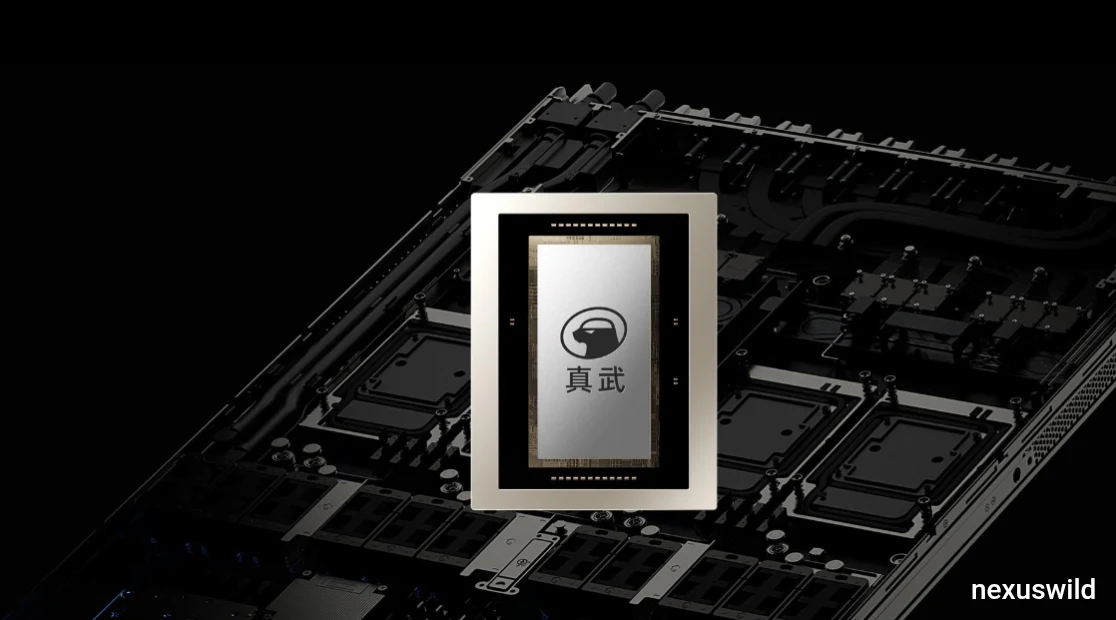
Microsoft's second-generation Maia 200 accelerator is an important component of this strategy.
Microsoft had already announced on October 12, 2026, that Maia 200 was in production and serving workloads including Microsoft Copilot.
The November Ignite announcement added that Maia 200 delivers 1.7 times more tokens per watt.
Tokens per watt is an important efficiency metric because it measures how much AI inference output can be generated relative to the energy consumed.
As enterprises expand AI deployments, infrastructure efficiency can affect both operating costs and the amount of computing capacity required to support additional workloads.
Custom accelerators can also give cloud providers greater opportunities to optimize hardware and software together.
Rather than relying exclusively on third-party processors, Microsoft can develop hardware designed around the characteristics of its own cloud services and AI workloads.
The company's strategy involves several interconnected layers: proprietary models, Azure deployment infrastructure, enterprise software integration and custom AI accelerators.
That integration could become increasingly valuable as organizations shift from individual AI interactions to continuously operating agents.
However, the existence of proprietary silicon does not automatically establish that Microsoft will achieve lower total costs than competing infrastructure providers. Hardware utilization, energy prices, data-centre construction, networking, software optimization and capital expenditure all affect the economics of AI infrastructure.
Maia 200's production status is therefore an important milestone, but its longer-term competitive impact will depend on deployment scale and measured performance across real workloads.
Seven models indicate a broader portfolio strategy
Although Code 2 and Cyber 2 Flash attracted much of the attention, the remaining releases show that Microsoft is expanding beyond coding and cybersecurity.
MAI Image 2.7 focuses on image generation and editing. Microsoft said the model achieved the leading position in image editing on Artificial Analysis evaluations and reported that it performed at approximately one-fifth of the price of a specified competing model.
MAI Realtime 1 is Microsoft's speech-to-speech model, designed for natural, low-latency conversational interactions. Microsoft announced pricing starting at $0.01 per audio minute.
MAI-Transcribe-2 targets multilingual transcription. Microsoft said its transcription technology is already being used within Dragon Copilot, supporting approximately 10 million patient encounters per month.
Decision 1.1 focuses on decision-making and model routing. Its purpose is to help applications determine when a larger, more expensive model is necessary and when a smaller, faster alternative can handle the task.
These releases illustrate Microsoft's attempt to develop a collection of specialized models that can operate across different enterprise activities.
Instead of depending on a single flagship model to perform every task, businesses could use a portfolio that assigns different workloads to models with different capability and cost profiles.
That approach may be particularly useful in large organizations where AI usage can span software engineering, customer service, document processing, security, business analysis and communications.
It also creates a commercial opportunity for Microsoft to increase the use of its proprietary models across products that already have substantial enterprise customer bases.
Competitive implications for OpenAI and Anthropic
Microsoft's expanded model portfolio adds another dimension to competition among major AI developers.
OpenAI and Anthropic have established strong positions in advanced reasoning, coding and enterprise AI services. Google and other model developers are also competing to deliver better performance at lower operating costs.
Microsoft has a distinctive position because it combines its own model-development capabilities with a large enterprise software and cloud distribution network.
GitHub Copilot, Microsoft Foundry, Azure and Microsoft's security products provide existing channels through which specialist models can reach enterprise customers.
This distribution advantage could make adoption easier than introducing an entirely new AI platform.
The company's pricing claims also target an important economic problem in the industry.
Many enterprises are discovering that the cost of running agents can become significant when systems perform repeated reasoning, call external tools and process large volumes of information.
A model that is slightly less capable on a narrow benchmark but significantly cheaper could become commercially attractive if it delivers reliable results for a specific task.
However, price comparisons alone cannot determine which model is the best business choice.
Organizations must also consider reliability, response speed, security, integration requirements, data governance, service availability and the amount of human supervision required.
The strongest model for an enterprise is not necessarily the one with the highest benchmark score or the lowest token price. It is the one that delivers the best overall result for the workload being automated.
Enterprise adoption will depend on real-world performance
The next stage for Microsoft's MAI strategy will be measured by actual customer adoption and performance outside controlled evaluations.
For coding models, important indicators will include how often developers accept generated changes, how frequently those changes pass testing, how much review time is required and whether the models can work reliably across large repositories.
For cybersecurity, organizations will need evidence that the models can identify meaningful vulnerabilities without overwhelming analysts with false positives.
They will also need to determine whether automated remediation recommendations are safe enough to use in production systems.
MAI Licensed Weights will face a different set of adoption requirements. Businesses will need clarity on licensing, customization limits, model update policies, operational responsibility and the costs associated with running customized models.
Infrastructure efficiency will also matter. Maia 200's reported tokens-per-watt improvement is promising, but customers will ultimately evaluate the economics of complete deployments rather than isolated hardware specifications.
These factors will determine whether Microsoft's specialized model strategy transla
Nexuswild welcomes factual corrections. Email contact@nexuswild.com with evidence and the article URL.