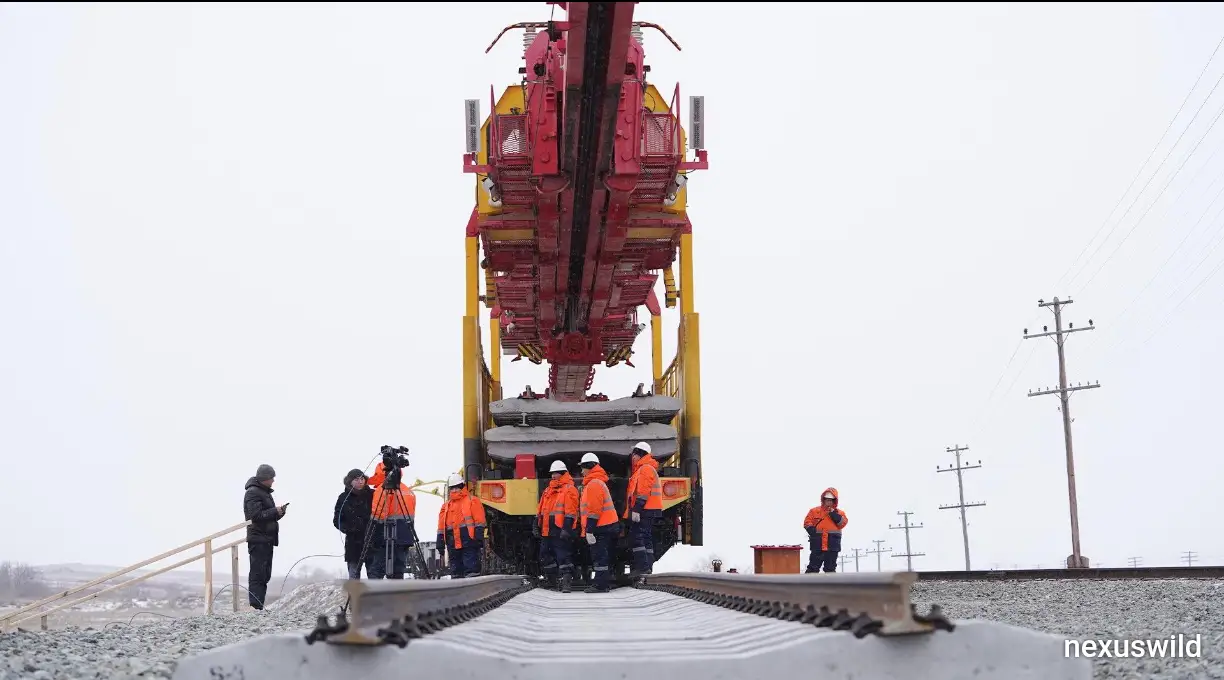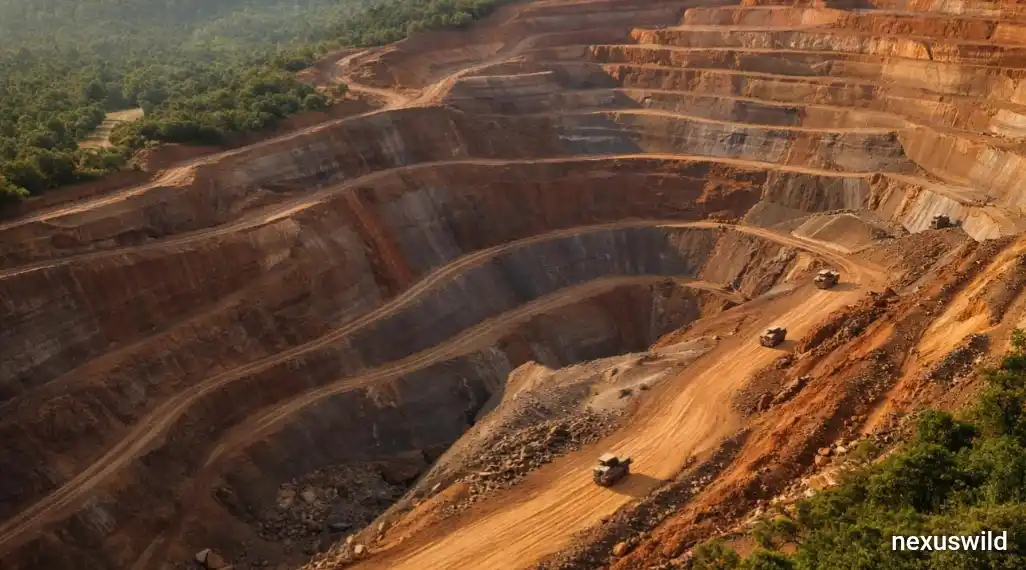

Mining-focused private equity firm Appian Capital Advisory plans to allocate approximately $2 billion to African mining opportunities over the next 12–24 months, but its leadership says regulatory uncertainty could influence how much capital ultimately reaches the continent.
Chief Executive Michael Scherb outlined the plan in an interview with Reuters published on 28 October 2026. Appian expects to deploy between $5 billion and $7 billion globally over the same period. Africa is therefore a major target for the investment programme, although the company has not announced project-by-project commitments covering the proposed allocation.
The announcement highlights a challenge for African economies seeking to attract international mining finance: mineral resources alone do not determine where investors place their money. Permitting timelines, tax arrangements, royalties, political stability and the rules governing long-term projects can all affect investment decisions.
Africa remains a major investment opportunity
Appian identified Morocco, Namibia and Botswana as particularly attractive African mining jurisdictions. It is also assessing opportunities in Ghana, Côte d’Ivoire, Mauritania and Senegal, according to Scherb’s comments reported by Reuters.
The countries are not interchangeable mining markets. Each has its own geology, mineral prospects, infrastructure, fiscal framework and licensing process. Appian’s assessment reflects the firm’s investment priorities rather than a universal ranking of African countries.
The distinction matters because mining projects typically require substantial upfront spending before generating revenue. Exploration, feasibility studies, environmental assessments, infrastructure development and construction can take years. Changes to fiscal or regulatory conditions during that period can affect projected returns and financing decisions.
Appian already has an established presence in the region. Reuters reported that the firm had three active African investments and had exited three others. Its exits included projects in Burkina Faso and Tanzania amid major political disruptions in those countries. The company also had four active investments in Latin America, mainly in Brazil. These portfolio figures provide context for its strategy but do not establish that every exit resulted solely from regulatory changes.
Why policy predictability matters
Scherb warned that changes to mining rules, higher royalties and demands for greater local participation can make investment planning more difficult when governments alter expectations unpredictably.
African governments have legitimate reasons to review mining arrangements. Mineral deposits are finite public resources, and authorities may seek to increase tax revenue, strengthen local supply chains, create jobs and secure more domestic processing. The policy challenge is balancing those objectives with a framework that investors can understand and model over the life of a project.
A higher royalty or stronger local-content requirement is not automatically a deterrent to investment. Its effect depends on the overall terms, the quality of the resource, infrastructure costs, commodity prices and whether the rules are transparent and consistently applied. Uncertainty can be especially difficult for capital-intensive projects because investors must estimate costs and returns far into the future.
Predictable regulation does not mean governments must freeze policy permanently. Rather, clear legislation, transparent consultation, reliable permitting procedures and reasonable transition arrangements can help companies assess risks before committing funds.
Appian’s comments therefore point to competition over the conditions for investment, not simply competition over mineral deposits.
Latin America competes for mining capital
Latin America is an important alternative destination for Appian’s capital, particularly through its Brazilian portfolio. Scherb told Reuters that fiscal and permitting arrangements in parts of the region have generally offered greater predictability than some African markets, while also acknowledging that Latin American producers face their own resource-policy debates.
The comparison should not be interpreted as proof that the entire region is consistently more stable. Conditions vary across countries and projects. Chile, Peru and Mexico, for example, have also experienced debates over resource governance and the distribution of mining revenues. Investors evaluate individual jurisdictions, rather than treating either continent as a single market.
Nevertheless, the competition is significant. A fund with a global investment mandate can compare opportunities across multiple countries. If a project’s expected returns deteriorate because approvals are delayed or fiscal terms become less certain, a competing project may become more attractive—even if its mineral resource is not necessarily better.
For African governments, the risk is that projects are postponed, reduced in scale or financed elsewhere. For investors, the question is whether expected returns justify the geological, political, operational and financial risks.
Critical minerals add to the stakes
Appian invests across commodities including gold, copper, zinc, rare earths and other minerals used in industrial and technology supply chains. Copper is particularly relevant to electrification, power-grid expansion, data centres and other infrastructure-intensive activities. Scherb said he expects supply growth to struggle to keep pace with demand drivers such as these, according to Reuters.
That outlook creates opportunities for new mines and expansions, but it does not guarantee that every proposed project will be developed or become profitable. Copper and other mineral projects remain exposed to commodity-price fluctuations, construction costs, financing conditions, infrastructure limitations and environmental requirements.
The proposed African investment allocation could help advance suitable projects if opportunities meet Appian’s investment criteria. However, the announcement does not identify which mines will receive capital, how much each country might receive, or how the proposed funds will be divided between extraction, processing and other activities.
Those details will be necessary to assess the programme’s eventual contribution to production, employment, exports and local value addition.
What to watch next
The next indicators are project-level announcements, permitting decisions, financing agreements and evidence that the proposed capital is moving from investment targets into committed transactions.
African governments will also face the challenge of demonstrating that fiscal and licensing frameworks are both commercially legible and aligned with public interests. Faster approvals may improve project economics, but they must not come at the expense of environmental review, community consultation or other legal safeguards.
For now, Appian’s plan represents a substantial potential investment opportunity rather than a completed funding commitment. Its message is twofold: the firm sees considerable scope for African mining investment, but capital remains mobile and will be directed towards projects and jurisdictions that meet its requirements for returns and manageable risk.
Whether the continent captures the full proposed allocation will depend on the projects available, the decisions of investors and the regulatory conditions in the countries competing for funding.
Nexuswild welcomes factual corrections. Email contact@nexuswild.com with evidence and the article URL.