
Kazakhstan plans to allocate approximately 6.5 trillion tenge, equivalent to around $14.3 billion, from its National Fund by the end of 2029 to finance a nationwide infrastructure modernisation programme announced by President Kassym-Jomart Tokayev.
The initiative, branded “Halyqtyq Qurylys” or “People’s Construction,” was outlined during Tokayev’s State of the Nation Address on October 28, 2026. It is intended to expand and modernise social facilities, transport links and essential utilities across the country, while supporting regional development and economic growth.
Of the planned allocation, approximately 1.5 trillion tenge, or about $3.3 billion, is intended for social infrastructure projects during 2026 and the first two months of 2027. Tokayev also proposed designating 2027 the Year of Nationwide Large-Scale Construction. The government is expected to prepare a regional project list and oversee implementation of the programme. These figures represent announced plans rather than proof that all funds have been disbursed or all projects have received final approval.
Hospitals, education and essential utilities among priorities
The initial programme is expected to include around 70 healthcare facilities and approximately 50 education, sports and cultural facilities. The broader construction agenda also covers roads, airports, railway stations, housing and public infrastructure in regional centres, districts and smaller communities.
Utility improvements are another part of the initiative, including expanded access to clean drinking water and natural gas. These projects are intended to address infrastructure needs beyond Kazakhstan’s largest cities and improve access to essential services.
The government has emphasised that projects should deliver tangible social and economic benefits. Its implementation plans are expected to identify regional priorities, with opportunities for qualified domestic small and medium-sized enterprises to participate in construction and related work. The ultimate impact will depend on project selection, procurement, financing and timely completion.
Railway expansion to strengthen China trade links
Transport infrastructure is a significant part of Kazakhstan’s wider economic strategy. The country occupies a strategic position between China, Central Asia and markets to the west, making railway capacity and cross-border logistics important for freight movement.
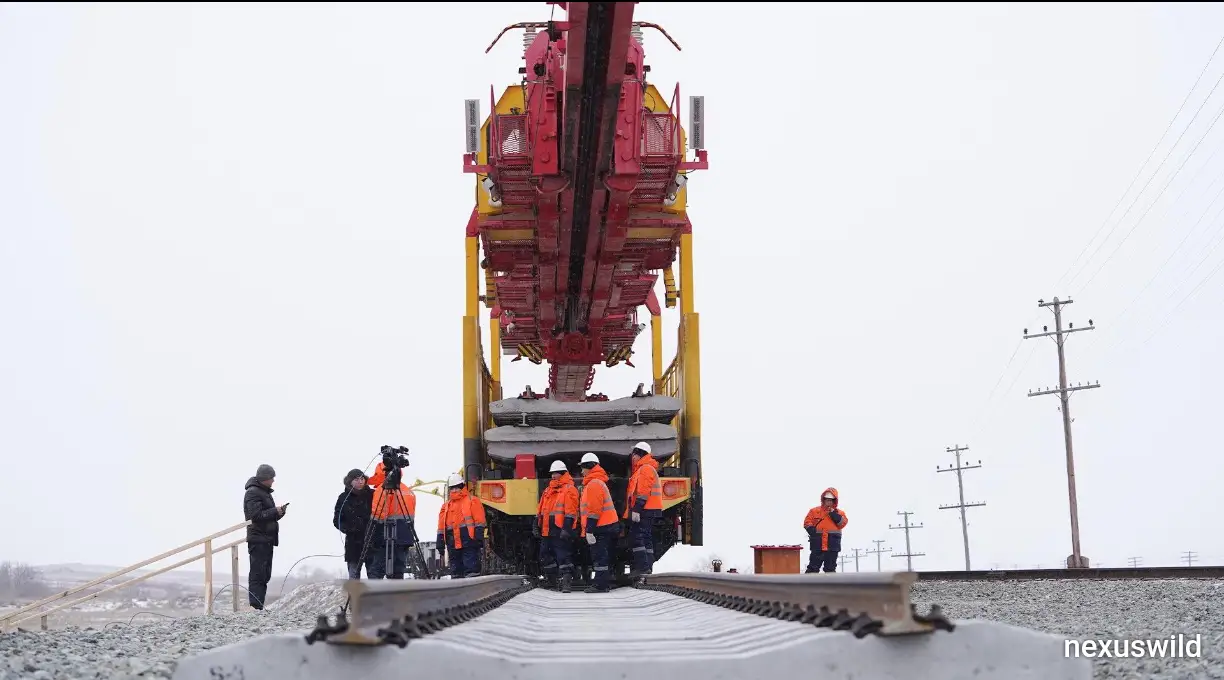
One project is the Bakhty–Ayagoz railway, a new line intended to increase rail capacity between Kazakhstan and China. Kazakhstan’s government previously said the project would increase the corridor’s capacity from approximately 28 million tonnes to around 48 million tonnes annually, adding about 20 million tonnes of potential throughput. The line was planned for completion in 2027, although its delivery timetable and operational capacity should be assessed against subsequent progress reports.
The route is expected to support an additional China border crossing and reduce pressure on existing freight connections. It forms part of a broader effort to expand Kazakhstan’s transit role and improve the movement of goods through Eurasian transport networks. However, the railway’s planned capacity increase should not be interpreted as a guarantee of equivalent growth in actual freight volumes.
Kazakhstan is also pursuing wider transport and logistics development, including connections linked to the Trans-Caspian International Transport Route, commonly known as the Middle Corridor. The commercial benefits will depend on coordination between railways, ports, border authorities and logistics operators across the countries involved.
Energy capacity is another strategic priority
The infrastructure programme comes as Kazakhstan works to expand electricity generation and reduce its reliance on a power system that has faced supply constraints.
The government’s existing energy plans aim to cover domestic electricity demand by early 2027 and achieve a sustained electricity surplus by 2029. Officials have identified additional generation capacity, power plant modernisation and grid improvements as important components of that effort.
Kazakhstan’s energy strategy includes both conventional and renewable generation. The projected surplus is a government target, not a guaranteed outcome: delivery depends on construction schedules, the reliability of existing facilities, demand growth and the commissioning of planned capacity.
More reliable electricity supply could support industrial activity and energy-intensive infrastructure, including data centres. Yet such investment would also increase demand, making the timing and scale of new generation and grid projects important. The relationship between the energy programme and the National Fund’s infrastructure allocation should not be taken to mean that every power project will necessarily be financed through “People’s Construction.”
National Fund financing raises oversight questions
The National Fund is a sovereign fund built largely from revenues linked to Kazakhstan’s natural resources. Using its assets for infrastructure could accelerate public investment, but it also raises questions about fiscal discipline, project quality and the balance between current development needs and preserving wealth for future generations.
There is an important implementation issue to watch. Reporting on the draft 2027–2029 budget says the proposed budget provides for 5 trillion tenge in targeted National Fund transfers for infrastructure, while the presidential address cited approximately 6.5 trillion tenge for the wider modernisation plan. The government has not fully clarified in the cited reporting how these figures relate to each other.
Separately, the Supreme Audit Chamber reportedly raised concerns about 66 projects worth approximately 1 trillion tenge whose eligibility or status required clarification. These findings do not establish that the overall programme has been cancelled, but they underline the importance of transparent project selection and compliance with budget rules.
What businesses and investors should watch
The proposed programme could create opportunities for construction companies, engineering and procurement contractors, domestic suppliers, utilities and transport operators. Railway development may also support logistics businesses serving trade between China and Europe.
However, the announcement alone does not guarantee private contracts, foreign investment or financing for individual projects. Commercial opportunities will depend on published tenders, procurement terms, project approvals and the structure of any public-private partnerships.
The next milestones include the government’s detailed regional project list, clarification of the funding framework, and progress on major construction and energy projects. Auditing and public reporting will be important indicators of whether the planned spending translates into completed infrastructure.
Kazakhstan’s $14.3 billion plan represents a substantial infrastructure ambition. Its success will depend not only on the resources identified in the National Fund, but also on transparent allocation, effective delivery and measurable benefits for households and businesses.
Nexuswild welcomes factual corrections. Email contact@nexuswild.com with evidence and the article URL.