
Asian Stocks Drop as AI Selling Spreads in Japan, South Korea and Taiwan
Asian stock markets saw a drop on Friday, November 6 as the technology selling that happened on Wall Street spread to major countries that make semiconductors and hardware. Japan and South Korea had losses and Taiwans market that focuses on technology also had problems as investors thought again about how much money will be spent on artificial intelligence infrastructure.
Japans main index, the Nikkei 225 went down 6.1% to finish at 57,332.92 points while South Koreas Kospi went down 6.3% to 5,042.65 according to Associated Press reports. Taiwans main index, the Taiex dropped about 4.5% showing that problems were happening across the regions technology supply chain.
This drop followed a day on Wall Street on November 5 when the Nasdaq Composite went down 5.5% and the Philadelphia Semiconductor Index dropped 12.2%. The US selling made people more worried about the money they might get back from investments in AI infrastructure and the chances that politics and rules might change how data centres are built.
The Asian market response showed how closely the local technology companies are connected to decisions about cloud computing, powerful chips, memory chips and data centre build-ups.
Japans Nikkei Drops as Technology Stocks Face Selling
Japans Nikkei 225 had one of the drops in recent days falling 6.1% on Friday.
Technology and chip-related companies were a reason for the drop. Advantest, a company that makes equipment to test chips had selling pressure as investors moved away from companies that are tied to AI hardware investments.
SoftBank Group also dropped a lot. The company has a lot of investments in technology and the bigger AI world, which makes its shares sensitive to how people feel about the sector.
The Nikkei drop also made people worry about where it stands compared to its high in June. Some reports said the index was in a bear market after falling more than 20% from that high. A bear market is when there is a drop of least 20% from a recent peak.
The drop was not for chip companies. More people were being careful with their money, which affected stocks as investors looked again at prices and reduced risk.
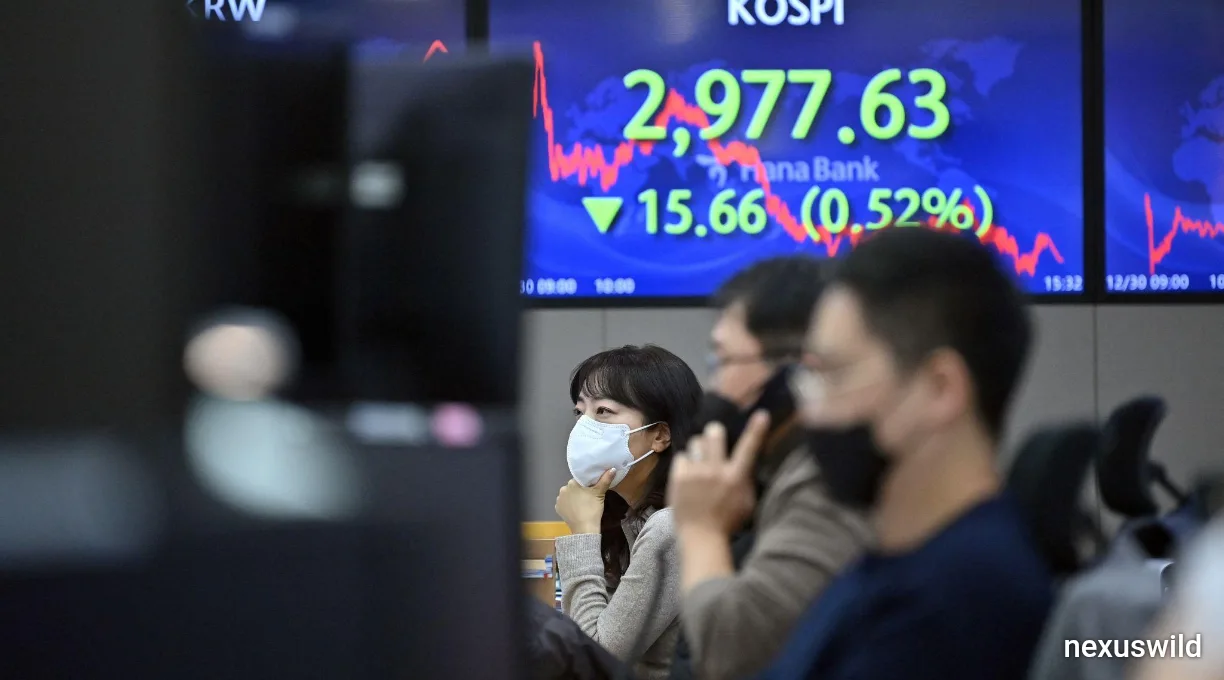
South Koreas Kospi Struggles Under Pressure
South Koreas Kospi index also had losses going down 6.3% to close at 5,042.65 points according to Associated Press.
The market had more pressure during the day. Reuters said the index dropped much as 8.8% during the day causing a 20-minute stop in trading because of the circuit-breaker rules before it recovered some of the loss.
Samsung Electronics and SK Hynix were among the companies hit. Both are important in the chip world especially for memory chips and products used in advanced computing.
SK Hynix shares went down 10.4% in the closing reports while Samsung Electronics fell about 6.4%.
Foreign investors also sold a lot. Reuters said foreign investors sold 2.8 trillion won worth of South Korean stocks during the day.
The big drop made Korean leaders take action. Finance Minister Lee Hyoung-il had an emergency meeting as officials looked at how unstable the market was. Authorities also made some rules about investments easier to help deal with the risk of selling forced by the market.
This situation showed how sensitive South Koreas stock market is to changes in what people expect for memory product demand and AI computing infrastructure.
Taiwans Semiconductor Sector Also Struggles
Taiwans market had a drop as investors thought again about the future of making chips and the related technology businesses.
The Taiex index went down about 4.5% on Friday. Taiwan is very important to the chip industry because it is a key player in making advanced chips and has a network of technology suppliers.
Taiwan Semiconductor Manufacturing Company (TSMC) one of the important companies that makes chips for others was affected by the drop in the region. Its shares went down as people thought again about how things will go for the AI chip supply chain.
The market reaction also showed worries about companies that do chip packaging, electronics assembly and other parts needed for computing.
The drop should not be seen as proof that chip orders are gone or that demand for AI chips has disappeared. Stock prices can change a lot when peoples expectations change even if the actual demand is still strong.
Wall Streets AI Sell-Off Reaches Asian Markets
The drop in Asia followed the US market sell-off on November 5 which was led by chip and technology stocks.
The Nasdaq Composite went down 5.5% while the Nasdaq-100 went down about 6.4%. The Philadelphia Semiconductor Index had a 12.2% drop, with big chip companies including AMD, Micron, Arm Holdings, Broadcom and Nvidia having losses in their share prices.
One big worry is how much money cloud and tech companies are spending. These companies have put a lot into data centers, AI chips, networking systems and the electricity needed for these.
Investors are starting to ask if the money made from AI services will be enough to pay for building and running these places. The debate involves how well the facilities are used how much customers want the services, how electricity costs, how they get the money and how long it takes for new investments to make real profits.
These worries are especially important for companies because several big economies in the region provide the parts and tools needed for global AI infrastructure.
US Political Changes Add Uncertainty
The results of the US mid-term election on November 3 also came into the market discussion.
Investors have been looking at whether changes in politics could lead to checking on big data center projects including how much electricity is used how land is used how much water is used and how local rules are followed.
Possible limits or delays could change the plans for building these projects. Affect how tech companies plan their future investments.
Election results don't automatically add new nationwide rules. Any changes would depend on the laws, rules and local plans.
So the market reaction shows uncertainty about what might happen in the future not that AI projects are already canceled or stopped.
What the Asian Sell-Off Means for the Global Tech Supply Chain
The drop on November 6 shows the money links between tech markets.
Japan gives equipment to test chips and special parts. South Korea makes a lot of memory chips and parts. Taiwan is key in making chips and making chips for others.
These companies face the decisions made by tech companies in the US and other places. When investors worry about AI spending the effects can quickly spread to companies that make, test, package and supply computer parts.
For companies the immediate effect is changes in stock prices and more people looking closely at their earnings forecasts how much money they need and how strong they are financially.
For investors the drop shows the risks of putting much money into fast-growing tech sectors. It also makes people wonder how much future AI growth is already in the prices of companies.
Still the drop doesn't mean that AI use or chip demand is going down for good. The future depends on what customers want the choices companies make and how well they can turn their spending into profitable services.
What to Watch Next
Investors will look at the reports of earnings plans for spending on AI infrastructure and what happens with building data centers in the US and Asia.
The performance of chip companies, including Samsung Electronics, SK Hynix, TSMC and Japans Advantest will stay important signs of how people feel about the market.
The drop on November 6 shows how quickly worries about AI money and rules can affect stock markets around the world. Whether the drop is a correction or a short-term change will depend on what happens with earnings company plans and if there is real demand, for AI infrastructure.
Nexuswild welcomes factual corrections. Email contact@nexuswild.com with evidence and the article URL.