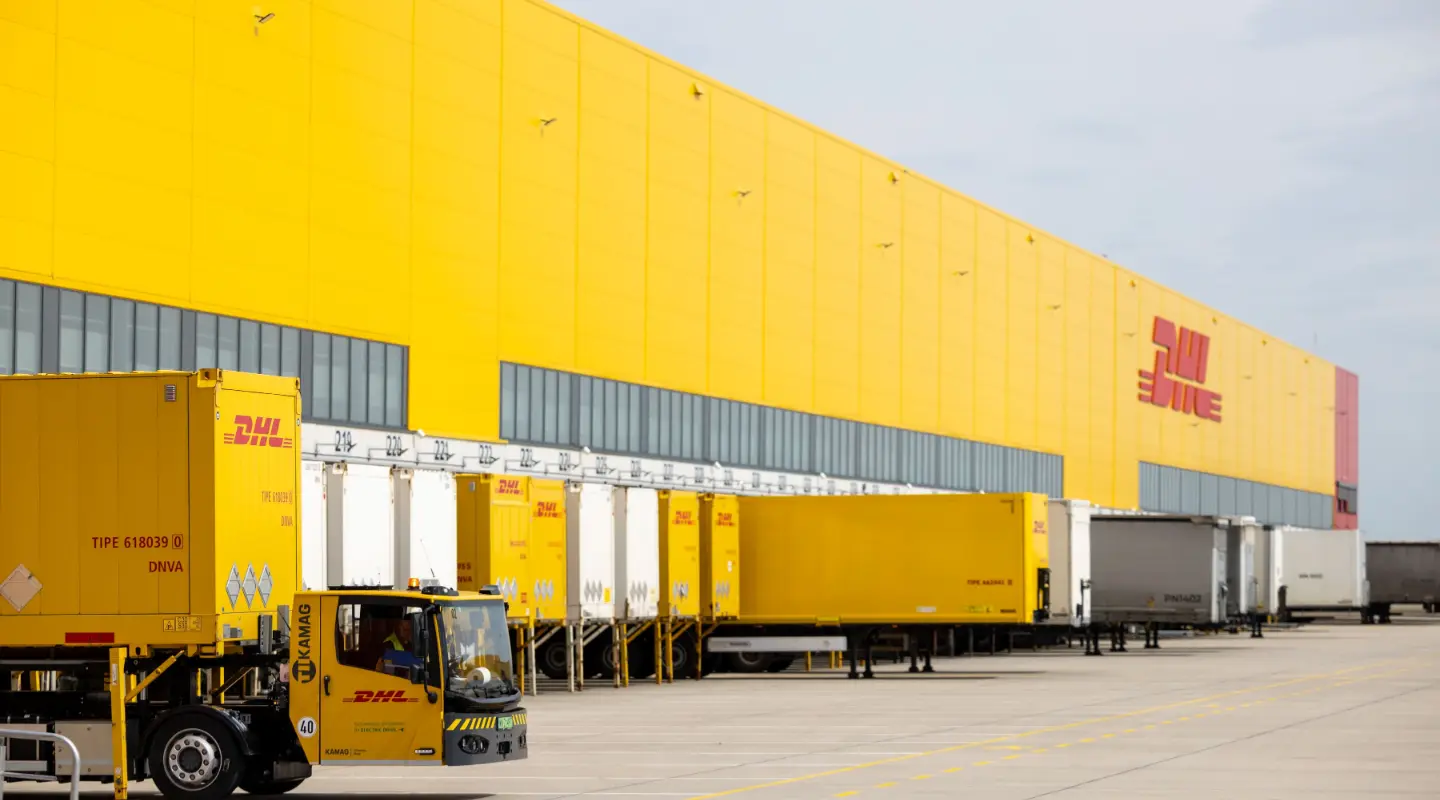

DHL Group is spending more on the physical backbone of its business. On October 16, 2026, the logistics giant raised its 2026 capital expenditure outlook to around €3.6 billion, up from €3.0 to €3.3 billion, and said it will use the money to "take advantage of selected opportunities amid ongoing business dynamics." The full third-quarter results, published November 5, show why management feels able to do it.
The numbers
Group revenue in the third quarter rose 12.6 percent to €22.7 billion from €20.1 billion a year earlier. Operating profit (EBIT) rose 16.2 percent to €1.7 billion. DHL raised its full-year EBIT guidance to more than €7.0 billion, up from more than €6.5 billion, and its free cash flow guidance, excluding acquisitions, to more than €3.2 billion, up from about €3.0 billion. It also said it will review its mid-term guidance in March 2027.
Spending is already rising. DHL invested €897 million in property, plant, equipment and intangibles in the quarter, against €632 million a year earlier. The company said the money went predominantly to maintaining and expanding its network infrastructure, meaning facilities, hubs, vehicles and equipment. Capex for the first nine months was about €2.2 billion, roughly €0.5 billion more than a year ago.
Where it is going
On the earnings call, management said the capex increase is not catch-up spending to fix past underinvestment. It is aimed at capturing growth, with the biggest year-on-year increase coming from the Supply Chain division, according to a summary of the call. That division, which runs warehousing and contract logistics for customers, grew revenue 12 percent to €4.94 billion in the quarter, and EBIT rose 8.1 percent to €301 million.
DHL Express, the international express parcel business, was the standout. Its EBIT rose to about €1.04 billion from €692 million, driven by pricing and cost measures plus the benefit of higher volumes. Express shipment weight per day grew 9.7 percent, according to a call summary.
The company ties the spending to its Strategy 2030, and in its results release highlighted a push to offer combined services across divisions for data centers, such as moving and installing equipment for customers building new capacity.
What is helping, and what could change
DHL itself flagged one temporary factor. Express's third-quarter result had limited support of about €100 million from capacity constraints in the air freight market, which tend to lift pricing when space is scarce. If that tightness fades, some of that benefit could too.
There is also a question about returns. An analyst on the call noted that Supply Chain margins were modestly lower year on year despite 12 percent revenue growth. Management answered that the capex relates to a strong business pipeline. Investors will want to see whether the new capacity turns into profit.
Why it matters
DHL is one of the largest logistics companies in the world, so where it puts its money is a signal of where it sees trade and e-commerce flows going. Raising capex while also lifting profit and cash flow guidance suggests management sees demand as strong enough to justify building capacity ahead of it. But it is a company view. Three things will test it:
Nexuswild welcomes factual corrections. Email contact@nexuswild.com with evidence and the article URL.