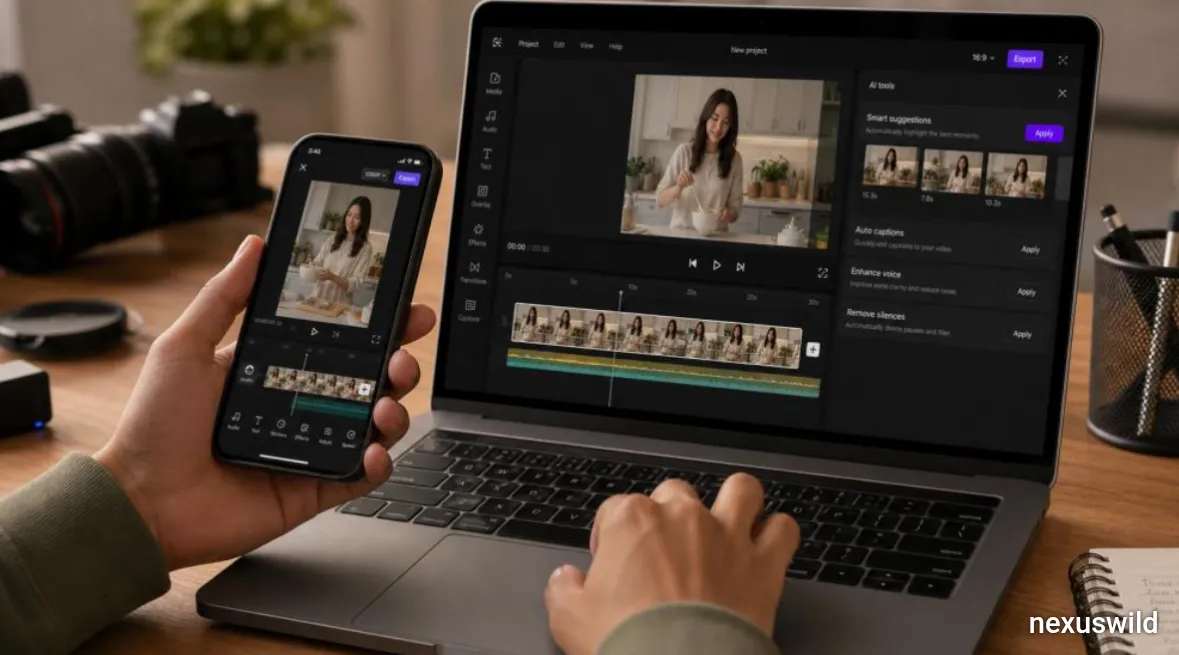

Google has launched Gemini Omni 1.2 Flash, a generative video tool that lets people make clips up to fifteen seconds long and tweak existing videos using chat‑style commands. The product was announced on November five 2026. It concentrates on videos, steadier visuals, better sound and cheaper production.
The update targets developers, companies, ad teams and solo creators who want to make videos more quickly. Google is offering the model via its Gemini API and Google Cloud. Is also opening it up through tools like Google Vids and Flow.
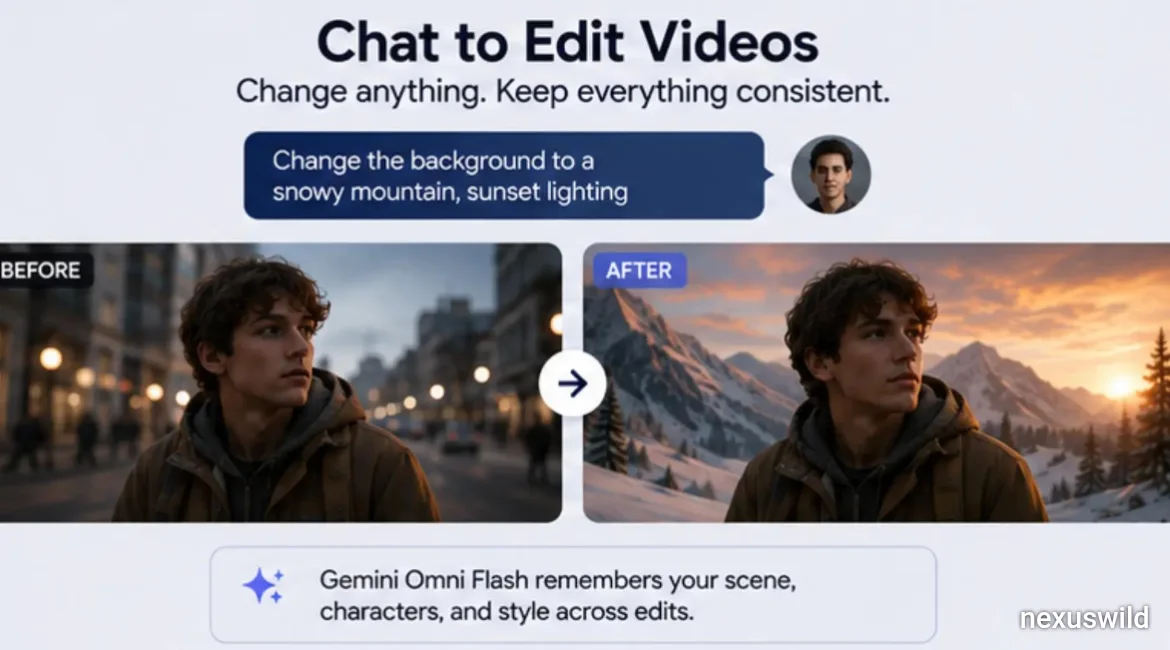
The biggest change is that users can now produce clips and edit them in conversation. Than re‑creating the whole clip every time a small detail changes people can give new instructions to adjust only the part that needs it.
Video Generation Limit Increases to 15 Seconds
Gemini Omni 1.2 Flash raises the native video length from ten seconds in Omni 1.1 Flash to fifteen seconds.
Users can choose a length in one‑second steps from three seconds up to fifteen seconds. This gives makers space to build short scenes show products create social media ads and produce promo videos all in one go.
Longer videos matter a lot for companies that make videos. A product ad for instance might need time to introduce the item show its features and deliver a final message. Five extra seconds give freedom without making several separate clips.
Google also claims the model keeps visuals steadier over a clip. Characters, items, clothes, packaging and backgrounds can stay more consistent during camera moves and scene changes when good references are provided.
That matters because visual drift is a long‑standing problem in video. Objects might change shape labels can. Characters may look different from one frame to the next. Better reference use should cut these problems.
Conversational Editing Changes the Video Workflow
The main feature of Gemini Omni 1.2 Flash is its multi‑turn chat editing.
Earlier generative video methods often forced makers to rebuild the clip if they wanted a new background, lighting or object. That raised both cost and time to get a video.
With the model people can tweak a made video by giving follow‑up commands. For example one could ask for a background change the light alter the weather or swap a product while telling the model to keep the rest of the scene the same.
The process is meant to keep visual details while making the requested change.
For ad teams this could simplify making variations of a campaign. A company might create one product video. Then ask for other backgrounds or looks for different audiences and spots.
The model can also use reference photos, quick motion clips and sound cues. Google says this helps keep visual traits like a character’s look clothing details, item design and brand colors.
Still conversational editing does not assure every frame or object stays perfect. Complex scenes may need tries, checks and some manual work.
Improved Audio, Dialogue and Lip-Sync
Google also worked on sound.
Gemini Omni 1.2 Flash offers speech that sounds natural better dialogue and clearer mouth movement sync. Its multi‑speaker settings help create scenes with than one talking character.
That matters because realistic video needs more than visuals. Dialogue must sound natural speakers must be clear and mouth movement must match the audio closely.
Google says these upgrades can help with animated chats, videos promo clips and avatar content.
The model can also use references during creation. That lets makers have control over the sound and how a scene sounds.
These features matter especially for marketing teams and online publishers who need videos with narration, dialogue or other sounds. Still the generated speech and mouth sync should be checked before publishing.
Pricing Falls by 30 Percent
Cost is another part of the launch.
Google has set the price for 720p video at seven cents per second a thirty percent drop, from Gemini Omni 1.1 Flash.
At this speed a 15‑second video at 720p would cost $1.05 before taxes or extra processing fees.
That lower price could make it easier for businesses that make many short clips to test and produce videos repeatedly.
Google also explains a workflow where users first create drafts at 360p or 720p then improve the ones and only upscale chosen videos to 1080p or 4K. This helps cut wasteful spending on high‑resolution output for ideas that may be rejected later.
The difference matters: the $0.07 rate is for 720p generation and 1080p or 4K upscaling is not automatically part of that price.
For companies that use video generation in production Google’s cloud infrastructure and enterprise‑grade service guarantees may also matter. Provisioned Throughput is offered for organisations that need predictable capacity.
Availability Across Googles Platforms
Gemini Omni 1.2 Flash is being offered through Google products and developer channels.
Gemini API and Google Cloud: Developers can plug the model into their applications and automated video‑production workflows. Google has announced that it is now generally available through its developer and business infrastructure.
Google Vids: The model can be used inside Google’s video creation and editing product. Google said that users with a Google account or a Google Workspace subscription can make up to three 15‑second videos each month at no extra cost through Vids.
Flow: The model is also being added to Google’s AI video‑creation environment, where users can build and refine scenes.
Gemini app: Google states that 15‑second video generation is being rolled out to Google AI subscribers through the Gemini app.
Availability and usage limits differ by product, subscription and rollout schedule. Users should check the Google product interface and plan details before depending on a specific feature or generation limit.
SynthID and AI-Generated Content Identification
The release also brings Google’s SynthID watermarking technology.
SynthID puts a watermark into generated media. The technology is meant to help identify content even when the watermark is not visible when people normally watch the video.
This is important because generative video is becoming more realistic and more common in advertising, entertainment and social media.
Watermarking does not mean every viewer will automatically see a label when a video is shared. Instead it gives a way to identify content made with supported Google generative tools.
For publishers and businesses provenance tools are a part of responsible AI use. They can help with transparency. Make it clear which media is generated and which is a normal recording.
What the Launch Means for the AI Video Market
Gemini Omni 1.2 Flash is entering a market that also has Google’s Veo models and other generative video platforms.
Its positioning is based on a mix of speed, cost, reference consistency and conversational editing. Of only trying to produce visually impressive clips Google is trying to make video generation more practical for repeatable business workflows.
The lower per‑second price could be especially useful for e-commerce companies, advertising agencies and digital publishers. These organisations often need versions of the same creative asset and the ability to edit an existing generation could cut down the number of full regeneration cycles.
The model’s integration into Google Cloud and developer APIs also gives businesses a path to add video generation to their applications.
However lower generation prices do not automatically mean overall production costs. Human review, development, editing, storage, distribution and quality assurance are still part of the process.
What to Watch Next**
The next step will depend on whether Gemini Omni 1.2 Flash can deliver results in real‑world production environments.
Developers and creators will watch for improvements in reference accuracy dialogue quality, complex motion and the reliability of multi‑turn edits. Businesses will also need to evaluate the cost of production workflows instead of only looking at the price per second.
Google’s expansion of the model across API, Cloud, Vids and Flow shows that it wants generative video to become part of creative and business software instead of staying a separate experimental tool.
The launch is a step in that direction.
Longer clips conversational editing and lower generation costs could make AI video production more practical even though supervision and quality control are still essential, for professional use.
Nexuswild welcomes factual corrections. Email contact@nexuswild.com with evidence and the article URL.