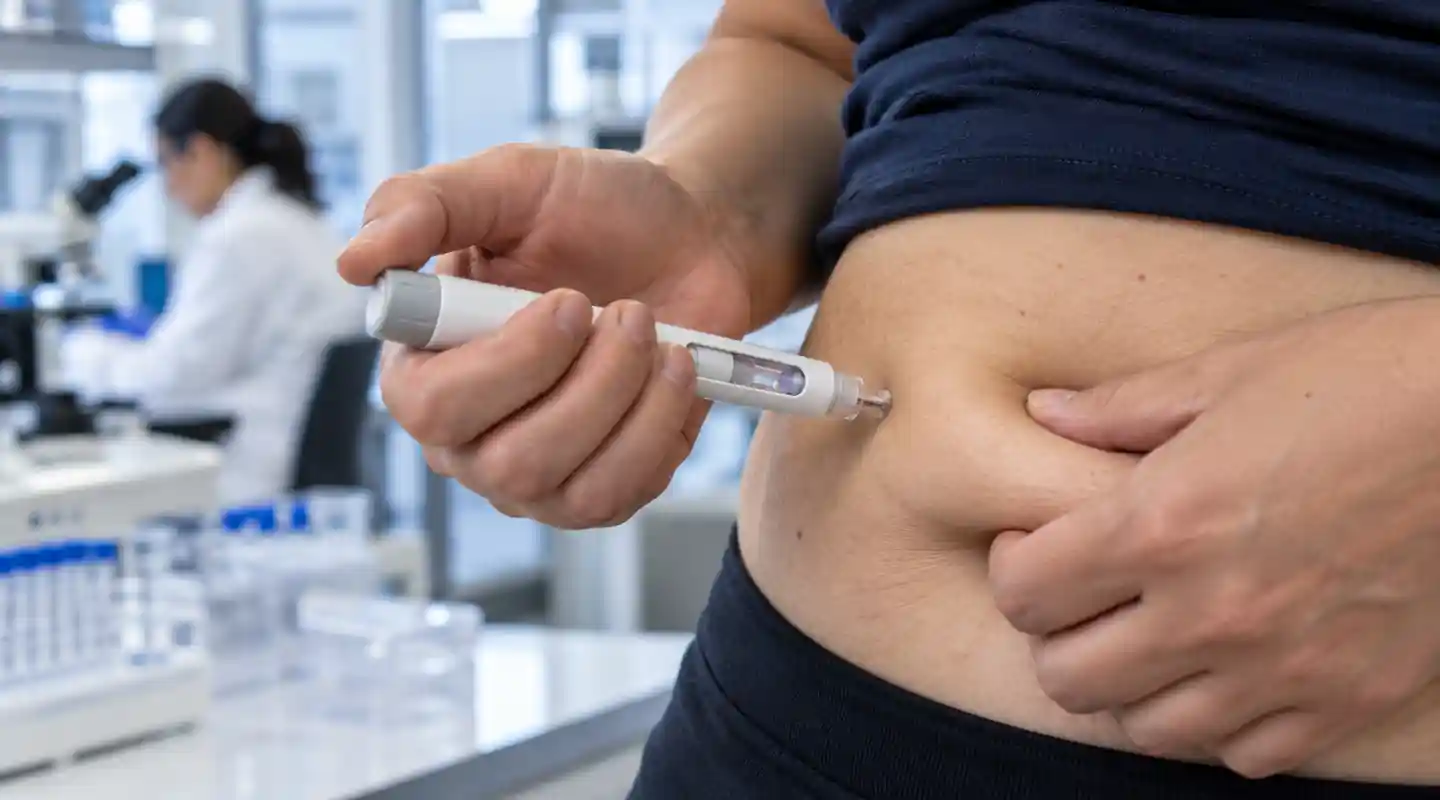

The global pharmaceutical industry is changing fast. Drug companies and investment firms are putting billions of dollars into treatments for obesity and related metabolic diseases. Demand for weight-management medicines keeps growing. This has led to competition. Companies are racing to speed up trials create longer-lasting treatments and build stronger commercial pipelines.
In a move investment firm Blackstone has agreed to provide up to $1.5 billion to support Pfizer’s work on a next-generation obesity treatment called berobenatide. This announcement came on November 11 2026. The funding will help support the development program through 2028.
Berobenatide is a monthly glucagon-like peptide-1 (GLP-1) receptor agonist. It is being developed to help manage weight over the term. It may also treat obesity-related health problems. The agreement is a step for Pfizer as it tries to strengthen its role in the fast-growing obesity treatment market.
It also shows how Blackstone is becoming more involved in financing development. Private investment firms are increasingly partnering with healthcare companies. This kind of partnership helps companies keep control while getting outside funding.
Unlike an acquisition or licensing deal this transaction lets Pfizer keep full ownership and control. Pfizer keeps all decision-making power. At the time it gets a major infusion of cash for development. This could ease the pressure of research and development. It also allows Pfizer to run clinical trials.
Berobenatide is still investigational. It must go through clinical testing. It must get approval from regulators before it can be sold to the public for weight management.
Details of the $1.5 Billion Funding Agreement
Under the agreement funds managed by Blackstone Life Sciences will cover up to $1.5 billion in development costs for berobenatide through 2028.
In return Blackstone will earn milestone-based payments. These payments depend on achievements. The key milestones are US approval for the monthly injectable form of berobenatide. The approval must be for weight management as a standalone treatment. The second milestone is reaching sales targets after the drug launches.
Any payments Blackstone receives will be made over years. The companies have not released the numbers. They haven’t shared the formula. They haven’t said how much each milestone is worth. They also haven’t disclosed the possible return for Blackstone.
A key point is that Blackstone will not own the drug candidate. Pfizer keeps ownership. Pfizer keeps control over the development process. Pfizer makes all decisions. The investment comes from two sources: funds managed by Blackstone Life Sciences and funds managed by Blackstone’s private equity strategy, BXPE.
This structure lets Pfizer use money without giving up ownership of the drug. For Blackstone it means a chance to profit from the drug’s success. Payments will come when the drug gets approved and sells well. The deal shows how specialized financing is becoming more common in drug research. The high cost and risk of development make outside funding very appealing.
What Is Berobenatide?
Berobenatide, also known as PF'3944 and previously called MET-097i is an investigational GLP-1 receptor agonist being developed by Pfizer. GLP-1 is a hormone that naturally helps regulate blood sugar, appetite and food intake. Drugs that activate GLP-1 receptors can reduce hunger slow down how fast food leaves the stomach and improve blood sugar control.
These effects have made GLP-1-based medicines a key treatment for obesity and metabolic diseases. Berobenatide is designed to be long-acting. It may be used a month. Monthly injections are a step forward. Many current obesity treatments require shots. Frequent dosing could make treatment easier. It could help patients stick with their treatment longer.
Monthly dosing is still under study. It is not a confirmed schedule. It’s part of the trial process. Pfizer is testing berobenatide both alone and in combination with metabolic treatments. One such treatment is an amylin analogue. Amylin is another hormone that helps control appetite and metabolism.
Pfizer is also looking at uses. The company is studying berobenatide for conditions like sleep apnea and knee osteoarthritis. These are often linked to obesity. A wider development program helps Pfizer build berobenatide into a part of its future cardiometabolic medicine portfolio.
Clinical Research Shows Promising Early Results
Berobenatide’s development gained momentum from Phase 2b results reported by Pfizer in June 2026. The company shared findings from dose-finding studies at the American Diabetes Association’s 86th Scientific Sessions.
In the VESPER-1 study patients taking a 2.4 mg dose lost almost 16% of their body weight after 32 weeks. This weight loss was not adjusted for placebo. The company said weight loss had not stopped by the end of the 32-week period. The results supported exploration of the dosing strategy. They also supported the drug’s potential for long-term weight management.
Pfizer also reported that berobenatide was well-tolerated. That made it safe to move into stages of testing.. The results need careful interpretation. A non-placebo-adjusted weight loss number does not show how better the drug is compared to a placebo. Also results from one Phase 2b study do not prove the drug works for everyone. More data is needed from more diverse groups of patients.
Pfizer plans to move with 10 ongoing or planned Phase 3 studies for berobenatide in 2026. These are part of an effort involving more than 20 clinical trials. The trials focus on obesity and related health issues. The large number of studies shows Pfizer is serious about competing in this market. Term clinical evidence and clear differences from other treatments are becoming very important.
Pfizer Expands Its Obesity Treatment Portfolio
The Blackstone deal is part of Pfizer’s plan to strengthen its position in the obesity and cardiometabolic market. In November 2025 Pfizer bought a stage biotech company called Metsera. This acquisition gave Pfizer access to a group of obesity treatments. Berobenatide was one of the assets from the deal.
The purchase helped Pfizer expand beyond its research. It now has a range of weight-management technologies. The Metsera portfolio also included MET-233i. That is an ultra-long-acting amylin analogue. Amylin is a hormone that helps control appetite and metabolism. Pfizer is studying how combining GLP-1 receptor agonists with amylin-based treatments might work better together.
Combination therapies are a growing focus. Companies want to go beyond single-mechanism drugs. They are looking for ways to manage weight and treat multiple metabolic conditions. For Pfizer the goal is to build a portfolio. This portfolio should offer treatment options. These include formats, dosing schedules and drug combinations.
Pfizer has faced setbacks in obesity efforts. That makes the progress of its candidates like berobenatide even more important. Berobenatide is more, than another research project. It is a part of Pfizer’s push to build a stronger long-term role in one of the most commercially valuable areas of the pharmaceutical industry.
Private Equity Enters Pharmaceutical Development at a Larger Scale One of the most interesting aspects of this transaction is Blackstone's expanding involvement in the financing of pharmaceutical innovation.
Traditional pharmaceutical research is usually funded through a company's internal research and development budget, partnerships with other drug manufacturers or capital raised through financial markets.
However, the development of advanced medicines can require years of research, multiple clinical trials and substantial financial investment before a product generates commercial revenue.
Specialised investment platforms such as Blackstone Life Sciences are creating alternative funding structures that allow pharmaceutical companies to share development costs and financial risks.
Under the Pfizer agreement, Blackstone is effectively providing capital for a defined clinical development programme in exchange for potential future payments linked to regulatory and commercial success.
This is different from a conventional equity investment because Blackstone does not receive ownership in Pfizer or berobenatide.
For Pfizer, the arrangement provides financial flexibility while retaining control over a valuable pharmaceutical asset.
For Blackstone, it offers exposure to the potential commercial success of a drug programme without requiring the firm to operate pharmaceutical research and manufacturing facilities itself.
The transaction also builds on an existing relationship between the two companies.
In April 2023, Pfizer entered into an earlier agreement under which Blackstone agreed to provide up to $550 million to co-fund development costs associated with specified treatments.
The new $1.5 billion agreement demonstrates the continued development of this financing relationship.
It also reflects a broader investment trend in which private capital is increasingly participating in the funding of advanced medical technologies and pharmaceutical research.
Competition in the Global Weight-Loss Drug Market Intensifies
The global obesity treatment market has become one of the most competitive areas of the pharmaceutical industry.
Major pharmaceutical companies are competing to develop medicines that provide greater weight reduction, improved tolerability, more convenient administration and potentially additional metabolic benefits.
Eli Lilly has established a strong position through its tirzepatide-based treatments, marketed as Mounjaro and Zepbound in the United States.
Novo Nordisk also remains a major competitor through its semaglutide-based products, including Wegovy and Ozempic.
Both companies have invested heavily in expanding their obesity treatment portfolios and manufacturing capabilities.
The competitive environment is increasingly shifting towards next-generation medicines with improved dosing convenience and potentially broader therapeutic benefits.
For Pfizer, berobenatide's proposed monthly administration could offer a commercial point of differentiation if clinical trials confirm its effectiveness, safety and suitability for that schedule.
However, developing a less frequently administered medicine is not sufficient by itself to guarantee market success.
Pricing, insurance coverage, long-term safety, manufacturing capacity and physician confidence will influence adoption.
Pfizer must also demonstrate that berobenatide can compete with established treatments that already have substantial clinical experience and commercial distribution networks.
The Blackstone funding agreement could help the company accelerate this competition by supporting a broad Phase 3 programme and reducing the immediate financial burden of development.
Financial Implications for Pfizer
The agreement provides Pfizer with an opportunity to support an expensive research programme without financing the entire development cost internally.
Large pharmaceutical companies must allocate substantial capital across multiple research areas, including oncology, vaccines, immunology and rare diseases.
External co-funding can help preserve financial resources for other pipeline programmes and potential acquisitions.
This is particularly relevant for Pfizer as it continues to diversify its business and strengthen its long-term revenue sources.
The pharmaceutical company faces an evolving commercial environment involving changing healthcare spending patterns, product competition and patent-expiration risks.
Developing successful next-generation medicines is important for maintaining its long-term earnings potential.
The Blackstone agreement also allows Pfizer to retain the potential commercial value of berobenatide.
Since the drug's ownership and development control remain with Pfizer, the company would retain its strategic position in the programme if clinical and regulatory milestones are achieved.
Nevertheless, the arrangement is not free capital.
Blackstone will be eligible for milestone-based financial returns if the specified regulatory and commercial conditions are met.
Pfizer will therefore need to account for the future financial obligations associated with successful development and commercialisation.
The overall economic benefit will depend on the eventual cost of development, the amount of funding used, the structure of milestone payments and the drug's commercial performance.
Clinical and Regulatory Challenges Remain
Despite promising early clinical findings, berobenatide still faces considerable development risks.
Phase 3 studies generally involve larger patient populations and longer observation periods than earlier clinical trials.
Their purpose is to establish stronger evidence regarding effectiveness, safety and the suitability of a treatment for regulatory approval.
Pfizer must demonstrate that berobenatide provides meaningful weight-management benefits while maintaining an acceptable safety profile.
Regulators will also evaluate the suitability of the proposed monthly administration schedule.
The company must establish that the treatment delivers consistent exposure and clinical outcomes over its intended dosing interval.
Other considerations include potential adverse reactions, treatment discontinuation rates and the effectiveness of the medicine in different patient groups.
Competition also adds commercial uncertainty.
By the time berobenatide reaches the market, competing manufacturers may have introduced newer treatments with different dosing schedules, improved clinical results or more attractive pricing.
Consequently, strong Phase 2b data and substantial financial backing do not guarantee regulatory approval or commercial success.
The next several years of clinical research will be important in determining whether Pfizer can turn the candidate into a commercially viable obesity treatment.
Future Outlook: A New Model for Pharmaceutical Investment
The Pfizer-Blackstone agreement highlights the growing importance of alternative financing arrangements in the development of advanced medicines.
As pharmaceutical innovation becomes more capital-intensive, companies may increasingly seek partnerships that share the cost of clinical trials while preserving strategic control over their research programmes.
For Pfizer, the immediate priority will be advancing berobenatide through its planned Phase 3 studies and building a broader cardiometabolic portfolio.
For Blackstone, the investment offers an opportunity to participate in the potential financial success of a treatment targeting a large and expanding healthcare market.
The wider pharmaceutical industry will be watching the development closely because its structure could provide an example of how specialised investment firms and drug manufacturers can collaborate.
The commercial outlook will depend on clinical results, regulatory decisions, treatment affordability and the company's ability to compete against established pharmaceutical brands.
If berobenatide achieves the necessary clinical and regulatory milestones, monthly dosing could become an important feature in Pfizer's future obesity treatment portfolio.
However, if trials fail to demonstrate sufficient benefits or reveal unexpected safety concerns, the commercial opportunity could be significantly reduced.
The agreement therefore represents a substantial investment in potential medical innovation rather than a guaranteed future pharmaceutical product.
Conclusion
Blackstone's commitment to provide up to $1.5 billion for Pfizer's berobenatide programme represents an important development in both pharmaceutical financing and the global obesity treatment market.
The agreement provides Pfizer with substantial financial support through 2028 while allowing it to retain full operational control and ownership rights over the investigational medicine.
Berobenatide's Phase 2b findings and planned Phase 3 development programme offer a foundation for further research into longer-acting GLP-1 treatments.
The transaction also demonstrates how private investment firms are increasingly participating in the development of advanced medicines by sharing research costs in exchange for potential regulatory and commercial milestone payments.
Nevertheless, clinical development remains uncertain, and the treatment must demonstrate safety and effectiveness before it can receive regulatory approval.
For Pfizer, the next challenge will be converting its investment in obesity research into a differentiated and commercially successful pharmaceutical portfolio.
For Blackstone, the partnership represents another opportunity to expand its presence in healthcare investment and benefit from scientific innovation.
As competition among pharmaceutical manufacturers intensifies, collaborations between traditional drug developers and specialised investment firms could become an increasingly important part of the global healthcare industry.
Nexuswild welcomes factual corrections. Email contact@nexuswild.com with evidence and the article URL.