
Brazilian financial markets suffered a sharp sell-off on October 26 after President Luiz Inácio Lula da Silva won reelection, overturning expectations among many investors who had positioned for a victory by right-wing challenger Flávio Bolsonaro.
The Ibovespa, Brazil’s benchmark stock index, closed down 13.88% at 176,608.23 points, its steepest daily decline since March 2020. Earlier in the session, the index had fallen more than 17%, prompting the B3 exchange to activate its circuit breaker and temporarily suspend trading.
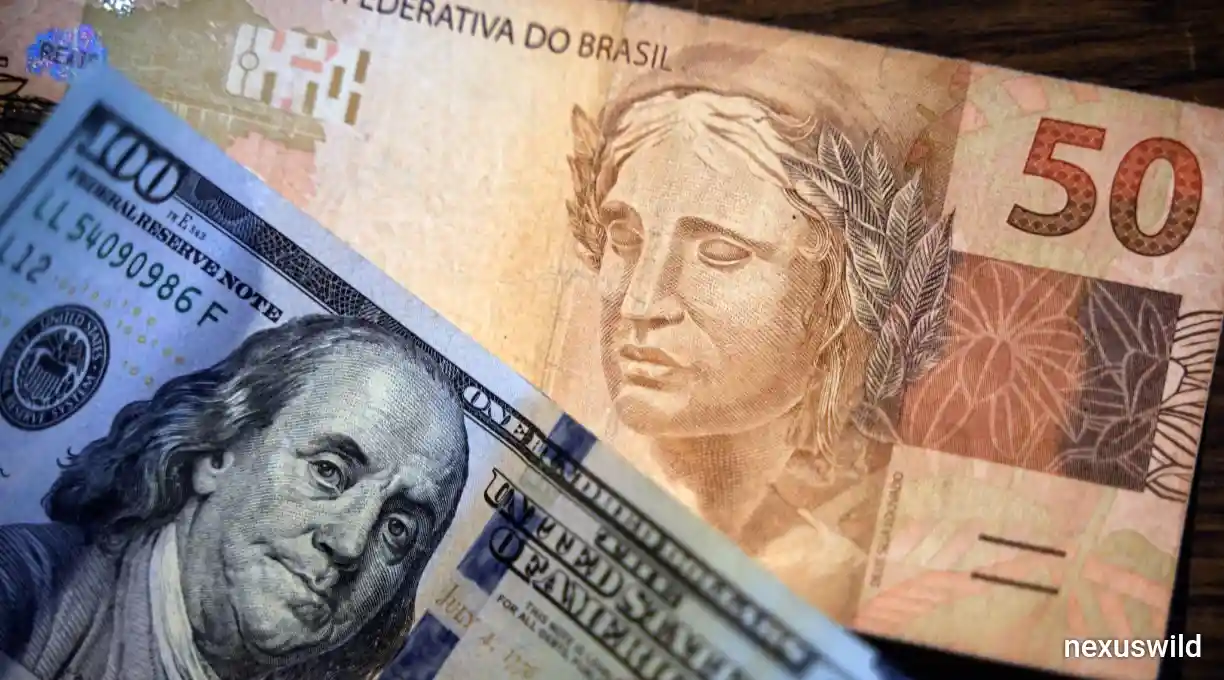
The Brazilian real also weakened sharply. The US dollar rose 8.21% against the currency, closing at approximately 5.403 reais. During the session, the dollar briefly climbed above R$5.60. The Brazilian Treasury cancelled scheduled auctions of certain government bonds as financial markets faced heightened volatility.
The reaction demonstrated how strongly investors had positioned themselves around the election outcome. It also brought renewed attention to Brazil’s fiscal outlook, the direction of interest rates and the relationship between government spending and public debt.
Election result overturns market expectations
Brazil’s Superior Electoral Court confirmed Lula’s victory in the October 25 runoff. He received 51.79% of valid votes, compared with 48.21% for Bolsonaro, according to official election results.
The outcome contradicted the expectations that had supported a rally in Brazilian assets during the campaign’s final weeks. Some investors had anticipated that a Bolsonaro administration would pursue stronger fiscal restraint, deregulation and policies intended to improve the government’s debt trajectory.
After Lula’s victory became clear, traders reassessed those positions. The resulting sell-off spread across equities, currency markets and government debt.
The election result was the immediate catalyst for the market reaction, but it does not by itself establish how Brazil’s economy will perform over the coming years. Investors are responding to expectations about future policy, and those expectations may change as the government announces its economic team and fiscal plans.
Ibovespa suffers its largest daily decline since 2020
The Ibovespa’s 13.88% closing decline marked one of its most severe single-session falls in recent years. The index reached an intraday low of 169,516.43 points, more than 17% below its previous close, before recovering some ground.
The circuit breaker temporarily halted trading when the decline crossed the exchange’s intervention threshold. Such mechanisms are designed to pause trading during exceptional volatility, giving market participants time to process information and reassess orders. They do not prevent further declines once trading resumes.
The session also saw unusually heavy turnover. Agência Brasil reported financial trading volume of approximately R$88.6 billion, far above the daily average cited in its report.
The sell-off was not uniform across all companies. Financial firms and businesses sensitive to domestic borrowing costs came under pressure, while some exporters were better positioned to benefit from a weaker real. That difference matters because a falling stock index does not mean every listed company faces the same economic consequences.
The scale of the decline nevertheless reflected a broad reassessment of the outlook for Brazilian assets, particularly among investors who had expected a different political outcome.
The real weakens as the dollar surges
The currency market experienced one of the most significant daily moves in the real’s recent history. The commercial dollar closed at approximately R$5.403, up 8.21% on the day, according to Agência Brasil. Reuters reported a closing level near R$5.415 and a decline of approximately 8.1% for the real, illustrating small differences between market data sources and reporting conventions.
During the morning, the dollar briefly reached approximately R$5.605. It subsequently retreated as some traders took profits and exporters sold foreign currency.
The move was substantial, but the closing result should be distinguished from the currency’s intraday low. Claims that the real fell 12% or more describe more extreme market indications rather than the confirmed end-of-session move in the commercial dollar.
A weaker currency can have mixed effects on the economy. Brazilian exporters that earn revenue in dollars may benefit when foreign earnings are converted into reais. However, companies that import equipment, fuel, components or other goods can face higher costs. Imported inflation may also complicate monetary policy if currency weakness persists.
For households and businesses, the impact depends on how long the exchange rate remains under pressure and how quickly higher import costs feed into domestic prices.
Petrobras and banks face sharp pressure
Brazilian companies traded in the United States came under heavy selling pressure in early trading following the election result. Petrobras, the state-controlled oil producer, and Itaú Unibanco, one of the country’s largest private-sector banks, were among the prominent names affected.
The size of the decline varied by market and trading period. Before the regular US session, Petrobras American depositary receipts fell sharply, while Itaú and other Brazilian financial shares recorded even larger percentage losses in some premarket quotations.
These early indications should not be confused with final closing returns on the Brazilian exchange. Market prices can change considerably between premarket trading, the opening session and the close.
Financial stocks can be especially sensitive to expectations for interest rates, credit demand, government policy and the economic outlook. If investors anticipate higher borrowing costs or weaker growth, they may revise their expectations for lending activity, loan defaults and future earnings.
Petrobras also faces questions about the relationship between state ownership, corporate strategy and government policy. Nevertheless, a single day’s share-price movement does not establish that the company’s operating performance has deteriorated. Investors were reacting to the potential implications of the political outcome as well as wider market uncertainty.
Treasury cancels selected bond auctions
The volatility extended beyond shares and foreign exchange. Brazil’s National Treasury cancelled scheduled auctions of fixed-rate and inflation-linked government securities planned for October 27 and October 29, according to reporting by Reuters.
The decision came as government bond prices weakened and market yields rose. The Treasury also conducted buybacks of existing securities, according to reports, as authorities responded to disrupted market conditions.
Bond prices and yields generally move in opposite directions: when investors sell existing bonds, their prices fall and their yields rise. Higher yields can increase the cost of financing government borrowing and influence interest rates across the wider economy.
Cancelling selected auctions does not mean Brazil has stopped issuing government debt altogether. The action applied to specified offerings, while other financing operations may continue. It is better understood as a response to difficult market conditions than as evidence that the government has lost access to funding.
Investors will be watching subsequent auction schedules, demand for new securities and the government’s financing plans to determine whether market conditions stabilise.
Fiscal policy and interest rates become central concerns
The immediate financial reaction reflected uncertainty about Brazil’s fiscal direction. Investors had expected a possible change in economic policy under Bolsonaro and had priced some of that expectation into Brazilian stocks, currency and bonds.
Lula’s victory prompted a reassessment. Market participants are now focused on the government’s spending commitments, debt trajectory, revenue plans and the credibility of its fiscal targets.
These concerns matter because government borrowing costs affect more than sovereign debt. Higher yields can increase financing costs for businesses and households, influence bank lending rates and weigh on investment. A persistently weaker currency could add pressure if it raises import prices and complicates efforts to control inflation.
However, the election outcome does not make a particular interest-rate path inevitable. The Central Bank of Brazil will assess inflation, economic activity, expectations and financial conditions when making policy decisions. A market sell-off may influence those conditions, but it does not automatically determine the timing of future rate cuts.
The government’s subsequent policy announcements will be important in determining whether investors view the initial reaction as a temporary repricing or a sign of a more sustained deterioration in confidence.
What the sell-off means for emerging markets
Brazil is an important emerging-market economy, so severe volatility can affect investor sentiment toward regional assets. International funds may reassess their exposure to Brazilian shares, currency and sovereign bonds, particularly if they believe fiscal risks are rising.
Still, losses in Brazil do not automatically translate into equivalent declines across Latin America or all emerging markets. Each country has a different fiscal position, inflation outlook, political environment and exposure to global trade and commodity prices.
The reaction also highlights the speed with which financial markets can reverse positions built around an anticipated political outcome. Investors who had purchased Brazilian assets in expectation of a Bolsonaro victory faced a sharp adjustment when the result went the other way.
For international investors, the episode reinforces the importance of considering currency risk alongside local share-price performance. An investment can lose value in local-market terms and experience a further change in returns when converted back into another currency.
What investors should watch next
The next signals will come from the government’s economic appointments, detailed fiscal proposals, subsequent Treasury operations and the central bank’s assessment of inflation and financial conditions.
Investors will also monitor whether the real stabilises, whether the Ibovespa recovers some of its losses and whether government bond yields retreat from their post-election highs. A rebound would not necessarily mean the underlying concerns have disappeared; equally, the initial sell-off does not prove that financial conditions will continue to deteriorate.
Brazil’s October 26 market shock was a sharp repricing following an election result that differed from many investors’ expectations. Its longer-term significance will depend less on the first day’s volatility than on the economic policies that follow, the government’s fiscal credibility and the response of inflation, interest rates and growth.
For now, the episode underscores how political uncertainty can rapidly affect equity valuations, exchange rates and sovereign financing costs—especially when financial markets have already positioned heavily around one expected outcome.
Nexuswild welcomes factual corrections. Email contact@nexuswild.com with evidence and the article URL.