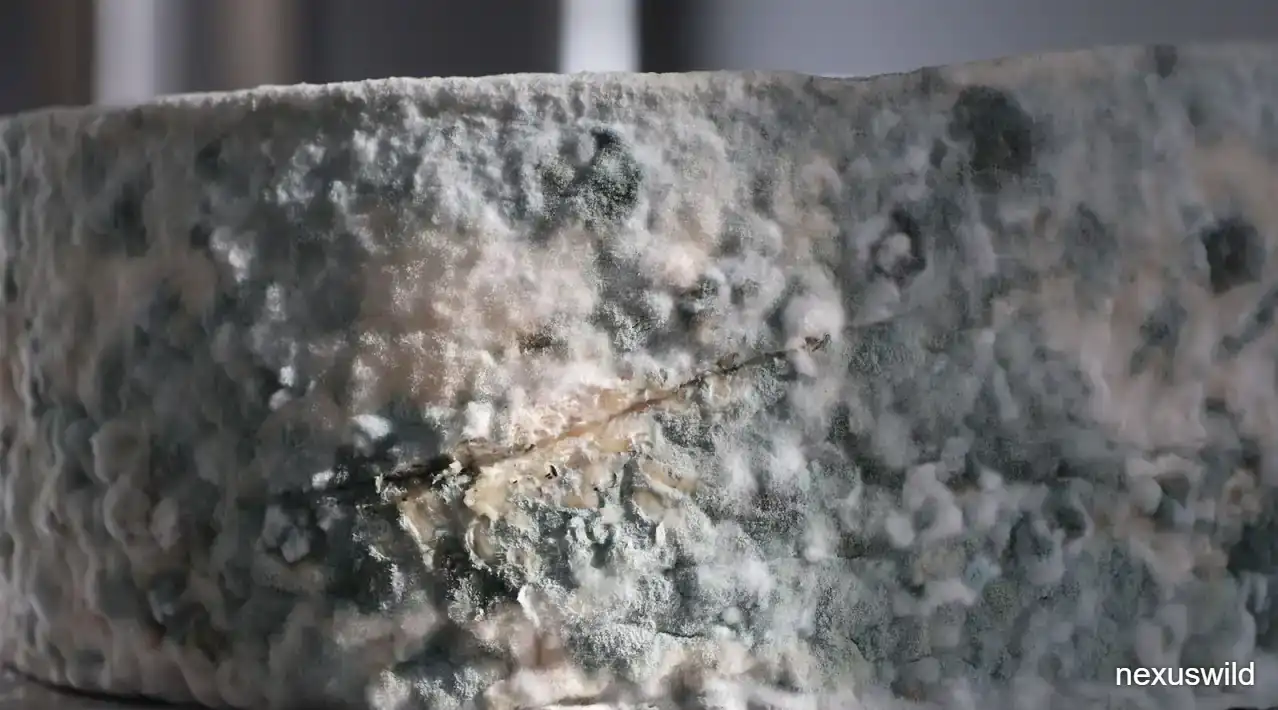

Scientists have found that metal-rich rocks on the deep seafloor are not simply mineral objects. Their cracks and cavities form a habitat for small animals that differ from the life found in the surrounding sediment. In a study published in Scientific Reports, researchers examined 244 polymetallic nodules from the Clarion-Clipperton Zone and recorded 4,139 animals inside them. One nodule alone contained 245 individuals.
The finding matters because polymetallic nodules are also targets of interest for deep-sea mining. They contain nickel, cobalt and copper, and proposed mining operations would collect them directly from the ocean floor. The study's authors warn that removing the nodules could cause irreversible loss of undescribed biodiversity. That warning is not a general claim about all mining, but a conclusion tied to the unique communities found inside the rocks.
The work was led by researchers including Tanja Stratmann of MARUM, Coral Diaz-Recio Lorenzo and Sabine Gollner of NIOZ, according to the institutional release. The paper is titled Polymetallic nodules provide a distinct habitat for abyssal meiofauna and was published on 11 November 2026.
A habitat hidden inside a rock
The study focused on meiofauna, the small animals that live among sediments and seafloor structures. Meiofauna are often overlooked because they are tiny, but they are abundant and ecologically important. In this case, the researchers looked inside the nodules themselves rather than only in the sediment around them.
MARUM's release explains that cracks inside the nodules are large enough to house animals smaller than one millimeter. Those spaces function as shelters. They are not just surface scratches; they create a three-dimensional habitat within a hard object on an otherwise soft seafloor.
That structural detail is the core of the finding. A nodule sitting on muddy sediment provides a hard surface, but its internal pores and fissures provide something more. Small animals can live within the rock, protected from some of the conditions that shape life in open sediment. The result is a community with a different composition from the one outside.
The team found an average of 17 animals per nodule. That average hides considerable variation. Most nodules held fewer animals than the most crowded specimen, and one held 245. The distribution shows that a nodule can be more than a sparse surface. In some cases, it can be a densely occupied miniature habitat.
The animals included roundworms, known as nematodes, and tiny crustaceans called copepods. The source material also notes that a single-celled organism identified as Thurammina sp. 1 was found particularly frequently within the nodules.
The rocks themselves
Polymetallic nodules are dark, roughly fist-sized formations made largely of iron and manganese oxides. The MARUM release describes them as forming at depths of 4,000 to 6,000 meters. They grow extremely slowly, often adding only a few millimeters over a million years. Because of that pace, a nodule can remain on the seafloor for very long periods.
This slow growth is central to the environmental concern. A mining operation can remove nodules in moments that took millions of years to form. From a geological perspective, they are effectively nonrenewable on human timescales. The source material does not quantify recovery times beyond the growth rate, so the point should be stated in those terms.
The nodules form rare hard surfaces on otherwise soft, muddy seafloor. In the deep ocean, where much of the bottom is covered by fine sediment, a hard object creates different opportunities. Organisms can attach to it, hide within it or use it as a base. The study shows that the internal structure matters as much as the outer surface.
The rocks also contain economically valuable metals. The ScienceDaily account names nickel, cobalt and copper. Those metals have attracted interest from industries considering deep-sea mining. The same chemical richness that makes nodules commercially interesting is part of what makes them scientifically distinctive.
The combination of slow formation, metal content and habitat value creates a difficult management problem. A resource that is attractive to extract may also be a long-lived structure that other organisms depend on.
How the animals were collected
The research team collected nodules from the Clarion-Clipperton Zone, a vast region of the central Pacific Ocean. The ScienceDaily report identifies this as the study area. The MARUM release says the scientists used equipment including box corers and diving robots to collect samples from the deep seafloor.
Box corers collect sections of the seafloor. They allow researchers to bring up sediment and objects from a defined area while preserving some of the spatial context. Remotely operated vehicles, or ROVs, can work at extreme depths and collect material that would be difficult to recover by other means. The MARUM image caption names the ROV KIEL6000 in connection with the expedition.
Once the nodules reached the laboratory, they had to be examined carefully. The animals living inside cracks and cavities are small and easily missed. Dissection and painstaking sorting were needed to extract them. The MARUM release says the nodules were dissected in the laboratory to extract organisms from the crevices.
The sampling method matters because it shows the study was not based on a few dramatic specimens. The researchers analyzed 244 nodules. That sample size gives the reported average and the unusual 245-animal specimen a firmer basis than an isolated observation.
The work was part of a broader research context. JPI Oceans has supported MiningImpact projects examining deep-sea mining, including MiningImpact 2 and MiningImpact 3. The institutional pages place the new study within a continuing program of research on nodule mining and environmental effects.
Counting life inside the nodules
The headline numbers are striking. Across 244 nodules, the team identified 4,139 individual animals. That works out to an average of 17 animals per nodule. One specimen contained 245 individuals.
The average and the extreme should be kept separate. An average of 17 describes the sample as a whole. The 245-animal nodule is an exceptional case that shows how densely occupied some nodules can be. It is the reason the ScienceDaily headline focuses on a single deep-sea rock.
The number of animals inside nodules was lower than the number in the surrounding sediment when measured by group. For nematodes, the count inside nodules was about 10 percent of the count in the sediment. For copepods, it was about 25 percent. Those percentages do not mean the nodules are unimportant. They show that the nodules support a substantial number of animals relative to sediment, while having a different community composition.
The source material is careful about this comparison. The MARUM release says the number of animals in nodules is lower than in surrounding sediment, but nonetheless significant for the ecosystem. The distinct species composition is what makes the habitat especially important.
The study therefore does not claim that nodules hold more animals than mud. It claims that they hold unique communities inside a structure that mining would remove. That is a more precise and better supported conclusion.
The crowded nodule
One nodule with 245 animals is the most vivid result. It demonstrates that a single rock can host a dense assemblage of small organisms. The ScienceDaily report calls it a particularly crowded specimen, while the MARUM release gives the same count.
It is important not to turn this one nodule into a typical example. The reported average across all 244 nodules was 17. The 245-animal nodule was unusual enough to be highlighted. It shows the upper end of what was observed, not the standard condition.
The crowded nodule also illustrates what the内部结构 of the rocks can provide. Cracks and cavities give animals places to live that are not available in open sediment. If the spaces are large enough for animals smaller than one millimeter, a fist-sized nodule can contain many microhabitats.
The finding changes how the rocks should be viewed. A nodule is not a uniform piece of metal oxide. It is a structured object with pores, fissures and surfaces that can be colonized. The internal complexity helps explain why so many individuals were found in one specimen.
This is why the study's authors describe the nodules as providing a three-dimensional habitat. The phrase captures the difference between living on a surface and living within a structure. Mining would remove both.
Different communities inside and outside the rocks
The study's most important ecological finding is that nodule communities differed from communities in the surrounding sediment. The animals inside the nodules were not simply a random sample of the animals living nearby. Genetic analyses showed that they formed distinctive communities.
The ScienceDaily account says these communities remained highly similar across locations separated by up to 1,000 kilometers. At the same time, they differed significantly from organisms in the surrounding seafloor sediment. That combination is notable: the nodule habitat appears to select for a particular set of organisms across a large region.
This pattern suggests that the nodules provide a consistent environmental niche. Wherever suitable nodules occur, similar animals may occupy them, even when the surrounding sediment communities vary. The source material does not provide species lists for every location, but the genetic result supports the broader conclusion.
The comparison with sediment is essential. If the same animals lived everywhere, removing nodules would be less concerning. The finding that the nodule community is distinct means that mining could eliminate a habitat type, not just reduce the number of animals in a shared pool.
The percentages for nematodes and copepods fit this picture. Fewer individuals occur in nodules than in sediment, but the organisms are different enough to matter. Conservation decisions often consider habitat uniqueness as well as abundance.
The study therefore links structure and identity. The physical cracks create space, and the conditions inside those cracks support a recognizable community.
Genetic evidence across long distances
The genetic analyses added a layer that microscopic counting alone could not provide. They showed that organisms living in nodules formed communities distinct from those in sediment. They also showed similarity across distances up to 1,000 kilometers.
That distance is remarkable for animals smaller than a millimeter. It suggests that the nodule habitat offers comparable conditions across a large part of the Clarion-Clipperton Zone. The study does not explain every mechanism behind this pattern in the public accounts, so this article does not invent one. The supported point is the observed genetic similarity.
The result also helps distinguish between two possibilities. Nodules could host whatever organisms happen to be nearby, in which case communities would vary with local sediment. Instead, the study found a recognizable nodule community across widely separated locations. That supports the idea that the rocks themselves provide a specific habitat.
The genetic work also matters for undescribed biodiversity. Many deep-sea animals are not formally named or well studied. Genetic tools can reveal relationships that are difficult to see from appearance alone. The source material identifies Thurammina sp. 1 as a frequent single-celled organism inside nodules, but it does not present a full species inventory.
The finding should not be overstated as proof that every nodule community is identical everywhere. The source says the communities were highly similar across locations separated by large distances, up to 1,000 kilometers. That is a strong result within the sampled region.
What it shows is that nodule habitats are repeatable. The same kind of rock structure supports the same kind of hidden community over a vast area.
One small specialist
The study highlights Thurammina sp. 1 as one organism found particularly often inside the nodules. MARUM describes it as a single-celled organism that appears especially well adapted to sheltered spaces inside the rocks. It serves as an example of the specialized life that could be threatened by nodule removal.
The name may look technical, and that is part of the point. Many deep-sea organisms are known only through scientific identifiers. They do not have familiar common names, and their biology is poorly understood. The fact that one was found frequently inside nodules does not mean it is the only important organism. It means the study could point to a clear example of specialization.
The organism's small size fits the habitat. The cracks inside nodules are large enough for animals smaller than one millimeter. A single-celled organism can occupy spaces that larger animals cannot. The structure of the rock therefore determines which organisms can use it.
This is why the authors warn about undescribed biodiversity. If scientists are still identifying and naming the organisms associated with nodules, the consequences of removing those habitats are difficult to measure. A species may disappear from an area before it is formally described.
The Thurammina example also shows why the study is about more than counts. Four thousand one hundred thirty-nine individuals is a striking number, but the identity and distinctness of those individuals matter just as much.
Why mining raises an unusual risk
Deep-sea mining proposals often focus on the metals contained in nodules. The new study focuses on what happens if the rocks themselves are removed. Because the animals live inside the nodules, collecting the nodules would not simply disturb the seafloor around a mining track. It would take the habitat with it.
The MARUM release says commercial mining would permanently destroy this unique habitat because nodules take millions of years to form. The ScienceDaily account quotes Professor Sabine Gollner warning that commercial mining may result in irreversible loss of undescribed and unique biodiversity associated with nodules. This article paraphrases that warning rather than treating it as an independent measurement.
The word irreversible follows from the growth rate. Nodules add only a few millimeters per million years. A mined area would not recover on a human timescale. The habitat that took geological time to build would be gone.
The risk is also unusual because the habitat is mobile only in the sense that it can be lifted away. Sediment communities may recover in part as organisms recolonize, but removing nodules removes the physical structure itself. There is nothing left for the specialized community to return to.
The study does not assess every proposed mining method or management plan. It provides biological evidence that should be considered in environmental planning. The source material explicitly says the finding needs to be considered in environmental management of deep-sea mining.
The research therefore does not settle policy. It changes the information available to those making decisions.
What the project context adds
The new study sits within a longer series of JPI Oceans MiningImpact projects. The original MiningImpact page is dated 2015, MiningImpact 2 dates to 2019, and MiningImpact 3 is listed in 2026. These projects have examined the environmental effects of deep-sea mining in the Clarion-Clipperton Zone and related regions.
That context matters because the study is not a one-off observation. It is part of sustained research into how nodule extraction could affect deep-sea ecosystems. Earlier ScienceDaily coverage of deep-sea mining footprints provides additional background on the broader research field.
The MARUM release identifies the study team's leadership and the journal publication. It also links the work to planning protected areas in the deep sea. The source says the findings are important for that planning because the nodule habitat is unique.
The project context helps explain how the samples and expertise came together. Collecting nodules from 4,000 to 6,000 meters requires specialized vessels and robots. Studying the animals requires taxonomic and genetic expertise. Linking those tasks takes coordinated programs.
The institutional pages do not make the study a policy document. They show the research lineage and the practical setting in which the work was conducted.
Why describing biodiversity matters
One of the quiet themes of the study is how much remains unknown about deep-sea life. The researchers found thousands of animals inside rocks that are often discussed mainly as mineral resources. They found distinct communities, repeated across large distances, and at least one frequently occurring single-celled organism with a technical scientific name.
Describing biodiversity is not just a cataloguing exercise. It establishes what exists before a habitat is altered. If a community has not been described, its loss may be difficult to recognize or measure. The study's warning about undescribed biodiversity follows directly from that problem.
The result also shows why small organisms deserve attention. Meiofauna are much less visible than fish or large invertebrates, but they live in enormous numbers and occupy specific niches. The 4,139 animals in 244 nodules are small, yet their community pattern is clear enough to matter.
The finding may influence how future environmental assessments are designed. If nodules are treated as simple mineral objects, their biological role will be missed. If they are treated as habitats with internal structure, assessments must ask what lives inside them and how those communities differ from sediment.
For now, the study has established several firm points. Polymetallic nodules host small animals within cracks and cavities. The communities are distinct from sediment communities and similar across long distances. The rocks grow very slowly, and mining would remove the habitat itself. Those are the facts behind the warning that some losses could be irreversible.
Nexuswild welcomes factual corrections. Email contact@nexuswild.com with evidence and the article URL.