
Nasdaq-100 Loses $2.5 Trillion in Historic AI-Linked Selloff as Data Centre Concerns Intensify
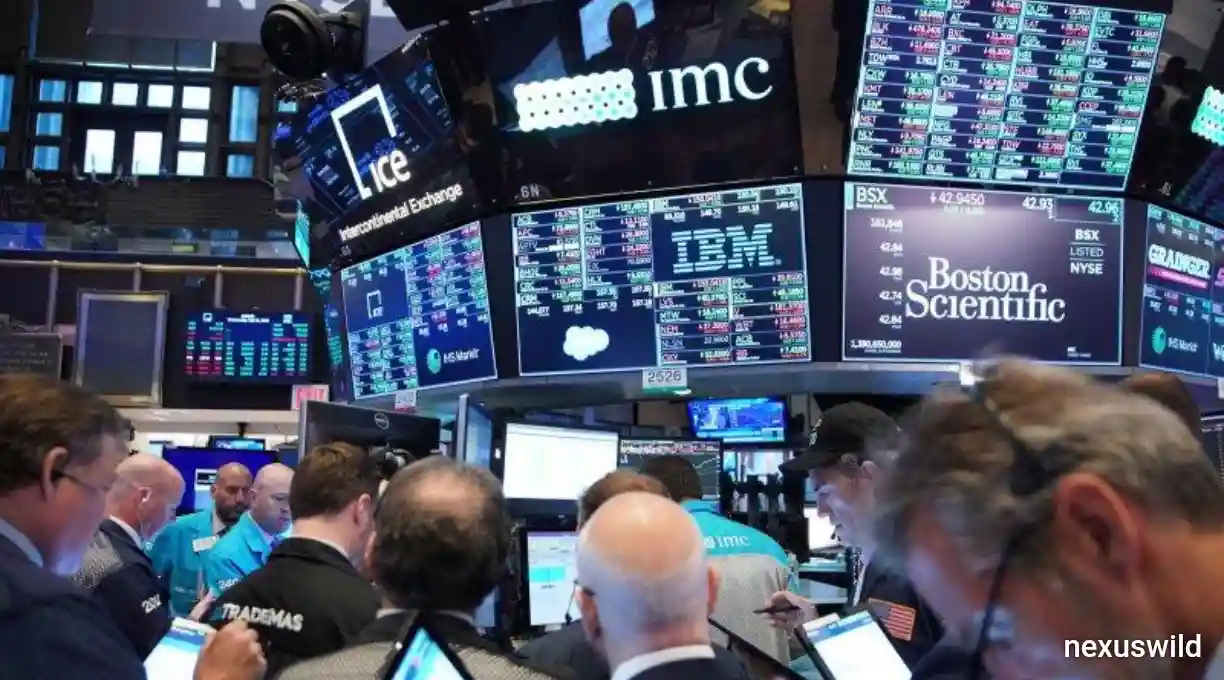
Wall Street had one of its technology‑driven selloffs in 2026 on Thursday, November 5 as investors quickly cut back on AI stocks and companies linked to data‑centre growth.
The Nasdaq-100 dropped about $2.5 trillion in market value in that session Reuters said. The larger S&P 500 also lost $3 trillion in market value showing how much selling happened across US stocks.
The Nasdaq Composite fell about 5.5% moving into correction territory after falling than 10% from its October peak. The S&P 500 fell about 4.4%. The Dow Jones Industrial Average fell about 3.4%.
The selloff hit semiconductor makers, tech firms, data‑centre operators and companies that supply equipment and infrastructure for AI.
Before worries about how much AI costs and how profitable it is had already dampened sentiment. The market shock grew when political changes after the US midterm elections raised fears of regulation and more limits on data‑centre expansion. Investors began to wonder if the election results could cause changes.
$2.5 Trillion wiped from Nasdaq-100 market value
Thursdays losses put the technology sector at the heart of the market downturn.
The Nasdaq-100, which tracks 100 of the non‑financial companies on Nasdaq fell about 6.4% wiping out roughly $2.5 trillion in market value.
The Nasdaq Composite, an index with thousands of Nasdaq stocks fell about 5.5%. This drop pushed the index into correction territory, which means a fall of least 10% from a recent high.
The difference between the two indexes is important. The $2.5 trillion loss belongs to the Nasdaq‑100 while the S&P 500 lost about $3 trillion on its own.
Selling was especially strong in tech and semiconductor stocks. The Philadelphia Semiconductor Index fell 12% showing many investors pulling out of companies tied closely to AI computing.
Nvidia shares fell 9% and Advanced Micro Devices dropped about 17%. Other semiconductor and tech companies also fell sharply.
The move showed that when investors put a lot of money into AI companies market swings get bigger if confidence in the sector drops.
AI infrastructure spending becomes an investor concern
A key question behind the selloff is whether the huge money needed to build AI infrastructure will bring enough profit.
Tech firms have put a lot of money into data centres, high‑speed processors, networking gear, cloud infrastructure and power. These investments aim to meet the rising need for AI services, business automation and big computing.
Building and running AI infrastructure needs a lot of money.
Data centres need buildings, fast chips, cooling gear, steady power and big networking systems. Projects can take years to finish. The money made from AI products may take even longer to cover the initial cost.
Investors are therefore examining questions:
- How fast can AI companies turn demand into regular income?
- Will business customers spend enough on AI services to keep current company values?
- Can tech firms keep their investment plans without adding more financial stress?
- Will limits on power, land, water and regulations delay planned infrastructure?
- Can smaller data‑centre operators get cheap financing?
These worries do not mean AI demand is fading. They show scrutiny of how infrastructure costs, running costs and future profit are linked.
Political developments add pressure to data‑centre expansion
The quick trigger for the market drop also came from the US midterm election results.
Democratic wins raised investor fears that lawmakers might scrutinise AI projects more data‑centres that need a lot of power, water and land.
Opposition to data‑centre projects has become a key local issue, in many parts of the US. Communities worry about power use, water use, land use, environmental impact and how it could raise household utility bills.
Investors fear that stronger political pushback could add permits, delay projects or restrict new facilities.
This matters because big tech firms and specialised data‑centre operators have announced plans to expand infrastructure for the next generation of AI systems.
I worry that a delay in construction could affect equipment suppliers, chip manufacturers, electricity providers, engineering contractors and companies that depend on computing capacity.
I see that the market reaction has spread beyond software companies and semiconductor manufacturers to businesses across the AI infrastructure ecosystem.
I notice that semiconductor companies face selling pressure.
I see that semiconductor stocks were among the hit parts of the technology market.
I notice that the Philadelphia Semiconductor Index fell 12% recording one of its steepest daily declines in recent years.
I notice that Nvidia, a leading supplier of AI accelerators declined around 9%. I also see that AMD suffered a fall of about 17%.
I note that these companies are closely connected to demand for AI computing infrastructure. I see that their products are used in data centres that train and operate AI models.
I see that the heavy selling reflected concerns that a slowdown in data-centre construction could affect orders for processors and other specialised hardware.
However a decline in share prices does not necessarily mean that semiconductor demand has collapsed. I see that the market was reacting to uncertainty around spending, project timelines, financing and regulatory conditions.
For semiconductor manufacturers the key issue will be whether AI infrastructure investment continues to expand at a pace that supports earnings expectations.
I notice that data-centre companies face financing and operating challenges.
I see that the selloff also affected companies building and operating data centres.
I notice that some specialised operators have relied on debt and external financing to fund expansion. I see that this business model can become more vulnerable when borrowing costs rise credit conditions tighten or investors become less confident about revenue.
I read that Reuters reported that shares of data-centre and cloud infrastructure companies declined sharply during the downturn. I note that CoreWeave and Nebius were among the businesses affected.
I see that investors are increasingly evaluating whether these companies can generate cash flow to support their infrastructure commitments.
I note that a data centre may require upfront investment before it reaches full operating capacity. I see that revenue depends on securing customers maintaining utilisation levels and managing electricity, cooling, financing and maintenance expenses.
I understand that if construction is delayed or customer demand grows slowly than expected the period required to recover the initial investment could become longer.
I see that these risks are particularly important for companies expanding through borrowed capital or long-term infrastructure commitments.
I notice that power and water constraints complicate AI expansion.
I see that the AI infrastructure boom is also facing constraints.
I note that modern data centres consume amounts of electricity particularly facilities designed to support high-performance AI workloads. I see that as companies expand their computing capacity they need access to power supplies and sufficient grid infrastructure.
I see that in some regions electricity demand from data centres has increased pressure on local power systems. I note that connecting facilities to the grid can require additional infrastructure, investment and regulatory approvals.
I understand that water consumption is another concern, where facilities use water-based cooling systems or operate in regions already facing water stress.
I see that these challenges can increase construction costs and create resistance from communities.
I note that for investors the issue is not simply whether companies can afford to purchase chips. I see that they must also determine whether sufficient electricity, land, cooling infrastructure and regulatory approvals will be available when projects are scheduled to begin operating.
I understand that this makes the term financial outlook for data-centre projects more dependent on infrastructure planning and local conditions.
I notice that investors reassess AI valuations and market exposure.
I see that the market correction illustrates how quickly investor expectations can change when a high-growth sector encounters risks.
I note that AI-related companies have benefited from market enthusiasm, expectations of rising computing demand and forecasts of substantial future productivity gains.
I understand that however high valuations can leave stocks vulnerable when investors begin questioning whether expected earnings growth will materialise on schedule.
I see that the November 5 selloff suggests that investors were reassessing assumptions simultaneously: the pace of AI infrastructure expansion the cost of financing the political environment and the time required for companies to generate returns.
I note that the movement also demonstrated how interconnected the AI investment ecosystem has become.
I understand that a slowdown in data-centre construction could affect semiconductor suppliers. I see that lower demand for chips could influence equipment manufacturers. I note that financing difficulties could delay projects affecting contractors, utilities and technology providers.
I see that this interconnected structure can amplify market movements when confidence weakens.
I understand that nevertheless a correction, in technology stocks should not automatically be interpreted as the end of the AI investment cycle. I see that it may instead indicate that investors are becoming more selective about which companies can convert AI demand into earnings.
I notice that markets partially recover on November 6.
I see that following Thursdays decline US equities recorded a partial recovery on Friday, November 6.
I note that the Nasdaq Composite rose 1.1% while the S&P 500 gained about 0.3%. I see that the Dow Jones Industrial Average declined 0.5%.
Semiconductor shares recovered a portion of their losses. The Philadelphia Semiconductor Index climbed 4.2 percent as reported by Reuters.
The rebound shows that investors were ready to buy technology shares following the steep fall. Yet the rebound did not completely undo the losses from the session.
All three major US indexes ended the week in decline. Nasdaq fell about 3.4 percent over the week. The S&P 500 dropped about 2.7 percent. Dow lost 0.9 percent.
The difference between Thursdays collapse and Fridays recovery highlights the volatility that currently affects technology and AI‑linked investments.
Business and market implications
The correction may have consequences in parts of the global technology and financial ecosystem.
Technology company financing: Companies planning data‑centre projects may face more scrutiny from investors and lenders. Companies with cash flows or higher debt may find it harder to secure affordable financing.
Semiconductor demand expectations: Chip manufacturers may receive cautious forecasts if data‑centre operators delay or cut infrastructure expansion. Future demand will rely on whether AI computing needs keep growing.
Data‑centre investment: Developers may need to re‑evaluate project timelines financing structures and access to electricity and water before investing capital.
Investor portfolio allocation: The selloff may prompt investors to reassess exposure to valued technology stocks and diversify into sectors with varied earnings and risk profiles.
AI business models: Companies may face pressure to show that AI products produce measurable revenue boost productivity or cut operating costs instead of relying mainly on long‑term growth expectations.
These are implications of the market correction not proof that every technology company has financing problems or that AI investment plans have been cancelled.
What investors will watch next
The next phase of market adjustment will depend on whether technology companies can show that their infrastructure investments produce commercial returns.
Investors are likely to watch earnings, capital expenditure announcements, data‑centre project approvals, borrowing costs and demand for semiconductor products.
Political developments around AI infrastructure regulation will also stay important. Changes to permitting rules or local restrictions could affect timing and cost of facilities.
For the market the key question is whether the recent correction is a temporary repricing of high‑growth technology stocks or the start of a longer period of cautious investment.
The November 5 selloff removed about $2.5 trillion from Nasdaq‑100 market value. Showed how sensitive AI‑related stocks are to changes in investor confidence.
The downturn was caused by a mix of concerns about AI infrastructure spending, financing needs and possible political scrutiny of data‑centre expansion.
Semiconductor manufacturers and data‑centre operators were among the businesses most affected.
Although US markets recovered a little on November 6 the broader indexes stayed lower for the week.
The episode shows a shift, in the AI investment cycle. Investors are increasingly looking beyond the promise of intelligence and demanding clear evidence that large infrastructure spending can deliver sustainable financial returns.
Nexuswild welcomes factual corrections. Email contact@nexuswild.com with evidence and the article URL.