
Four Enterprise AI Startups Raise $131 Million as Investors Support Healthcare Automation, Private-Equity Research, Inference and Agent Security
Four enterprise artificial intelligence companies announced a combined $131 million in venture financing between November 10 and November 14 2026. This shows that investors still want to back AI projects that help companies run better and govern their data.
The funding covers four parts of the tech market. Charta Health raised $55 million to grow AI tools that check charts and make billing more accurate. Operand raised $31 million in seed and Series A rounds to build AI tools for private‑equity diligence. Luminal announced a $25 million Series A to grow its compiler and inference‑cloud tech for kinds of hardware. WhiteMatter raised $20 million to boost its platform that protects and manages AI agents inside big organisations.
Together these announcements show a range of enterprise AI investment not just one type of product. The companies solve problems: reading clinical records analysing investment research speeding up model run time and controlling software agents that act in company systems.
The total of $131 million comes from the four announced sizes: $55 million, $31 million, $25 million and $20 million. This figure shows how much money was publicly disclosed, not how much revenue or customer spending or real productivity gains the companies have. The deals also vary in how mature they're how they are structured. Operand’s $31 million covers. Series A together while the other three announcements describe separate Series A or Series B rounds.
Charta Health raises $55 million to address healthcare documentation and billing accuracy
The biggest of the four announcements came from San Francisco‑based Charta Health, which announced a $55 million Series B on November 10. Insight Partners led the round. Existing investors Madrona, Bain Capital Ventures and South Park Commons also joined, along with QuantumLight. Charta Health said the new money brings its funding to $85 million.
Charta Health creates AI software that reviews charts and checks whether the clinical notes support the codes and information used in health claims. Charta Health is focusing on a long‑standing admin problem in the US health system: the gap between what doctors write during care and the structured codes that are sent for billing and payment.
Medical records are often made of data, such as doctors’ notes, scanned papers, lab results orders and other documents. Health billing takes that data. Turns it into standard codes and claims. That step is vital for payment. It can create errors when the record is incomplete, inconsistent or not fully checked.
A provider might send a claim that has a diagnosis or procedure code that is not fully backed by the chart underneath.. A patient’s record might hold important clinical data that is missing from the codes that are sent. Both situations can cause work, disputes, late payments, legal risk and extra review costs.
Charta Health’s plan is to use language models and other AI tools to analyse clinical documents on a big scale. Its platform will spot diagnoses and codes that match the record flag codes that are not supported and highlight gaps before claims go out. Charta Health says this is a move from fixing problems after billing to fixing them before billing.
This difference matters. Traditional claim review usually happens after a provider has sent a claim and a payer has started to process it. If the payer sees a mismatch the parties may need to swap records do audits, appeal or fix coding. Charta Health says that a thorough review before sending can cut the number of disputes.
Charta Health also explained an expanded product plan that serves both providers and health plans. The provider side of the product will review charts before claims are sent compare the record with coding rules and payer rules and give the findings for a human to approve inside the existing health record workflow. The payer side will help with back‑of‑the‑book coding review, validation, risk adjustment and chart analysis that ties to quality.
That two‑way approach could be very useful. Providers and insurers often have money goals but both need accurate clinical records. Providers want to get the payment, for care they give while health plans need to make sure the claims and diagnoses they receive are properly supported. A system that improves the quality and consistency of record review could appeal to both long as it works reliably with their different rules and workflows.
Charta said that Chartas platform is already being used by healthcare organisations such as American Family Care, Grow Therapy and Pediatric Associates Family of Companies. Charta also reported that Chartas revenue grew ten times in the twelve months. That growth number comes from Charta itself and should be treated as such; the announcement does not give an audited revenue series or an independently verified breakdown of customer performance.
The new capital is meant to speed up product development make Chartas platform more accurate and grow into medical specialties. Chartas announcement also mentioned the launch of products for health plans starting with organisations that serve Medicare Advantage and Affordable Care Act Marketplace populations.
The opportunity is large. Healthcare AI has a tough adoption environment. Medical coding is governed by rules, payer policies and regulatory requirements. A model that gives a summary but misses a critical qualification can cause financial or compliance problems. Clinical documentation is also very sensitive requiring handling of patient privacy, access controls, auditability and data security.
Human review is still important. Charta says that Chartas provider workflow shows findings for approval. This is a safeguard because automated chart interpretation should not be seen as unlimited power to decide medical necessity change clinical records or make final reimbursement decisions without proper oversight.
The funding shows that investors are confident in an administrative workflow opportunity. Whether that confidence turns into lasting customer economics will depend on cuts in denials, better coding accuracy, integration costs, customer retention and the ability to show reliable performance across different specialties and payer rules.
Operand secures $31 million for AI‑powered private‑equity due diligence
New York‑based Operand raised $31 million in seed and Series A financing according to Axios Pro. Khosla Ventures led the financing and Felicis, SV Angel, Soma Capital and Y Combinator also participated. Operands valuation was reported at $220 million.
The financing targets a part of financial services: research and due diligence for private‑equity investors. Private‑equity firms examine businesses before buying them committing capital or making changes. That work can involve reviewing records, customer information, pricing data, public filings, market developments, competitor activity and other evidence that may show a companys commercial position.
The process uses resources. Investment teams and external advisers may spend a lot of time gathering information from sources checking inconsistencies testing management claims and spotting risks that are not obvious in a companys formal reporting. The quality of the analysis can influence deal pricing, investment decisions and the assumptions used in a post‑acquisition operating plan.
Operand says Operands product uses AI to process information and use non‑traditional data sources. Of only looking at documents that the company gives during a transaction the platform helps private‑equity teams analyse public records and information from across the web. The goal is to make research more complete and speed up finding signals.
For a private‑equity investor those signals might include changes in pricing, customer sentiment, product positioning hiring patterns, competitive activity or other signs that help judge a target companys market position. That information can add to financial analysis but it cannot automatically replace verified financial statements, direct customer checks, legal review or specialist diligence.
The difference between data collection and investment judgment is very important in this market. AI can help teams find information organise evidence, compare claims and produce research summaries.. The information may be incomplete outdated, biased or misleading. A company may have an online presence but not strong financial performance; a drop in web activity does not always mean a drop in revenue. A model may also mix up named entities or draw conclusions from sources that do not represent a target business.
Because of that AI‑generated diligence should be seen as an aid, not a replacement for professional verification. Private‑equity decisions involve money commitments and legal responsibilities. A research platform must allow analysts to trace conclusions back, to source material, test assumptions and spot uncertainty.
The $31 million announcement is notable because it mixes seed and Series A financing into one reported total. It should not be called a $31 million Series A. The reported $220 million valuation is also a deal term, not an audited measure of Operands true value or a guarantee of future performance.
I think Operands market opportunity depends on whether its system can give information that's useful and reliable enough to affect investment decisions. Faster research is good. Private‑equity customers will judge the product by how well it finds risks spots hidden opportunities and raises the quality of diligence without adding new mistakes.
I believe Operand is stepping into a market where established providers, specialist research firms, consulting businesses and large investment groups already have strong capabilities. Some private‑equity firms also build internal analytics systems that fit their investment strategies and data access. Therefore Operand must show that its mix of AI processing and alternative data gives an edge over current workflows.
I see that the funding shows investors are interested in using AI for high‑value services. In this context the economic case is not just that a model can summarise documents. It is that a research team can look at companies test more hypotheses or finish parts of a diligence process faster while keeping the quality of its conclusions.
Luminal raises $25 million to improve AI inference across computing hardware
I understand that the investor said Luminal is building a compiler that lets AI models run efficiently on existing hardware. Axios Pro also reported the funding. Called the company a search‑compiler and inference‑cloud provider.
I understand Luminal is tackling a cost and capacity problem in the AI industry: the computing power needed to run models after they have been trained. This process, called inference happens when a model produces outputs in response to user prompts, software requests or other inputs. As AI applications enter production inference can become an operating expense instead of a one‑time development cost.
I see the cost of inference depends on factors, such as model size, workload characteristics, hardware utilisation, latency needs, memory use, energy consumption and the software stack that links models to processors. When an organisation has powerful chips poor execution can stop it from getting the best performance from those systems.
I think Luminals compiler‑based approach aims to optimise how models are turned into operations that a specific processor can run. A compiler takes a model’s representation. Turns it into instructions that fit the target hardware. In AI workloads different but mathematically equivalent execution plans can give performance results depending on the processor and the model’s characteristics.
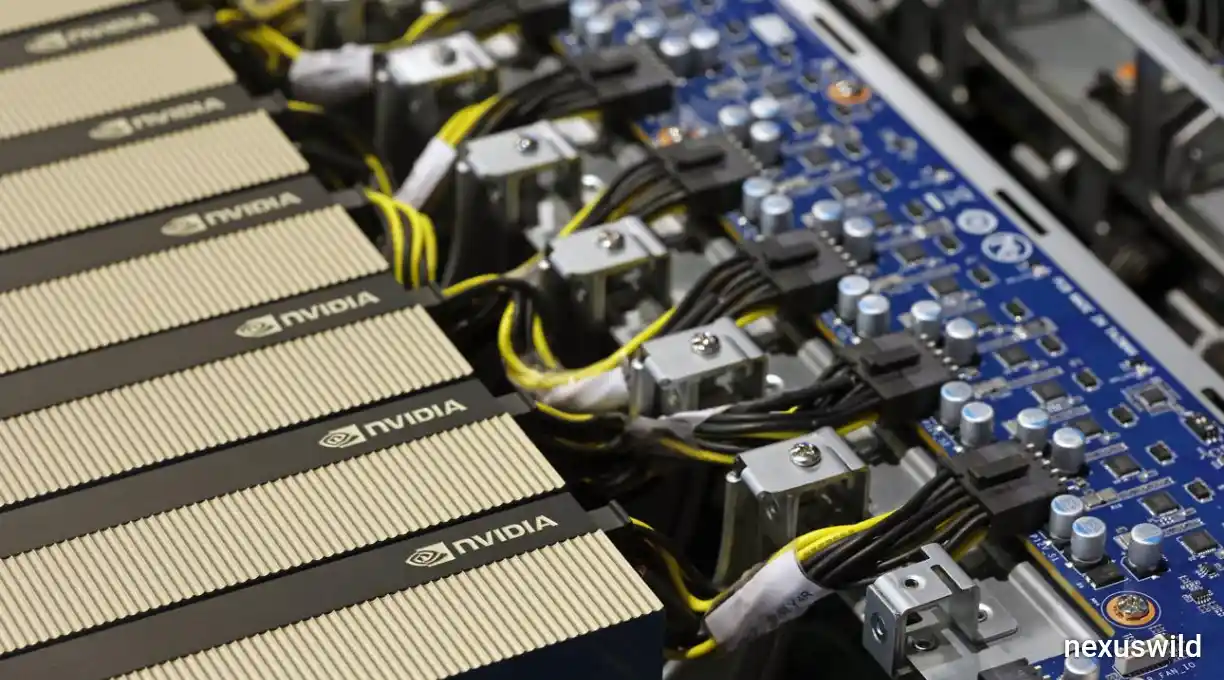
I think the company wants to use software optimisation to boost the performance of AI workloads on hardware platforms. This is important because the AI infrastructure market is not tied to one processor maker. Nvidia dominates AI accelerators. Enterprises and cloud providers are also looking at AMD products and specialised application‑specific integrated circuits. Cloud operators. Use their own chips and customers try other architectures to control cost, availability and supply‑chain risk.
I think a compiler that can adjust model execution for processors could help developers avoid locking every workload to one hardware environment. It could also make it easier to try chips without rewriting big parts of the software stack.. Hardware portability is hard. Different processors have memory layouts, programming models supported operations and performance traits. An optimisation that works well on one chip may not work the same on another.
I understand Luminals funding ties into an infrastructure problem: making AI computing more efficient as the need for model serving grows. The industry has put a lot of money into data centres and accelerators. Adding more hardware is only one way to grow computing power. Better scheduling, compilation, memory management and workload placement can also raise the amount of work that current infrastructure can do.
I see this matters for businesses that use AI at high volume. A small drop, in the cost of each inference request can add up when multiplied across millions or billions of operations. Lower inference costs may also make it financially sensible to use powerful models help more customers or add AI features to products that were previously too expensive.
I think Luminals Series A was led by Standard Capital. The company’s seed investors also joined, including Y Combinator, Felicis, SagaVC and Liquid 2. The Standard Capital announcement says it is the lead and that the compiler’s goal is to make models run efficiently on existing hardware. Other coverage reports more about investor participation; the main confirmed facts are the investor and the funding amount.
The company did not announce an improvement that works for every model and processor. Enterprise buyers will have to test the numbers on their work looking at throughput, latency, reliability the effort needed by engineers and the total cost of ownership. A compiler might give gains for one job but only small gains for another.
There are also questions about compatibility, software maintenance and support. Enterprise systems that run in production need deployments, predictable performance and clear service‑level promises. A platform that works with chip designs must stay up to date with hardware changes, model updates and new software frameworks.
The investment still shows a business problem. As AI use grows experiments organisations must control the cost of running models not just training them. Infrastructure software that uses resources better and lets other hardware fit in could become a part of the enterprise AI stack.
WhiteMatter raises $20 million to govern autonomous enterprise AI agents
WhiteMatter announced a $20 million Series A on November 10 to grow its platform for securing and governing AI agents in enterprise settings. Blumberg Capital led the round with existing investors Crew Capital and Sprout & Oak joining. The company used to be called QuilrAI.
WhiteMatter focuses on the security and governance problems made by AI systems that can act not write text. Enterprise agents can talk to business apps pull files use software tools read data talk to outside services or start multi‑step workflows. These abilities can boost productivity. They also bring risks that old security systems were not built to handle.
Traditional enterprise security looks at people, devices, apps, identities and predictable software steps. Autonomous or semi‑autonomous agents make that model harder because an agent can make decisions call tools, read data and start more actions very fast. One workflow can touch systems and permissions so we must know who started an agent what the agent may do and what it really did.
WhiteMatter calls its platform a control layer that covers the life of enterprise AI agents. The platform can govern agents, models and integrations; watch and secure actions; enforce rules; and give visibility into AI activity on endpoints, browsers, SaaS apps, cloud systems and code.
One part of the plan is to use Guardian agents to watch other AI agents. The company says these guardians can put rules on the actions done by the agents they look after. The goal is to build a system where AI work is watched and limited by controls made for workflows.
The funding news comes as enterprises shift from trying AI assistants to running systems that can do work. Companies are testing agents for customer service, software building, document work, research, finance, HR and inner tasks. These setups can make work faster. They also raise worries, about who can access what data leaks, unauthorized moves, prompt tricks, wrong decisions and accountability.
Nexuswild welcomes factual corrections. Email contact@nexuswild.com with evidence and the article URL.