
FAA Lifts Nationwide Ground Stop After Four-Hour Communications Failure Exposes Aging US Air Traffic Control Network
The United States Federal Aviation Administration (FAA) lifted a ground stop on November 13 after a telecommunications failure disrupted air traffic control communications and radar data across multiple facilities. The failure forced departing aircraft to stay on the ground for four hours and 21 minutes. The incident exposed the weaknesses of an ageing national aviation network and prompted the administration to renew its demand for a comprehensive modernisation programme costing about US$50 billion.
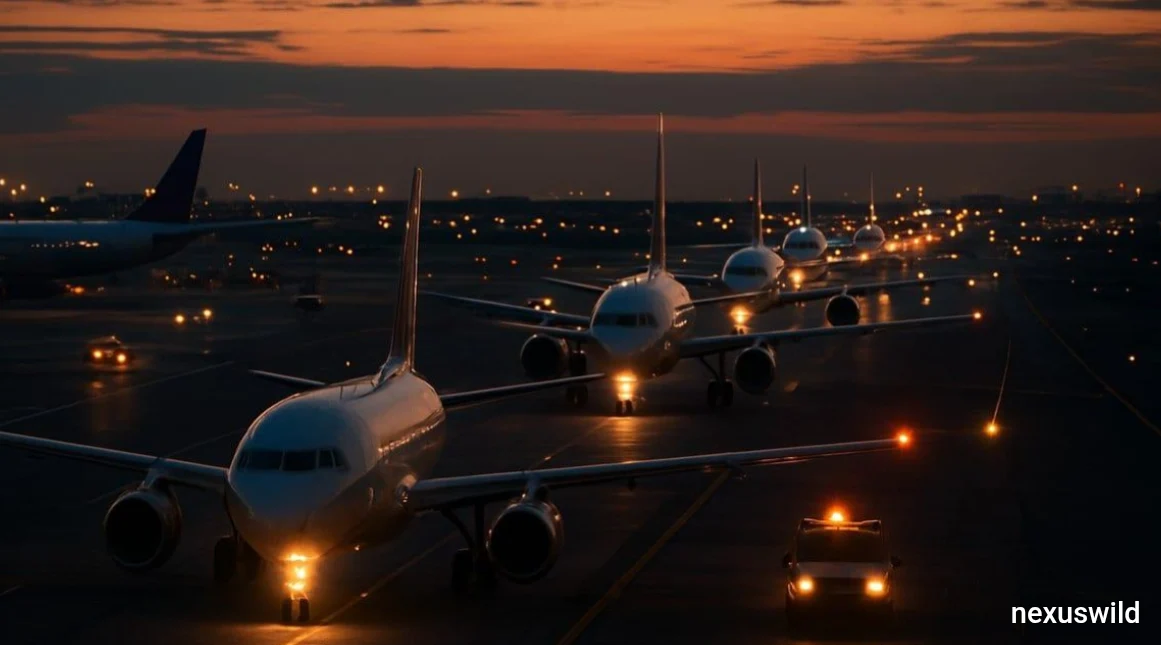
The restriction began at 3:54 p.m. Eastern Time. Was lifted at 8:15 p.m. Eastern Time. The restriction affected departures from airports across the United States after intermittent instability appeared in communications and radar systems used by Air Route Traffic Control Centers and Terminal Radar Approach Control facilities. Aircraft airborne were allowed to continue toward their destinations and land using established safety procedures.
Transportation Secretary Sean Duffy and Homeland Security Secretary Markwayne Mullin addressed the incident during a White House briefing. Duffy said the failure was caused by overloaded legacy switches and routers inside an ageing telecommunications infrastructure that contains analog technology and copper lines from the 1980s. Duffy also said newer equipment installed as part of the government’s modernisation work had not failed in the way.
The administration described the shutdown as a safety measure not as proof that the entire air traffic control network had stopped working. Officials said the system had received radar and communications information, which made it unsafe to keep normal departure operations running.
The disruption spread quickly beyond airports. Airlines experienced cancellations, diversions, problems with repositioning aircraft and crew scheduling difficulties. International operators changed their services to the United States and passengers felt delays that lasted even after the FAA reopened the airspace.
The incident has brought scrutiny to the technology that supports one of the world’s busiest aviation systems. It has also made the policy debate sharper about whether slow equipment replacement can fix the weaknesses of the national air traffic control network.
How the nationwide ground stop unfolded
The disruption began before the FAA issued its restriction. According to Duffy instability in radar and communications systems appeared at 3:36 p.m. Eastern Time on Friday, November 13.
The affected systems are used by air traffic controllers to stay in touch with aircraft and to manage traffic moving through the airspace. The United States runs a network of en‑route control centres and terminal facilities that coordinate aircraft movement between airports and through busy airspace.
At the facilities controllers began getting inconsistent information from radar systems and communications equipment. Duffy said the problem was not a loss of all radar or telecommunications capability. Instead the instability hurt the reliability and consistency of the information that controllers received.
That difference matters. Air traffic control needs information that is sent and received all the time. Even if parts of a communications network still work inconsistent information can break the confidence needed to keep normal traffic flowing.
The FAA therefore issued a ground stop at 3:54 p.m. Eastern Time. The instruction stopped departing aircraft from taking off under the national operating conditions. The measure was meant to lower risk while technicians and authorities examined the communications problems.
The restriction did not mean that every aircraft in the sky had to land away. Duffy said than 3,500 aircraft were already airborne when the instability happened. Those aircraft kept operating under established procedures. Were guided safely to land.
The difference between a ground stop and a full airspace closure is key to understanding the incident. The FAA stopped departures while aircraft that were already airborne were handled through the remaining systems and operational procedures.
At the White House briefing Duffy said that the number of aircraft in the air had gone down a lot as flights finished their journeys. Officials stressed that established procedures and trained controllers kept safety during the disruption.
At 8:15 p.m. Eastern Time Duffy announced that US airspace had reopened. However the reopening did not instantly bring back the flight schedule. Airlines still had to reposition aircraft find crews handle passenger rebookings and set new departure slots.
The operational disruption continued after the ground stop officially ended.
Why ageing telecommunications equipment became an aviation problem
The main technical issue that the administration pointed out was the condition of the legacy telecommunications network that supports air traffic control.
Duffy said the network contains switches, routers and analog telecommunications equipment including copper lines, from the 1980s. He described the system as an ageing infrastructure that had faced data overload and inconsistent information.
I think air traffic control networks carry information that helps coordinate aircraft movements. Air traffic control networks include communication between controllers and pilots and the transmission of radar data. Air traffic control networks work as parts not as isolated pieces of equipment.
I see that if one part of an air traffic control network fails or becomes unstable the reliability of operational processes can be affected.
I understand that the reported overload of switches and routers seems to have caused data across affected facilities. According to Duffy technicians deployed fixes that reduced the overload and allowed the affected air traffic control networks and control facilities to return to status.
I note that officials have not published a technical investigation that identifies the precise sequence of events that produced the instability.
I think the difference between a technical explanation and a final root‑cause investigation matters. The administration has identified ageing hardware. Overloaded air traffic control network equipment as the likely source of the incident. The administration has not yet established every contributing factor, including the triggering event, the configuration of affected equipment or whether specific integration changes contributed to the incident.
I believe the government’s public explanation does not show that every component of the air traffic control system is equally outdated. Duffy explicitly said that newer internet‑protocol switches installed as part of modernisation work did not fail during the incident.
I think this suggests that the incident exposed weaknesses in legacy components rather than proving that every recent technology investment was unsuccessful.
I see that for aviation infrastructure planners the incident raises questions about the relationship between new systems. Modernisation programmes often require existing equipment to operate alongside replacement technologies during transition periods. Maintaining interoperability and resilience during that process is an engineering challenge.
I realize that an air traffic control network may contain equipment in some facilities while still relying on older infrastructure elsewhere. If critical communication paths still depend on legacy components the benefits of technology may remain limited until the entire operational architecture is sufficiently upgraded.
I understand that the FAA incident has therefore renewed attention on the need for a national replacement strategy rather than isolated equipment upgrades.
I note that the cyberattack investigation remains open.
I think the cause of the telecommunications disruption also raised questions about cybersecurity.
I know that modern air traffic control networks are infrastructure and any unexplained communications failure can trigger concerns about malicious interference, system compromise or other security threats.
I remember that Homeland Security Secretary Markwayne Mullin said investigators had found no evidence of a cyberattack or rogue intelligence system at the time of the briefing. However he explicitly declined to rule out activity while the investigation continued.
I think that qualification is important. The administration’s initial assessment suggested a driven technology problem but the absence of evidence at an early stage is not the same as a completed investigation proving that cyber activity played no role.
I recall that Mullin said the Department of Homeland Security was working with government agencies to investigate the incident. He also indicated that the National Security Agency was assisting the examination of the technical failure.
I understand that the investigation therefore involves more than restoring the air traffic control network. Authorities must determine whether the incident resulted exclusively from equipment overload, whether configuration or integration issues contributed and whether any external activity influenced the incident.
I note that officials also addressed speculation that the outage was connected to a Microsoft 365 disruption. Mullin said he saw no reason to connect the two events and treated them as incidents.
I see that the administration has not presented evidence establishing a connection between the Microsoft service disruption and the FAA communications failure.
I know that the FAA had also recently expanded its Strategic Management of Airspace, Routes and Trajectories programme, known as SMART. The system is intended to improve airspace management reduce delays and support efficient flight routing.
I remember that during the briefing Duffy said the newer equipment associated with the modernisation programme had not failed and distinguished it from the air traffic control network components involved in the incident.
I think this does not amount to an independent technical assessment of every system interaction. It does however mean that the outage should not be attributed to the SMART programme without evidence.
I believe a final investigation will be important, for determining whether the incident was entirely hardware‑related or whether other operational and technical factors contributed.
I note that than 3,500 aircraft were airborne when the disruption began.
I see that the ground stop created an operational challenge because aircraft were already moving through US airspace when the restriction was imposed.
I recall that Duffy said than 3,500 aircraft were airborne when instability emerged. These aircraft were not simply. Left without all communications. Officials said they were managed through established procedures and continued towards landings.
I understand that the FAA’s decision to restrict departures was intended to prevent aircraft from entering an operating environment where communications and radar information were experiencing instability.
This method lowered the number of departures that needed coordination while controllers and technicians worked on the network problem.
Aircraft in the air were kept under control according to the rules at each facility. International arrivals were also handled one by one of being treated exactly like domestic departures.
The difference between aircraft in the air and aircraft waiting to depart explains why this incident caused different results for airlines and passengers.
An aircraft that was already airborne could usually keep going to its planned destination following the instructions from air traffic controllers. A departure that was still waiting at an airport however could not take off until the restriction was lifted and the rules for taking off were met.
As the ground stop went on airlines started to build up backlogs of aircraft and passengers. When the restriction ended airlines had to decide which flights could run with the aircraft, crews and airport resources that were available.
The recovery process that followed was more complicated than just restarting departures.
Flight diversions and cancellations spread the disruption.
The immediate operational effects could be seen over the US aviation network.
The aviation analytics firm Cirium counted least 827 flight diversions by 7:05 p.m. Eastern Time on November 13. Of these 670 flights went back to their departure airports while 157 landed at other airports.
These numbers show diversions that were recorded by that reporting time, not the count of flights affected by the wider disruption.
The diversion data show how a nationwide communications problem can cause effects beyond the airports where the first instability happened.
Aircraft can be forced to return to their origin airports when they cannot keep going efficiently toward their planned destinations. Other aircraft may land at airports because of operational needs, available capacity or changes to their planned routes.
Airlines then have to manage the aircraft, passengers and crews at places where they were not originally scheduled to stop.
The consequences can be especially hard for airlines that run hub-and-spoke networks. A delay at one hub can affect many connecting flights, aircraft rotations and crew assignments.
The number of cancellations grew as airlines reacted to the restriction and the lack of aircraft. Reuters said that 10,000 flights had been cancelled by about 11:30 p.m. Eastern Time on Friday using data. Other tracking services gave totals because their counting methods and times were different.
By the morning of November 14 ABC News said that than 12,500 flights were cancelled across Friday and Saturday using FlightAware data. That number included the impact of the disruption not just the flights that were held during the four‑hour ground stop.
The difference between cancellations and delays is also important. Some flights were cancelled completely while others were delayed because the aircraft, pilots and flight attendants were not available at the places.
Airlines were therefore facing a network‑wide scheduling problem of just a short period of airport closures.
Passenger impact went beyond the ground stop.
The passenger consequences were big because the restriction happened when thousands of flights were set to depart.
Cirium said that 11,000 flights carrying more than 1.5 million passengers were still set to leave US airports after 4 p.m. Eastern Time on November 13.
This number shows the size of travel that was exposed to the disruption. It does not mean that all 1.5 million passengers had their flights cancelled or directly affected.
The real passenger impact differed by airline, airport, route and time. Some travellers were delayed others were. Some flights ran after the ground stop was lifted.
Passengers whose aircraft were already at gates faced uncertainty about when they would leave. Other passengers had diversions, missed connections. Had to stay overnight because their planned onward flights could not run as scheduled.
The recovery was especially hard, for travellers who were connecting through US hubs. Even if one flight was still available a missed connection could mean an itinerary and extra accommodation.
Airlines told customers to check flight status themselves and watch notifications as schedules changed.
The disruption also showed the limits of airline recovery power. A carrier may have an aircraft but not the right crew in place. It may have pilots and cabin staff but not an aircraft or a departure slot at an airport.
Restoring service therefore needs the coordinated availability of many resources.
The US Department of Transportation and airline operators were also asked about how to help passengers. Reuters said that US airlines do not have to give money for the disruption because the FAA system failure was not under the control of the carriers. Still the rules about refunds and rebooking are separate from the question of compensation.
For passengers the difference between a cancelled flight, a delayed service and a right to a refund depends on the terms of the ticket and on US consumer‑protection laws.
I noticed that international aviation and transatlantic schedules were affected.
It felt like the impact reached beyond American borders.
International airlines and aviation authorities had to deal with uncertainty about arrival permissions, departure coordination and the availability of US destinations.
I saw that the FAA said that international flights would be handled on a case‑by‑case basis. This lets authorities look at each situation instead of applying one rule to every international service.
EUROCONTROL also issued a restriction that affected US‑bound departures from its member‑state airspace.
According to the notice operators were told that traffic leaving the EUROCONTROL Integrated Flight Plan Processing System area between 22:00 UTC on November 13 and 05:00 UTC on November 14 heading for US airports was suspended at the FAAs request because of problems.
This measure changed the schedule of flights and forced airlines to change departures during that window.
It is important to describe the restriction. It was not a closure of European airspace or a general ban on all international aviation. The restriction only applied to US‑bound departures from the specified EUROCONTROL area during a period.
For airlines that fly between Europe and North America the incident added planning work. Aircraft and crews could be moved from their planned rotations and passengers could face delays and missed connections.
I realized that a communications failure inside the United States can cause scheduling problems for carriers, airports and passengers, in regions.
Air cargo operators faced risks. Express freight networks depend on coordinated aircraft movements and time‑sensitive connections. When flights are cancelled or diverted shipments can miss sorting windows and connecting services.
I worry that the long‑term commercial impact depends on how fast airline schedules and cargo networks return to normal.
I wonder why the administration is calling for a US$50 billion overhaul.
I saw the debate quickly revive after the communications failure.
Transportation Secretary Sean Duffy asked Congress to give US$50 billion for an overhaul. He argued that incremental repairs would not solve the problem.
Nexuswild welcomes factual corrections. Email contact@nexuswild.com with evidence and the article URL.