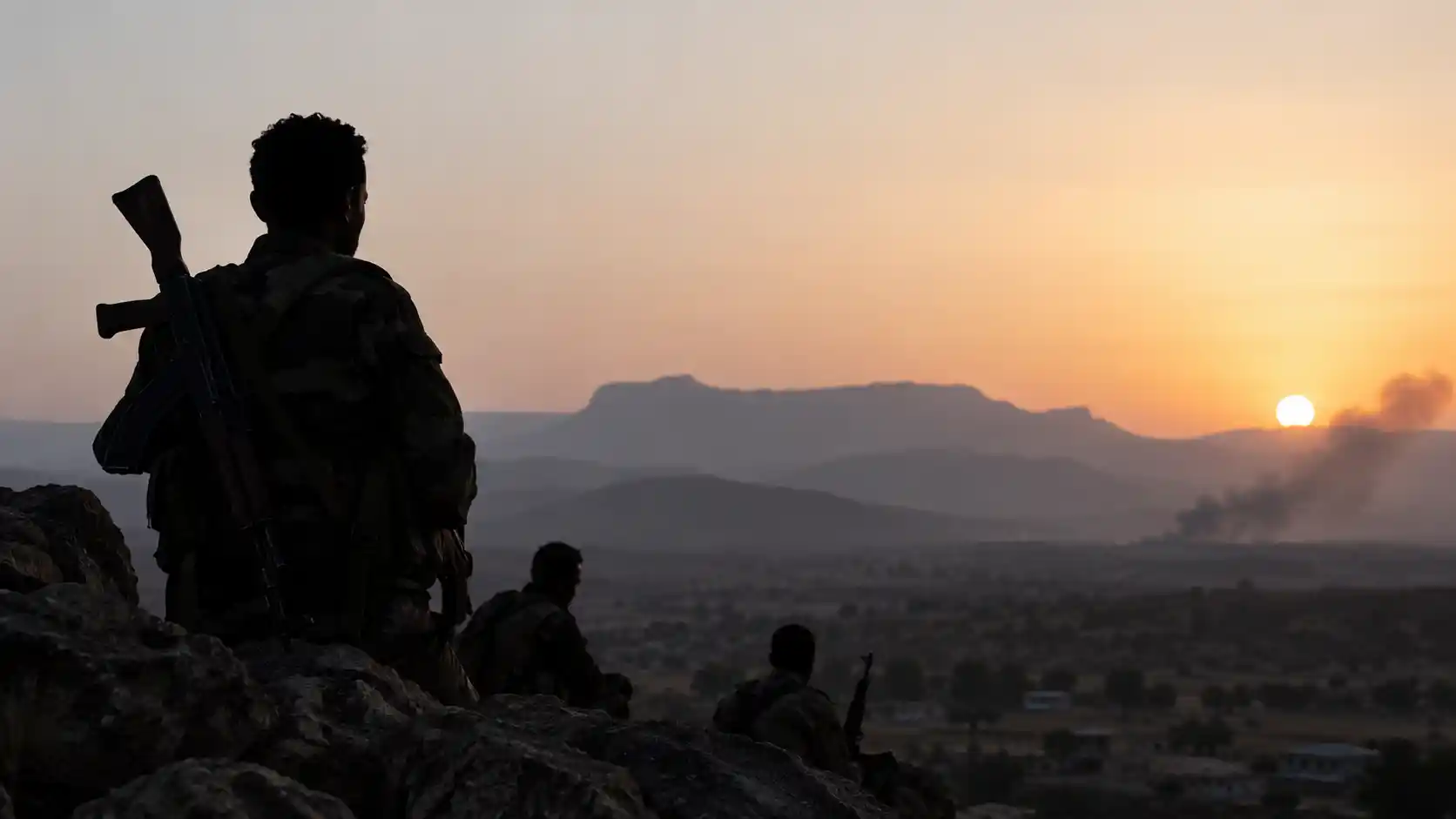

Fighting has escalated sharply across Ethiopia's Tigray, Amhara and Afar regions since September 22, 2026, raising fears that the 2022 peace agreement ending the country's brutal Tigray war could collapse into renewed civil conflict.
The New Alliance
The immediate trigger was the formation of the Ethiopian Peoples' Forces Alliance for Survival, announced September 20. The coalition brings together seven armed groups, including the Tigray People's Liberation Front (TPLF) and the Amhara Fano National Movement, forces that fought on opposite sides of Ethiopia's 2020-2022 civil war, alongside the Oromo Liberation Army, the Ogaden National Liberation Front, and armed movements from the Somali, Afar and Benishangul-Gumuz regions. The alliance says its goal is to remove Prime Minister Abiy Ahmed's government and install a transitional administration. Several of its member parties boycotted Ethiopia's June 2026 election, in which Abiy's Prosperity Party won roughly 90 percent of available parliamentary seats; voting did not take place in Tigray at all.
How the Fighting Unfolded
Clashes broke out days after the alliance's announcement, with the TPLF describing its actions as a "defensive" war against the federal government and accusing government forces of firing first. Tigrayan forces reportedly seized several federally controlled airports, and fighting spread across all three northern regions within days. Ethiopia's federal army said it launched a counter-offensive in North Wollo, an Amhara area bordering Tigray, claiming it killed 272 Tigrayan fighters, a figure that has not been independently verified. Communications networks across the north have gone dark, echoing the blackout and blockade tactics used during the 2020-2022 war. Reports have also referenced drone activity in the affected areas, though the scale of such operations remains unconfirmed.
Why the 2022 Peace Deal Is Under Strain
Ethiopia's earlier civil war, fought largely in Tigray, killed an estimated 600,000 people before the Pretoria Agreement ended it in November 2022. That truce has faced persistent strain since, particularly over western Tigray, a territory Amhara-aligned forces took control of during the war and have held since, despite what rights groups describe as ongoing violations of the peace agreement. Ethiopia has also accused neighboring Eritrea of backing the new alliance, an allegation Eritrea denies; relations between the two governments have deteriorated over Ethiopian demands for access to the Red Sea, a dispute left unresolved since the earlier conflict.
Humanitarian Concerns
Laetitia Bader, deputy Africa director at Human Rights Watch, said the renewed hostilities "raise fears that civilians will face further abuses given the warring parties' past atrocities and ongoing impunity." One security analyst has assessed that the alliance's operations appear to be targeting infrastructure and supply routes specifically to disrupt the federal government's ability to resupply its forces, though this reflects outside analysis rather than a confirmed military assessment.
What Remains Unverified
Claims about territorial control, casualty numbers and the overall scale of military operations remain contested, with government and alliance forces offering conflicting accounts. The extent of any Eritrean involvement is also disputed. This should be treated as a fast-developing situation rather than a settled account of events on the ground.
Further reading and useful links
Reader questions
Frequently asked questions
What triggered the renewed fighting in northern Ethiopia?
The fighting was triggered by the formation of the Ethiopian Peoples' Forces Alliance for Survival, a coalition of seven armed groups aiming to remove Prime Minister Abiy Ahmed's government.
Which groups are part of the new alliance?
The coalition includes the Tigray People's Liberation Front (TPLF), the Amhara Fano National Movement, the Oromo Liberation Army, the Ogaden National Liberation Front, and movements from the Somali, Afar, and Benishangul-Gumuz regions.
What was the status of the 2022 peace agreement?
The 2022 Pretoria Agreement had ended the civil war in Tigray, but it faced persistent strains over territorial control, particularly in western Tigray, before collapsing into renewed hostilities.
What regions have been affected by the latest clashes?
Clashes have spread across Ethiopia's Tigray, Amhara, and Afar regions, accompanied by communication blackouts across the north.
Nexuswild welcomes factual corrections. Email [email protected] with evidence and the article URL.