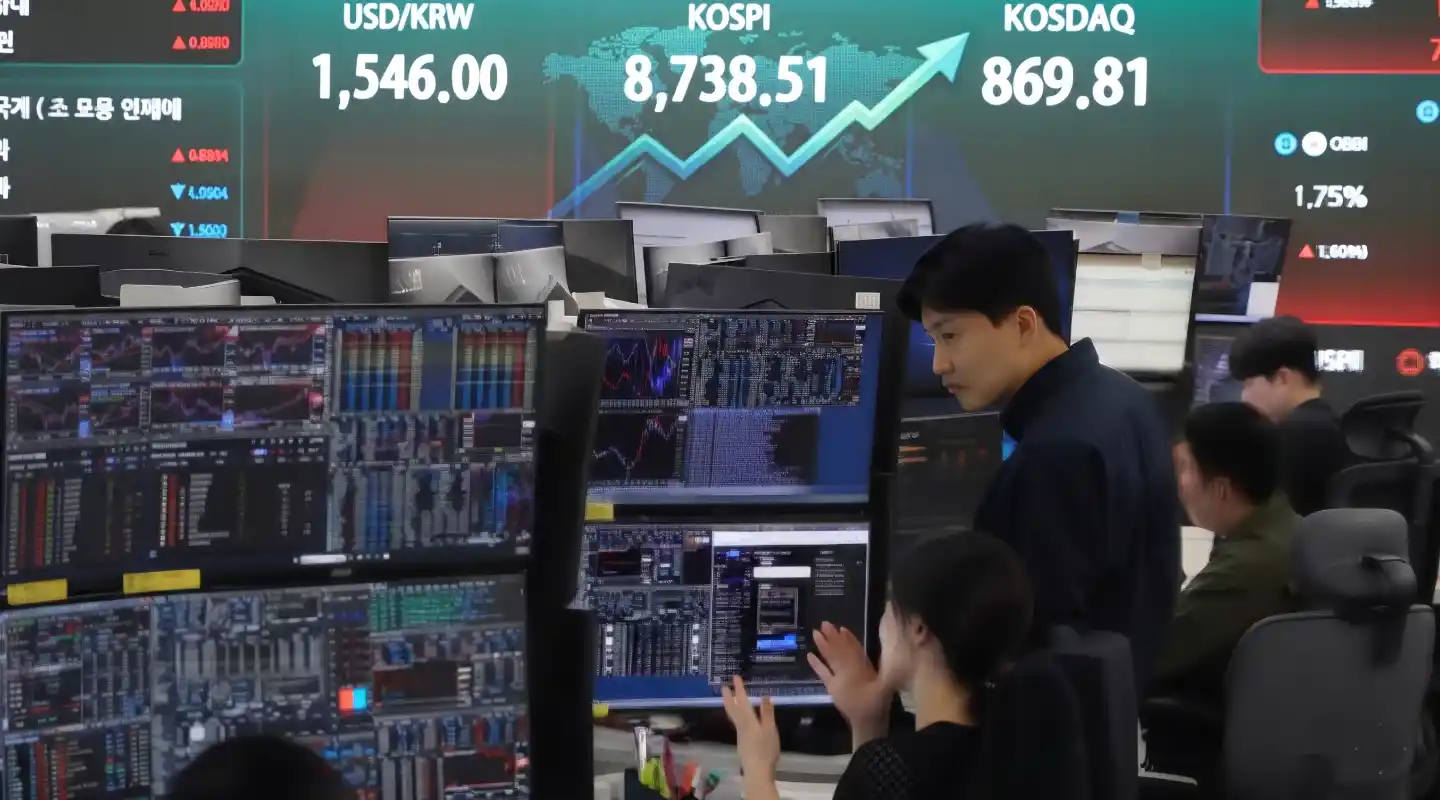

Global Markets Enter a Crucial Week
Global equity markets are entering an important trading week as investors attempt to recover confidence following a significant technology-led selloff that affected major US indices and increased volatility across international financial markets.
After several sessions of pressure on technology and artificial intelligence-related stocks, market participants are shifting their attention towards a series of important corporate earnings announcements, economic indicators and central bank developments that could determine the direction of financial markets throughout November.
The latest developments have created a challenging environment for investors. While some markets showed signs of stabilisation on Monday, November 2, concerns surrounding elevated technology valuations, increasing artificial intelligence infrastructure costs and uncertain investment returns continue to influence trading decisions.
In the United States, investors are particularly focused on quarterly financial results from Apple, Palantir Technologies and Advanced Micro Devices (AMD). These companies represent different parts of the technology industry, from consumer electronics and enterprise artificial intelligence software to advanced semiconductor manufacturing.
Their earnings announcements could provide important information about whether demand for technology products and AI infrastructure remains strong enough to support the industry's high growth expectations.
Beyond corporate earnings, the October US employment report scheduled for Friday, November 6, will provide another important indication of the American economy's health.
The combination of corporate earnings, employment figures, monetary policy expectations and the US midterm elections makes this one of the most closely watched weeks for global investors.
Technology Selloff Raises Questions About AI Investment
The recent weakness in technology stocks has highlighted a growing debate across financial markets: whether the enormous investments being made in artificial intelligence infrastructure will generate sufficient financial returns.
Over the past several years, artificial intelligence has become one of the most influential investment themes in global markets. Major technology companies have committed substantial capital towards data centres, specialised processors, cloud computing infrastructure and advanced AI models.
This investment cycle has supported valuations across semiconductor manufacturers, software companies, cloud service providers and data centre operators.
However, investors are increasingly examining the financial consequences of these commitments.
Recent quarterly results from major technology companies have brought attention to rising infrastructure expenditure, cash flow requirements and the time needed to generate returns from AI-related investments.
Concerns intensified after disappointing market reactions to results from major technology companies, while Intel experienced a particularly sharp share-price decline following its latest financial update on October 30.
Intel shares fell approximately 29% during Friday's session, contributing to the broader technology market weakness.
The Nasdaq Composite declined approximately 2.9%, while the S&P 500 fell around 1.8% on the same trading day.
These developments demonstrated that investors are becoming more selective about technology investments rather than purchasing shares simply because a company has exposure to artificial intelligence.
The central question is gradually changing from how much companies are investing in AI to how effectively those investments can generate sustainable revenue, improve productivity and increase profitability.
For technology companies, future earnings growth will increasingly need to justify their capital expenditure and market valuations.
Apple Earnings: Investors Look Beyond iPhone Sales
Apple is among the most important companies investors will monitor this week.
The company is scheduled to announce its fiscal fourth-quarter 2026 financial results after the US market closes on November 2.
The announcement is particularly significant because it represents an important earnings update under its new chief executive, John Ternus, who succeeded Tim Cook in September 2026.
Unlike companies heavily focused on building large-scale AI infrastructure, Apple has a different business model, with its financial performance depending significantly on consumer electronics, software, services and its broader ecosystem.
Investors will examine several important areas of Apple's performance.
First, iPhone sales will remain a major indicator of consumer demand. The company's ability to maintain strong product demand, particularly during the important holiday shopping season, could influence its revenue outlook.
Second, investors will closely examine the performance of Apple's services business, which includes subscriptions, digital services and other recurring revenue streams.
Services are strategically important because they can provide a more predictable source of income compared with hardware sales.
Third, Apple's artificial intelligence strategy will receive considerable attention.
The company faces increasing pressure to demonstrate how AI features can improve the customer experience and strengthen its competitive position against technology companies developing advanced AI platforms.
Another important issue is the rising cost of memory chips and other hardware components.
Increasing input costs could affect Apple's gross margins if the company cannot offset those expenses through operational efficiencies, pricing strategies or stronger product demand.
According to Reuters' November 2 market commentary, Apple's ability to maintain strong margins and manage rising chip costs will be an important consideration for investors.
The company's holiday-quarter guidance could ultimately matter more than its historical quarterly performance.
Investors want evidence that Apple can sustain growth while protecting profitability in an increasingly competitive technology environment.
AMD Earnings Could Reveal the Strength of AI Semiconductor Demand
Advanced Micro Devices is another major technology company attracting attention during this week's earnings season.
AMD is scheduled to announce its quarterly results after the US market closes on Tuesday, November 3.
The company has become an important participant in the global semiconductor industry, competing across central processing units, graphics processing units, data centre processors and AI computing infrastructure.
Demand for AI-related computing capacity has created significant opportunities for semiconductor manufacturers.
Technology companies developing large AI models require powerful processors and advanced computing infrastructure. This has increased demand for specialised chips used in data centres and high-performance computing systems.
AMD's financial results could therefore provide investors with an important indication of the strength of semiconductor demand.
Investors will particularly examine three areas.
- Data centre revenue
The data centre business is a major growth opportunity for AMD. Investors will look for evidence that demand for its server processors and AI accelerators is translating into sustainable revenue growth.
- AI accelerator competition
AMD is attempting to strengthen its position in the AI accelerator market, where competition remains intense.
Its ability to deliver competitive products, secure major customers and expand its software ecosystem will influence its long-term growth opportunities.
- Profit margins and future guidance
Strong revenue growth does not automatically translate into higher profitability.
Investors will examine production costs, operating expenses, gross margins and management's expectations for future demand.
AMD previously indicated that it expected approximately $13 billion in quarterly revenue, plus or minus $300 million, with a non-GAAP gross margin of approximately 56%.
These figures provide an important benchmark against which investors can evaluate the company's latest results.
The broader semiconductor industry is also facing questions about whether current AI infrastructure demand can continue growing at its recent pace.
A stronger-than-expected outlook from AMD could help restore confidence in semiconductor stocks. However, weaker guidance or concerns about profitability could increase pressure across the sector.
Palantir Earnings: AI Software Business Faces a Growth Test
Palantir Technologies is another company expected to attract considerable attention during the current earnings season.
The company is scheduled to announce its third-quarter 2026 results after the US market closes on November 2.
Palantir operates in the enterprise software and artificial intelligence market, providing platforms that help organisations integrate data, analyse information and support operational decision-making.
Its artificial intelligence products have attracted attention from businesses and government organisations seeking to implement AI technology in practical business environments.
Unlike semiconductor manufacturers, which provide the computing infrastructure required to run AI systems, Palantir focuses on software platforms and enterprise applications.
This distinction makes its financial results particularly useful for understanding whether businesses are moving beyond AI experimentation towards commercial adoption.
Investors will focus on several important indicators:
- Commercial revenue growth and new customer acquisitions.
- Demand for its Artificial Intelligence Platform.
- Government contract performance.
- Operating margins and profitability.
- Management's revenue guidance for upcoming quarters.
Palantir previously guided for third-quarter revenue of approximately $2.160 billion to $2.164 billion.
That guidance represents substantial growth compared with the company's revenue of approximately $1.181 billion in the corresponding period a year earlier.
The earnings announcement will help investors assess whether the company can maintain this growth trajectory.
However, valuation remains an important consideration.
Even companies delivering impressive revenue growth can experience share-price volatility when investors believe their future earnings expectations are already reflected in current stock prices.
Palantir's results could therefore influence sentiment across the wider enterprise AI software industry.
US Employment Report: A Major Economic Indicator
While technology earnings will dominate much of the corporate news cycle, the US employment report scheduled for Friday, November 6, could become the most important macroeconomic event of the week.
The monthly employment report provides information about job creation, unemployment and wage growth across the American economy.
These figures are closely monitored by investors because employment conditions influence consumer spending, economic growth and monetary policy decisions.
The US economy depends heavily on household consumption. When employment remains strong, households generally have greater financial security and spending capacity.
However, a weakening labour market could indicate that businesses are reducing recruitment, controlling expenses or responding to slower economic activity.
Investors will particularly monitor three indicators.
Nonfarm payrolls: This measures the number of jobs added or lost across major sectors of the US economy, excluding certain categories such as agricultural employment.
Unemployment rate: This indicates the proportion of the labour force that is actively seeking employment but remains unemployed.
Average hourly earnings: Wage growth provides information about household income and potential inflationary pressure.
A stronger employment report could indicate that the US economy remains resilient.
However, unexpectedly strong wage growth could also increase concerns about inflation, potentially limiting the scope for interest-rate reductions.
Conversely, weaker employment figures could increase expectations of monetary easing if policymakers believe economic activity is slowing.
The Federal Reserve must balance two important objectives: supporting employment and maintaining price stability.
This creates a complicated environment for financial markets because investors must assess both economic growth and inflation risks.
A weak employment report is not automatically positive for equities, just as strong employment figures are not always negative.
The market reaction will depend on how the numbers compare with expectations and what they suggest about the future direction of interest rates.
Central Bank Decisions Add Another Layer of Uncertainty
Monetary policy developments are also influencing global investment sentiment.
Interest rates affect borrowing costs, business investment, currency valuations and the attractiveness of different financial assets.
For equity markets, lower borrowing costs can support company valuations by reducing financing expenses and increasing the present value of future earnings.
However, central banks cannot reduce interest rates without considering inflation risks.
Investors are monitoring policy developments involving major monetary authorities, including the Federal Reserve, Bank of England, Reserve Bank of Australia and Sveriges Riksbank.
Market expectations have pointed towards possible interest-rate increases from the Bank of England, Reserve Bank of Australia and Sweden's central bank.
These expectations reflect concerns about inflation, energy costs and the broader economic outlook.
The Federal Reserve and European Central Bank's latest policy decisions are also part of the background against which investors are assessing financial conditions.
The important issue for investors is whether central banks will prioritise controlling inflation or supporting economic growth.
If inflation remains elevated, central banks may maintain restrictive monetary policies for longer than investors expect.
Such a scenario could place pressure on technology companies, particularly businesses whose valuations depend heavily on anticipated future earnings.
Higher interest rates can also increase the cost of financing large infrastructure projects, including AI data centres.
Consequently, central bank decisions have implications extending well beyond traditional banking and financial stocks.
European and Asian Markets Reflect Mixed Investor Sentiment
The recent technology selloff has also influenced international financial markets.
European equities struggled to establish a clear direction on Monday as investors assessed corporate earnings, economic conditions and geopolitical developments.
Concerns about energy prices, government finances and industrial costs continue to influence sentiment across the region.
Manufacturing activity remains another important area of attention.
While some economic indicators suggest stabilisation, European businesses continue to face pressure from energy costs, supply-chain conditions and uncertain demand.
Asian markets have also experienced mixed trading conditions.
Investors across the region are monitoring US technology stocks because several Asian economies play important roles in global semiconductor manufacturing, electronics production and technology supply chains.
South Korea and Taiwan are particularly exposed to changes in global semiconductor demand.
A prolonged slowdown in AI infrastructure spending could affect companies involved in chip manufacturing, electronics components and advanced computing equipment.
However, continued investment in AI infrastructure could support long-term opportunities for businesses operating across these industries.
China's economic developments also remain important for regional markets.
Chinese authorities have introduced measures aimed at supporting financial markets and economic activity, while investors continue assessing domestic demand, industrial performance and international trade conditions.
The performance of global markets will therefore depend on developments across several interconnected economies rather than US corporate earnings alone.
Oil Prices and Geopolitical Developments Remain Important
Energy markets are another important factor influencing the global economic outlook.
Oil prices experienced a sharp decline on Monday, November 2, following developments that raised hopes of renewed diplomatic discussions involving Iran and the United States.
Brent crude prices fell approximately 6.5%, moving towards $106 per barrel.
The movement was important because higher oil prices can increase transportation expenses, manufacturing costs and inflationary pressure across major economies.
For countries that depend heavily on imported energy, rising oil prices can also affect currency stability and external trade balances.
Lower oil prices can provide some relief to consumers and businesses by reducing fuel and transportation expenses.
Airlines, logistics companies and other fuel-intensive industries may benefit from lower energy costs.
However, geopolitical uncertainty continues to create risks for global supply chains and energy markets.
Any renewed escalation involving major oil-producing regions or critical shipping routes could quickly reverse recent price movements.
Investors will therefore continue monitoring geopolitical developments alongside corporate earnings and economic indicators.
US Midterm Elections Could Influence Market Expectations
Another significant event taking place during the week is the US midterm election scheduled for November 3.
The election will determine the composition of Congress and could influence the direction of future economic and regulatory policies.
Investors are particularly interested in potential changes involving technology regulation, taxation, government spending, trade policy and artificial intelligence oversight.
The technology industry has become an increasingly important subject of political debate.
Issues such as AI regulation, competition policy, data privacy, semiconductor manufacturing and international technology restrictions could influence business strategies.
Although election outcomes do not automatically determine short-term market performance, changes in political control can affect expectations about future government decisions.
Investors may therefore adjust their portfolios based on anticipated policy changes and potential regulatory developments.
What Investors Should Watch During the Week
The combination of corporate earnings and economic announcements creates several potential market-moving events.
The following developments deserve particular attention:
November 2 – Apple and Palantir earnings: Both companies will provide important information about consumer technology demand and enterprise AI adoption.
November 3 – US midterm elections and AMD earnings: Political developments and semiconductor industry performance will influence investor s
Nexuswild welcomes factual corrections. Email contact@nexuswild.com with evidence and the article URL.