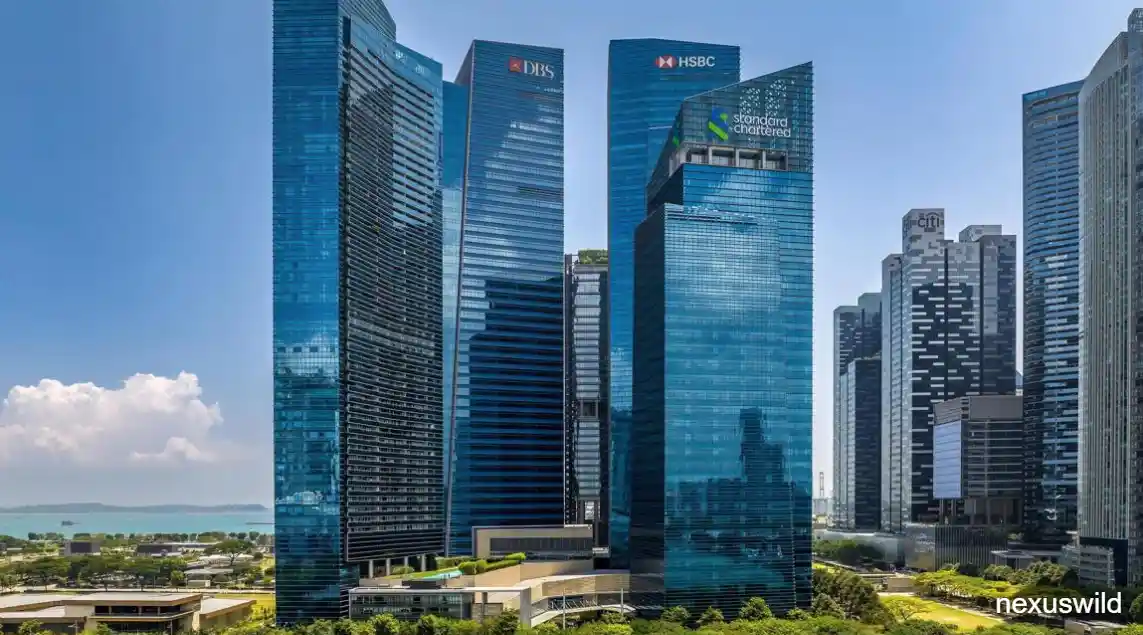

SBI Holdings is strengthening its position in Japan's financial services market as traditional banking and investment operations generate stronger earnings alongside an expanding digital finance strategy.
The Japanese financial group announced its results for the six months ended September 30, 2026, on November 2, reporting record first-half performance across several major financial indicators. The results reflect growth across its established financial businesses, particularly banking and securities, as well as stronger contributions from private equity investments.
Consolidated revenue increased 17.2% year on year to ¥1,057.5 billion, equivalent to approximately ¥1.06 trillion. Profit before tax reached ¥324.3 billion, up 52.9% from ¥212.1 billion in the corresponding period of the previous financial year.
Profit for the period increased 52.6% to ¥249.1 billion, while profit attributable to owners of the parent rose 39.1% to approximately ¥230.6 billion.
The distinction between these profit measures is important. Profit for the period includes earnings attributable to non-controlling interests, whereas profit attributable to owners reflects the portion belonging to SBI Holdings shareholders.
The stronger earnings performance also reflected improved profitability relative to revenue growth. The company benefited from higher contributions from its financial services and private equity businesses, while its overall expense growth remained below revenue growth.
These results come as SBI continues moving beyond its traditional identity as a financial services group. The company is developing a wider business ecosystem that includes digital banking, cryptocurrency exchanges, blockchain-based payments, stablecoins and investment products designed for digital markets.
The expansion provides opportunities for future growth, although the latest financial results show that established banking, securities and investment operations remain the main drivers of profitability.
Financial Services Business Becomes the Main Earnings Driver
SBI's financial services division delivered its strongest first-half performance, generating pretax profit of approximately ¥200.2 billion, an increase of 69.7% compared with the same period last year.
The segment crossed the ¥200 billion profit threshold for the first time, reflecting improved contributions from banking, securities and insurance operations.
Banking remained an important contributor, with segment pretax profit increasing 45.8% to approximately ¥107.3 billion. The securities business recorded an even stronger increase, with pretax profit rising 90% to ¥64.8 billion.
The insurance business also improved significantly. Its pretax profit increased 227.1% to ¥18.6 billion, although the percentage increase partly reflects the comparison with a lower level in the previous year.
The strength across these businesses demonstrates the benefit of operating multiple financial services under one group. Customers can use banking accounts, investment platforms and insurance products through different parts of the SBI ecosystem, creating opportunities to expand relationships and generate additional revenue.
This strategy also reduces dependence on a single source of income. Securities trading, banking operations and insurance do not necessarily respond to market conditions in the same way.
However, the results should not be interpreted as proof that every business line will maintain the same growth rate. Securities earnings can change with trading activity and financial-market conditions, while banking profitability depends on funding costs, lending quality and interest-rate movements.
The immediate financial message remains positive: SBI's established financial services operations are generating stronger earnings and providing the foundation for the group's broader expansion.
SBI Shinsei Bank Strengthens Its Banking Operations
SBI Shinsei Bank has become an important part of the group's efforts to strengthen its banking business and connect traditional financial services with digital distribution.
The bank's performance improved during the first half of FY2027. Gross operating profit reached approximately ¥199.8 billion, an increase of 21% year on year. Net operating profit before credit costs rose 34% to ¥106.4 billion, while profit before income tax expense increased 51% to ¥92.9 billion.
The growth reflects improvements in the bank's operations following its integration into the SBI Group.
Deposits have expanded considerably. SBI Shinsei Bank's total deposits increased from approximately ¥6.3 trillion at the end of March 2022 to ¥18.1 trillion in September 2026. Its retail account base also increased from 3.04 million to 4.59 million over the same period.
One important development has been the SBI Hyper Deposit service, launched in September 2025. It connects deposits held at SBI Shinsei Bank with investment accounts at SBI Securities, making it easier for customers to manage funds across banking and securities services.
Within a year of launch, the service accumulated approximately ¥1.59 trillion in balances across around 710,000 accounts.
This illustrates how SBI is using digital integration to make its financial products more connected. Instead of treating banking and investment accounts as separate services, the group is developing an ecosystem in which customers can move between savings and investment activities more conveniently.
The bank is also pursuing a broader role in financial infrastructure. SBI's Fourth Megabank Concept aims to provide technology-based banking services and infrastructure to regional financial institutions, creating opportunities beyond its own retail customer base.
The strategy could strengthen SBI's position in digital banking, although its success will depend on service reliability, customer adoption, operating efficiency and the ability to manage credit risks.
Securities Business Expands Through Digital Investment Platforms
The securities business was another major contributor to SBI Holdings' record earnings.
SBI Securities reported consolidated operating revenue of approximately ¥191 billion during the first half, up 48.3% year on year. Operating income increased 75.6% to ¥66.9 billion, with both figures reaching record levels for a first-half period.
The business has continued expanding its online brokerage platform in Japan. Its securities account base reached approximately 16.8 million by the end of September 2026, and management announced that the number had crossed 17 million on October 15.
Assets under custody increased 39% year on year to approximately ¥79.1 trillion.
These figures demonstrate the scale of SBI's online investment platform and its growing role in Japan's retail investment market.
A major factor has been the company's strategy of lowering barriers to participation. Its ZERO Revolution initiative, launched in September 2023, eliminated online domestic stock trading commissions for eligible transactions.
Although reducing trading fees can put pressure on traditional brokerage income, SBI has developed other revenue sources to support profitability.
These include financial revenue from margin trading and securities lending, trading revenue from activities such as foreign exchange and other securities transactions, and income from investment trusts and related services.
The company reported financial revenue of approximately ¥81.8 billion and trading revenue of ¥42.9 billion during the first half.
Its investment trust business also expanded. Investment trust balances reached ¥32.3 trillion, an increase of 49.5% year on year. Monthly recurring investment amounts set by customers exceeded ¥340 billion.
Japan's tax-advantaged investment framework, including the expanded Nippon Individual Savings Account system, provides an additional opportunity for online brokers to attract long-term investors.
The growth of SBI Securities shows how digital distribution can expand a financial services business beyond traditional commission-based brokerage. Its next challenge will be maintaining customer growth while ensuring that alternative revenue streams remain sustainable through different market conditions.
Asset Management Expansion Creates Another Growth Opportunity
SBI Holdings is also increasing its focus on asset management, an area that can generate recurring revenue through investment products and assets managed on behalf of customers.
During the first half of FY2027, the Asset Management Business segment reported revenue of approximately ¥26.2 billion, up 40.7% year on year. Pretax profit increased 87.9% to ¥6.5 billion.
SBI Global Asset Management, part of the wider group, reported assets under management of approximately ¥13.9 trillion, representing growth of 45% compared with the previous year.
Management has outlined a target of reaching ¥50 trillion in assets under management by fiscal year 2029.
Achieving this would require substantial expansion across investment products, customer relationships and institutional mandates.
The group intends to support this growth through several routes, including managing assets linked to its insurance operations, acquiring or integrating insurance businesses and working with international financial institutions.
One significant organisational development is the planned integration of SBI Global Asset Management and SBI Insurance Group. The merger is scheduled to take effect on April 1, 2027, subject to completion of the required procedures.
The broader strategy aims to connect insurance liabilities with investment management capabilities. Insurance companies collect premiums and maintain funds to meet future obligations. Managing those assets efficiently can create opportunities for investment income while supporting the financial requirements of policyholders.
However, asset management performance can be influenced by financial-market conditions, investment returns and customer flows. The long-term target will therefore depend on more than acquisitions and product launches.
SBI will need to demonstrate that its expanding asset base can generate stable fees and attractive returns while maintaining appropriate investment risk controls.
Private Equity Investments Provide a Significant Contribution
Private equity investment has become another important contributor to SBI Holdings' profitability.
The business invests in companies and financial opportunities with the objective of generating returns through business growth, strategic development and eventual investment realisation.
During the first half of FY2027, the PE Investments segment recorded revenue of approximately ¥181.3 billion, up 28.5% year on year. Segment pretax profit increased 38.5% to approximately ¥153.1 billion.
This was a substantial contribution to the group's overall earnings.
Private equity can offer higher returns when portfolio companies increase in value or when investments are sold successfully. However, this type of income may be less predictable than recurring interest or fee revenue.
The timing of investment exits, valuation changes and market conditions can influence the financial results from one reporting period to another.
For this reason, investors need to distinguish between recurring earnings from banking and securities activities and returns generated through investment transactions.
SBI's private equity business adds diversification to its portfolio, but the group will need to maintain a balance between investment gains and more stable operating income.
The strong first-half contribution reinforces the value of the business, while its longer-term performance will depend on the quality of investments and the group's ability to realise returns.
JPYSC Stablecoin Becomes a Key Part of the Digital Finance Strategy
Beyond traditional financial services, SBI Holdings is developing infrastructure for digital payments and blockchain-based financial products.
One of its major initiatives is JPYSC, a yen-denominated stablecoin developed with Singapore-based Startale Group and other SBI Group companies.
The stablecoin was launched on June 24, 2026, through an initial distribution limited to SBI VC Trade accounts. SBI Shinsei Trust & Banking acts as the issuer, while SBI VC Trade handles distribution.
A trust-based structure is designed to provide a regulated framework for the yen-denominated digital asset, with the backing assets managed by the trust bank.
The initial launch was limited rather than a full public rollout. The companies indicated that wider circulation through public blockchain networks would follow once relevant legal and tax arrangements were sufficiently clarified.
JPYSC is intended to support digital payments, transfers and financial transactions, including potential use in business and cross-border transactions.
On November 2, SBI VC Trade announced that the total JPYSC handling balance had exceeded ¥30 billion and that balances in its JPYSC lending service had surpassed ¥10 billion.
These figures indicate early activity around the product, but they should not be confused with a fully open-market circulation figure or proof of widespread commercial adoption. The company's handling measure includes both on-chain balances and balances in its lending service.
The stablecoin's future growth will depend on regulatory clarity, integration with financial institutions, merchant acceptance and the development of practical payment use cases.
For SBI, the initiative represents an attempt to connect conventional financial services with blockchain-based settlement infrastructure.
Partnerships With BlackRock and SMBC Expand the On-Chain Finance Ambition
SBI is also looking to build partnerships with major financial institutions to support the development of tokenized financial products.
On October 27, 2026, SBI Holdings and Startale signed a memorandum of understanding with BlackRock to explore connections between tokenized money market funds and the JPYSC stablecoin.
A money market fund invests in short-term financial instruments and is generally designed to provide liquidity and relatively low-risk returns compared with more volatile investment products.
Tokenization involves representing financial assets digitally on blockchain infrastructure. In principle, it can support faster settlement, improved transferability and greater integration between investment and payment systems.
The proposed cooperation is intended to examine technical infrastructure, commercial distribution and regulatory requirements. It is an exploratory agreement, not evidence that a fully operational tokenized fund and stablecoin platform has already launched.
Another important development came on October 30, when SBI Holdings and Sumitomo Mitsui Financial Group signed a capital and business alliance agreement to examine new financial services using stablecoins and other digital assets.
The partnership reflects growing interest among established financial institutions in blockchain-based financial infrastructure.
For SBI, cooperation with large financial groups could help it reach customers, strengthen regulatory capabilities and establish a broader network for digital financial products.
However, tokenized assets and stablecoins still face challenges involving legal treatment, custody, liquidity, interoperability and customer confidence. Progress will depend on practical implementation rather than announcements alone.
International Investments Extend SBI's Digital Financial Network
SBI's digital finance strategy also includes investments outside Japan.
On November 2, the group announced a US$100 million investment in Erebor Bank, an American digital bank focused on serving companies operating in areas such as artificial intelligence, defence technology and energy.
Erebor was established in 2025 and received a banking charter from the US Office of the Comptroller of the Currency. It also operates with deposit insurance coverage through the Federal Deposit Insurance Corporation.
The investment gives SBI exposure to a specialised digital banking institution serving businesses in sectors that require financial services suited to technology-driven operations.
Earlier, on October 30, SBI announced an investment in PhotonPay, a Hong Kong-based provider of stablecoin payment infrastructure. PhotonPay's business includes digital wallets, payment services and financial infrastructure designed to support international corporate transactions.
SBI also announced a strategic alliance with CRB Group, the parent company of US-based Cross River, on October 28. The parties signed a basic agreement towards establishing a joint venture in Japan.
These initiatives illustrate the group's intention to build connections across banking, payments and digital asset markets.
The international approach could give SBI access to new technologies and customers, while allowing it to develop services that connect traditional money with digital financial networks.
Nevertheless, overseas expansion introduces additional risks. Banking regulations differ across countries, and digital asset businesses may face changing requirements involving licensing, capital, data protection and customer verification.
The commercial value of these investments will depend on whether partnerships generate sustainable business rather than simply expanding the group's portfolio of interests.
Crypto-Asset Weakness Highlights the Risks of Digital Expansion
Despite the positive developments across its financial businesses, SBI's digital asset operations did not deliver uniformly strong results.
The CryptoAsset segment recorded a decline in revenue to approximately ¥23.1 billion, down 30.1% year on year. It also reported a pretax loss of approximately ¥1.6 billion.
This is an important qualification to the wider digital finance story.
Cryptocurrency trading and exchange businesses can be affected by changes in asset prices, investor activity, transaction volumes and regulatory requirements. A fall in trading activity can reduce revenue even when the broader financial technology market continues to expand.
SBI's digital strategy is also broader than cryptocurrency speculation. Its stablecoin, tokenized fund, cross-border payment and digital banking initiatives are designed to develop financial infrastructure and services with different commercial models.
However, these businesses still need to demonstrate customer adoption and reliable revenue generation.
The company must also maintain strong cybersecurity, risk controls and compliance systems. Digital financial services can face threats involving unauthorised access, fraud and operational failures, which can damage customer trust and create financial losses.
The crypto-asset segment's weaker performance shows why the group cannot assume that every digital finance investment will become profitable simply because blockchain and digital assets are receiving greater attention.
Shareholder Returns Improve as Earnings Strengthen
SBI Holdings has also revised its dividend outlook following the strong first-half performance.
The company declared an interim dividend of ¥30 per share for the six months ended September 30, 2026. The payment is scheduled to begin on December 14, 2026.
It also revised its expected year-end dividend to ¥80 per share, taking the projected full-year dividend to ¥110 per share.
This compares with the previous financial year's dividend of ¥95 per share on a post-stock-split basis, representing an expected increase of ¥15.
The company completed a two-for-one stock split effective December 1, 2025. Dividend comparisons therefore need to account for the adjusted share count to avoid misleading comparisons.
The higher dividend forecast signals management's confidence in its financial services business and its ability to return capital to shareholders while continuing investment in expansion.
However, the year-end dividend remains a forecast and will be determined finally in light of full-year financial performance.
For shareholders, the combination of profit growth and higher expected dividends provides a positive signal. The long-term test will be whether earnings remain strong enough to support shareholder returns and the capital requirements of the group's expanding businesses.
What Happens Next for SBI Holdings?
The next stage for SBI Holdings will involve maintaining the profitability of its established financial businesses while turning digital finance investments into commercially sustainable services.
Banking and securities will remain central to the group's financial performance. SBI Shinsei Bank will need to continue expanding deposits and lending while managing credit quality and funding costs. SBI Securities will need to retain customers and diversify revenue as competition in online brokerage remains strong.
Asset management and private equity will also influence results, although both businesses can be affected by investment-market conditions.
In digital finance, the progress of JPYSC will be closely watched. Broader distribution, real payment usage and partnerships with financial institutions could help determine whether the stablecoin becomes an important part of Japan's digital financial infrastructure.
The collaboration with BlackRock and Startale may create opportunities for tokenized investment products, while partnerships with SMBC and international fintech businesses could expand the group's reach.
At the same time, the company must manage regulatory differences between markets and ensure that digital services meet security and operational standards.
Investors will also monitor whether the group's numerous partnerships and acquisitions generate measurable financial contributions. A broad digital strategy can create opportunities, but it can also increase management complexity and demand substantial investment.
The strongest long-term position will come from combining innovation with disciplined capital allocation and consistent profitability.
Conclusion
SBI Holdings' first-half FY2027 results demonstrate the strength of its diversified financial services operations. Revenue increased 17.2% to approximately ¥1.06 trillion, while profit before tax rose 52.9% to ¥324.3 billion. Banking, securities, insurance and private equity provided substantial support, with the financial services division exceeding ¥200 billion in pretax profit for the first time.
Alongside these established businesses, SBI is expanding its presence in digital banking, stablecoins, tokenized financial products and cross-border payment infrastructure. Investments in Erebor Bank and PhotonPay, together with partnerships involving BlackRock, Startale and SMBC, underline its ambition to participate in the next phase of financial technology.
However, the weaker crypto-asset performance demonstrates that digital expansion comes with commercial and regulatory risks. New products must attract customers, generate recurring revenue and operate within increasingly complex compliance frameworks.
SBI's financial performance shows that its traditional banking and investment businesses remain the foundation of profitability, while digital finance represents an important avenue for future growth.
The group's next challenge is to convert its growing network of digital partnerships and financial technology investments into sustainable earnings without weakening the performance of its core businesses.
Nexuswild welcomes factual corrections. Email contact@nexuswild.com with evidence and the article URL.