
For decades, the integrated development environment (IDE) was the centre of professional software engineering. Developers wrote code, navigated projects, ran compilers, inspected variables, refactored symbols and stepped through failures without leaving the IDE.
That model is changing, but it is not disappearing.
The most important development tools of 2026 combine conventional IDE capabilities with foundation models, repository retrieval, terminal access, testing tools and agentic workflows. Instead of merely suggesting the next line, these systems can investigate a codebase, propose a plan, change several files, run tests and return a reviewable patch.
This is a significant increase in automation. It is not the arrival of a universally reliable, fully autonomous software engineer.
What is a traditional IDE?
A traditional integrated development environment brings the core tools required to build software into one application. These normally include:
- A source-code editor
- Language-aware completion and diagnostics
- Project and dependency management
- Compilers, interpreters and build tools
- A debugger and refactoring tools
- Test runners and version-control integration
Visual Studio, the JetBrains IDE family, Android Studio and Xcode are clear examples. Visual Studio Code is formally an extensible code editor, but with language servers and extensions, it performs the practical role of an IDE.
Traditional IDE features are deterministic and structurally aware. A symbol rename performed by a mature refactoring engine uses the compiler representation of the program. A debugger reports the actual state of a running process. These properties remain valuable even when AI is added.
What is an AI development environment?
An AI development environment places a foundation model and an agent execution layer inside, beside or above the conventional development toolchain.
It can include:
- Natural-language interaction
- Repository search and indexing
- Code generation and transformation
- Planning and task decomposition
- Terminal command execution
- Build and test feedback
- Git branches, worktrees and pull requests
The term describes an architecture rather than a single product category. An AI development environment might be a desktop editor such as Cursor, an established IDE with an agent added, a terminal tool such as Claude Code, or an isolated cloud worker that returns a pull request.
From Autocomplete to Agents
The progression began with deterministic completion based on types, syntax and symbols. Machine-learning systems then improved ranking and predicted longer fragments. Large language models introduced natural-language prompts, full-function generation and conversational explanations.
The next step was tool use. A model that can only produce text cannot establish whether a change compiles. An agent can run the build, read an error, edit the implementation and try again. The practical agent loop now looks like this:
- Interpret the request and inspect the repository.
- Retrieve relevant files, documentation and history.
- Propose or internally construct a plan.
- Edit one or more files.
- Run the compiler, linter or tests.
- Diagnose the results and revise the change.
- Present a diff, commit or pull request for review.
This feedback loop is more consequential than autocomplete. It also expands the risk surface because the system can take actions rather than merely suggest text.
The 2026 Platform Landscape
The market is converging around three operating models: AI added to established IDEs, AI-native editors, and agents that operate from the terminal or cloud.
Established IDEs are becoming agentic
- Visual Studio: Remains a full Microsoft development environment. GitHub Copilot Agent Mode can analyse a project, change files, invoke tools, run terminal commands and iterate on build or test failures.
- Visual Studio Code: Its agent architecture can use local, Copilot, Claude and Codex harnesses. Planning, tool selection, memory and agent hand-offs are becoming part of the editor itself.
- JetBrains: Retains traditional project models while AI Assistant can host JetBrains Junie and third-party agents, which can plan complex changes and edit multiple files.
- Android Studio: Combines Android-specific tooling with Gemini Agent Mode, which creates plans, invokes tools, and addresses errors.
- Xcode: Apple introduced agentic coding in Xcode 26.3. Agents can generate, navigate, fix and refactor code, with external agents connecting via an MCP bridge.
AI-native editors
- Cursor: Developed by Anysphere, this AI-native editor features an Agent that inspects code, edits files, and executes terminal commands. Cloud Agents run in isolated virtual machines with cloned repositories.
- Devin Desktop (formerly Windsurf): Acquired by Cognition in 2025, it includes the local Devin agent, Cascade, and access to the cloud-based Devin agent. Chat, planning and agent delegation are primary design elements.
CLI and cloud coding agents
- Anthropic’s Claude Code: A terminal-first coding agent that inspects codebases, edits files, and connects to external systems via MCP.
- Google’s Gemini CLI: An open-source terminal agent for understanding code and automating tasks with local project context.
- OpenAI’s Codex: Works through a CLI, IDE extension, or isolated cloud environments to inspect, edit, and run code, returning diffs or pull requests.
Traditional IDEs versus AI Development Environments
The practical distinction differs by activity.
- Code writing: IDE completion is fast and predictable based on syntax. AI can generate larger implementations based on natural-language intent but may hallucinate APIs.
- Repository understanding: IDEs understand structure; AI searches conceptually and summarises unfamiliar modules.
- Debugging: Traditional debuggers expose actual runtime state. Agents can interpret logs and coordinate changes, useful for investigation but prone to making plausible yet incorrect assumptions.
- Testing: Agents excel at generating unit tests and fixing failures, but human oversight is required to ensure tests validate actual business requirements.
Security and Software-Supply-Chain Risk
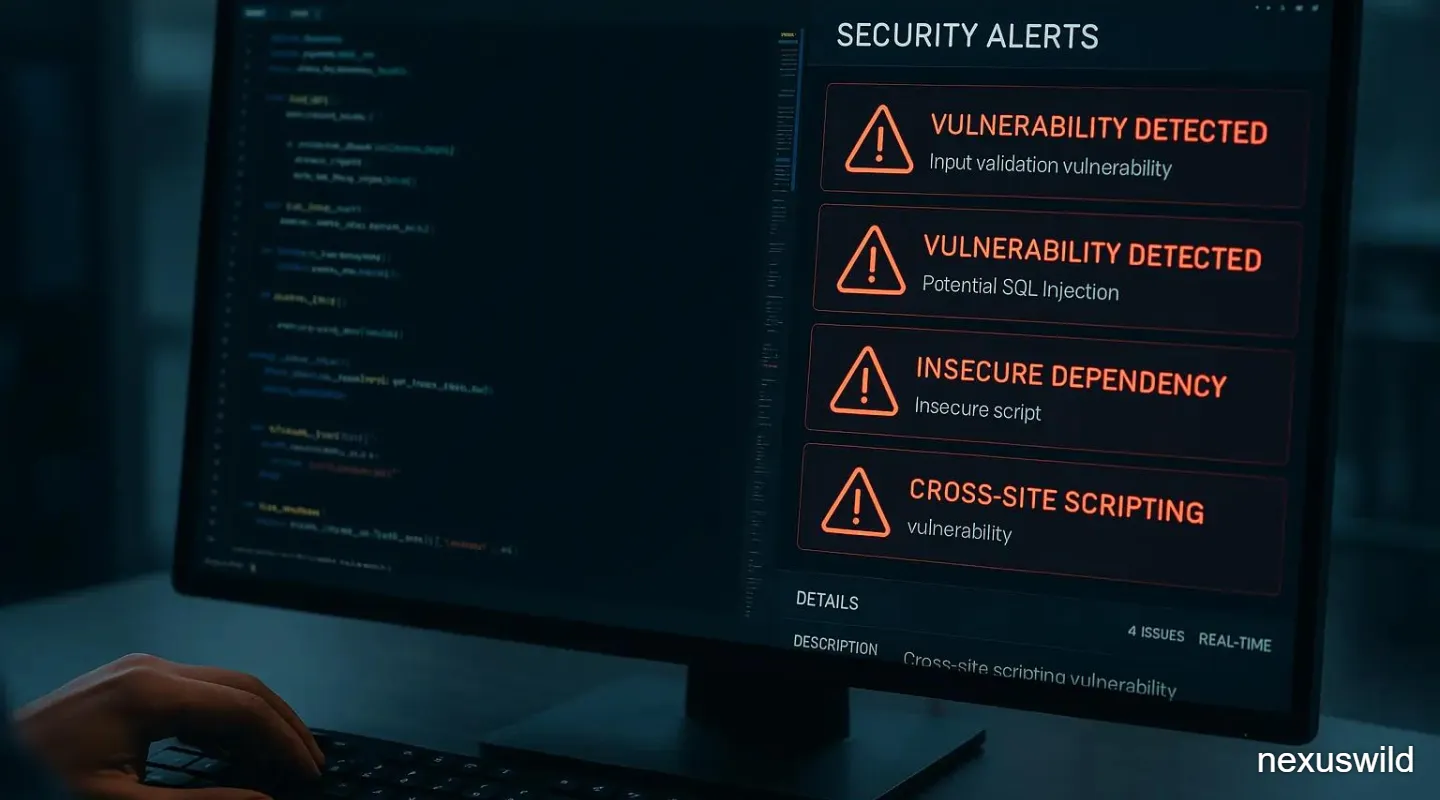
Generated code requires strict engineering controls. Models can hallucinate dependencies, inventing packages that attackers can register to distribute malware (a software-supply-chain threat).
Generated code can also pass simple tests while mishandling authorisation, concurrency, or sensitive data. Furthermore, coding agents are susceptible to indirect prompt injection if they read malicious instructions embedded in source comments, documentation, or tool responses.
How Developer Roles are Changing
AI is shifting effort from producing every line toward directing, evaluating and integrating machine-produced work. A 2026 preprint describes this as a movement toward "supervisory engineering."
- Junior developers can prototype quickly but may miss opportunities to develop debugging instincts if they accept generated code without understanding it.
- Senior engineers will shift further toward architecture, decomposition, security, reliability and review, defining constraints agents cannot infer.
- Code review and QA become more critical, as reviewers receive larger changes more quickly, and agent-written tests may share the same flawed logic as agent-written code.
Will AI Development Environments Replace Traditional IDEs?
Wholesale replacement is less likely than convergence.
Visual Studio, VS Code, JetBrains IDEs, Android Studio and Xcode are already becoming agentic. Cursor and Devin Desktop combine AI-native interaction with familiar editor and development-tool foundations.
For developers, less time may be spent manually producing routine code and more time specifying intent, reviewing changes, debugging systems and making architectural decisions. Programming knowledge becomes more important for judging output even when less code is typed directly.
The likely future is not IDE or agent. It is an increasingly agentic development environment in which proven IDE tooling supplies structure and evidence, agents perform more bounded work, and people retain responsibility for what reaches production.
Further reading and useful links
Reader questions
Frequently asked questions
What is an AI development environment?
It is a development environment that places a foundation model and an agent execution layer alongside traditional tools, allowing the system to understand natural language, plan tasks, edit multiple files, and execute terminal commands.
Will AI coding agents replace software developers?
No. AI shifts the developer's role from manually writing every line of code to 'supervisory engineering'—focusing on architecture, reviewing AI-generated patches, threat modeling, and ensuring business requirements are met.
What are the security risks of AI coding assistants?
Risks include hallucinated dependencies (which attackers exploit via supply-chain attacks), generating code with architectural vulnerabilities, and agent hijacking through indirect prompt injection from untrusted repositories.
What is the Model Context Protocol (MCP)?
MCP is an open standard that connects model-driven applications (like Claude Code or Xcode) to external tools and data sources, such as issue trackers, databases, and source-control operations.
Nexuswild welcomes factual corrections. Email contact@nexuswild.com with evidence and the article URL.