
India Estimates $220 Billion Investment Need to Reach 500 GW Clean Energy Target by 2030
India will need approximately $220 billion in clean energy investment between 2027 and 2030 to reach its target of 500 gigawatts (GW) of installed non-fossil fuel capacity, according to the Ministry of New and Renewable Energy (MNRE).
MNRE Secretary Santosh Kumar Sarangi outlined the investment requirement ahead of the Bharat Renewable Energy Summit and Expo 2026. The government estimates that reaching its 2030 target will require more renewable power generation, stronger electricity transmission networks, expanded energy storage and greater domestic manufacturing capacity.
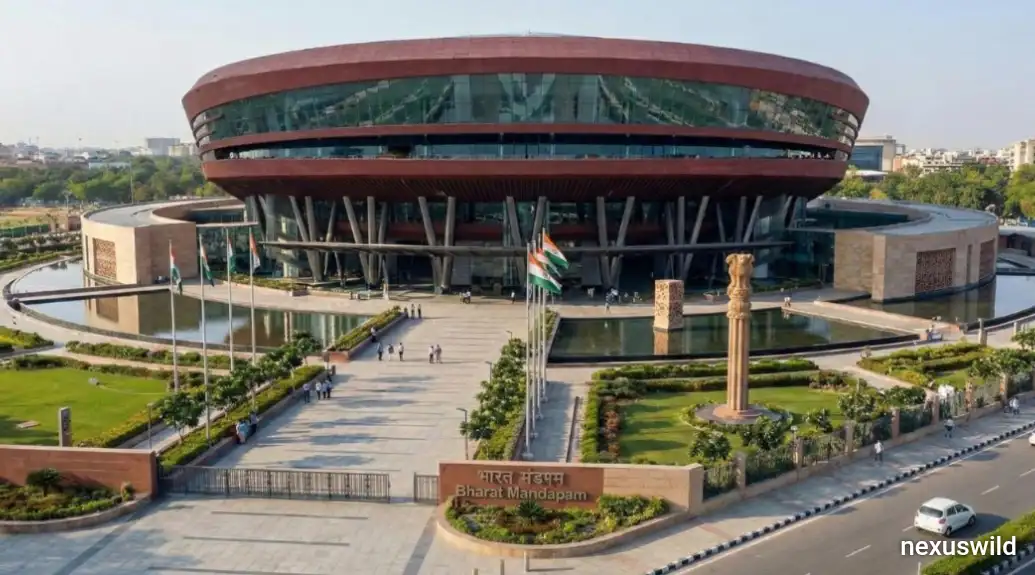
The summit is scheduled to take place at Bharat Mandapam in New Delhi from November 2 to 5. It is intended to bring together policymakers, investors, energy developers, manufacturers and financial institutions to discuss investment opportunities and ways to mobilise capital for India's energy transition.
The $220 billion figure represents an estimated funding requirement, rather than investment already secured. The government is seeking to establish a roadmap that can help convert potential investment into projects and partnerships.
Solar power and transmission account for major investment needs
Solar power is expected to attract one of the largest shares of the proposed investment. Estimates reported ahead of the summit place the solar allocation at around $70 billion, with some reporting putting the range at $70 billion to $75 billion.
Transmission infrastructure is expected to require another $40 billion to $45 billion. These networks are essential for transporting electricity from renewable energy generation centres to industrial facilities, cities and other areas of demand.
Wind energy is projected to require approximately $25 billion to $30 billion. The investment estimates also cover energy storage, green hydrogen, clean technology manufacturing, hydropower and bioenergy.
Reported figures put green hydrogen investment at $20 billion to $25 billion, energy storage at around $20 billion, manufacturing at $15 billion to $20 billion, hydropower at $12 billion to $15 billion and bioenergy at $3 billion to $5 billion.
These are sector-level estimates reported by officials and media outlets. They should not be interpreted as individual government spending commitments or as a final allocation of a fully funded $220 billion package.
Grid infrastructure and storage are key to the transition
Expanding renewable generation is only one part of the challenge. Solar and wind output can fluctuate with weather conditions and time of day, while electricity demand changes across regions and throughout the day.
Transmission infrastructure can help move power from areas with strong renewable resources to consumers farther away. Investment in grid capacity is therefore important to reduce bottlenecks and support the integration of additional generation.
Battery energy storage systems can help manage short-term fluctuations by storing electricity when supply is available and releasing it when needed. Storage can improve grid flexibility, although it does not by itself replace all the requirements for reliable electricity supply.
The investment roadmap also includes manufacturing, reflecting the need for equipment and industrial capabilities that support renewable power projects and grid expansion. Green hydrogen represents another potential area of investment, though its commercial development will depend on production costs, demand, infrastructure and the availability of suitable projects.
India moves towards its 500 GW target
India's clean energy investment plan is linked to its target of reaching 500 GW of installed non-fossil fuel capacity by 2030. In an official announcement dated October 29, the government said installed non-fossil capacity had reached approximately 308 GW.
The non-fossil category includes renewable energy sources and nuclear power. It is therefore broader than renewable electricity capacity alone, an important distinction when assessing progress towards the target.
The government says that faster deployment of storage, stronger transmission infrastructure and expanded domestic manufacturing will be necessary to support the next phase of capacity growth. Meeting the target will require not only investment but also the timely development of projects and the infrastructure needed to connect them to the grid.
Summit aims to mobilise domestic and international capital
The Bharat Renewable Energy Summit and Expo 2026 will provide a platform for discussions on financing, policy, technology and partnerships. The event will run from November 2 to 5 at Bharat Mandapam in New Delhi and will be organised by MNRE.
The summit will take place alongside the ninth session of the International Solar Alliance Assembly and the fourth International Conference on Green Hydrogen. The government expects the wider programme to connect investors, technology providers, developers and policymakers across different parts of the clean energy sector.
The investment requirement is substantial enough that public funding alone is unlikely to be the only source of capital. Private investors, financial institutions, project developers and international partners are among the groups the government hopes to engage. However, the exact financing structure and the commitments that may emerge from the summit remain to be seen.
Financing remains the key test
The $220 billion estimate highlights both the scale of India's clean energy ambition and the financing challenge associated with reaching it. Solar and wind projects will need to progress alongside transmission expansion, storage deployment and industrial investment.
For energy developers and investors, the roadmap could create opportunities across generation, grid infrastructure, equipment manufacturing and emerging technologies. Yet the investment estimate should not be confused with guaranteed contracts, confirmed financing or a completed government programme.
The next indicators to watch are any financing mechanisms announced by the government, concrete investment commitments, project development progress and the pace of new non-fossil capacity additions.
India's 500 GW target is a defined policy ambition. Achieving it by 2030 will depend on whether the required capital can be mobilised and translated into operational projects in time.
Nexuswild welcomes factual corrections. Email contact@nexuswild.com with evidence and the article URL.