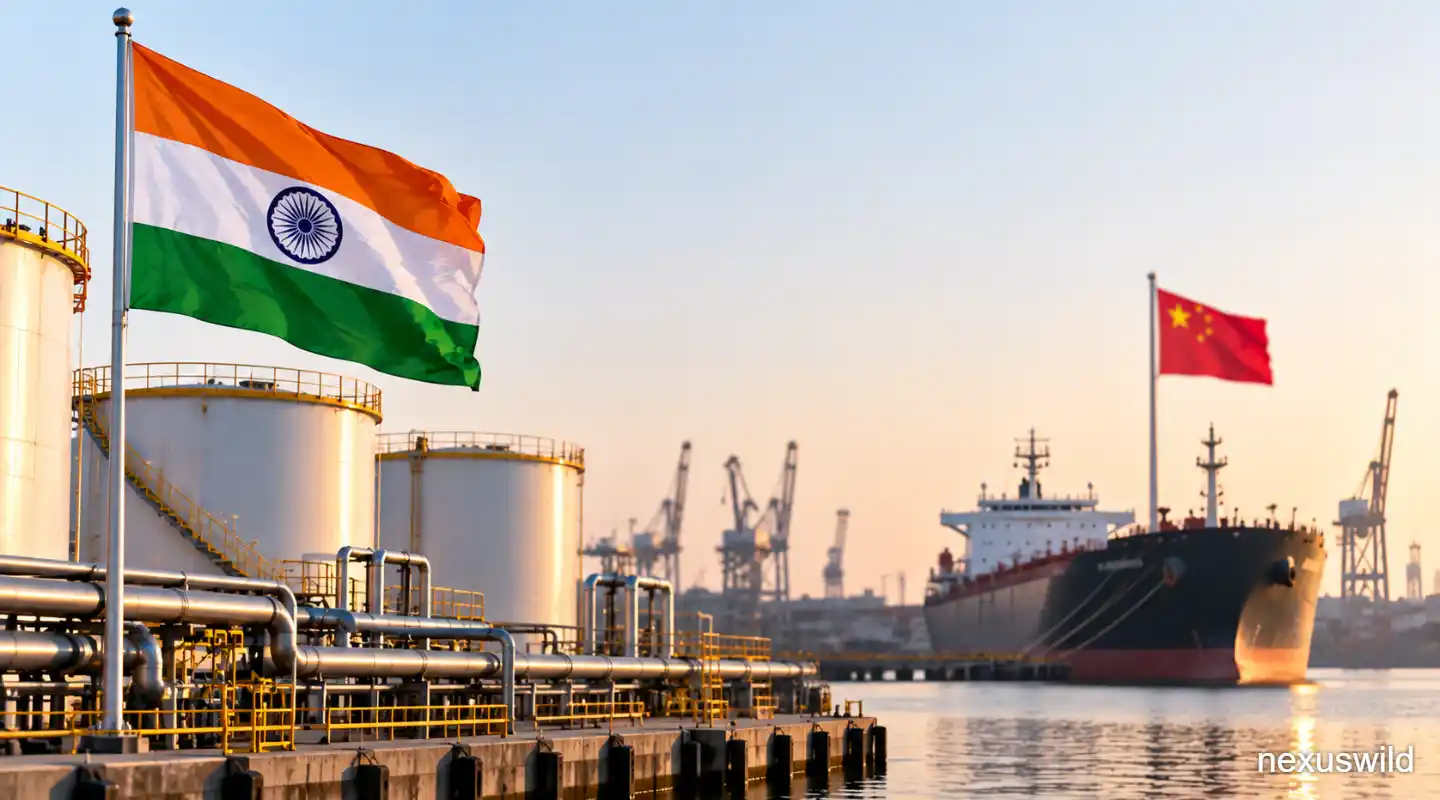

India could have an opportunity to increase refined-fuel exports to Asian markets after Chinese refiners suspended most October shipments outside Hong Kong and Macau, tightening regional supplies of diesel, gasoline and jet fuel.
The Chinese move was reported on October 1 after major refiners, including PetroChina and Zhejiang Petrochemical, halted or skipped scheduled export cargoes. Reuters reported that the restrictions were linked to Beijing’s focus on rebuilding domestic fuel inventories after months of supply pressure.
Chinese authorities have also been emphasizing domestic supply security. In September, the National Development and Reform Commission directed refiners including PetroChina, Sinopec and CNOOC to organize production and transportation to ensure stable domestic fuel supply as international oil prices remained elevated.
No public Chinese government notice located in the official sources reviewed here sets out a blanket October export ban in those exact terms. The suspension itself has been reported by Reuters based on people briefed on refinery instructions, while official Chinese measures continue to regulate refined-product exports through licenses and quotas.
China’s Export Pause Tightens Asian Fuel Supply
China is one of Asia’s largest refining centers and an important swing supplier when regional fuel markets tighten.
Reuters reported that October exports to destinations other than Hong Kong and Macau had been suspended, removing potential barrels from markets already dealing with disruption in the Middle East and damage to Russian refining infrastructure.
The impact varies by fuel.
Singapore was the largest recipient of Chinese gasoline during the first nine months of 2026, importing about 1.772 million metric tons, according to Kpler data cited by Reuters. Australia was the second-largest importer of Chinese jet fuel, while Singapore, Australia, Malaysia and Bangladesh were among the leading diesel buyers.
That does not mean all of those markets immediately face shortages. Existing inventories, imports from other refiners and contracted cargoes can offset some of the lost Chinese supply. But fewer export barrels from China reduce flexibility in the regional market.
Diesel, Gasoline and Jet Fuel Markets Could Feel the Effects
The first market reaction was visible in refining margins and near-term pricing.
Reuters reported that expectations for lower Chinese exports pushed Asian gasoline refining margins to more than $50 a barrel over Brent crude on October 1, while gasoil and jet-fuel markets also moved into tighter near-term pricing structures.
Jet fuel is particularly significant because kerosene makes up a large share of China’s refined-product exports. Hong Kong remains exempt from the current restrictions, but shipments to other regional buyers are affected.
For diesel, the wider concern is that China’s absence removes supply from a market already strained by geopolitical disruptions and refinery outages elsewhere.
These market movements show that traders expect a tighter supply balance. They do not establish how long China’s suspension will remain in place or how large the eventual volume shortfall will be.
India Has One of the World’s Largest Refining Systems
India is well placed structurally to respond because it has a large refining base and routinely produces more petroleum products than it consumes.
The Petroleum Planning and Analysis Cell, part of India’s Ministry of Petroleum and Natural Gas, lists installed refining capacity at 267.116 million metric tons per year as of April 1, 2026.
A separate government statement in May described India as the world’s fourth-largest refiner and said the country had 258.1 million tonnes per year of operational capacity across 22 refineries, with petroleum-product exports of 61.5 million tonnes in fiscal 2025-26.
The difference between those two capacity figures reflects timing and the inclusion of newer capacity in the later PPAC data.
In daily terms, Reuters estimated India’s refinery system at roughly 5.6 million barrels per day, making it substantially smaller than China’s but large enough to support significant export volumes after meeting domestic demand.
India Already Exports More Transport Fuel Than China
India is not a new entrant in the regional fuel trade.
Kpler data cited by Reuters showed that Indian exports of diesel, gasoline and jet fuel reached about 47 million metric tons in 2025, compared with 25.4 million tonnes from China.
That makes India an established exporter rather than merely a potential emergency supplier.
However, Indian shipments weakened substantially in 2026. Combined exports of those three fuels fell by roughly 23% during the first nine months of the year, or almost 8 million tonnes compared with the same period of 2025.
The decline reflected tighter crude availability following disruptions in the Middle East and higher Indian export duties designed to protect domestic supply.
Middle Eastern Crude Imports Rebounded in September
A major factor improving India’s export outlook is the recovery in crude imports from the Middle East.
India typically sourced about 45% to 50% of its crude oil from the region, with monthly Middle Eastern deliveries averaging around 9.4 million tonnes in 2025, according to Kpler data cited by Reuters.
Those flows fell below 6 million tonnes a month between March and July after the Iran conflict disrupted shipping and supplies.
By September, however, Middle Eastern crude deliveries to India had rebounded to more than 11.3 million tonnes, the highest monthly level since February.
That increase matters because refineries need reliable crude feedstock before they can raise output of exportable diesel, gasoline or aviation fuel.
The September number is confirmed shipping data from Kpler cited by Reuters. Whether those higher crude flows persist through October and beyond remains uncertain.
Lower Export Taxes Improve the Economics for Indian Refiners
Indian policy has also become somewhat more supportive of exports.
The government cut windfall taxes on diesel and aviation turbine fuel exports effective October 1. The diesel levy was reduced to ₹16 per litre from ₹20, while the ATF levy fell to ₹10.5 per litre from ₹15.
That followed an earlier September reduction in export duties on petrol, diesel and jet fuel.
Lower duties can improve the netback Indian refiners receive on overseas sales, making exports relatively more attractive when international refining margins are strong.
That does not mean refiners will automatically maximize exports. Indian authorities can adjust duties again, and domestic fuel availability remains a policy priority.
Why India Could Supply More Fuel to Asia
Several conditions now point in the same direction.
India has large refining capacity, established export infrastructure and a track record of supplying overseas markets. Crude imports from the Middle East improved sharply in September, while export taxes on diesel and jet fuel were reduced just as Chinese barrels became less available.
Reuters commentary identified Singapore and Australia as natural destinations for additional Indian fuel, with Indonesia, Vietnam and the Philippines also potentially seeking replacement barrels if Chinese supply remains constrained.
India’s largest fuel-export destinations in 2025 included the United Arab Emirates, Australia, Tanzania, Singapore and South Africa, according to Kpler data cited in the same analysis.
Those existing trading relationships could make it easier for Indian refiners to redirect incremental production toward markets facing tighter supply.
Refinery Operations Will Determine How Much India Can Export
Potential capacity is not the same as actual available supply.
Refinery maintenance, outages and operating rates can materially change export volumes from month to month. A country may have large nameplate refining capacity while having considerably less product available for sale if units are undergoing maintenance or experiencing operational problems.
Individual refiners also make commercial decisions based on their crude slate, product yields, contractual commitments and margins.
Private refiners such as Reliance Industries and Nayara Energy historically play an important role in Indian product exports, while public-sector refiners balance commercial opportunities with domestic supply obligations.
No official Indian announcement reviewed for this article sets a target for replacing Chinese October exports.
Domestic Demand Remains a Constraint
India has a large and growing domestic market for transport fuels.
That means refiners cannot treat all incremental production as exportable. Petrol, diesel, aviation fuel and other products must first be available in sufficient quantities for domestic consumers.
The Indian government emphasized earlier this year that its refining surplus was sufficient to meet domestic requirements, but it has also used export duties to discourage excessive overseas sales during periods of supply stress.
If domestic demand accelerates or local inventories tighten, more output could be retained inside India regardless of international prices.
Crude Availability Is Still Exposed to Middle East Risks
The September rebound in Middle Eastern crude imports improves the near-term position of Indian refiners, but supply risks have not disappeared.
Reuters reported that Middle Eastern crude exports recovered strongly in late September, even as shipping through and around the Strait of Hormuz continued to face security and logistical disruption.
Higher freight rates, insurance costs or another decline in crude flows could quickly reduce the attractiveness or feasibility of increasing Indian fuel exports.
India can buy crude from other regions, but longer voyages and different pricing can raise refinery costs.
Global Prices and Margins Will Shape Export Decisions
Refiners generally decide whether to export by comparing the value of selling products abroad with the economics of supplying their domestic market.
Current Asian refining margins have strengthened as fuel supplies have tightened. That can encourage refiners to operate harder and place more barrels into international markets, assuming crude is available.
But margins can move rapidly.
If China resumes exports, Middle Eastern refineries recover, global fuel demand weakens or crude prices rise faster than product prices, the incentive for Indian exports could diminish.
India’s role therefore depends on market conditions rather than on refining capacity alone.
China’s Pause May Be Temporary
There is also no confirmation that China intends to remain out of the export market beyond the current restriction period.
Reuters reported that refiners suspended October shipments pending further guidance and that future exports could resume if domestic inventories improve.
China has frequently adjusted refined-product export volumes according to domestic market conditions, quotas and energy-security priorities.
That makes the present opening for Indian exporters potentially significant but also temporary.
India Is Better Positioned, Not Guaranteed to Replace China
The strongest conclusion supported by current data is that India has more room than many competing refiners to respond to the Asian supply gap.
It has large refining capacity, substantial existing exports, improving access to Middle Eastern crude and lower export duties.
But describing India as a guaranteed replacement for China would go beyond the evidence.
Actual export volumes will depend on refinery operations, domestic consumption, crude imports, government policy, freight economics, refining margins and global fuel prices.
Even if India raises shipments, supplies from South Korea, Singapore, Taiwan, the Middle East and other refining centers will also influence how the market adjusts.
Conclusion
China’s decision to suspend most October refined-fuel exports outside Hong Kong and Macau has removed an important source of diesel, gasoline and jet fuel from the wider Asian market, increasing pressure on buyers that regularly rely on Chinese cargoes.
India is in a comparatively strong position to supply some of that demand. Its refining system has capacity of roughly 267 million tonnes per year, Middle Eastern crude imports recovered to more than 11.3 million tonnes in September, and recent cuts to fuel-export duties have improved the economics of overseas sales.
Those conditions create an opportunity, not a guaranteed outcome.
How much Indian fuel ultimately reaches Asian buyers will depend on refinery utilization, domestic consumption, crude availability, export regulations, shipping costs and international refining margins.
India could therefore become a more important marginal supplier while Chinese exports remain constrained, but the scale and duration of that role will be determined by market and operating conditions rather than by refining capacity alone.
Nexuswild welcomes factual corrections. Email contact@nexuswild.com with evidence and the article URL.