
Indonesia Stocks Slide as MSCI Downgrade Threat Raises Outflow Fears
Indonesia’s stock market faced pressure on October 19 when investors reacted to a proposal by global index provider MSCI to reclassify Indonesia from an emerging market to a standalone market. This announcement heightened worries about market transparency share ownership and the danger of foreign investment outflows.
The Jakarta Composite Index (JCI) dropped sharply for a trading day in a row hitting a low that has not been seen in about six years. The fall came after a plunge of around 11.6% on October 16 when the benchmark experienced its one‑day drop since the Asian financial crisis of 1998.
The sell‑off shows growing doubt about whether Indonesia can show improvement in how its stock market works. For investors the problem goes beyond short‑term share prices. MSCI’s classification shapes how global funds evaluate and decide where to put money.
Why MSCI Is Considering a Reclassification
MSCI announced on October 15 that it had started a consultation about moving Indonesia indexes from emerging‑market to standalone‑market status. The provider said that market participants kept raising concerns about hidden shareholding structures, suspected coordinated trading and the small evidence that announced reforms had led to improvements.
Indonesia has been part of MSCI’s emerging‑market classification for years. A shift to standalone status would be a setback for Indonesia’s standing in international investment benchmarks.
The difference matters because many investment funds use MSCI indexes to guide their portfolios. If Indonesia is removed from an index family benchmark‑tracking funds may need to change their holdings. Other managers could also rethink their exposure though active investors keep the choice in their hands.
MSCI has set April 30 2027 as the deadline for market participants to give feedback. It plans to announce its decision by June 30 2027. The proposed change has not yet taken effect.
Transparency and Free‑Float Concerns
At the heart of the dispute is whether investors can reliably find out who owns companies and how many shares are truly available for public trading.
Free float means shares that public investors can trade, of shares held by controlling shareholders or otherwise locked from normal market circulation. A small free float can make a stock less liquid and more likely to swing in price.
MSCI has cited worries about ownership, disclosure practices and suspected coordinated trading. It has also said that announced reforms must be carried out consistently with proof that they are making market conditions better.
Indonesian authorities have laid out measures that include detailed disclosures for shareholders holding more than 1% reporting on highly concentrated shareholdings and a roadmap toward a minimum free‑float requirement of 15%.
The challenge is to prove that these measures work across Indonesia’s market not on paper. MSCI has kept a freeze on some index‑related changes that involve securities while the review continues.
Foreign Investors and the Risk of Capital Outflows
The chance of reclassification has sparked worries that international funds might cut their Indonesia holdings. Reuters reported on October 19 that foreign investors had net sold about $4.88 billion of Indonesia stocks far in 2026 putting Indonesia on track for its biggest annual outflow in at least 16 years.
Potential selling pressure is not from passive funds that follow an index. Active managers may also re‑evaluate their allocations if they think market liquidity, governance or the ability to trade securities is getting worse.
However the size of any outflows is still unclear. The proposal does not force every investor to sell. The eventual impact will depend on MSCI’s decision, fund mandates and investor assessments of Indonesia’s reforms.
A long decline in participation could make it harder for companies to raise equity capital and could hurt trading liquidity. It may also reduce confidence in Indonesia assets if investors worry about overall financial‑market stability.
Pressure Spreads Beyond Equities
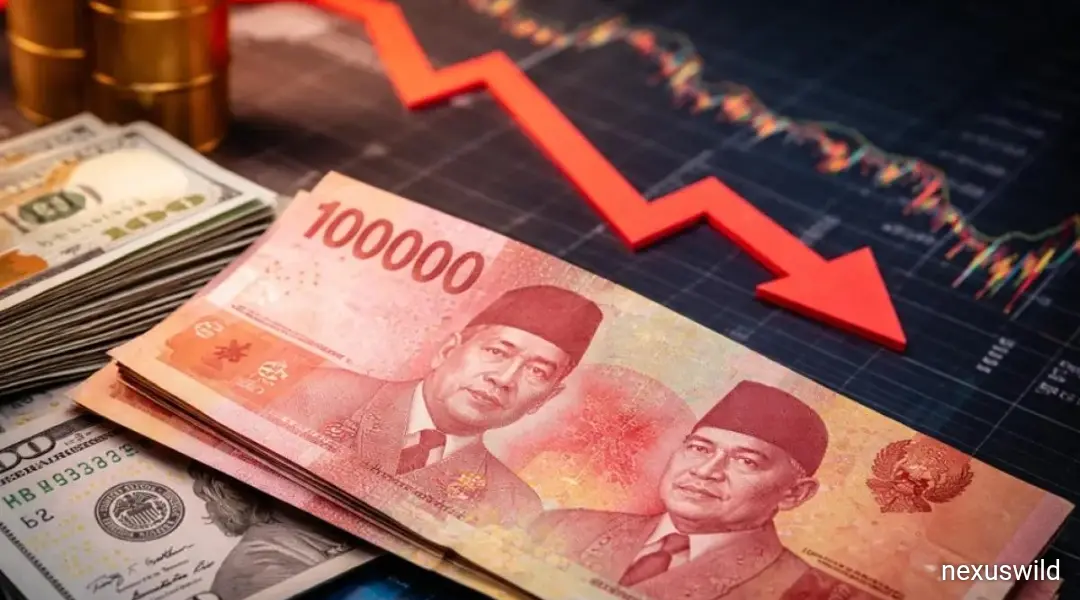
The market turmoil has also hit Indonesia’s currency and government bonds. Reuters reported that the rupiah fell to about 18,040 per US dollar on October 19 while the yield on Indonesia’s 10‑year government bond climbed to around 7.4%.
Higher bond yields show that investors are asking for returns to hold the debt. Yields can also shift in response, to interest rates inflation expectations and currency risks.
These developments add to the challenges policymakers face as they try to stabilise markets without hurting longer‑term reforms. The episode has also drawn attention to regulatory enforcement and the credibility of Indonesia’s market institutions.
What Happens Next?
The immediate focus is whether Indonesian regulators and the stock exchange can show progress in transparency, ownership disclosures and trading oversight.
MSCI’s consultation gives regulators and the stock exchange time to provide evidence before the final decision. Yet MSCI has made clear that announced reforms alone may not be enough: consistent implementation and measurable improvements will be vital. From my perspective the pressure on regulators is heavy.
For investors the next milestones are regulatory announcements, proof of stronger enforcement and updates during MSCI’s consultation process. I expect investors to watch these milestones closely. Any recovery in share prices will also depend on market conditions and whether confidence begins to return.
Indonesia’s market remains open. The proposed reclassification is not a final downgrade.. The episode has become a major test of Indonesia’s ability to keep international investor confidence by implementing credible and enforceable market reforms.
The outcome could affect not Indonesia’s position, in global investment indexes but also how international investors assess market transparency and governance across Southeast Asia.
Nexuswild welcomes factual corrections. Email contact@nexuswild.com with evidence and the article URL.