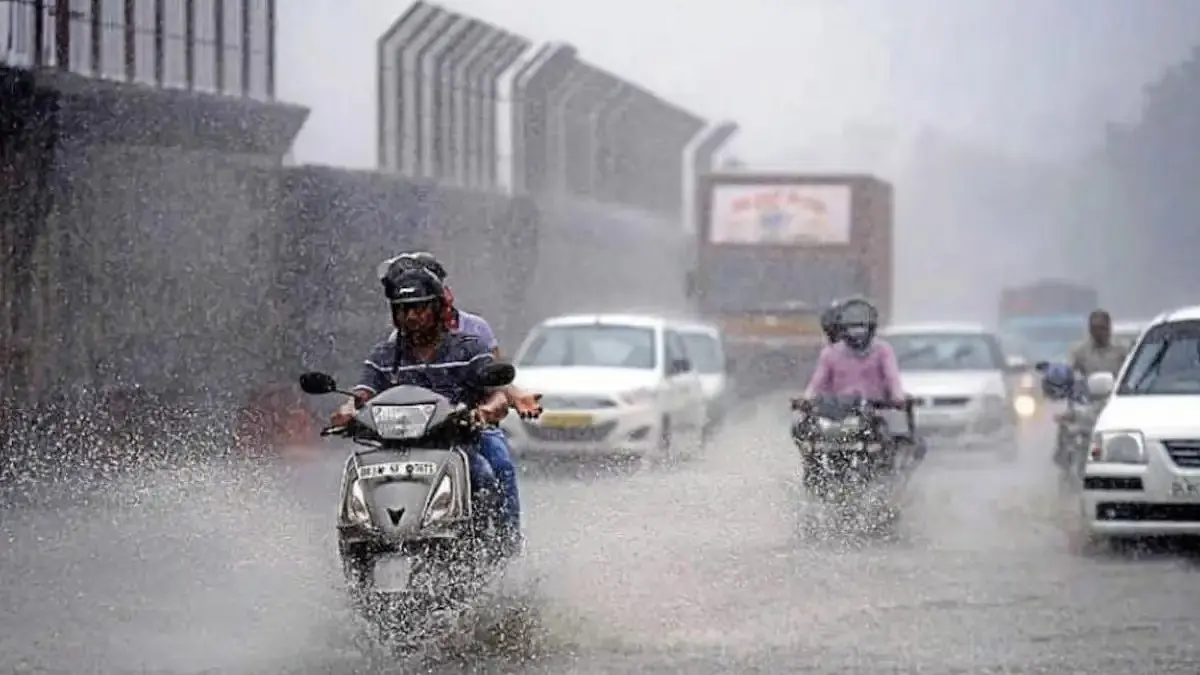
A pre-dawn landslide triggered by relentless monsoon rains claimed the lives of seven people and left seven others injured in Mumbai’s Ghatkopar area early Wednesday morning.
The collapse occurred at approximately 3:48 a.m. in the Ashok Nagar locality of Chirag Nagar, a densely populated hillside neighborhood in the city's eastern suburbs. As residents slept, a saturated section of the hillock gave way, sending massive boulders, loose soil, and a large uprooted peepal tree crashing down onto Gaushiya Chawl, burying two to three houses under heavy debris.
While preliminary reports early Wednesday morning indicated six fatalities and four injuries, emergency services confirmed by Wednesday afternoon that the toll had risen. Authorities have now verified that seven individuals were killed and seven others sustained injuries in the collapse. Rescue operations at the site have accounted for all individuals initially reported missing, and teams are meticulously clearing the remaining rubble to ensure no one else is trapped.
The Human Cost
The landslide devastated several families, most notably claiming the lives of a family of four who had reportedly moved to Mumbai from Jaunpur, Uttar Pradesh, just four days prior to the incident. Arif Halim Shaikh, 28, his wife Marjina, 27, and their two young children, four-year-old Mannat and two-year-old Aban, were all killed in their home.
Another victim, 27-year-old Viket alias Rahul Yadav, was identified as the primary earner for his family, helping his widowed mother meet their daily expenses. The other two deceased were identified as Sahil Husain Abdul Kadri, 19, and Mohammed Sayeed Ansari, 14.
All seven deceased individuals were declared brought dead at the civic-run Rajawadi Hospital in Ghatkopar. The seven injured residents were admitted to Rajawadi Hospital and the civic-run Bhabha Hospital in Kurla. Medical officials report that all the injured, including an 18-year-old with a head injury and a 14-year-old with a back injury, are currently in stable condition.
| Confirmed Fatalities | Age | Confirmed Injured | Age |
|---|---|---|---|
| Arif Halim Shaikh | 28 | Dilber Amnulla Khan | 38 |
| Marjina Arif Shaikh | 27 | Farana Dilber Khan | 28 |
| Viket alias Rahul Yadav | 27 | Naimuddhin Iqbal Khan | 28 |
| Sahil Husain Abdul Kadri | 19 | Shamin Muslim Khan | 26 |
| Mohammed Sayeed Ansari | 14 | Sohail Ansari | 18 |
| Mannat Arif Shaikh | 4 | Sajid Ansari | 16 |
| Aban Arif Shaikh | 2 | Mohamad Ansari | 14 |
A Logistical Nightmare for Rescue Teams
The initial response was led by local residents, who rushed to the site and managed to pull five to six people from the rubble before emergency services arrived. Shortly after, a multi-agency operation was launched, deploying 70 to 75 personnel from the Brihanmumbai Municipal Corporation (BMC), the Mumbai Fire Brigade, local police, and the National Disaster Response Force (NDRF), alongside 108 ambulance services.
The rescue effort faced severe geographical and logistical hurdles. The route into the Ashok Nagar settlement consists of extremely narrow, congested lanes, allowing only one rescue worker to pass through at a time. This tight access completely blocked the deployment of heavy earth-moving machinery, forcing emergency crews to clear thick mud, heavy boulders, and the massive tree trunk entirely by hand in the dark.
Anil Sandade, a local resident born in the area, noted the suddenness and severity of the collapse. "The boulders came falling from three separate sides, leading to some entrances into the locality completely getting blocked," he stated.
Official Response and Evacuations
Mumbai Mayor Ritu Tawde and Dr. Avinash Dhakne, the Additional Municipal Commissioner for the Eastern Suburbs, visited the disaster site early Wednesday to supervise the ongoing operations and meet with affected families. Tawde announced an immediate financial relief package, providing Rs 4 lakh to the next of kin for each deceased victim and Rs 50,000 to cover the medical treatment of each injured person.
Recognizing the acute risk of further soil erosion, the BMC and local police evacuated approximately 50 neighboring houses situated in the immediate danger zone. The displaced families have been relocated to temporary municipal accommodations or the homes of relatives.
According to Anil Jadhav, the assistant municipal commissioner of L ward, the affected chawl sits on collector land. He noted that only structures built in the area prior to 2011 possess legal protection, while the remaining dwellings are considered unauthorized. The Ghatkopar police have registered an Accidental Death Report (ADR) and are facilitating permissions for the Shaikh family's relatives to transport the bodies back to their native village in Uttar Pradesh.
The Role of Extreme Weather and Systemic Risks
The immediate catalyst for the landslide was a sustained period of heavy rainfall that battered Mumbai over the preceding 48 hours. Officials suspect that the continuous precipitation seeped deep into the hillside, saturating the soil, severely weakening the foundational rock, and destabilizing the root system of the large peepal tree.
The disaster unfolded against a backdrop of severe monsoon weather disrupting the broader Mumbai metropolitan area. The India Meteorological Department (IMD) has forecast continued active monsoon conditions across western India and issued intense rain alerts for the city. The torrential downpours have routinely inundated roads and railway lines, caused widespread waterlogging, and forced airlines to issue advisories due to disrupted air traffic.
Wednesday’s tragedy spotlights the persistent vulnerability of Mumbai's densely packed hillside settlements. Experts have consistently warned that rapid urbanization, informal construction on fragile slopes, and inadequate drainage networks have left the city increasingly susceptible to deadly monsoon-related disasters, a risk amplified by climate change.
Civic data underscores the severity of this threat. Over the past six years alone, Mumbai has recorded 95 landslide incidents, resulting in 39 deaths and 28 injuries prior to Wednesday’s collapse. While BMC authorities stated that residents of the Ashok Nagar hillock had been previously warned and advised to move to safer areas during the monsoon, the lack of viable alternative housing often leaves vulnerable populations with nowhere else to go. Authorities continue to urge residents in landslide-prone areas to remain on high alert as the heavy rains persist.
Further reading and useful links
Reader questions
Frequently asked questions
What caused the landslide in Ghatkopar, Mumbai?
The landslide was triggered by continuous heavy monsoon rains that saturated the hillside, weakening the rock foundation and uprooting a large peepal tree that crashed onto houses.
How many casualties were reported in the Ghatkopar landslide?
Officials confirmed seven deaths and seven injuries in the incident, with all missing persons accounted for following rescue operations.
What relief compensation was announced for the victims?
Mumbai Mayor Ritu Tawde announced a financial relief package of Rs 4 lakh to the next of kin for each deceased person and Rs 50,000 for medical expenses for each injured individual.
Nexuswild welcomes factual corrections. Email contact@nexuswild.com with evidence and the article URL.