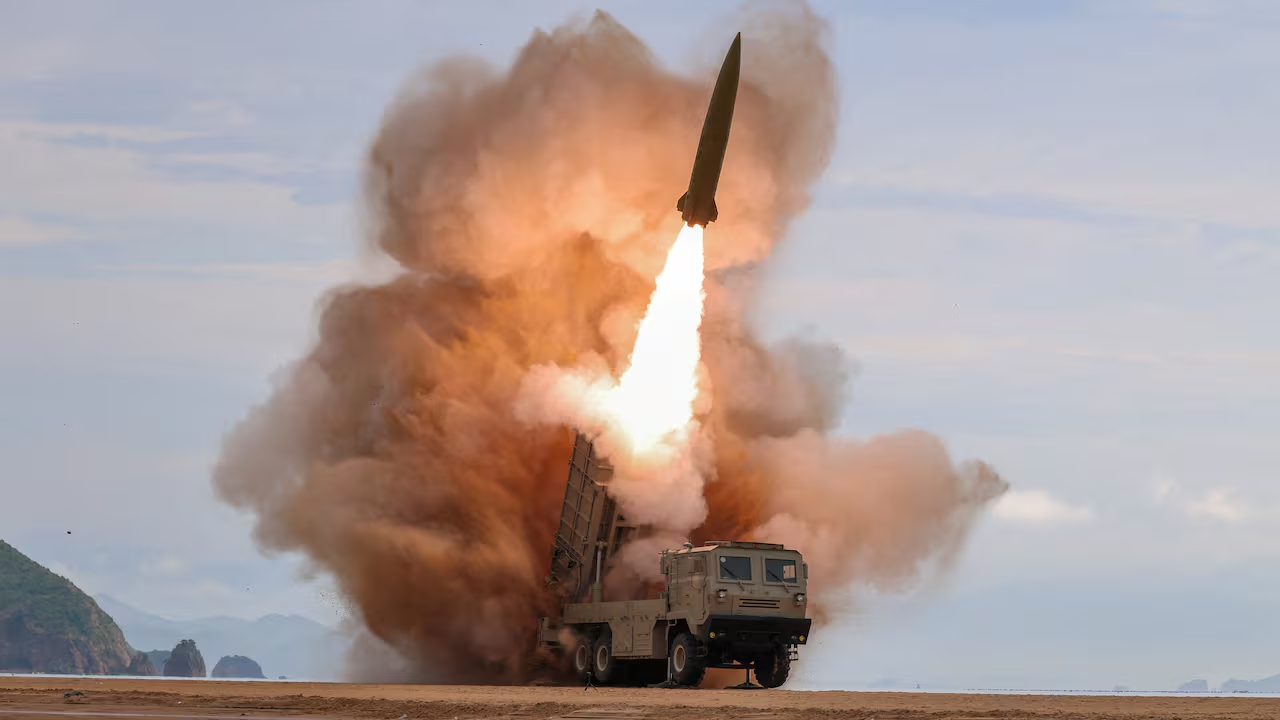

North Korea launched two short-range ballistic missiles from its eastern coast on Sunday, September 20, 2026, with the second launch coming just under three hours after the first, South Korea's Ministry of National Defense said. The launches, both fired from the Wonsan area toward the East Sea, also known as the Sea of Japan, marked North Korea's second round of weapons tests in roughly a week and came days after a senior North Korean official accused the United States of driving tensions on the Korean Peninsula through military exercises.
This article sets out what has been confirmed about the two launches by South Korean and Japanese authorities, distinguishes those confirmed details from information that remains uncertain, and places the tests within the broader security and diplomatic context building on the Korean Peninsula in recent weeks.
Launch Details
According to South Korea's Joint Chiefs of Staff, the first missile was detected launching from the Wonsan area at approximately 3 p.m. local time on September 20. South Korean authorities identified it as a ballistic missile, an assessment Japan's Ministry of Defense also reached independently. The missile flew approximately 450 kilometers, or about 280 miles, before coming down in the sea, and South Korea's military said it is presumed to belong to the Hwasong-11 series, a family of short-range ballistic missiles North Korea has tested repeatedly in recent years.
Approximately three hours later, at around 5:50 p.m. local time, North Korea launched a second short-range ballistic missile, also from the Wonsan area. South Korea's military said this second missile flew more than 600 kilometers, or roughly 373 miles, further than the first, before also landing in the sea. Japan's public broadcaster NHK reported that the projectile came down outside Japan's exclusive economic zone, and Japan's Defense Ministry separately confirmed that the missile did not enter Japanese territorial waters.
South Korean and United States intelligence authorities said they had been tracking and sharing information related to the launches from their initial stages, according to South Korea's military, though the full extent of that coordination was not detailed in statements reviewed for this report.
It is worth being precise about what remains provisional in these assessments. Initial reporting on the second launch described it as still being confirmed as a ballistic missile at the time some early accounts were published, meaning that in the hours immediately following the launches, South Korean officials were still finalizing their classification of the second projectile even as the first had already been confirmed as a ballistic missile by both South Korean and Japanese authorities. Neither South Korea nor Japan has publicly disclosed the missiles' peak altitude or speed in the statements reviewed for this report, and this article does not estimate those figures beyond what officials have confirmed.
What Remains Uncertain
While the broad facts of the two launches, their approximate times, general launch area, and approximate flight distances, have been confirmed by South Korea's Joint Chiefs of Staff and corroborated by Japan's Ministry of Defense, several details remain either unconfirmed or were not addressed in the statements available for this report. These include the precise type of missile fired in the second launch beyond its classification as a short-range ballistic missile, the exact trajectory and apogee of either missile, and whether the two launches were connected to a specific unit or exercise within North Korea's military rather than being independent test events. Readers should treat any characterization of the missiles' specific military purpose or operational readiness beyond what officials have stated as unconfirmed.
Official Responses
South Korea's presidential office convened an emergency meeting of its National Security Council following the launches to discuss the situation. South Korea's National Security Council denounced the launches and called on North Korea to immediately halt all ballistic missile activity, stating that such launches violate United Nations Security Council resolutions, which prohibit North Korea from conducting ballistic missile tests. South Korea's military said it maintains readiness to repel any provocations from the North under what it described as a solid alliance with the United States.
Japan lodged a formal protest over the launches through diplomatic channels in Beijing, a route Japan has used in the past given the absence of direct diplomatic relations between Tokyo and Pyongyang. Japan's Ministry of Defense reiterated that the missiles' actions threaten regional peace and security, consistent with the ministry's standard characterization of North Korean ballistic missile activity.
As of this report, no specific, dated statement from the United States Indo-Pacific Command addressing this particular September 20 launch had been identified in the sources reviewed. In past instances of North Korean missile tests, the U.S. Indo-Pacific Command has typically issued statements noting that it is monitoring the situation and consulting with South Korea and Japan, while assessing whether the launch poses an immediate threat to U.S. personnel, territory or allies. Readers should not assume that pattern was necessarily repeated for this specific launch without a directly confirmed statement, and this article does not attribute a specific comment to U.S. Indo-Pacific Command for this event. Similarly, no specific United Nations statement responding directly to the September 20 launches was identified in the sources reviewed, though South Korea's own statement invoked existing UN Security Council resolutions that North Korea's ballistic missile program is understood to violate.
Regional Security Context
Sunday's launches followed a North Korean missile test on September 12, 2026, meaning the September 20 launches represented North Korea's second round of weapons testing within approximately a week. This pattern of closely spaced tests is consistent with a broader increase in North Korean weapons activity observed at various points during 2026.
The launches also came in the immediate aftermath of pointed public statements from Kim Yo Jong, the influential sister of North Korean leader Kim Jong Un. On Friday, September 18, 2026, two days before the missile launches, Kim Yo Jong said in a statement carried by North Korea's state media outlet KCNA that U.S.-led military drills were the main source of what she called "ever-worsening" tensions on the Korean Peninsula, and said there would be no change in North Korea's course of strengthening its nuclear deterrent. She specifically referenced the Pacific Vanguard 2026 naval exercise near Guam, describing it as another threatening U.S.-led "war game" and part of a broader effort by Washington to expand military cooperation with regional allies including South Korea and Japan. She said the situation demonstrated the need for North Korea to take response measures that were "proportional or more offensive in nature," and warned that the country's armed forces would "mobilize all means available" if North Korea's security or national interests were violated.
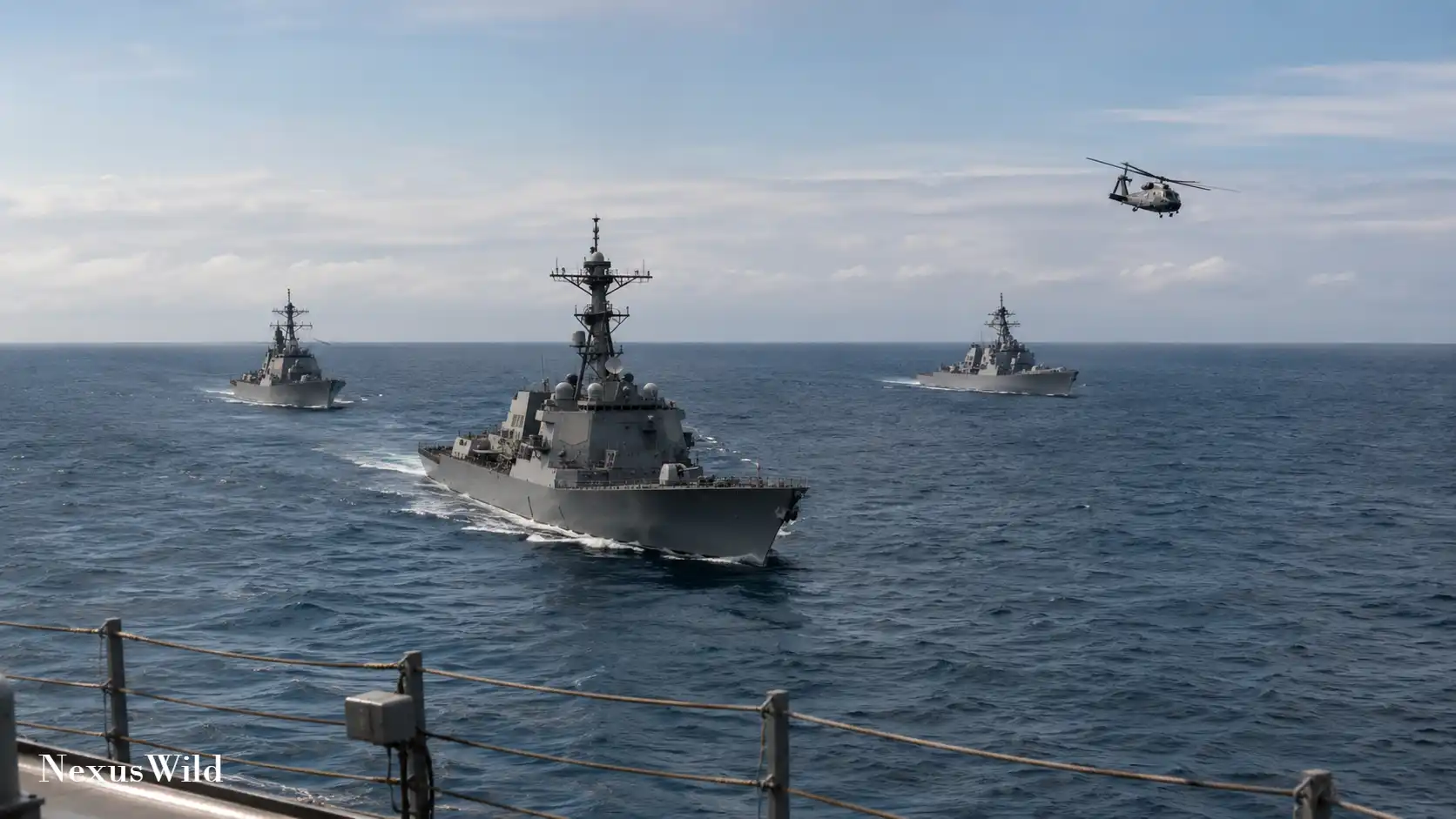
According to Japan's Maritime Self-Defense Force, the Pacific Vanguard 2026 exercise Kim Yo Jong referenced was a multilateral naval exercise led by the United States Navy, involving the naval forces of South Korea, Australia, Canada, New Zealand and Japan, conducted in the vicinity of Guam from August 29 to September 10, 2026.
Kim Yo Jong's September 18 statement followed a separate statement she issued the day before, on Thursday, September 17, in which she rejected renewed international calls for North Korea's denuclearization made at an International Atomic Energy Agency conference, reiterating Pyongyang's position that its status as a nuclear-armed state is irreversible.
The broader diplomatic backdrop to these developments includes a decision by U.S. President Donald Trump to scale back a joint military exercise with South Korea the previous month, in what was widely described at the time as an apparent effort to help revive diplomatic engagement with North Korean leader Kim Jong Un. Despite that gesture, North Korea has continued its weapons testing activity, and separate reporting indicates Pyongyang has rejected renewed overtures for diplomacy with Washington in the period surrounding these launches. North Korea has consistently characterized its own missile and weapons testing as a legitimate exercise of its right to self-defense, framing joint military exercises conducted by the United States and South Korea as rehearsals for invasion, a characterization that officials in Washington and Seoul have rejected, describing their joint exercises as defensive in nature.
International Reaction
Beyond the immediate responses from South Korea and Japan described above, broader international reaction specifically addressing the September 20 launches was limited in the sources reviewed for this report. South Korea's National Security Council's statement, invoking violations of United Nations Security Council resolutions, represents the clearest official reference to the international legal dimension of the launches identified in available reporting. This article does not speculate about whether the United Nations Security Council will convene a formal session in response to these specific launches, as no such announcement had been confirmed as of this report.
Expert Analysis and Context
While specific analyst commentary on the September 20 launches directly was limited in the sources reviewed, the broader pattern these tests fit into offers relevant context, drawn from confirmed statements and reporting rather than speculative interpretation. North Korea's decision to conduct a second round of missile tests within roughly a week of its previous test, and to do so within days of Kim Yo Jong's public statements linking North Korea's weapons posture directly to ongoing U.S.-led military exercises, is consistent with a pattern in which North Korea has, in past years, timed weapons demonstrations to coincide with or follow joint military exercises involving the United States and its regional allies. This pattern reflects North Korea's stated position that such exercises constitute a direct security threat requiring a response, a position North Korea has repeated consistently across multiple public statements from its leadership over an extended period.
At the same time, it is worth noting the broader diplomatic context in which these launches occurred, given the Trump administration's decision to scale back joint military exercises with South Korea the previous month specifically to help create space for renewed diplomatic engagement with Pyongyang. The fact that North Korea proceeded with weapons testing shortly afterward illustrates the continued gap between gestures aimed at reducing tensions and North Korea's own weapons development and testing activities, though this article does not draw conclusions about North Korea's broader intentions beyond what its own officials have publicly stated.
Potential Implications
The September 20 launches add to an ongoing pattern of North Korean weapons testing activity during 2026, occurring against a backdrop of continued diplomatic uncertainty regarding prospects for renewed dialogue between Washington and Pyongyang. For South Korea and Japan, the launches reinforce existing security concerns that have driven continued close coordination between the two countries and the United States on missile detection, tracking and response planning, as reflected in South Korea's confirmation that it was sharing launch-related intelligence with U.S. counterparts from the earliest stages of the September 20 tests.
This article does not predict how North Korea's weapons testing activity or the broader diplomatic situation on the Korean Peninsula will develop in the coming weeks. What can be said based on confirmed information is that the September 20 launches represent a continuation of North Korea's established pattern of ballistic missile testing, conducted in the context of stated North Korean objections to ongoing U.S.-led military exercises in the region, and that they prompted formal diplomatic protests and security consultations from both South Korea and Japan.
Conclusion
North Korea fired two short-range ballistic missiles from its eastern Wonsan area on September 20, 2026, within just under three hours of each other, with the first flying approximately 450 kilometers and the second more than 600 kilometers before both landed in the sea. South Korea's Joint Chiefs of Staff and Japan's Ministry of Defense both confirmed the launches and classified the projectiles as ballistic missiles, though neither government publicly disclosed further technical details such as altitude or speed in the statements reviewed for this report. The tests followed a North Korean missile launch on September 12 and came two days after North Korean official Kim Yo Jong publicly blamed U.S.-led military exercises, specifically the Pacific Vanguard 2026 naval exercise near Guam, for worsening tensions on the Korean Peninsula. South Korea's National Security Council convened an emergency meeting in response and called on North Korea to halt further ballistic missile activity, while Japan lodged a formal protest through diplomatic channels in Beijing. The launches occurred despite a recent decision by the United States to scale back a joint military exercise with South Korea in an apparent effort to encourage renewed diplomatic engagement with North Korea, underscoring the continued gap between that diplomatic gesture and North Korea's ongoing weapons testing activity.
Further reading and useful links
Reader questions
Frequently asked questions
What missiles did North Korea launch on September 20, 2026?
North Korea launched two short-range ballistic missiles from its eastern Wonsan area. The first flew approximately 450 kilometers, presumed to be part of the Hwasong-11 series, and the second flew over 600 kilometers before landing in the sea.
How did South Korea and Japan respond to the launches?
South Korea convened an emergency National Security Council meeting condemning the launches as violations of UN Security Council resolutions, while Japan lodged a formal diplomatic protest through Beijing.
What preceded North Korea's missile tests?
The tests came two days after Kim Yo Jong publicly criticized U.S.-led military drills, including the Pacific Vanguard 2026 exercise near Guam, warning of proportional or offensive responses.
Nexuswild welcomes factual corrections. Email [email protected] with evidence and the article URL.