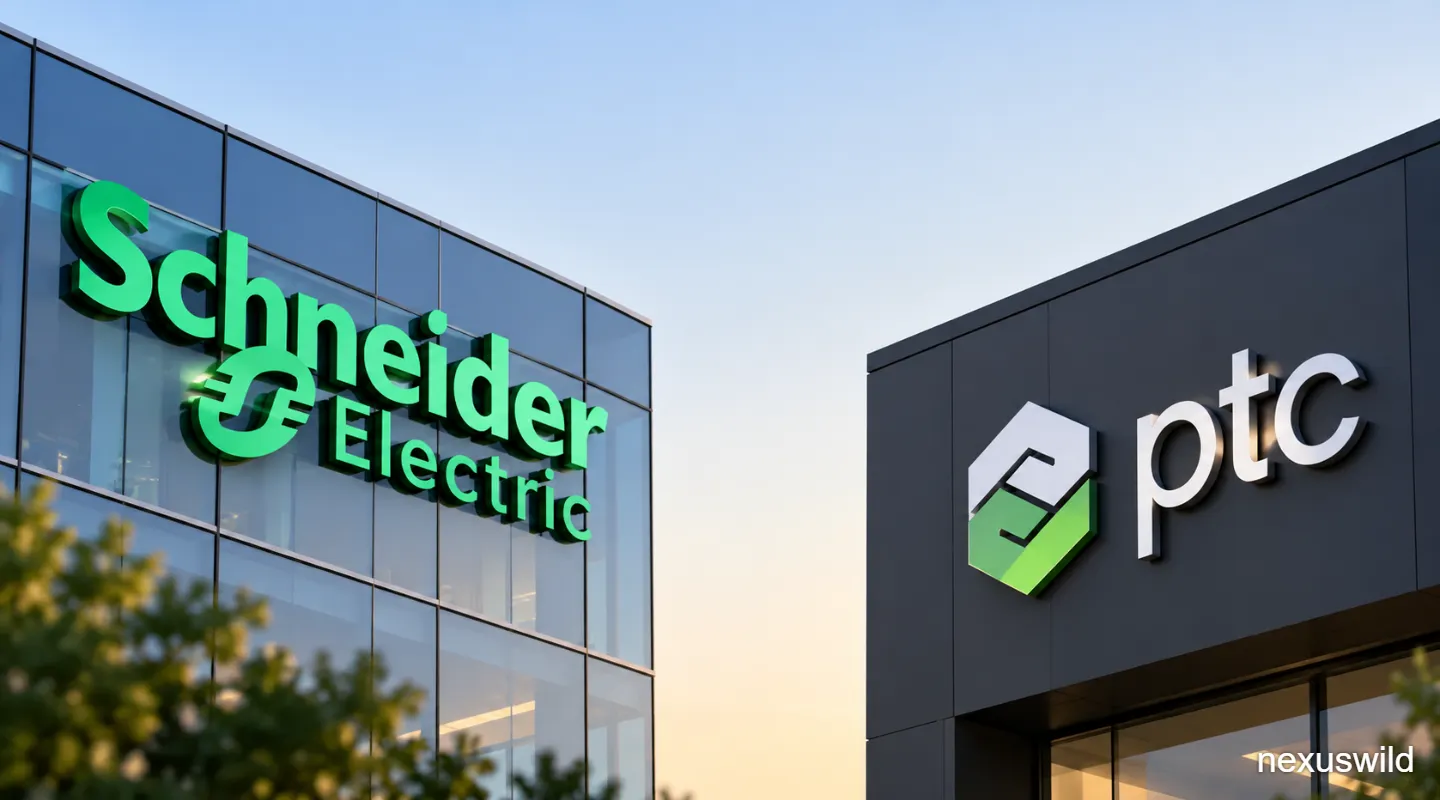

Schneider Electric has agreed to acquire U.S. industrial software company PTC in an all-cash transaction valuing PTC’s equity at approximately $22.6 billion, marking the French group’s largest acquisition and a major expansion of its software business.
Under the definitive merger agreement, PTC shareholders would receive $205 in cash for each share they own. The offer represents a 42.3% premium to PTC’s closing share price immediately before the transaction was announced and a 46.1% premium to its 30-trading-day volume-weighted average price. The deal implies an enterprise value of about $23.7 billion.
The companies announced the agreement on October 5, 2026, after signing the merger agreement on October 4. Both boards unanimously approved the transaction. PTC’s board is recommending that shareholders vote in favor of the deal.
Closing is anticipated by the third quarter of 2027, although that timetable remains conditional on shareholder approval, antitrust reviews and other regulatory clearances.
Schneider Offers $205 a Share in Cash
The transaction is structured as an all-cash acquisition.
PTC shareholders will receive $205 per share if the merger closes under its agreed terms. That values 100% of PTC’s equity at roughly $22.6 billion, while assumed debt and other balance-sheet items bring the implied enterprise value to $23.7 billion.
The 42.3% premium is measured against PTC’s last closing price before the announcement. Reuters reported that PTC had closed at $144.03 before the offer was disclosed.
The equity value and enterprise value should not be treated as interchangeable. The $22.6 billion figure refers to the value attributed to PTC’s shares, while the $23.7 billion figure reflects the broader enterprise valuation used in the transaction.
Deal Will Be Financed With Equity and New Debt
Schneider Electric plans to finance the approximately €22 billion cash consideration through a combination of new equity and debt.
The company said it expects to raise approximately €5 billion to €6 billion through an equity issuance and another €16 billion to €17 billion through new debt.
The equity portion is expected to take the form of an accelerated bookbuild offering under existing authorization granted by Schneider Electric shareholders. The debt financing is expected to be issued across several currencies.
Until those permanent financing steps are completed, the cash consideration is backed by a fully committed bridge facility from Morgan Stanley and Société Générale.
Schneider has said it expects to retain an investment-grade credit profile in the Category A range, although that expectation remains subject to formal decisions by credit-rating agencies.
PTC Brings Product Design and Lifecycle Software
PTC is a Boston-based industrial software company focused on technologies used to design, engineer, manage and service complex manufactured products.
Its portfolio includes computer-aided design, product lifecycle management, application lifecycle management and service lifecycle management software. Major products include Creo, Windchill, Onshape, Arena, Codebeamer and ServiceMax.
PTC says its software is used across industries including industrial equipment, aerospace and defense, automotive, electronics and medical technology.
The company's tools allow manufacturers to create digital product designs, manage engineering information, track product configurations and requirements, and connect product data from initial development through manufacturing and after-sales service.
The companies said PTC serves more than 30,000 customers globally.
Why Schneider Electric Wants PTC
Schneider Electric’s stated strategic rationale is to extend its software capabilities further into the product-development stage of industrial operations.
Schneider already has a large presence in energy management, industrial automation and operational software. PTC brings software used earlier in the lifecycle, particularly in product design, engineering and product-data management.
The companies argue that combining those capabilities would connect engineering information with operating, process and energy data. Schneider describes that approach as extending its software platform from the design and build stages through operation and maintenance.
That is the companies’ expected strategic benefit. Whether integration produces the commercial gains Schneider projects will depend on execution after the transaction closes.
Acquisition Would Expand Schneider’s Software Business
Schneider estimates that PTC would significantly increase the weight of software and services inside the group.
On a pro forma basis, including PTC and Schneider’s separately proposed Cognite acquisition, the company says Software & Services would account for approximately 24% of group revenue. The combined software organization would have more than 15,000 employees and address more than 50,000 software customers, according to Schneider’s transaction presentation.
Schneider also estimates that PTC would expand its addressable market in industrial software by roughly three times, particularly in discrete and hybrid manufacturing.
Those figures are management estimates prepared to explain the transaction. They are not independently realized results.
PTC Generated $2.74 Billion in Fiscal 2025 Revenue
PTC reported $2.74 billion in total revenue for the fiscal year ended September 30, 2025, according to its annual report filed with the U.S. Securities and Exchange Commission.
Of that amount, approximately $2.63 billion came from software revenue, including license revenue and support and cloud services.
Schneider’s transaction materials present PTC on a calendar-year basis and estimate approximately €2.4 billion in 2025 revenue after excluding revenue associated with ThingWorx and Kepware, which were subsequently divested. Schneider also cites an adjusted EBITA margin of roughly 40% using its own transaction methodology.
The two sets of figures use different reporting periods, currencies and adjustments, so they should not be directly compared without those qualifications.
Schneider Projects Cost and Revenue Synergies
Schneider expects the transaction to produce approximately €250 million in annual cost synergies by the third year after completion.
It also forecasts about €800 million in revenue synergies, primarily from cross-selling, broader geographic reach, expanded customer access and joint product development.
The company further expects the deal to be low-single-digit accretive to adjusted earnings per share before purchase-price-accounting effects in the first full year of consolidation, rising to mid-to-high-single-digit accretion after full synergies are achieved.
Those figures are forward-looking estimates from Schneider Electric. They are not guaranteed savings, revenue or earnings outcomes.
Industrial AI Is Part of the Strategic Case
Schneider is also positioning the acquisition around the growing use of artificial intelligence in industrial environments.
The company argues that AI systems used in factories, engineering and infrastructure require reliable, contextualized data. PTC supplies product and engineering information, while Schneider already handles large volumes of operational, process and energy data.
Schneider says bringing those data sets together could create what it calls a more complete industrial AI data foundation, linking information about how products are designed with data describing how factories, machines and energy systems operate.
That is Schneider’s strategic thesis rather than proof that the acquisition will automatically generate superior AI products or financial returns.
PTC has also been incorporating AI into its own software portfolio. Its regulatory disclosures acknowledge both the potential opportunity and the risk that customer adoption of AI capabilities could be slower than expected.
Shareholder Approval Is Still Required
The acquisition is not yet complete.
PTC shareholders must approve the merger agreement at a special meeting. The transaction requires support from holders of at least a majority of PTC’s outstanding shares.
PTC’s board has unanimously approved the deal and resolved to recommend that shareholders vote in favor.
Schneider Electric does not need a separate shareholder vote for the transaction under the structure disclosed in the merger documents. Its merger subsidiary will combine with PTC, after which PTC would survive as a wholly owned Schneider Electric subsidiary.
U.S. and International Regulatory Reviews Are Required
The agreement is also subject to several regulatory processes.
The merger documents require filings under the U.S. Hart-Scott-Rodino Antitrust Improvements Act, along with applicable foreign competition laws and foreign-investment regimes.
Because Schneider Electric is a French company acquiring a U.S. business, the parties also agreed to submit the transaction to the Committee on Foreign Investment in the United States, or CFIUS.
The agreement additionally refers to U.S. defense-security requirements, including notification to the Defense Counterintelligence and Security Agency where applicable.
The deal cannot close until the required waiting periods expire or applicable approvals and clearances are obtained.
Closing Target Is Q3 2027, Not a Guaranteed Date
Schneider and PTC say they anticipate completing the transaction by the third quarter of 2027.
That target assumes the shareholder vote, antitrust process, foreign-investment reviews and other customary closing requirements proceed as expected.
The companies specifically caution in their regulatory disclosures that the transaction could be delayed or fail to close if necessary approvals are not obtained or other closing conditions are not satisfied.
The Q3 2027 date should therefore be described as an anticipated closing period, not a fixed completion date.
Market Reaction Highlights Valuation Debate
The announcement produced sharply different initial reactions in the two companies’ shares.
PTC shares surged following the disclosure of the $205 offer, reflecting the substantial premium embedded in the transaction. Schneider Electric shares fell in European trading as investors assessed the purchase price, new borrowing and integration requirements.
Reuters reported that the transaction is Schneider Electric’s largest acquisition to date and extends a broader strategy of increasing its exposure to industrial software and data-driven services.
Some analysts have questioned the valuation and execution risk associated with another large software transaction, while others have pointed to the strategic fit between PTC’s product-engineering software and Schneider’s existing automation and energy-management businesses.
Those assessments are market interpretations, not confirmed outcomes of the acquisition.
Conclusion
Schneider Electric’s agreement to acquire PTC would give the French industrial technology group a substantially larger position in product design, engineering software and lifecycle data management.
The confirmed transaction terms call for $205 per PTC share in cash, valuing PTC’s equity at approximately $22.6 billion and its enterprise value at roughly $23.7 billion. The offer represents a 42.3% premium to PTC’s last closing share price before the announcement.
Schneider plans to fund the transaction with approximately €5 billion to €6 billion of new equity and €16 billion to €17 billion of new debt, backed initially by a committed bridge facility.
Management expects PTC to strengthen Schneider’s industrial-software portfolio by adding product design, engineering and lifecycle-management capabilities to its existing energy, automation and operational software businesses.
Those strategic and financial benefits remain projections. Completion itself is still subject to approval from PTC shareholders and regulatory authorities in the United States and other jurisdictions.
If those conditions are satisfied, Schneider and PTC currently expect the acquisition to close by Q3 2027.
Nexuswild welcomes factual corrections. Email contact@nexuswild.com with evidence and the article URL.