
The search for a missing person is often characterized by a frantic initial response, followed by a gradual and agonizing loss of public momentum. As days turn into weeks, and weeks into years, traditional search methods lose their efficacy. Posters pinned to municipal bulletin boards fade in the sun, flyers handed out at transit stations are quickly discarded, and public attention inevitably shifts to more recent news cycles. In South Korea, this phenomenon has left hundreds of families in a state of indefinite suspension, searching for loved ones who have been missing for over a decade. However, an innovative public safety initiative has fundamentally altered the methodology of these prolonged searches by tapping into one of the most ubiquitous elements of modern consumer life: the e-commerce delivery box.
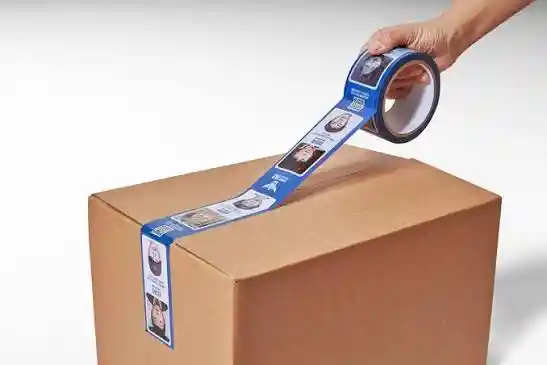
In a highly coordinated effort to keep cold cases in the public consciousness, South Korean authorities and corporate partners launched a campaign that replaces standard brown packaging tape with custom-printed tape featuring the profiles of long-term missing children. Dubbed "Hope Tape," the initiative transforms everyday parcels into mobile, high-visibility missing-person flyers that arrive directly on the doorsteps of millions of citizens.
By integrating artificial intelligence (AI) for age progression, mobile application technology through quick response (QR) codes, and the sheer logistical volume of national courier services, the campaign represents a paradigm shift in public safety communications. This comprehensive report examines the mechanics of the delivery-box initiative, the organizations driving its implementation, the technological integrations that make it actionable, and its broader implications for missing-person searches globally.
The Crisis of Long-Term Missing Persons in South Korea
To understand the necessity and impact of the delivery-box initiative, it is essential to contextualize the scale of the missing persons crisis in South Korea. While the vast majority of missing children and adults are located within the first 48 hours of their disappearance, a small percentage of cases remain unsolved, transitioning into long-term missing status.
According to data released by the Korean National Police Agency (KNPA) around the inception of this campaign, there were 661 children in South Korea who had been missing for over a year. More distressingly, 638 of these individuals had been missing for more than five years, with many cases remaining unsolved for decades.
The logistical reality of modern law enforcement dictates that active search operations cannot be maintained indefinitely at the same intensity as the first week of a disappearance. Police departments face systemic challenges, including limited personnel, strict budget constraints, and the constant influx of new, urgent cases. Consequently, the heavy burden of keeping a long-term search alive almost entirely falls upon the missing person’s parents and immediate family members. These families frequently exhaust their life savings printing conventional flyers, traveling across the country to follow up on unverified tips, and attempting to keep local media interested in their tragedy.
Traditional physical media, such as paper flyers and street banners, suffer from what marketing professionals call "banner blindness." Citizens become desensitized to static imagery in public spaces, meaning that a poster taped to a subway station wall often blends into the background of a daily commute. Recognizing that the conventional methods of seeking public assistance were no longer yielding actionable results, South Korean authorities realized the critical need for a disruptive medium - one that could capture undivided attention in a private, highly engaged setting.
How the Delivery-Box Initiative Works
The operational mechanism of the Hope Tape initiative is a masterclass in utilizing existing logistics infrastructure to deliver a public service message without disrupting commercial efficiency. The concept is straightforward: replace the unbranded, generic packaging tape used to seal outbound e-commerce parcels with a specially designed, high-information tape that serves as a missing person alert.
The tape itself is white, providing a high-contrast background for the vital information printed upon it in clear, legible typography. For the initial rollout of the campaign, the tape featured the detailed profiles of 28 specific children who had been missing for a long time.
Each profile printed on a segment of the Hope Tape contains several crucial data points designed to maximize the chances of recognition:
- The Original Photograph: An image of the child taken around the time of their original disappearance.
- Age-Progressed Imagery: Because many of the featured children went missing years or even decades ago, searching for the face in the original photograph is often futile. To solve this, the tape prominently features an AI-generated age-progressed sketch, predicting what the individual might look like in the present day based on bone structure, genetics, and aging algorithms.
- Identifying Characteristics: Brief text detailing the missing person's name, their exact age at the time of disappearance, physical descriptors (such as height, birthmarks, or scars), and the specific location where they were last seen.
- The Actionable QR Code: The most critical interactive element of the Hope Tape is the integration of a scannable QR code. Instead of simply providing a phone number - which requires the recipient to manually dial and wait to speak to a dispatcher - the QR code links directly to a secure law enforcement database.
When a consumer receives a delivery box sealed with this tape, the psychological dynamic of the interaction changes entirely. The anticipation of receiving a package naturally draws the consumer's full visual attention to the box. Before they can cut the tape to retrieve their goods, they are confronted with the face of a missing person. This moment of forced, intimate engagement ensures that the information is actively absorbed rather than passively ignored.
Organisations Behind the Campaign
The realization of the Hope Tape campaign was heavily reliant on a robust public-private partnership, bringing together the authority of state law enforcement, the creative engineering of the private advertising sector, and the immense operational scale of the logistics industry.
The Korean National Police Agency (KNPA)
The KNPA served as the authoritative anchor of the initiative. The agency was responsible for selecting the 28 specific cases featured on the initial print runs of the tape, ensuring that the families of the missing individuals consented to having their loved ones' information distributed in this unprecedented manner. Furthermore, the KNPA provided the technological backend for the campaign, supplying the age-progressed imagery and managing the mobile application infrastructure connected to the QR codes.
Cheil Worldwide
The creative architecture of the campaign was designed and executed by Cheil Worldwide, a major marketing and advertising agency headquartered in Seoul. Cheil was tasked with finding a solution to the declining efficacy of traditional missing-person flyers. The agency conceptualized the idea of utilizing the physical space of delivery tape. Their design teams carefully formatted the tape to ensure that the faces, text, and QR codes remained clearly visible and scannable even when the tape was stretched, wrapped around corners, or partially obscured during the shipping process.
Korea Post and Hanjin Transportation
An idea requiring physical distribution is only as effective as its logistics network. To achieve national scale, the campaign partnered with two of South Korea’s leading parcel delivery services: the state-run Korea Post and the private logistics giant Hanjin Transportation. Initially, the tape was deployed at 22 specific Seoul Post Offices and integrated into the Hanjin Express Integrated Logistics Center. By placing the tape at the exact point where outbound parcels are sealed, the campaign leveraged the courier companies' existing nationwide distribution networks without requiring any additional logistical overhead.
Importantly, Cheil Worldwide made the decision to open the design rights of the Hope Tape to the public. By offering the design templates as open-source material, the agency encouraged other independent businesses, e-commerce retailers, and organizations to print their own batches of the tape, democratizing the public safety effort and allowing the campaign to scale beyond its original partners.
Why E-Commerce Deliveries Are Being Used
The strategic decision to utilize e-commerce delivery boxes as the primary medium for this public safety campaign is deeply rooted in modern consumer behavior and logistics trends. Over the last decade, South Korea has developed one of the most advanced, high-density, and rapid e-commerce logistics networks in the world, heavily driven by the cultural expectation of "ppali-ppali" (hurry, hurry) which demands ultra-fast delivery times.
This reliance on door-to-door delivery services experienced a massive, structural acceleration during the COVID-19 pandemic. As citizens were subjected to social distancing guidelines and largely confined to their homes, foot traffic in public spaces plummeted. Traditional missing-person flyers posted in subway stations, on utility poles, or at community centers were suddenly rendering zero impressions, as the public was no longer commuting past them. Concurrently, the volume of home parcel deliveries skyrocketed.
The architects of the Hope Tape campaign recognized this macroeconomic shift. If the public was no longer going out into the world where the flyers were located, the flyers had to be routed directly into the homes of the public. The delivery box became the most reliable, high-frequency physical touchpoint between the outside world and the isolated consumer.
Furthermore, utilizing packaging tape represents a highly efficient use of an otherwise wasted commercial canvas. Every single parcel shipped requires adhesive tape for structural integrity. By repurposing this mandatory shipping material, the campaign achieved national distribution without requiring any party to pay for new physical advertising space. The medium transformed an operational necessity into a life-saving communication tool.
Technology and Public Participation
While the physical tape acts as the visual trigger, the true efficacy of the delivery-box initiative lies in its seamless integration with mobile technology. The campaign is specifically designed to reduce the friction between a citizen spotting a missing person's profile and actually reporting actionable intelligence to the authorities.
The cornerstone of this technological integration is the KNPA’s proprietary mobile application, known as "Safety Dream." When a consumer scans the QR code printed on the Hope Tape using their smartphone camera, they are instantly redirected to the Safety Dream app.
The application serves multiple critical functions:
- Immediate Reporting: Users can submit tips, report potential sightings, or share relevant information regarding the specific missing person featured on the tape. The digital submission routes directly to the specific police department handling that cold case, eliminating the bureaucratic delays of calling a general emergency hotline.
- Expanded Database Access: The app allows citizens to browse the broader national database of missing persons, extending the search beyond the 28 individuals featured on the physical tape.
- Proactive Fingerprint Registration: In a remarkable example of preventative public safety, the Safety Dream app allows parents to pre-register their own children’s fingerprints, photographs, and identifying details securely into the police database. If a registered child ever goes missing, law enforcement can instantly access this vital data, drastically accelerating the launch of an emergency search protocol.
The inclusion of age-progression technology is equally vital. Human facial structures change predictably over time, but visualizing those changes requires advanced forensic technology. The KNPA utilizes specialized software that analyzes the missing child's original facial geometry and applies algorithms based on the aging patterns of biological parents and siblings. By printing these AI-generated images on the delivery boxes, the campaign ensures the public is looking for a face that matches the missing person's current physical reality, rather than a decades-old photograph.
Reported Results and Public Response
The initial deployment of the Hope Tape campaign was timed to coincide with International Missing Children’s Day on May 25, 2020. The rollout was highly targeted and meticulously tracked to gauge both logistical feasibility and public engagement.
To initiate the campaign, approximately 10,000 rolls of the custom-printed Hope Tape were manufactured and distributed to the participating Korea Post and Hanjin Transportation logistics centers. Over a focused one-month operational window spanning from mid-May to June, the tape was used to seal and secure an estimated 620,000 to 630,000 outbound parcels.
The scale of this physical distribution is unprecedented for a missing-person campaign. To achieve the same level of reach using traditional methods, families or police departments would have had to manually print and distribute over 100,000 paper flyers for each of the 28 featured children. By piggybacking on the e-commerce supply chain, this physical distribution was achieved automatically, with parcels traveling to every geographic corner of the nation - from dense apartment complexes in Seoul to remote rural addresses.
The public response to the initiative was overwhelmingly positive and highly vocal. Consumers who received the specialized boxes frequently documented the packaging on social media platforms, amplifying the campaign's reach far beyond the physical parcels. According to performance metrics released by the campaign's organizers, the initiative generated over 14 million earned media impressions. Crucially, this massive level of national engagement was achieved with a $0 media budget, as all exposure was generated organically through consumer sharing and news coverage.
While authorities strictly protect the operational details of specific cold cases, the broader success of the campaign is measured not just in immediate rescues, but in the revival of public consciousness. Finding an individual who has been missing for over five years is statistically rare, but ensuring that their face remains in the public eye prevents the case from being permanently closed and provides immeasurable emotional support to the enduring families.
Privacy and Implementation Challenges
Despite the overwhelming praise for the ingenuity of the campaign, executing a nationwide initiative involving the names, faces, and data of private citizens requires strict adherence to privacy protocols and careful logistical management.
Data Privacy and Consent
South Korea operates under the Personal Information Protection Act (PIPA), one of the strictest data privacy frameworks in the world. The public distribution of any individual's face, name, and physical description requires explicit, informed legal consent. For the Hope Tape campaign, the KNPA had to work closely with the families of the long-term missing children to ensure they fully understood the scale of the distribution and explicitly consented to having their loved ones' information printed on commercial packaging. Navigating the emotional toll this takes on families - who must confront age-progressed images of children they haven't seen in years - requires profound sensitivity from law enforcement liaisons.
Logistical Friction in Warehouses
From a commercial implementation standpoint, introducing a new variable into a high-speed logistics center poses potential operational risks. E-commerce fulfillment centers are timed down to the second; any specialized packaging material that is difficult to cut, fails to adhere properly to cardboard, or slows down the automated or manual packing lines represents a financial loss for the courier. The designers at Cheil Worldwide had to ensure that the Hope Tape possessed the exact same tensile strength, adhesive quality, and usability as standard commercial brown tape so that warehouse workers at Korea Post and Hanjin could utilize it without altering their standard operating procedures.
Sustainability and Packaging Trends
As global supply chains increasingly pivot toward environmental sustainability, campaigns relying on physical consumables must adapt. Traditional packaging tape is often made of non-recyclable plastics (such as polypropylene) backed with synthetic adhesives, which complicates the cardboard recycling process. To ensure the long-term viability of similar public safety campaigns, future iterations must account for the shift toward water-activated paper tape and biodegradable adhesives, ensuring that civic responsibility does not conflict with corporate environmental, social, and governance (ESG) mandates.
Expert and Official Views
The organizations involved in the Hope Tape campaign view the initiative as a critical evolution in how society manages long-term crises that generally suffer from public fatigue.
In public statements accompanying the launch, representatives from the Korean National Police Agency emphasized that the campaign was fundamentally about sustaining hope. The KNPA formally requested the urgent attention and cooperation of citizens across the country to help give encouragement to the families of children who have gone missing. By utilizing the Hope Tape campaign, the agency sought to draw renewed attention to a terribly sad situation that is too often marginalized by the passage of time.
Advertising professionals and creative directors involved in the project highlighted the necessity of finding alternative mediums when traditional advertising spaces become saturated. Seongphil Hwang, a creative director at Cheil Worldwide, noted that during periods of high domestic isolation - such as a pandemic - people rely heavily on door-to-door delivery services. In this context, parcels evolve from mere cardboard boxes into a highly effective, intimate medium capable of spreading vital information directly into the hands of the consumer.
Logistics and public safety analysts have also praised the initiative as a prime example of "civic logistics." By integrating public service announcements into the physical supply chain, governments can achieve unparalleled communication reach without taxing the municipal budget. The success of the South Korean model has sparked discussions among international public safety organizations regarding how major global e-commerce retailers and regional delivery networks could adopt similar, localized campaigns to aid in tracking missing persons, fugitives, or disaster relief information.
Conclusion
The South Korean delivery-box initiative stands as a profound testament to the power of cross-sector innovation in addressing seemingly intractable public safety challenges. By refusing to accept the limitations of fading posters and forgotten bulletin boards, the Korean National Police Agency, Cheil Worldwide, and the nation's logistics giants successfully transformed an ordinary piece of commercial packaging tape into a nationwide network of vigilance.
The Hope Tape campaign proved that the sheer volume of modern e-commerce does not merely have to be a symbol of consumerism; it can be actively harnessed for the public good. Through the thoughtful integration of AI age-progression and seamless QR-code reporting applications, the initiative bridged the gap between physical awareness and digital action.
While the ultimate goal of finding every long-term missing person remains an immense challenge, the delivery-box initiative guarantees one vital outcome: it ensures that these individuals, and the families who continue to search for them, are not forgotten. As millions of parcels continue to crisscross the country, each strip of tape serves as a quiet, powerful reminder that the search is never truly over, and that a single glance at a delivery box could be the key to bringing a missing child home.
Further reading and useful links
Reader questions
Frequently asked questions
What is South Korea's Hope Tape initiative?
Hope Tape is a public safety campaign created by the Korean National Police Agency and Cheil Worldwide that replaces standard packaging tape on e-commerce parcels with tape printed with profiles of long-term missing children.
What information is printed on Hope Tape?
Each strip of Hope Tape features the missing person's original photograph, an AI-generated age-progressed image, physical descriptions, and a scannable QR code linking to the police database.
Which logistics providers participated in the Hope Tape campaign?
The initial rollout partnered with state-run Korea Post across 22 Seoul post offices and private courier Hanjin Transportation at its major integrated logistics center.
How does the QR code on the box work?
Scanning the QR code redirects users directly to the police department's Safety Dream mobile app, allowing citizens to report tips instantly or check a wider missing persons database.
Nexuswild welcomes factual corrections. Email [email protected] with evidence and the article URL.