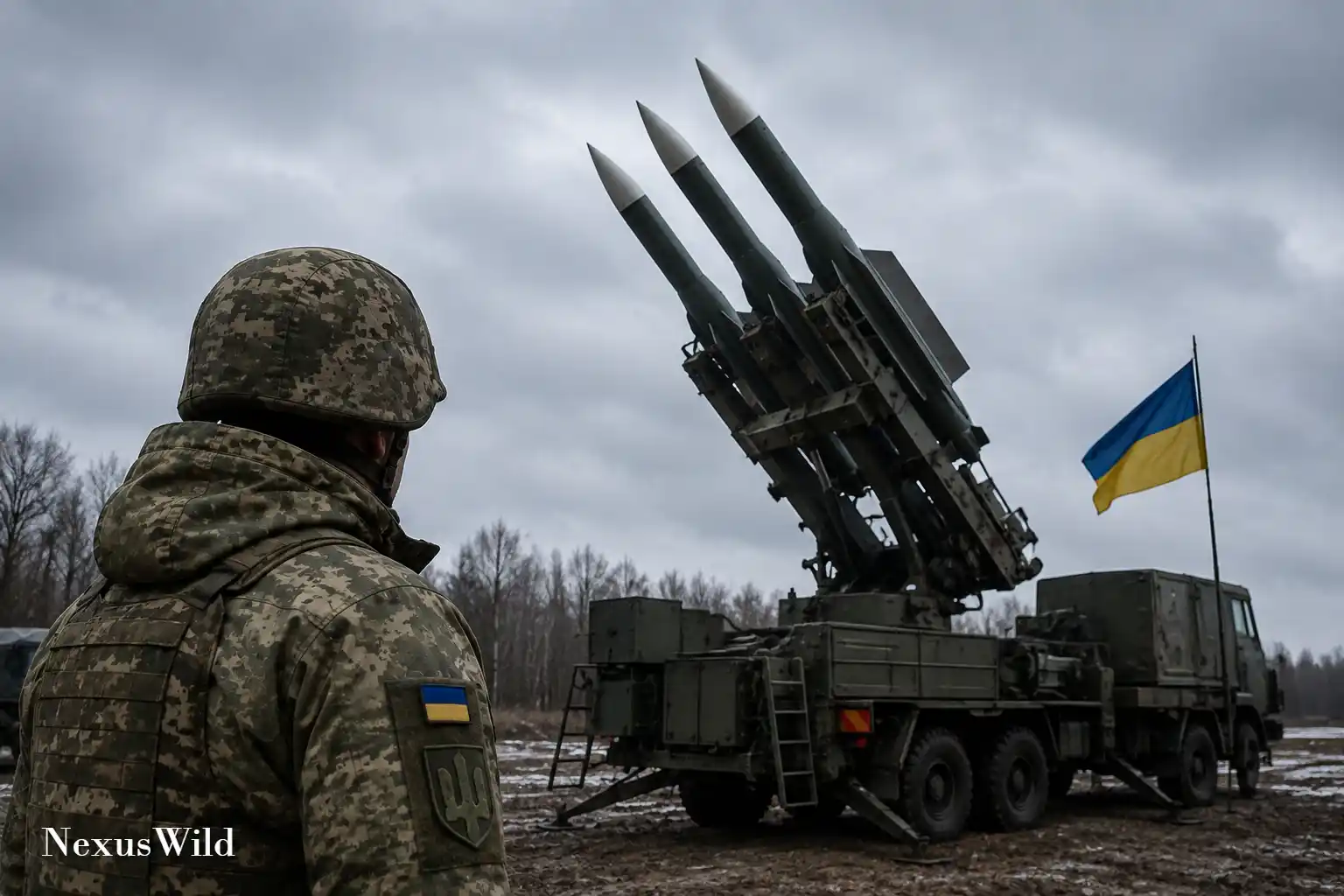

KYIV — Ukraine is intensifying calls for stronger air defences ahead of winter, with President Volodymyr Zelenskyy pressing allies for more Patriot interceptors as Russian strikes on energy infrastructure continue.
The push came into focus at a Coalition of the Willing meeting of roughly 30 leaders in Kyiv on August 24, co-chaired by France and Germany remotely and attended in person by British Prime Minister Andy Burnham and European Council President Antonio Costa. Leaders pledged to urgently strengthen Ukraine's air defences, increase military and energy support, tighten sanctions on Russia and continue preparing a multinational force that could deploy after any ceasefire. Burnham said the UK had approved sharing Storm Shadow missile production technology with Ukraine.
Patriot Interceptor Shortage
Zelenskyy told the gathering that Ukraine received 675 Patriot missiles in 2023 and 364 in 2025, with only 264 currently projected for 2026, despite intensifying Russian missile strikes. He said Ukraine's air force has requested 360 Patriot missiles for the winter, out of roughly 600 produced globally each year, and that Kyiv is seeking to buy a small share, potentially 5 to 10 percent, of US stockpiles. Germany has agreed to supply several hundred PAC-2 missiles, though not until 2027-2028. These remain requests and partial pledges rather than confirmed near-term deliveries.
Zelenskyy has said Ukraine now has roughly two and a half times fewer interceptors than in 2025, even as Russia fires about twice as many ballistic missiles per month. Ukrainian officials have linked the shortage partly to competing US demand following the American and Israeli war with Iran, which began in February.
Escalating Strikes on Infrastructure
A co-chairs' statement from the Kyiv meeting condemned what it called Russia's escalating strikes on Ukrainian cities and infrastructure, citing the highest civilian casualties since the 2022 invasion began and damage to a children's hospital in Kyiv the previous week. A shopping centre in Odesa was hit in a Russian air attack on August 24. Russian strikes have also repeatedly hit Ukraine's energy and gas infrastructure in recent weeks, including Naftogaz production facilities and port infrastructure at Izmail.
Protecting heating, water and power supplies through winter remains a central concern for Kyiv. Analysts at the Institute for the Study of War have assessed that Russia is shifting toward faster, harder-to-intercept ballistic missiles and jet-powered drones to exploit Ukraine's depleted interceptor stocks during the coming cold season.
Domestic Production and Financial Gaps
Ukraine has expanded domestic production to offset shortfalls. Ukrainian officials say the country produced 100,000 interceptor drones in 2025, with roughly 450 domestic manufacturers now involved. Zelenskyy has also said Washington agreed in principle to license Patriot production in Ukraine, though officials acknowledge that effort would take one to five years to yield large quantities.
Beyond missiles, Kyiv is seeking sustained financing. Officials have pointed to a roughly €27 billion funding gap for air defence needs, separate from a broader €90 billion EU loan package that includes €60 billion earmarked for military support.
Further reading and useful links
Reader questions
Frequently asked questions
How many Patriot missiles has Ukraine requested for the winter of 2026?
Ukraine's air force has requested 360 Patriot missiles for the winter, citing an increase in Russian ballistic missile strikes and depleted local stocks.
What is the Coalition of the Willing?
The Coalition of the Willing is a Franco-British initiative bringing together over 30 allied nations to coordinate security contributions and marshal military support for Ukraine's defense.
Why is Ukraine facing a shortage of air defense interceptors?
Deliveries of Patriot interceptors have halved since 2023, partly due to competing U.S. demand following the American and Israeli war with Iran that began in early 2026.
Nexuswild welcomes factual corrections. Email contact@nexuswild.com with evidence and the article URL.