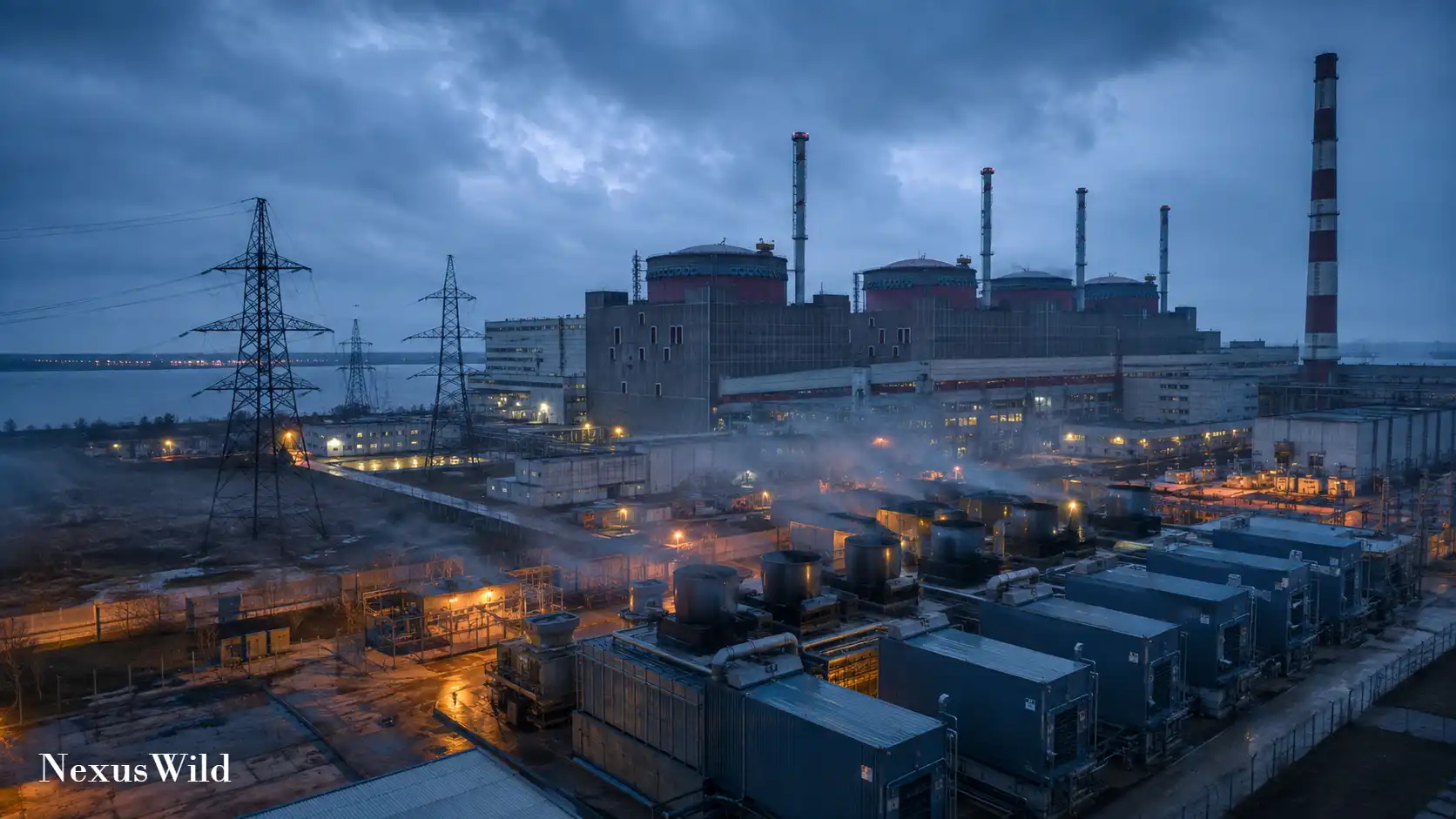

KYIV — Ukraine's Zaporizhzhia Nuclear Power Plant has been without off-site electricity for more than a week, relying on emergency diesel generators to power the cooling systems and safety functions needed to keep its six shut-down reactors and spent fuel pools stable, the International Atomic Energy Agency said Saturday.
The plant, occupied by Russian forces since March 2022, lost its only remaining external power connection, the 330 kV Ferosplavna-1 line, on August 20 following military activity on the northern side of the Dnipro River, according to the IAEA. All six reactors at Zaporizhzhia, Europe's largest nuclear plant, have been in shutdown since 2022 and are not generating electricity, but they still require continuous power to run pumps that cool the reactors and the spent fuel stored on site.
Critical Fuel Shortages and Security Risks
The IAEA said the plant had roughly a 10-day diesel supply as of its Saturday statement. The facility's off-site fuel storage depot has not received a delivery in about six months, and a resupply scheduled for May was postponed because of military activity in the area; IAEA inspectors have been unable to visit that storage site since March 2025. On Thursday and Friday, several dozen tonnes of diesel were transported to the plant from two other locations nearby, IAEA teams observed. The agency is now trying to negotiate a localized ceasefire to allow technicians to repair the damaged power line.
IAEA Director General Rafael Grossi said "the availability of diesel fuel is of paramount importance whenever a nuclear power plant loses off-site power," adding that the situation underscores why reliable external power and secure supply routes are essential to nuclear safety.
Drone Attacks and Ongoing Frontline Dangers
Separately, the IAEA said three drone-related incidents occurred at the plant this week, injuring two employees. Russia and Ukraine routinely accuse each other of military activity near the site, which sits on the frontline along the Dnipro river. Ukrainian officials have said this marks the 27th time the plant has lost external power since Russia's full-scale invasion began in 2022.
The plant reported that radiation levels remained normal when the outage began, and the IAEA, which has maintained a continuous on-site presence since September 2022, has not reported any abnormal readings. Prolonged reliance on generators is considered a safety concern because it removes the redundancy of a stable grid connection, leaving the plant dependent on fuel deliveries that have become increasingly difficult to guarantee amid ongoing fighting near the site.
Further reading and useful links
Reader questions
Frequently asked questions
Why is the Zaporizhzhia Nuclear Power Plant running on emergency generators?
The plant lost its only remaining external power connection, the 330 kV Ferosplavna-1 line, following military activity on August 20. Generators are required to power critical cooling systems for the shut-down reactors and spent fuel pools.
How long can the Zaporizhzhia plant operate on its current diesel supply?
As of the IAEA's Saturday statement, the plant had roughly a 10-day supply of diesel fuel remaining for its emergency generators.
Are radiation levels normal at the Zaporizhzhia plant?
Yes. Both the plant operators and the continuous IAEA on-site team reported that radiation levels remained normal when the power outage began, with no abnormal readings detected.
Nexuswild welcomes factual corrections. Email contact@nexuswild.com with evidence and the article URL.